

In This Article
Let’s be honest: nobody moved to the UK for the scorching summers. And yet, here we are. The summer of 2023 — the eighth warmest on record — was linked to over 2,000 heat-related deaths in England alone, according to the UK Health Security Agency. Climate scientists aren’t exactly predicting a return to the drizzly, mild Julys of decades past, either. The heat is arriving, it’s staying longer, and if you work outdoors — on a construction site, a road crew, a warehouse loading bay, or even a festival field — your body is the one paying the price.

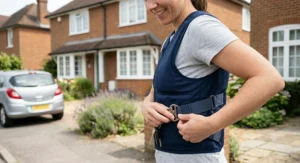
An ice pack cooling vest is exactly what it sounds like: a wearable garment fitted with pockets that hold frozen gel packs or water-filled inserts directly against your core. Worn over a base layer, it transfers cold to the areas closest to your major blood vessels — chest, back, torso — keeping your core temperature from spiralling upward on a 30°C August afternoon. The science is simple; the relief is immediate.
What’s less simple is choosing the right one. The market is flooded with vests that range from impressively engineered to spectacularly useless. Some keep you genuinely cool for three or four hours; others turn into a soggy, lukewarm hug within forty-five minutes. This guide cuts through the noise. We’ve researched the best ice pack cooling vests available on Amazon.co.uk in 2026, with a particular focus on construction workers, outdoor professionals, and anyone who can’t exactly nip inside for a chilled glass of lemonade when things get uncomfortable.
Quick Comparison: Top 7 Ice Pack Cooling Vests at a Glance
| Product | Ice Packs Included | Est. Cooling Duration | High-Vis Option | Best For | Price Range (GBP) |
|---|---|---|---|---|---|
| PANGTIKU Cooling Safety Vest | 24 gel packs | 2–3 hrs per rotation | ✅ Yes | Construction workers | £30–£45 |
| Ergodyne Chill-Its 6215 | 6 phase-change packs | Up to 4 hrs | ✅ Yes (FR version) | Industrial/warehouse | £80–£120 |
| Techniche HyperKewl 6529 | N/A (evaporative) | 5–10 hrs | ✅ Yes | Road workers, outdoors | £35–£55 |
| FlexiFreeze Personal Series | 3 water-ice panels | 2–3 hrs | ❌ No | Sports, leisure | £55–£80 |
| SKTIKUNIY Reflective Cooling Vest | 6 gel packs (24 total) | 2–3 hrs per set | ✅ Yes | Budget construction | £20–£35 |
| Alphacool Ice Vest Pro | 8–12 gel packs | 2–4 hrs | ❌ No | Sports & motorcycle | £45–£70 |
| HENNCHEE Cooling Safety Vest | 12 gel packs | 2–3.5 hrs | ✅ Yes | Hot weather work | £25–£40 |
The table above tells an interesting story. You’ll notice that the higher-priced vests — Ergodyne’s Chill-Its range in particular — achieve longer cooling durations not through more ice packs, but through superior phase-change material (PCM) technology. If you’re on a job site with access to a freezer or cool box for pack rotation, a budget vest with 20-plus packs can rival that performance at a fraction of the cost. The deciding factor is often logistics: how many packs do you have, and how often can you swap them?
💬 Just one click — help others make better buying decisions too! 😊
✨ Don’t Miss These Exclusive Deals!
🔍 Take your comfort on the job to the next level with these carefully selected cooling vests. Click on any highlighted product to check current pricing and availability on Amazon.co.uk. Your coolest summer yet starts here.
Top 7 Ice Pack Cooling Vests — Expert Analysis
1. PANGTIKU Cooling Safety Vest with 24 Gel Ice Packs
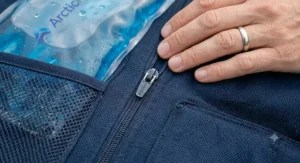
The PANGTIKU is the vest you see most frequently on UK construction sites, and for good reason — it bundles generous value into a package that actually works. The vest features six zippered pockets (two front, four back) in a 100% polyester high-visibility shell with reflective strips running along the edges, which matters enormously when you’re working on a road scheme or site where passing plant operators need to see you clearly.
The key spec here is the ice pack quantity: 24 gel packs means rotation is genuinely practical. You freeze half, use half, and by the time the first set has warmed up, the second set is ready. In British summer conditions — typically 25–32°C on a hot day, with humidity rarely reaching the extremes of the Gulf States — expect around two to three hours of solid cooling per set before packs need swapping. The bubble bags included are a nice detail: they add a thin layer of insulation so the packs feel refreshingly cool rather than uncomfortably icy against your ribs.
In my assessment, this is the standout value pick for UK outdoor workers who have somewhere to store a cool box. The high-vis shell means it can often double as your required site hi-viz, eliminating the need for a separate tabard — though always verify with your site manager that it meets the specific EN ISO 20471 Class 2 standard required on your project.
Customer feedback summary: UK buyers consistently praise the pack count and construction quality; a minority note that the packs can feel slightly bulky under a hardhat harness.
✅ 24 packs enables all-day rotation
✅ High-vis reflective shell doubles as site PPE
✅ Generous six-pocket layout for 360° cooling
❌ Packs take 4–6 hours to refreeze — plan your rotation
❌ Slightly heavier than minimalist sports vests when fully loaded
Around the £30–£45 range on Amazon.co.uk — genuinely difficult to beat for the money.
2. Ergodyne Chill-Its 6215 Phase Change Cooling Vest
If the PANGTIKU is the workhorse, the Ergodyne Chill-Its 6215 is the thoroughbred. Ergodyne is a respected American workwear brand with a strong UK distribution presence, and the 6215 represents their flagship ice-pack cooling vest for professional industrial use. Rather than standard water-gel packs, it uses phase-change material (PCM) inserts that maintain a consistent 18°C (64°F) for up to four hours — regardless of external air temperature. That’s the part worth paying attention to. A standard gel pack loses its cooling power as it warms; PCM maintains a steady, controlled temperature throughout its working life.
The vest itself is built for sustained hard use: reinforced stitching, a hook-and-loop closure system rather than cheap zips, and a Flame Retardant (FR) version available for welders or anyone working near open flame. For warehouses, foundries, or any environment where heat is generated by machinery rather than sunshine, the controlled 18°C output is dramatically more useful than the unpredictable cold of a frozen gel pack.
The recharge time is where the 6215 earns its higher price: PCM inserts recharge in cold water in as little as 15–30 minutes, meaning a spare set kept in an ice bath can keep you continuously cool through an entire shift — no waiting for a four-hour freeze cycle.
Customer feedback summary: Industrial buyers note this vest significantly outlasts cheaper alternatives on long shifts; a few mention the sizing runs slightly large for slimmer UK builds.
✅ PCM maintains steady 18°C for up to 4 hours
✅ Inserts recharge rapidly in cold water
✅ FR version available for high-risk environments
❌ Higher price point (£80–£120 range)
❌ PCM insert replacements add ongoing cost
Worth every penny for full-time outdoor professionals. For someone who wears a cooling vest three times a summer, it’s harder to justify.
3. Techniche HyperKewl 6529 Evaporative Cooling Sport Safety Vest
A slight curveball on this list: the HyperKewl 6529 isn’t technically an ice pack vest — it’s an evaporative cooling garment. But it’s earned its place here because it’s the practical solution when you simply cannot carry frozen packs to site, and because it outperforms many ice-pack vests on total cooling duration. Soak it in water for one to three minutes, wring it out, put it on. As water evaporates from the fabric, it draws heat away from your core continuously — for five to ten hours on a warm day.
The catch is weather-dependent performance. In humid conditions (anything above 70% relative humidity), evaporative cooling loses effectiveness. Britain, with its notoriously damp climate, sits in a middle ground: on a hot, breezy summer day — the kind you might get on a motorway scheme in the East Midlands in July — this vest is spectacular. On a muggy, overcast day in central London with still air, you’ll feel less benefit. It’s also worth knowing that evaporative cooling works best in direct sunlight and breeze; if you’re working inside a building or in sheltered site compounds, an ice-pack vest will serve you better.
The high-vis version meets site visibility requirements, and the entire garment weighs almost nothing — a genuine advantage if you’re also carrying a hard hat, tool belt, and PPE.
Customer feedback summary: Road workers and agricultural workers are enthusiastic; warehouse users find performance more variable depending on ventilation.
✅ No freezing required — soak and go
✅ Up to 5–10 hours cooling duration
✅ Featherlight — barely notice it under PPE
❌ Loses effectiveness in high humidity or still air
❌ Not suited to enclosed or poorly ventilated environments
Price range: around £35–£55 on Amazon.co.uk. A compelling secondary vest to own alongside an ice-pack model.
4. FlexiFreeze Personal Series Ice Vest
The FlexiFreeze takes a different philosophical approach to cooling: instead of gel packs, its removable panels are filled with 96 individual pure-water ice cubes encased in a flexible sheet. The science here is compelling — water absorbs 35% more heat as it melts than chemical gels do, which means a lighter, thinner vest can deliver more actual cooling power. In practice, the vest weighs under 1.8kg fully loaded, which is considerably less than a heavy gel-pack vest loaded with 20-plus packs.
This is unambiguously a leisure and sports-oriented vest rather than a workwear garment — no high-vis, no reflective strips. But for cyclists, festival-goers, gardeners, or anyone managing a chronic heat-sensitivity condition (such as Multiple Sclerosis, where temperature management is clinically significant), the FlexiFreeze is a genuinely clever piece of kit. The three-panel design attaches via Velcro, and spare panel sets can be kept in a cool bag for easy swaps mid-activity.
Worth noting for UK buyers: the neoprene construction is more forgiving in a slightly unpredictable climate. You’re not going to overheat in a neoprene vest the moment a cloud appears — unlike some heavier industrial options.
Customer feedback summary: Sports users and MS patients are among the most vocal fans; some buyers note that refreeze time is longer than a standard ice tray (panels require flat freezer space).
✅ Pure-water ice panels absorb more heat than gel
✅ Lightweight and flexible — excellent freedom of movement
✅ Suitable for medical heat-management needs
❌ No high-vis option — not suitable for most site environments
❌ Panels need flat freezer space to refreeze properly
Around the £55–£80 range on Amazon.co.uk. Well worth it for sports or personal use.
5. SKTIKUNIY Reflective Cooling Vest with 24 Ice Packs
Budget-conscious site workers, take note. The SKTIKUNIY is in a similar category to the PANGTIKU but comes in at the lower end of the price spectrum, and manages to include 24 ice packs (12 gel-fill, 12 water-absorbing) with an additional thermal storage bag thrown in for good measure. The reflective trim running around the vest provides reasonable visibility, though it’s worth checking against your specific site requirements — some larger construction contracts specify Class 2 EN ISO 20471 as a minimum, and not all budget hi-viz vests meet this standard.
What distinguishes this model is the dual ice-pack system: the gel packs and the water-absorbing packs serve different roles. The gel packs go in when you want maximum, intense cold; the water-absorbing variants act as a buffer, reducing the transition shock from “freezing cold” to “body temperature” by adding a slower-release phase. It’s a smart touch on a budget product, and the included thermal bag for transporting frozen packs to site is a practical feature many pricier vests skip.
Customer feedback summary: UK buyers appreciate the pack quantity and bag inclusion; a minority note the zipper quality could be more robust on a product used daily.
✅ 24 packs with dual-type system
✅ Includes thermal storage bag
✅ Excellent entry-level price point
❌ Zip durability may be a concern for daily heavy-duty use
❌ Hi-vis compliance should be verified against your site standard
Price range: £20–£35 on Amazon.co.uk — solid value for occasional or supplementary use.

6. Alphacool Ice Vest Pro
Alphacool occupies an interesting position in the market: it sits between consumer-grade budget vests and full industrial PPE, and does so rather elegantly. The vest uses 8–12 gel packs depending on configuration, positioned across both the front and back of the torso. The design is notably cleaner and more fitted than the boxy high-vis workwear options, making it appropriate for motorcycle riders, cyclists, outdoor event staff, and professionals who need heat management but also need to look presentable — delivery drivers, for example, or outdoor hospitality workers.
The gel packs are rated for up to three to four hours of effective cooling in UK summer conditions, and the vest’s outer fabric handles light perspiration without becoming unpleasantly saturated. For motorcycle use specifically — where you might be stationary in traffic on a 30°C day with leathers or a textile jacket adding insulation — an Alphacool vest under your riding jacket can make the difference between a safe, focused ride and an increasingly miserable one. This is one of the few cooling vests specifically designed with enough slimline profile to layer comfortably under outerwear.
Customer feedback summary: Motorcycle communities and outdoor event workers rate this highly; some note the packs can occasionally shift position if the vest isn’t fitted snugly.
✅ Fitted profile works well under outerwear
✅ Suitable for motorcycle and cycling use
✅ Clean aesthetic for customer-facing professionals
❌ No high-vis — pure workwear use limited
❌ Pack shifting possible if vest fit is loose
Around the £45–£70 range on Amazon.co.uk. The best option on this list for motorcycle riders and outdoor hospitality staff.
7. HENNCHEE Cooling Safety Vest with 12 Ice Packs
The HENNCHEE rounds out the list as a solid mid-market choice, threading the needle between the budget-tier SKTIKUNIY and the premium Ergodyne. It comes with 12 gel packs in an adjustable high-visibility vest, with a layout that prioritises back coverage — which is actually sensible ergonomics. Your back carries the most surface area closest to your spinal cord and major blood vessels; a vest that does a reasonable job cooling your back is more effective than one that focuses entirely on your chest.
The adjustable side fastenings accommodate a wide range of body shapes without the need for size-specific ordering, which is useful for employers kitting out a mixed team at once. The fabric is breathable enough that even in warmer conditions the vest doesn’t become unbearably sticky — a common complaint with cheaper alternatives.
Customer feedback summary: Team managers and site supervisors praise the one-size-adjustable design for bulk ordering; individual buyers note the 12 packs are sufficient for a half-day shift but could stretch thin on a full day without a spare set.
✅ Back-heavy ice pack layout for effective core cooling
✅ Adjustable for multiple body shapes — good for team orders
✅ Genuinely breathable outer fabric
❌ 12 packs limits all-day use without refreeze access
❌ Cooling duration slightly shorter than the 24-pack alternatives
Price range: around £25–£40 on Amazon.co.uk — an excellent team-purchase option.
How to Get the Most From Your Ice Pack Cooling Vest: A Practical Usage Guide
Buying the right vest is half the battle. Using it correctly is the other half, and it’s one that the product listing on Amazon won’t help you with.
Pre-chill your packs overnight. This sounds obvious, but many first-time buyers chuck packs in the freezer two hours before a shift and wonder why their vest feels barely cool by mid-morning. Gel packs require a full four to six hours in a household freezer to reach optimal temperature. For a 7am construction start, that means packs go in no later than 1am. If that’s not practical, invest in a second set and run a rotation.
Wear a thin base layer underneath. Direct skin contact with frozen gel packs can be uncomfortable or even cause cold burns after prolonged contact — particularly on thinner or more sensitive skin. A moisture-wicking polyester base layer gives you a comfortable buffer whilst still allowing heat transfer. Cotton is less ideal; it saturates with sweat and loses its wicking properties rapidly.
Transport packs in a quality insulated bag. From your home freezer to the job site, you might be looking at a 45-minute journey. A good-quality insulated bag can preserve pack temperature far better than a standard carrier bag. Several of the vests above include thermal bags; if yours doesn’t, a decent insulated lunch bag will do the job.
Hydration is non-negotiable. A cooling vest reduces the sensation of heat stress, but it doesn’t eliminate the physiological impact of a hot environment. The HSE is clear that cool drinking water must be provided to outdoor workers in hot conditions, and a vest is a supplement to — not a replacement for — proper hydration. Aim for 250ml of water every 20–30 minutes during strenuous outdoor work in hot conditions.
Watch for early heat stress symptoms. Even with a vest, be vigilant for signs that your body is struggling: persistent headache, dizziness, unusual fatigue, or cessation of sweating. These warrant immediate rest in a cool, shaded area. The Health and Safety Executive provides detailed guidance on heat stress management at hse.gov.uk/temperature — it’s worth a read for any site manager or outdoor worker.
Real-World Scenarios: Matching the Vest to the UK User
The Birmingham Road Worker
Dave, a 38-year-old Highways England operative working on a smart motorway scheme outside Birmingham. He’s on-site from 7am to 4pm, outdoors in full Class 2 PPE, unable to leave the exclusion zone for extended breaks. Heat days are his nemesis.
Best match: The PANGTIKU with a full 24-pack rotation kept in a site cool box. The hi-vis shell satisfies his PPE requirement, and the high pack count means a fresh set is always available without leaving the compound. Cost in terms of productivity saved on heat-stress days — considerable.
The Festival Medic, Glastonbury
Sarah, a 29-year-old event first-aider who works three-day festivals in the English summer. She needs to stay cool, look professional, and be able to move freely to respond quickly.
Best match: The Alphacool Ice Vest Pro. Fitted enough to wear under a polo shirt without looking like she’s smuggling something, effective enough to manage four-hour patrol shifts in a 28°C field. She keeps a cool bag with spare packs in the medical tent for mid-shift swaps.
The Amateur Cyclist, Edinburgh
Alistair, a 52-year-old who cycles the Water of Leith path most summer mornings and wants something to manage the increasingly warm Scottish summers — plus a known sensitivity to heat following a cardiac event. His cardiologist has suggested temperature regulation is important during exercise.
Best match: The FlexiFreeze Personal Series. Lightweight, flexible, and medically appropriate for heat-sensitive individuals. He uses it under a cycling jersey on mornings where temperatures are expected to exceed 22°C. Worth noting: for medically-indicated heat management, speaking to a healthcare professional before choosing a cooling vest is sensible — NHS Inform’s pages on heat exhaustion provide a useful health context.
How to Choose an Ice Pack Cooling Vest in the UK — 7 Key Criteria
Picking the wrong vest isn’t just an inconvenience — on a hot site, it’s a genuine health and safety issue. Here’s how to think through the decision systematically.
1. Intended environment. Construction site? You need high-vis compliance. Sports or leisure? A fitted sports vest without reflective strips is perfectly fine. Never buy a non-hi-viz vest for site use and assume it’ll pass a toolbox talk inspection.
2. Shift duration vs. pack count. A six-hour outdoor shift with a single set of eight packs is a problem waiting to happen. Do the maths: if packs last two to three hours, you need at least two full sets to cover a standard shift comfortably.
3. Recharge logistics. Do you have access to a freezer or ice box on site? If yes, gel packs work perfectly. If not, either invest in a very large number of packs kept in a well-insulated box, or consider an evaporative vest like the HyperKewl which requires only water.
4. Layering requirements. If you need to wear the vest under PPE, a harness, or motorcycle gear, choose a slimline profile vest. Bulky pockets on the front can interfere with harness fit — a serious safety issue.
5. Body type and sizing. Many UK buyers find that sizing skews toward broader American builds. Slim or shorter-framed buyers should check specific measurements rather than relying on S/M/L alone. Adjustable options like the HENNCHEE are safer bets for team purchasing.
6. Budget and frequency of use. A £90 Ergodyne vest is outstanding value for someone using it five days a week from May to September. For someone who needs a vest for three bank holiday weekends a year, a £30–£40 budget option covers the brief admirably.
7. Medical considerations. If you’re managing a health condition — particularly MS, cardiovascular disease, or any condition that affects thermoregulation — discuss cooling vest use with your GP or specialist before purchasing. Some conditions benefit from very specific temperature ranges, and not all ice vests deliver a controlled temperature.
What the Spec Sheet Won’t Tell You: Real-World Performance in British Conditions
British heat is different from the heat these vests were often designed for. It’s worth unpacking what that means in practice.
The majority of ice pack cooling vests are designed with American, Middle Eastern, or Australian conditions in mind — environments where temperatures regularly exceed 35–40°C and humidity can be reliably extreme. British summers are milder but oddly variable: a week of 30°C sunshine can be followed by a blustery 18°C bank holiday Monday, then back to 28°C by Thursday. This means a vest that was calibrated for eight hours of 40°C desert use will significantly over-perform in most British conditions — which is actually good news.
In practical terms, most ice-pack vests on this list will deliver towards the upper end of their stated cooling duration during a typical UK summer workday. Where British conditions create specific challenges is humidity: on overcast, muggy days — very common in the Midlands, the North, and Scotland — sweat does not evaporate efficiently, so the body’s own cooling mechanism is already compromised. On those days, an ice-pack vest isn’t a luxury; it’s doing meaningful physiological work that your sweat glands simply cannot.
One important note on pack condensation: British summer humidity means frozen gel packs will develop significant exterior condensation as they melt. This moisture finds its way into vest pockets, eventually soaking through to your base layer. A minor annoyance in dry heat becomes a rather soggy reality on a humid British morning. The vests on this list with waterproof-lined pockets — PANGTIKU, SKTIKUNIY — handle this more gracefully than those with simple fabric pockets.
Common Mistakes When Buying an Ice Pack Cooling Vest
Even sensible buyers make these errors. Save yourself the disappointment.
Overestimating pack duration. Manufacturers quote cooling durations based on ideal conditions — typically a cool, breezy environment where the pack is doing minimal work. On a 30°C site in direct sun, halve that number. Eight packs rated for “three to four hours” in marketing materials might deliver two hours of effective cooling on a hot British afternoon. Plan accordingly.
Ignoring the fit. A vest worn loosely will allow warm air to circulate between the ice packs and your body, reducing heat transfer significantly. Ice cools by conduction — it needs contact to work. Wear it snug over a single thin layer, not loose over a thick hoodie.
Buying a US-voltage charging accessory without checking. Most ice-pack vests are passive products with no electrical component, so this isn’t relevant. However, some hybrid vests include USB-charged fans or cooling elements; always confirm UK voltage compatibility (230V/50Hz) before purchasing. A US-spec device running on a UK socket through a dodgy adaptor is a fire risk that no amount of bodily coolness is worth.
Assuming hi-vis compliance without checking. As touched on above, not all reflective vests meet the EN ISO 20471 Class 2 standard required on most UK construction and highway sites. A vest with some reflective tape is not automatically compliant. Check the product listing for specific standards certification before relying on it as your sole hi-viz garment.
Ignoring UK consumer rights. One small silver lining of buying on Amazon.co.uk rather than importing directly: UK Consumer Rights Act 2015 and Consumer Contracts Regulations give you 14 days to return any online purchase for any reason, no questions asked. If a vest doesn’t perform as expected, exercising that right is straightforward.
UK Regulations, Safety Standards & Legal Requirements
If you’re purchasing an ice pack cooling vest for professional use in the UK, there are a few regulatory considerations that will spare you the awkward site manager conversation.
Employer duty of care: Under the Health and Safety at Work Act 1974, and reinforced by the Workplace (Health, Safety and Welfare) Regulations 1992, employers have a legal obligation to protect workers from heat stress. This includes provision of PPE appropriate to the thermal environment. Cooling vests can form a legitimate part of a heat stress control plan — but they sit alongside, not instead of, engineering controls (shade, ventilation), hydration provision, and adjusted work schedules.
Hi-vis requirements: EN ISO 20471 is the standard governing high-visibility clothing on UK sites. Class 2 is the minimum for most road and construction environments; Class 3 is required for high-risk situations such as live carriageway work. Always verify the classification stated in the product listing.
UKCA marking: Post-Brexit, PPE sold in Great Britain should carry UKCA marking (replacing the former CE marking) to confirm conformity with UK safety standards. Some products sold on Amazon.co.uk carry CE marking rather than UKCA — which remains acceptable in a transitional period for many categories, but worth checking for professional procurement. Northern Ireland buyers should note that CE marking continues to apply in NI under the Windsor Framework.
Risk assessment: Under the Management of Health and Safety at Work Regulations 1999, any workplace heat risk should be formally risk-assessed. Introducing cooling vests as a control measure is typically a sensible outcome of that assessment, particularly for roles involving sustained outdoor physical work above 28°C.

FAQ
❓ How long does an ice pack cooling vest stay cold?
❓ Can I use an ice pack cooling vest on a UK construction site?
❓ Are reusable gel ice packs safe to use repeatedly?
❓ Are ice pack cooling vests suitable for people with MS or heat sensitivity?
❓ Do cooling vests work in British summer humidity?
Conclusion: Don’t Wait for a Record-Breaking Summer to Buy One
The British tendency to dismiss heat as “a bit of a warm spell” is charmingly stoic, and entirely misplaced when you’re standing on a south-facing motorway embankment in full PPE at 2pm in July. Heat stress is not a soft complaint. It reduces reaction times, impairs concentration, raises accident risk, and — in worst cases — becomes a genuine medical emergency. The Health and Safety Executive’s guidance leaves employers in no doubt about their duty of care, and a quality ice pack cooling vest is one of the most practical, cost-effective interventions available.
For most UK workers and outdoor enthusiasts, the PANGTIKU or SKTIKUNIY deliver excellent value for money with their high pack counts and hi-vis shells. Step up to the Ergodyne Chill-Its if you need sustained, controlled cooling across a long shift. Go with the FlexiFreeze or Alphacool if weight and mobility matter more than workwear compliance.
Whatever you choose, plan your logistics ahead of time — more packs, a good cool box, and a solid hydration plan — and you’ll find a summer shift considerably more manageable than you might have imagined.
✨ Check the Latest Deals on Amazon.co.uk
🔍 Click on any highlighted product above to see current pricing and availability. Prime members enjoy next-day delivery to most UK postcodes — so there’s really no reason to suffer through tomorrow’s forecast unprepared.
Recommended for You
- Best Evaporative Cooling Vest UK 2026: 7 Picks That Actually Work
- Best Phase Change Cooling Vest UK 2026: 7 Top Picks Reviewed
- Best Cooling Vest UK 2026: 7 Picks That Actually Work
Disclaimer: This article contains affiliate links. As an Amazon Associate, I earn from qualifying purchases. If you purchase products through these links, we may earn a small commission at no additional cost to you.
✨ Found this helpful? Share it with your mates! 💬🤗
