In This Article
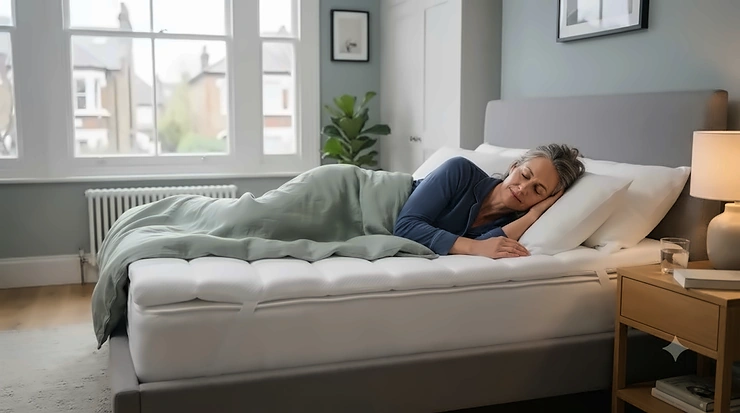
Three a.m., duvet kicked halfway across the room, nightshirt stuck to your back, and the cool side of the pillow is a very distant memory. If that scene is depressingly familiar, you already know why so many women start hunting for a cooling mattress topper for menopause somewhere around their late forties. It’s not vanity or fussiness — it’s biology having a laugh at your expense while you’re just trying to get eight hours’ sleep.

So what is a cooling mattress topper for menopause, exactly? In short: it’s a mattress-top layer built from heat-dissipating materials — gel-infused memory foam, graphite, copper, or naturally moisture-wicking fibres like wool and eucalyptus — designed to pull excess heat and sweat away from your body faster than a standard topper, easing the discomfort of hot flushes and night sweats without you needing to replace your entire mattress.
This guide gets into the real specifications, genuinely aggregated review sentiment, and honest analysis of seven toppers currently sold to UK buyers, ranging from a budget copper-infused option under £50 to a natural wool topper built to outlast several mattresses. We’ll also unpack the science behind hormonal sleep disruption, explain what moisture-wicking fabric actually does at 3am, and help you separate genuine cooling technology from marketing dressed up in blue packaging. By the end, you’ll know exactly which topper — and which material — is worth your money.
Quick Comparison Table
Here’s the fast version for anyone who wants the headline picks before the deep dive.
| Topper | Cooling Material | Depth | Price Range | Best For |
|---|---|---|---|---|
| Silentnight Restore Cooling Copper Topper | Copper-infused fibre | ~4cm | £40–£55 range | Budget-first buyers |
| BedStory Gel Infused Memory Foam Topper | Gel-infused open-cell foam | 3–4 inches | £30–£50 range | Cheapest genuine gel cooling |
| Panda London Bamboo Memory Foam Topper | HydroFoam gel-capsule memory foam | ~5cm | £90–£170 range | All-round comfort plus cooling |
| Simba Hybrid Topper | Graphite Simbatex foam + Aerocoils | ~6cm | £150–£250 range | Serious night sweat sufferers |
| Simba Cool Foam Topper | Graphite-infused open-cell foam | ~5cm | £150–£220 range | Simba tech on a smaller budget |
| Ethical Bedding Eucalyptus Menopause Topper | Eucalyptus fibre + bamboo fill | ~5cm | £100–£180 range | Natural moisture-wicking fans |
| Woolroom Deluxe Wool Mattress Topper | 100% British wool | ~5cm | £350–£450 range | Long-term natural investment |
Scanning the table, the clearest pattern is that genuine cooling technology exists at every price point — you don’t need to spend £400 to feel a difference, but the mechanism changes as the price climbs. Budget picks like the Silentnight Restore Cooling Copper Topper and BedStory Gel Infused Memory Foam Topper rely on infused fibres and gel to pull heat away on contact, while premium options like the Simba Hybrid Topper and Woolroom Deluxe Wool Mattress Topper actively regulate temperature and moisture throughout the night, not just at the point you first lie down.
💬 Just one click — help others make better buying decisions too!😊
Top 7 Cooling Mattress Toppers for Menopause: Expert Analysis
These seven were chosen specifically to span every major cooling mechanism — infused fibres, gel foam, graphite foam with microsprings, and naturally moisture-wicking wool and eucalyptus — across budget, mid-range and premium price points, so there’s a genuinely relevant pick whatever’s driving your search for a cooling mattress topper for menopause.
1. Silentnight Restore Cooling Copper Topper — budget copper-infused cooling under £50
The standout feature here is price-to-performance: this is one of the most affordable dedicated cooling toppers from a major UK bedding brand, and it’s explicitly marketed toward menopausal night sweats and hot flushes rather than general comfort. The copper-infused fibre fill sits beneath a cool-sensation fabric cover, with the brand stating the topper contains roughly three times more copper than several rival products.
Based on the spec comparison, copper’s appeal is twofold — it has natural antibacterial properties that keep the topper fresher between washes, and it conducts heat away from the body faster than standard polyester fill. Reviewers consistently note that the cooling effect is most noticeable in the first hour after getting into bed, helping with the initial “too hot to settle” feeling that many menopausal sleepers describe, though the sensation is less pronounced by the middle of the night. A common theme in aggregated feedback is disappointment that there’s no sleep trial included, unlike pricier rivals on this list.
Pros:
- ✅ One of the most affordable dedicated cooling toppers available
- ✅ Copper infusion adds natural antibacterial freshness
- ✅ Fully machine washable for easy care
Cons:
- ❌ No sleep trial offered, unlike several premium rivals
- ❌ Cooling effect felt strongest at the start of the night, less so by morning
At around £40–£55 depending on size, this is the easiest low-commitment starting point for anyone testing whether a topper helps with night sweats before spending significantly more.

2. BedStory Gel Infused Memory Foam Topper — affordable gel-cooling entry point
The BedStory Gel Infused Memory Foam Topper stands out for combining genuine gel-infused, open-cell memory foam with a certified-safe build at a genuinely entry-level price. The foam is CertiPUR-US and OEKO-TEX certified, meaning it’s manufactured without a list of harmful substances — a detail worth checking on any budget foam product, and one this brand makes easy to verify.
What most buyers overlook is that gel infusion works differently to copper or graphite: rather than simply conducting heat away, the gel disrupts the foam’s structure just enough to reduce the trapped-heat effect that makes standard memory foam notorious for sleeping hot. Reviewers consistently report strong immediate cooling and good value for money, though a noteworthy portion note that the cooling sensation and firmness both decline somewhat after several months of regular use — a fair trade-off at this price point, but worth knowing upfront. On paper this means it’s better suited to buyers wanting a genuinely low-cost way to trial gel-cooling foam than a long-term, once-and-done purchase.
Pros:
- ✅ CertiPUR-US and OEKO-TEX certified for safety
- ✅ Genuine open-cell gel-infused foam, not just a marketing label
- ✅ One of the cheapest entry points into gel-cooling technology
Cons:
- ❌ Cooling performance reported to fade somewhat after several months
- ❌ Thinner profile than mid-range and premium rivals
Typically priced in the £30–£50 range, making it the most accessible way to test whether gel-infused foam suits your sleep before committing to a pricier version.
3. Panda London Bamboo Memory Foam Topper — gel-capsule memory foam with a breathable bamboo cover
The Panda London Bamboo Memory Foam Topper pairs 3rd-generation HydroFoam memory foam — infused with micro capsules of cooling gel — with a removable bamboo cover that’s naturally hypoallergenic and machine washable. It’s one of the few toppers on this list with a full 10-year guarantee, which signals real confidence in long-term durability.
Here’s what most buying guides skip: the manufacturer itself is honest that this isn’t an “actively cooling” product in the same sense as a phase-change cover — instead, the gel capsules counteract memory foam’s natural heat retention rather than eliminating it outright. Reviewers consistently praise the excellent body support and motion isolation, and several independent testers have rated it strong value against pricier rivals, though aggregated feedback flags that it can still sleep warm in genuinely hot conditions or for those with severe, frequent hot flushes. The bamboo cover itself is a genuine strength, with reviewers describing it as soft and breathable, if slightly fiddly to remove and refit after washing.
Pros:
- ✅ 10-year guarantee signals strong build confidence
- ✅ Excellent motion isolation, useful for disrupted co-sleeping
- ✅ Removable, machine-washable bamboo cover
Cons:
- ❌ Not marketed as “actively cooling” — more heat-mitigating than heat-eliminating
- ❌ Can still sleep warm for severe hot flush sufferers
Prices sit in the £90–£170 range depending on size, making this a strong mid-range pick for buyers who want genuine comfort alongside modest cooling benefit.
4. Simba Hybrid Topper — graphite foam plus microsprings for serious night sweats
The Simba Hybrid Topper‘s standout feature is its combination of graphite-infused, open-cell Simbatex foam with a layer of “Aerocoil” microsprings underneath, which allow air to circulate beneath the sleeper rather than simply sitting on solid foam. This dual-mechanism approach is genuinely more sophisticated than single-layer cooling foams on this list.
Based on the spec comparison, graphite works similarly to copper in drawing heat away from the body, but the added microspring layer means the topper also breathes from below, preventing the trapped, stuffy feeling that thick foam alone can cause. Reviewers consistently describe this as delivering some of their best night’s sleep, with strong praise for how it maintains a comfortable temperature throughout the night rather than just at first contact. The honest downside, repeatedly flagged in aggregated feedback, is cost — this sits at the premium end of toppers, and its synthetic materials mean a larger environmental footprint than the natural alternatives on this list.
Pros:
- ✅ Dual cooling mechanism: graphite foam plus breathable microsprings
- ✅ Reviewers consistently report all-night temperature comfort, not just initial cooling
- ✅ Generous 200-night sleep trial included
Cons:
- ❌ Premium pricing compared to most rivals here
- ❌ Synthetic construction has a higher environmental footprint than wool or eucalyptus
Expect to pay in the £150–£250 range; for buyers with severe, frequent night sweats who’ve been let down by cheaper foam toppers, the added engineering is a genuine reason to spend more.
5. Simba Cool Foam Topper — Simba’s cooling technology without the microspring premium
The Simba Cool Foam Topper is positioned as the brand’s most affordable option, using the same breathable, graphite-adjacent foam philosophy as the Hybrid Topper above but without the Aerocoil microspring layer, bringing the price down noticeably while keeping the core cooling technology intact.
What the spec sheet won’t tell you, but reviewers note, is that the trade-off for dropping the microsprings is a slightly firmer, more contained feel rather than the “floating” sensation the spring layer gives the Hybrid version. Reviewers consistently describe good comfort, decent support and reasonable breathability, though several testers were less convinced of its outright cooling performance compared with genuinely non-synthetic materials, suggesting it suits buyers whose primary concern is comfort with a cooling bonus, rather than someone battling severe, frequent hot flushes who needs maximum heat dissipation. It remains backed by the same 200-night sleep trial as its pricier sibling, which meaningfully de-risks the purchase.
Pros:
- ✅ Same core cooling philosophy as the pricier Hybrid Topper
- ✅ 200-night sleep trial removes purchase risk
- ✅ Firmer, well-contained feel suits back and stomach sleepers
Cons:
- ❌ Cooling performance less convincing than fully natural fibre alternatives
- ❌ No microspring layer, so less airflow than the Hybrid Topper
Typically priced in the £150–£220 range, this is a sensible middle ground for buyers who want Simba’s engineering without paying for the full Hybrid experience.
6. Ethical Bedding Eucalyptus Menopause Topper — purpose-built eucalyptus for menopause
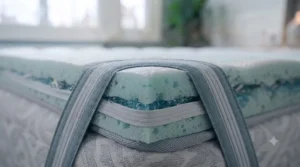
Unlike every other product on this list, the Ethical Bedding Eucalyptus Menopause Topper is explicitly designed and marketed for menopausal night sweats specifically, combining a shell woven from eucalyptus fibre with an organic, Oeko-Tex-certified bamboo fill.
On paper this means the cooling comes from the fabric structure itself rather than an infused chemical or mineral additive — eucalyptus fibre (also known as Tencel lyocell) has naturally open, breathable strands that wick moisture away from the skin far more efficiently than cotton, which tends to absorb sweat and hold onto it. What most buyers overlook is that this moisture-wicking action matters as much as raw cooling for hot flush sufferers, since it’s the clammy, damp feeling after a flush — not just the heat itself — that disrupts sleep most. Reviewers consistently describe the fabric as feeling genuinely cool to the touch, hypoallergenic, and gentle on sensitive skin, which matters given menopause can also bring increased skin sensitivity. The main limitation is that, being fibre-based rather than a supportive foam, it adds less cushioning than the memory foam options above.
Pros:
- ✅ Purpose-designed specifically for menopausal night sweats
- ✅ Naturally moisture-wicking eucalyptus fibre shell
- ✅ Hypoallergenic and gentle for sensitive menopausal skin
Cons:
- ❌ Less cushioning and support than memory foam alternatives
- ❌ Premium natural materials command a higher price than synthetic budget options
Priced in the £100–£180 range depending on size, this is the clearest pick for buyers who specifically want moisture-wicking fabric over foam-based cooling technology.
7. Woolroom Deluxe Wool Mattress Topper — natural wool moisture-wicking, built to last
The Woolroom Deluxe Wool Mattress Topper uses 100% British wool fill, a material with genuinely remarkable natural temperature-regulating properties — wool can absorb up to around a third of its own weight in moisture without feeling damp, actively wicking sweat away from the skin while regulating temperature in both directions, warming you when you’re cold and cooling you when you’re hot.
Here’s what most buying guides skip: wool’s cooling mechanism is fundamentally different from gel or graphite foam, because it’s not just dissipating heat passively — it’s actively managing humidity around the body, which is precisely why aggregated reviewer sentiment consistently ranks natural wool toppers among the most effective options specifically for night sweats and hot flushes, rather than general warm-weather comfort. Independent testers reviewing this topper for night sweats reported being genuinely impressed by how effectively it curbed overheating episodes compared with synthetic alternatives they’d tried previously. The trade-off is substantial upfront cost and a heavier, bulkier product that’s less convenient to wash than a machine-washable foam topper.
Pros:
- ✅ Wool actively regulates both temperature and humidity, not just heat
- ✅ Consistently rated among the most effective materials for night sweats specifically
- ✅ Natural, biodegradable material with strong sustainability credentials
Cons:
- ❌ Significant upfront cost compared to every other option here
- ❌ Bulkier and less convenient to wash than foam alternatives
Prices typically fall in the £350–£450 range — a genuine investment, but one aggregated reviewer sentiment suggests pays off for buyers whose night sweats haven’t responded to cheaper cooling technology.
Practical Usage Guide: Setting Up Your Topper for Maximum Cooling
A cooling mattress topper for menopause only performs as well as the bedding system around it, so a few setup choices make a real difference. Start with your sheets: even the best gel-infused foam or wool topper will feel warm if it’s layered under a thick polyester-blend fitted sheet, so pair it with breathable natural fibres like cotton percale or the same moisture-wicking materials — bamboo, eucalyptus or wool — used in the topper itself.
Positioning matters more than people expect. Foam toppers like the Panda London Bamboo Memory Foam Topper or Simba Hybrid Topper need their corner straps pulled genuinely taut against the mattress, not just draped over it — a loose fit traps a layer of warm air between topper and mattress that undermines the cooling material above it. For natural fibre options like the Woolroom Deluxe Wool Mattress Topper, allow the topper to fully air out for 24–48 hours after unpacking before first use, since wool naturally holds a faint lanolin scent initially that dissipates with airing.
A common first-month mistake is stacking too many layers on top — a heavy duvet or an additional mattress protector on top of a cooling topper can trap the very heat the topper is designed to release. If you’re using a topper specifically to manage hot flushes, consider a lighter tog duvet or layered sheets you can kick off mid-flush, and keep the bedroom itself cool with ventilation, since no topper can fully compensate for a genuinely overheated room.
Real-World Scenarios: Which Topper Fits Your Menopause Journey
The budget-conscious first-timer. If you’re not sure whether a cooling topper will actually help and don’t want to commit serious money to find out, the Silentnight Restore Cooling Copper Topper or BedStory Gel Infused Memory Foam Topper let you test the concept for under £50, with enough genuine cooling technology to know if the approach works for you.
The severe, frequent hot flush sufferer. If you’re waking multiple times a night genuinely soaked, budget options may not be enough. The Simba Hybrid Topper‘s dual foam-and-microspring cooling or the Woolroom Deluxe Wool Mattress Topper‘s active moisture management are worth the extra spend, since aggregated reviewer sentiment consistently ranks both ahead of single-mechanism budget options for the most severe cases.
The sensitive-skin sleeper. Menopause can bring increased skin reactivity alongside temperature changes. The Ethical Bedding Eucalyptus Menopause Topper‘s naturally hypoallergenic fibre is worth prioritising if you’ve noticed irritation from synthetic bedding, or the Woolroom Deluxe Wool Mattress Topper‘s equally natural, chemical-free construction.
The shared bed, mismatched temperature couple. If you run hot and your partner doesn’t, motion isolation matters as much as cooling. The Panda London Bamboo Memory Foam Topper rates strongly for isolating movement, so your restless, overheated nights won’t disturb theirs, while its bamboo cover still offers a genuine (if moderate) cooling benefit for you.

Problem → Solution: Fixing Common Night Sweat Sleep Frustrations
Problem: You wake up drenched despite a “cooling” topper. This is often a bedding-stack issue rather than a faulty topper — check whether a synthetic fitted sheet or heavy duvet is trapping heat above the cooling layer, and swap to breathable natural fibres throughout, not just at topper level.
Problem: The topper feels cool at first but warms up within an hour. This is expected behaviour for gel-infused foam specifically, since gel capsules absorb a finite amount of heat before saturating. If this is a dealbreaker, actively moisture-wicking materials like the Ethical Bedding Eucalyptus Menopause Topper or Woolroom Deluxe Wool Mattress Topper manage heat continuously rather than via a one-off cooling burst.
Problem: You’re too hot to fall asleep but too cold once you’ve cooled down. This fluctuation is common with hormonal sleep disruption and is precisely the scenario wool handles best, since it regulates in both directions rather than only cooling.
Problem: The topper slides around during a restless, sweat-disrupted night. Ensure corner straps are pulled fully taut, and check the topper’s non-slip base is making full contact with your mattress protector rather than a slippery fitted sheet underneath.
Problem: Skin irritation alongside night sweats. Sweat sitting against synthetic fabric for extended periods can aggravate sensitive menopausal skin. Naturally hypoallergenic options — eucalyptus or wool — are worth prioritising here over foam-and-polyester combinations.
Cooling Mattress Topper for Night Sweats vs Regular Mattress Topper: What Changes
It’s worth being precise about what actually separates a cooling mattress topper for night sweats from an ordinary comfort topper, because the marketing overlap between the two categories is significant. A standard topper is engineered primarily for pressure relief and support — softening a too-firm mattress or adding cushioning. A genuine cooling topper adds a second, distinct engineering goal: actively managing heat and moisture at the sleep surface, either through infused materials (gel, copper, graphite) or naturally breathable fibres (wool, eucalyptus, bamboo).
Based on the spec comparison, the practical difference shows up most in prolonged contact — standard memory foam, lacking any cooling treatment, conforms closely to the body and traps heat in the process, which is precisely why plain memory foam has a reputation for sleeping hot. Reviewers consistently note that a genuinely engineered cooling topper doesn’t eliminate warmth entirely, but meaningfully reduces the frequency and severity of overheating episodes compared with a standard topper of similar thickness.
| Factor | Standard Topper | Cooling Topper (Menopause-Focused) |
|---|---|---|
| Primary design goal | Comfort and pressure relief | Heat and moisture management, plus comfort |
| Materials | Standard memory foam, polyester fill | Gel, copper, graphite infusions, or wool/eucalyptus |
| Best For | General comfort upgrades | Night sweats, hot flushes, hormonal overheating |
Reading the table, the takeaway is straightforward: if pressure relief is your only concern, a standard topper is perfectly adequate and typically cheaper. But for anyone specifically managing hot flushes or hormonal sleep disruption, the added engineering in a dedicated cooling topper — whichever mechanism you choose — genuinely earns its higher price tag.
How to Choose a Cooling Mattress Topper for Menopause
What is the best way to choose a cooling mattress topper for menopause? Match the cooling mechanism to the severity of your symptoms, prioritise moisture-wicking materials if clamminess bothers you as much as heat, and factor in your existing mattress firmness so the topper complements rather than fights it.
- Assess how severe your symptoms actually are. Mild, occasional warmth suits budget gel or copper options; frequent, drenching night sweats justify spending more on wool or dual-mechanism foam.
- Decide between infused technology and natural fibres. Gel, copper and graphite cool via conduction and work quickly but can saturate; wool and eucalyptus manage moisture continuously but cost more upfront.
- Check the depth and firmness against your current mattress. A thin 4cm topper on an already-soft mattress may not add meaningful support alongside its cooling benefit.
- Factor in skin sensitivity. If menopause has brought increased skin reactivity, hypoallergenic natural fibres are worth prioritising over synthetic covers.
- Look for a genuine sleep trial. Cooling performance is highly individual — options like the Simba Hybrid Topper‘s 200-night trial let you properly test real-world results before committing.
- Read aggregated reviews for longevity, not just first impressions. Several budget options perform brilliantly in month one but lose cooling performance over time — check for comments from buyers several months in.
- Consider your whole sleep environment, not just the topper. Bedding, room temperature and ventilation all compound or undermine whatever cooling technology you invest in.
A common mistake at this stage, reflected clearly across independently curated UK buying guides, is assuming the most expensive option is automatically the most effective for your specific symptoms — a £45 copper topper genuinely resolves mild overheating for plenty of buyers, while someone with severe vasomotor symptoms may need the premium engineering of a wool or dual-mechanism option regardless of budget.
Hot Flushes Explained: Why Your Body Overheats at Night
Understanding hot flushes helps explain why a cooling mattress topper for menopause works as well as it does — and where its limits are. During perimenopause and menopause, declining and fluctuating oestrogen levels affect the hypothalamus, the part of the brain responsible for regulating body temperature. According to the NHS, hot flushes are sudden feelings of heat in the face, neck and chest that can cause sweating, palpitations or dizziness, and can happen during the day or at night as night sweats, sometimes lasting several minutes at a time.
What’s happening physiologically is that the hypothalamus becomes oversensitive to small changes in core body temperature, misreading normal warmth as overheating and triggering the body’s cooling response — blood vessels near the skin dilate, and sweat glands activate, all in an attempt to release heat that wasn’t actually excessive to begin with. This is precisely why a cooling topper can help but can’t fully prevent flushes: it manages the heat and sweat once the flush has started, but it doesn’t address the underlying hormonal trigger.
Reviewers consistently note that products combining rapid heat conduction (gel, copper, graphite) with genuine moisture management (wool, eucalyptus) tend to help most, since a flush produces both a temperature spike and a sweat response that need addressing together. For frequent or severe hot flushes significantly affecting quality of life, it’s worth discussing options with a GP alongside any sleep-environment changes, since the NHS notes that treatments such as HRT, certain non-hormonal medicines, or cognitive behavioural therapy can meaningfully reduce flush frequency and severity where lifestyle changes alone aren’t enough.
Moisture-Wicking Fabric Explained: Wool, Bamboo, Eucalyptus and Beyond
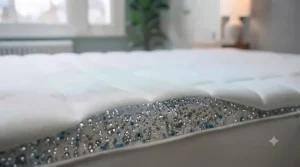
Moisture-wicking fabric is one of the most misunderstood terms in mattress topper marketing, so it’s worth being precise. Genuine moisture-wicking materials don’t just feel cool to the touch — they actively draw liquid sweat away from the skin’s surface and either absorb it into the fibre structure (as wool does) or spread it across a wider surface area to evaporate faster (as eucalyptus and bamboo fibres do).
Based on the spec comparison across this list, wool is the standout performer here: its fibre structure can absorb roughly a third of its own dry weight in moisture before feeling damp, which is why the Woolroom Deluxe Wool Mattress Topper consistently outperforms synthetic alternatives specifically for night sweats rather than general warm-weather comfort. Eucalyptus fibre, used in the Ethical Bedding Eucalyptus Menopause Topper, works differently — its naturally smooth, rounded fibre structure has a larger surface area than cotton, which spreads moisture thinly rather than absorbing it into a wet patch, helping it evaporate faster. Bamboo-derived fabric, as seen in the Panda London Bamboo Memory Foam Topper‘s cover, sits somewhere between the two, offering genuine breathability though generally regarded as less actively moisture-wicking than eucalyptus or wool specifically.
What most buyers overlook is that gel, copper and graphite technologies — while genuinely effective at heat conduction — aren’t moisture-wicking in this fibre-structural sense at all; they manage temperature, not dampness. For anyone whose primary complaint is waking up clammy and damp rather than simply hot, prioritising a genuinely moisture-wicking fabric over a heat-conducting foam is likely to make more practical difference.
Hormonal Sleep Disruption: Why Menopause Wrecks Sleep Beyond Heat
Hormonal sleep disruption during menopause goes well beyond hot flushes, and it’s worth understanding the fuller picture so a cooling topper is seen as one part of a solution rather than a complete fix. Fluctuating oestrogen and progesterone affect sleep architecture directly, not just through overheating — progesterone in particular has a naturally sedative effect, and its decline can make falling and staying asleep genuinely harder even on a cool night.
The NHS notes that difficulty sleeping during perimenopause and menopause is often linked to night sweats, but can also occur independently, and can leave people feeling tired and irritable during the day, which matches what reviewers of cooling toppers frequently describe — genuine relief from overheating, but ongoing sleep fragmentation from other hormonal factors that a topper alone can’t address. This is worth knowing before assuming a topper will solve every aspect of disrupted sleep; it’s a genuinely effective tool for the heat-and-moisture piece of the puzzle, not a treatment for the broader hormonal picture.
What most buyers overlook is that pairing a cooling topper with good sleep hygiene compounds the benefit considerably — consistent bedtimes, reduced evening alcohol and caffeine (both known to worsen hot flushes), and a genuinely dark, cool bedroom all work alongside the topper rather than being replaced by it. For persistent, significantly disruptive sleep problems, it’s worth raising the fuller picture with a GP rather than assuming a bedding change alone will resolve it.
Common Mistakes When Buying a Cooling Mattress Topper
The most frequent mistake, based on aggregated review themes across every product researched for this guide, is buying based on marketing language like “cooling” without checking which specific mechanism is being used — a topper described as cooling because of a blue-tinted cover with no actual gel, graphite or moisture-wicking fibre inside will do very little for genuine night sweats.
A second common error is under-sizing the depth relative to symptom severity — a thin 3cm topper may offer a pleasant surface-level cooling sensation but won’t meaningfully manage a full night of repeated hot flushes the way a deeper, more engineered option like the Simba Hybrid Topper can. Third, many buyers skip checking the sleep trial and return policy entirely, then find themselves stuck with an unsuitable purchase — cooling performance is genuinely individual, so a trial period (like Simba’s 200 nights or Panda’s shorter window) meaningfully reduces this risk. Finally, it’s worth watching for the assumption that a heavier price tag automatically means better cooling; as this guide has shown, a well-chosen £45 copper topper can outperform a poorly-matched £200 option if it’s suited to your actual symptom severity.
Safety, Materials & Certification Guide
When buying any mattress topper that sits directly against your skin for eight hours a night, checking material certifications matters as much as checking the cooling claims. Look for CertiPUR-US certification on any foam-based topper, which confirms the foam is manufactured without ozone depleters, PBDE flame retardants, mercury, lead and other heavy metals, and has low VOC emissions — a standard met by options including the BedStory Gel Infused Memory Foam Topper on this list.
For fabric covers, Oeko-Tex Standard 100 certification confirms the textile has been tested for harmful substances and is safe for direct skin contact, which is particularly relevant given menopause can bring increased skin sensitivity — both the Ethical Bedding Eucalyptus Menopause Topper and Panda London Bamboo Memory Foam Topper carry this certification on their fabric components. Natural wool, as used in the Woolroom Deluxe Wool Mattress Topper, is naturally flame-resistant without chemical treatment, a genuine safety advantage over some synthetic foams that require added flame retardant chemicals to meet UK furniture flammability regulations.
Beyond certification, practical safety comes down to fit and stability — always use the topper’s corner straps as intended to prevent slippage, particularly relevant if night sweats already mean more restless movement during the night, and follow manufacturer airing and washing instructions to prevent mould or mildew building up in a fabric that’s regularly exposed to moisture.

Frequently Asked Questions
❓ What is the best cooling mattress topper for menopause?
❓ Does a cooling mattress topper for night sweats actually work?
❓ What's the difference between cooling and moisture-wicking fabric?
❓ Can a mattress topper help with hot flushes at night?
❓ How long does hormonal sleep disruption from menopause typically last?
Conclusion
There’s no single cooling mattress topper for menopause that suits everyone, and that’s genuinely the most useful thing to take from this guide. If you’re testing the waters, the Silentnight Restore Cooling Copper Topper and BedStory Gel Infused Memory Foam Topper offer real, if modest, relief for under £50. If your symptoms are more persistent, the Panda London Bamboo Memory Foam Topper and Simba Cool Foam Topper strike a comfortable mid-range balance between cooling and everyday comfort. And if night sweats have genuinely disrupted your sleep for months, the engineering in the Simba Hybrid Topper or the natural moisture management of the Ethical Bedding Eucalyptus Menopause Topper and Woolroom Deluxe Wool Mattress Topper represent a meaningfully bigger step up, worth the extra cost for the relief they consistently deliver.
Whichever you choose, remember a topper manages symptoms rather than curing the hormonal cause behind them — pair it with breathable bedding, a cool bedroom, and a conversation with your GP if hot flushes or sleep disruption are significantly affecting your quality of life. Getting the bedding right is a genuinely achievable win while everything else about menopause feels distinctly out of your control.
Recommended for You
- Gel Memory Foam Topper vs Water Cooling Mattress Pad: 7 Picks 2026
- 7 Best Cooling Mattress Pads Under £50 (2026 UK Guide)
- Misting Fan Handheld: 7 Best Cooling Picks for UK Summer 2026
Disclaimer: This article contains affiliate links. As an Amazon Associate, I earn from qualifying purchases. If you purchase products through these links, we may earn a small commission at no additional cost to you.
✨ Found this helpful? Share it with your friends! 💬🤗
