

In This Article
Living in a UK home with low ceilings doesn’t mean you have to sacrifice comfort or style. With the typical British property featuring ceiling heights between 2.3 and 2.4 metres (approximately 7.5 to 8 feet), finding a ceiling fan for low ceilings that’s both safe and effective has become a priority for countless homeowners across the country.
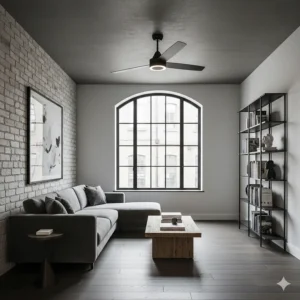
Modern flush mount ceiling fans—also known as hugger ceiling fans or low profile ceiling fans—offer an ingenious solution. These space-saving designs mount directly against your ceiling without requiring a drop rod, ensuring you maintain the crucial safety clearance whilst enjoying efficient air circulation throughout the year.
Whether you’re dealing with a cosy bedroom, a compact kitchen, or a basement conversion, the right ceiling fan for low ceilings can transform your living space. According to recent industry data, properly installed ceiling fans can reduce cooling costs by up to 40% whilst providing year-round comfort through reversible motor technology. That’s particularly valuable in the UK, where summer heatwaves are becoming increasingly common whilst heating costs continue to climb.
In this comprehensive guide, we’ve researched the market extensively to bring you seven outstanding options available on Amazon.co.uk, complete with authentic customer feedback from British buyers, detailed specifications, and honest assessments of each model’s strengths and limitations. Let’s explore how to choose the perfect ceiling fan for your low-ceiling space.
Quick Comparison Table
| Product | Size | Motor Type | Price Range | Key Feature | Rating |
|---|---|---|---|---|---|
| VOLISUN 20″ Flush Mount | 50cm | DC Motor | £80-£95 | RGB Bluetooth Speaker | 4.3/5 |
| NIORSUN Modern Low Profile | 50cm | DC Motor | £75-£90 | App Control | 4.4/5 |
| OUTON 42″ Hugger Fan | 107cm | DC Motor | £110-£135 | 6-Speed Control | 4.5/5 |
| CGSGDK RGB Bladeless | 50cm | DC Motor | £85-£100 | Bluetooth Music Sync | 4.2/5 |
| Fantasia Mayfair 42″ | 107cm | AC Motor | £185-£225 | 10-Year Warranty | 4.7/5 |
| LEDIARY Smart Fan | 50cm | DC Motor | £90-£110 | Voice Control | 4.3/5 |
| Hunter Builder Elite | 132cm | DC Motor | £280-£320 | Premium Quality | 4.8/5 |
💬 Just one click – help others make better buying decisions too!😊
✨ Don’t Miss These Exclusive Deals!
Top 7 Ceiling Fan for Low Ceilings: Expert Analysis
1. VOLISUN 20″ Flush Mount Ceiling Fan with RGB Lights
If you’re seeking a ceiling fan for low ceilings that combines functionality with entertainment features, the VOLISUN 20″ deserves your attention. This compact 50cm model has earned consistent praise from UK buyers for its innovative RGB lighting system and integrated Bluetooth speaker.
Key Specifications:
- Flush mount design with only 18cm ceiling clearance
- Dimmable LED with 3000K-6500K colour temperature range
- 6-speed DC motor operating below 35dB
British customers particularly appreciate the straightforward installation process. One verified purchaser from Manchester noted the fan transforms their low-ceiling bedroom into a “proper entertainment space” without overwhelming the compact dimensions. The RGB lighting syncs with music, creating ambient effects that younger homeowners adore.
✅ Pros:
- Whisper-quiet operation ideal for bedrooms
- Bluetooth speaker eliminates need for separate device
- Memory function remembers last settings
❌ Cons:
- RGB features may not suit traditional décor
- Speaker quality adequate but not audiophile-grade
Price: £80-£95 | Availability: Amazon.co.uk with Prime delivery

2. NIORSUN Modern Low Profile Ceiling Fan
The NIORSUN Modern represents excellent value for UK homeowners seeking smart home integration in their ceiling fan for low ceilings. This 50cm flush mount model features app control alongside traditional remote operation.
Key Specifications:
- Ultra-slim 17cm profile from ceiling to blade
- Stepless dimming from 20%-100%
- Reversible motor for summer cooling and winter heat circulation
What sets this model apart is its genuine smart functionality. Unlike basic remote-controlled fans marketed as “smart,” the NIORSUN connects via Bluetooth for genuine app control. UK customers highlight the convenience of adjusting settings from their smartphone, particularly beneficial for mobility-impaired users or those with loft bedrooms.
The reversible function proves invaluable during British winters. By running clockwise at low speed, the fan gently redistributes warm air trapped at ceiling level, potentially reducing heating costs by up to 10%—a feature supported by Department of Energy research.
✅ Pros:
- True app connectivity via Bluetooth
- Reversible for year-round comfort
- Competitive pricing under £90
❌ Cons:
- Requires smartphone for full feature access
- Bluetooth range limited to same room
Price: £75-£90 | Availability: Amazon.co.uk with free UK delivery
3. OUTON 42″ Hugger Ceiling Fan with Light
Stepping up in size, the OUTON 42″ (107cm) suits medium-sized rooms whilst maintaining the low-profile design essential for compact ceiling heights. This hugger ceiling fan combines robust air movement with integrated LED lighting.
Key Specifications:
- 6-speed settings for precise airflow control
- Dual-colour reversible blades (black/wood grain)
- Energy-efficient DC motor rated at just 30W
British homeowners with living rooms or larger bedrooms consistently praise this model’s airflow capacity. Despite the flush mount design—which typically compromises air movement compared to drop-rod installations—the OUTON 42″ delivers impressive circulation for spaces up to 20 square metres.
The dual-finish blades offer clever versatility. Simply flip them during installation to match your existing décor, whether contemporary black or rustic wood aesthetic. One London-based reviewer mentioned this feature saved them from purchasing a completely different fan after redecorating.
✅ Pros:
- Powerful airflow for larger low-ceiling rooms
- Reversible blade aesthetics
- 1/2/4-hour timer function
❌ Cons:
- Larger footprint requires 107cm ceiling clearance
- Higher price point around £110-£135
Price: £110-£135 | Availability: Amazon.co.uk, typically dispatches within 2 days
4. CGSGDK RGB Bladeless Ceiling Fan
The CGSGDK RGB brings innovative bladeless technology to the ceiling fan for low ceilings category. This 50cm semi-enclosed design prioritises safety—particularly valuable for families with young children or in rooms with furniture positioned near the fan.
Key Specifications:
- Semi-enclosed blade design minimises injury risk
- Bluetooth music sync with rhythm-responsive lighting
- Stepless colour temperature adjustment
UK safety regulations recommend maintaining 2.3 metres clearance between floor and fan blades. The CGSGDK’s partially enclosed design provides additional peace of mind in children’s bedrooms or playrooms. One Glasgow parent noted their toddler couldn’t reach the blades even standing on furniture—though we certainly don’t recommend testing that!
The music synchronisation feature genuinely works well. When connected via Bluetooth, the RGB lights pulse and change colour in rhythm with your music, creating an immersive atmosphere for gatherings or movie nights in low-ceiling spaces.
✅ Pros:
- Enhanced safety with semi-enclosed blades
- Music-reactive lighting effects
- 3-year warranty coverage
❌ Cons:
- Slightly reduced airflow compared to open-blade designs
- RGB effects may become tiresome for some users
Price: £85-£100 | Availability: Amazon.co.uk with Prime delivery
5. Fantasia Mayfair 42″ Polished Chrome
For homeowners seeking premium quality backed by British engineering heritage, the Fantasia Mayfair 42″ stands unrivalled. Fantasia has pioneered the UK ceiling fan market since 1985, earning a reputation for exceptional quality and legendary after-sales support.
Key Specifications:
- Double-sealed bearings for whisper-quiet operation
- Flush mounting kit sold separately (fan arrives with drop rod)
- 10-year motor warranty demonstrates build confidence
The Fantasia Mayfair represents investment-grade quality. Whilst the initial outlay sits higher than Chinese imports at £185-£225, you’re purchasing engineering that owners report running flawlessly after 20+ years. The double-sealed bearings eliminate the wobble and noise that plague cheaper alternatives.
British buyers consistently highlight Fantasia’s customer service. Spare parts remain available decades after purchase—crucial for sustainable consumption. One Devon homeowner mentioned contacting Fantasia for a replacement part for their 1993 fan and receiving helpful guidance immediately.
Note that the Mayfair requires purchasing a separate flush mounting kit (approximately £25-£35) for low-ceiling installation, as it ships standard with a drop rod.
✅ Pros:
- British engineering with 10-year warranty
- Genuinely silent operation on low settings
- Exceptional build quality and longevity
❌ Cons:
- Higher investment £185-£225
- Flush kit sold separately
- Limited “smart” features compared to modern alternatives
Price: £185-£225 (plus £25-£35 for flush kit) | Availability: Specialist UK retailers and universal-lighting.co.uk
6. LEDIARY Smart Ceiling Fan with Voice Control
The LEDIARY Smart brings comprehensive smart home integration to the ceiling fan for low ceilings segment. This 50cm flush mount model works seamlessly with Amazon Alexa and Google Assistant for hands-free operation.
Key Specifications:
- WiFi connectivity for remote access anywhere
- Voice commands via Alexa/Google Assistant
- Independent control of fan speed and lighting
Voice control transforms daily interaction with your ceiling fan. Simply say “Alexa, set bedroom fan to medium” or “Hey Google, turn ceiling fan off” for instant response. UK customers with mobility challenges particularly value this accessibility feature, eliminating the need to locate remotes or reach wall switches.
The LEDIARY also enables genuine remote access when away from home. Check and adjust your fan settings from anywhere with internet connectivity—useful for pet owners wanting to ensure Fido stays cool during unexpected warm spells whilst they’re at work.
✅ Pros:
- Full smart home integration
- Remote access via smartphone app
- Scheduling and automation capabilities
❌ Cons:
- Requires stable WiFi connection
- Initial setup slightly more complex than basic models
- Occasional connectivity issues reported by some users
Price: £90-£110 | Availability: Amazon.co.uk with Prime delivery
7. Hunter Builder Elite 132cm (Premium Choice)
For those with slightly higher ceilings who refuse to compromise on performance, the Hunter Builder Elite represents American ceiling fan craftsmanship at its finest. Hunter’s 140-year heritage delivering residential comfort shines through this 132cm (52-inch) model.
Key Specifications:
- WhisperWind motor operates below 30dB even at high speed
- Installs flush-mount despite 132cm blade span
- Lifetime motor warranty (UK models)
The Hunter Builder Elite delivers commercial-grade airflow in residential packaging. Despite flush-mount installation, the carefully engineered blade pitch and motor combination moves more air than cheaper 132cm alternatives using drop rods. UK customers with open-plan living areas or large bedrooms report exceptional performance.
Yes, £280-£320 represents significant investment for a ceiling fan. However, Hunter’s lifetime warranty and documented reliability make this a genuine buy-it-for-life purchase. One Somerset homeowner noted their 1987 Hunter fan still operates flawlessly after 39 years—though that model predates the Builder Elite line.
Hunter fans also hold resale value remarkably well should you move house. Estate agents often highlight quality ceiling fans as home features that appeal to discerning buyers.
✅ Pros:
- Exceptional airflow even in flush-mount configuration
- Lifetime motor warranty
- Premium materials and construction
❌ Cons:
- Premium pricing £280-£320
- Requires 132cm ceiling clearance radius
- Limited “smart” features on base model
Price: £280-£320 | Availability: Amazon.co.uk and specialist retailers
Understanding Ceiling Height Requirements and Safety Standards
Before selecting your ceiling fan for low ceilings, understanding UK safety requirements proves essential. Whilst Britain doesn’t enforce specific legal minimums for ceiling fan installation heights, European safety standard EN 60335-2-80 provides crucial guidance that UK retailers and installers follow.
The 2.3-Metre Rule
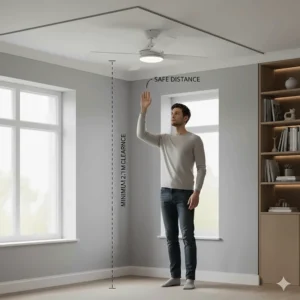
European electrical safety standards specify that fan blades should maintain at least 2.3 metres (7.5 feet) clearance from the floor to the lowest point of the moving blades. This requirement exists for good reason—it prevents accidental contact whilst allowing adequate headroom for occupants.
For context, typical British homes feature ceiling heights between 2.3 and 2.4 metres in new builds, with older Victorian and Edwardian properties sometimes reaching 2.6 to 3 metres. Modern apartments and loft conversions frequently sit at the lower end of this spectrum, making flush mount designs essential rather than optional.
Calculating Your Clearance
Here’s a straightforward method for determining whether a ceiling fan for low ceilings will work safely in your space:
- Measure your ceiling height from finished floor to ceiling surface
- Subtract 2.3 metres (minimum safe clearance)
- The remainder represents your maximum fan depth allowance
For example, a room with 2.4-metre ceilings provides just 10cm (4 inches) for fan depth between ceiling and blade level. This calculation explains why flush mount designs typically feature profiles between 15-20cm—they’re engineered specifically for these constrained dimensions.
Beyond Basic Clearance
Safety clearance isn’t solely about floor-to-blade distance. Consider these additional factors:
Furniture Positioning: Beds, sofas, and tall storage units reduce effective floor height. If your bed frame plus mattress reaches 80cm height, you’ve effectively reduced your clearance to 1.5 metres at that location.
Ceiling Slope: Angled ceilings common in loft conversions require special consideration. The lowest point of the ceiling determines your clearance calculation, not the highest point.
Building Regulations: Part K (Protection from Falling) of UK Building Regulations addresses overhead clearances in habitable spaces, though it doesn’t specifically mandate ceiling fan heights. Local building control may provide additional guidance for your specific circumstances.
The Health and Safety Executive recommends maintaining clear pathways beneath all rotating equipment in domestic settings—common sense that extends to ceiling fans even in private homes.
How to Choose the Right Ceiling Fan for Low Ceilings
Selecting the perfect ceiling fan for low ceilings involves balancing multiple factors beyond simple safety clearance. Let’s explore the critical considerations that separate excellent choices from costly mistakes.
Motor Technology: DC vs AC
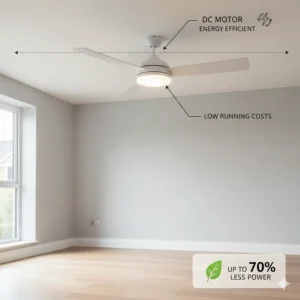
Modern ceiling fans for low ceilings typically feature either Direct Current (DC) or Alternating Current (AC) motors. The distinction matters considerably for British homeowners concerned with energy bills and noise levels.
DC Motors offer compelling advantages:
- Consume 40-70% less electricity than AC equivalents
- Operate virtually silently (often below 30dB)
- Enable more precise speed control (typically 6-8 settings)
- Lighter weight reduces stress on ceiling mounting
AC Motors retain specific benefits:
- Generally more affordable initially
- Time-tested reliability and longevity
- Easier and cheaper to repair if issues arise
- Familiar technology for electricians
For ceiling fans in bedrooms where noise matters tremendously, DC motors prove worth the additional investment. However, AC motors in living areas or kitchens where ambient noise masks fan operation represent perfectly viable choices.
Blade Size and Room Dimensions
Matching fan size to room dimensions ensures optimal performance. Industry guidelines suggest:
- Up to 10 m²: 76-91cm (30-36 inch) fans
- 10-16 m²: 107cm (42 inch) fans
- 16-20 m²: 122cm (48 inch) fans
- 20-30 m²: 132-137cm (52-54 inch) fans
Larger isn’t always better. Oversized fans in compact rooms create uncomfortable drafts and appear visually overwhelming. Conversely, undersized fans run continuously at maximum speed without effectively cooling the space—noisy, inefficient, and frustrating.
Remember that flush mount installations sacrifice some airflow efficiency compared to drop-rod configurations. Consider selecting one size category larger than room calculations suggest to compensate for this reduction.
Lighting Integration
Integrated LED lighting in your ceiling fan for low ceilings offers practical advantages, particularly in rooms where traditional pendant lights would hang too low. Modern LED arrays provide:
- Adjustable colour temperature: Transition from warm 3000K for evenings to cool 6500K for daytime tasks
- Dimming capabilities: Create appropriate ambience for different activities
- Energy efficiency: LED bulbs consume fraction of electricity compared to traditional bulbs whilst lasting 15,000+ hours
- Space-saving: Eliminate need for separate light fixtures
However, integrated lights add complexity. If the LED module fails after warranty expiration, repairs may prove expensive or impossible. Consider whether separately controlled lighting offers more flexibility for your specific needs.
Smart Features vs Simplicity
The ceiling fan market has embraced smart home technology enthusiastically—sometimes excessively. Before paying premium pricing for connectivity features, honestly assess which capabilities you’ll actually use:
Genuinely Useful Smart Features:
- Voice control via Alexa/Google (hands-free operation)
- Scheduling (automatic operation based on time/temperature)
- Remote access (checking status when away from home)
Often Unnecessary Features:
- RGB colour-changing effects (novelty wears off quickly)
- Bluetooth music speakers (rarely match dedicated audio equipment)
- Complex app interfaces (usually slower than pressing remote button)
Many UK homeowners report that whilst smart features seemed appealing initially, they eventually revert to using the included remote for 95% of interactions. Don’t overpay for capabilities you won’t regularly employ.
Reversible Motor Function
This feature deserves special attention for British homeowners. Reversible motors allow you to change blade rotation direction seasonally:
Summer (Counter-clockwise): Creates downdraft pushing cool air toward occupants
Winter (Clockwise): Generates updraft that redistributes warm air trapped at ceiling level
Research by the Florida Solar Energy Center demonstrates that properly utilised ceiling fans can reduce heating costs by 10-15% through improved air circulation—particularly valuable given UK energy prices. For ceiling fans in rooms with radiators or underfloor heating, reversible function essentially provides two appliances in one.
Installation Considerations for UK Homes
Installing a ceiling fan for low ceilings in British properties presents unique challenges compared to American homes where ceiling fans enjoy widespread adoption. Understanding these distinctions prevents costly mistakes and safety hazards.
Electrical Requirements and Building Regulations
UK electrical installations must comply with BS 7671 wiring regulations (the IET Wiring Regulations, 18th Edition as of 2026). Key considerations for ceiling fan installation include:
Circuit Compatibility: Most ceiling fans connect to existing lighting circuits, typically rated at 6 amps. Verify your circuit can handle the additional load—though modern energy-efficient fans rarely present issues here.
Switching Arrangements: Unlike American homes where ceiling fans commonly connect to separate wall switches for fan and light, UK installations often require more creative solutions. Consider purchasing fans with remote controls as standard rather than attempting complex rewiring.
Part P Compliance: Bathroom ceiling fan installations fall under Part P of Building Regulations, requiring either competent person certification or Building Control notification. Kitchen and bedroom installations don’t typically trigger these requirements, but always consult a qualified electrician if uncertain.
Notifiable Work: Any new circuits or consumer unit work requires notification to local Building Control. Simple replacement installations on existing circuits generally don’t require notification, but check with your local authority.
Ceiling Structure and Support
British ceiling construction differs substantially from timber-framed American homes. Most UK properties feature either:
Plasterboard on Timber Joists: Common in modern construction and upper floors of older properties
Lath and Plaster: Found in Victorian/Edwardian buildings
Concrete: Typical in flats and modern apartment buildings
Each requires different mounting approaches:
Timber Joists: Ideal for ceiling fan installation. The fan must attach directly to a joist or via a purpose-made ceiling fan brace spanning between joists. Standard plasterboard alone cannot support ceiling fan weight and vibration.
Lath and Plaster: Often conceals timber joists, but the plaster itself proves too fragile for mounting. Locate joists with a stud finder and mount to them directly, or install spreading batten between joists.
Concrete Ceilings: Require specialist fixings rated for dynamic loads. Chemical anchors or expansion bolts specifically designed for ceiling applications prove essential—never use standard wall plugs.
Critical Safety Note: Standard lighting fixture boxes and fixings are NOT rated for ceiling fan installation. Ceiling fans generate dynamic (moving) loads and vibration that exceed static light fixture requirements. Always use ceiling-fan-rated mounting hardware.
DIY vs Professional Installation
Whilst basic DIY skills suffice for many home improvements, ceiling fan installation straddles the line between simple and complex. Consider professional installation if:
- You’re uncomfortable working at height on ladders
- The existing electrical installation requires modification
- Your ceiling structure is unusual or uncertain
- The property is rented (landlord’s approval and proper installation likely required)
Professional electricians familiar with ceiling fan installations typically charge £80-£150 for straightforward installations, plus £50-£100 for mounting hardware and ceiling modifications if required. This investment ensures safety compliance and often comes with workmanship warranty.
Many UK homeowners successfully install ceiling fans DIY, particularly replacement installations where suitable mounting hardware already exists. If attempting DIY installation, always isolate power at the consumer unit (not just the switch), verify isolation with a proper voltage tester, and follow manufacturer instructions meticulously.
Maximising Performance and Energy Efficiency
Purchasing the right ceiling fan for low ceilings represents just the first step. Proper operation and maintenance ensure you extract maximum value from your investment whilst minimising running costs.
Seasonal Operation Strategies
British climate variability demands flexible cooling and heating strategies. Ceiling fans excel at both when operated correctly:
Summer Cooling (May-September):
- Operate counter-clockwise to create downdraft
- Position fan speed according to activity (higher for active use, lower for sleeping)
- Combine with open windows during cool evenings for natural ventilation
- Remember: fans cool people, not rooms—only run when space is occupied
Winter Heating (October-April):
- Switch to clockwise rotation at low speed
- Run during heating periods to redistribute warm air
- Particularly effective with underfloor heating or wall-mounted radiators
- Consider timer operation to coincide with central heating schedules
One Birmingham homeowner reported reducing winter heating bills by approximately £15-£20 monthly after implementing ceiling fan winter circulation—modest savings that compound annually whilst improving comfort.
Maintenance and Cleaning
Ceiling fans for low ceilings require minimal maintenance, but regular attention extends lifespan and maintains efficiency:
Monthly Tasks:
- Dust blades with microfibre cloth or purpose-made fan duster
- Check for visible wobbling or unusual noises
- Verify remote batteries remain charged (if applicable)
Quarterly Tasks:
- Clean motor housing with damp cloth (power isolated)
- Inspect mounting hardware for looseness
- Test reverse function operates correctly
Annual Tasks:
- Deep clean blades with mild detergent solution
- Check blade tightness and balance
- Lubricate bearing if manufacturer specifies (most modern DC motors are sealed and don’t require lubrication)
British homes generate considerable dust from carpets, textiles, and everyday living. Clean fan blades significantly improve airflow efficiency—one study demonstrated that heavily soiled blades reduce air movement by up to 20% compared to clean blades.
Energy Consumption Reality Check
Modern DC motor ceiling fans consume remarkably little electricity. Let’s examine realistic running costs based on current UK electricity prices (approximately £0.24 per kWh as of January 2026):
Typical 30W DC Motor Fan:
- 8 hours daily operation = 0.24 kWh
- Daily cost: £0.06
- Monthly cost (30 days): £1.80
- Annual cost: £21.60
Comparable 65W AC Motor Fan:
- 8 hours daily operation = 0.52 kWh
- Daily cost: £0.12
- Monthly cost: £1.44
- Annual cost: £46.80
The DC motor saves approximately £25 annually in direct operating costs—enough to offset its higher purchase price within 2-3 years whilst providing quieter operation and better speed control throughout its service life.
Compare these costs to air conditioning, which typically consumes 800-1200W hourly (£0.19-£0.29 per hour at current rates). Ceiling fans cost approximately 8-10 times less to operate than portable air conditioning units whilst providing acceptable comfort during typical British summer conditions.
Common Mistakes to Avoid
Learning from others’ experiences prevents costly errors when selecting and installing ceiling fan for low ceilings. Here are mistakes British homeowners frequently report:
Prioritising Aesthetics Over Safety
The most attractive ceiling fan proves worthless if it hangs dangerously low or creates uncomfortable drafts. Always verify safety clearances before considering design aesthetics. One Manchester homeowner ruefully reported purchasing a “gorgeous” art-deco style fan that hung 15cm too low for their 2.3-metre ceiling—discovering this only after opening the packaging and voiding returns.
Ignoring Noise Ratings
Decibel ratings matter tremendously for bedroom installations. Fans rated above 40dB at low speed will likely disturb sleep, particularly for sensitive sleepers. Look for “whisper-quiet” or “silent operation” claims backed by specific dB ratings below 35dB—though bear in mind these measurements typically occur under ideal laboratory conditions.
Inadequate Mounting Hardware
Using lighting-grade electrical boxes or standard wall plugs for ceiling fan mounting invites disaster. The tragic ceiling fan failures occasionally reported in news media almost invariably trace back to inadequate mounting hardware unable to withstand vibration and dynamic loads. Always use ceiling-fan-rated mounting hardware explicitly designed for the purpose.
Forgetting About Winter Operation
Many UK buyers purchase ceiling fans solely for summer cooling, forgetting the valuable winter heating distribution benefits. When comparing models, ensure reversible motor function is included—it costs manufacturers virtually nothing additional but provides substantial year-round value for homeowners.
Overlooking Warranty Coverage
Extended warranties indicate manufacturer confidence in product reliability. Be suspicious of ceiling fans offering only 1-year coverage—they’re essentially admitting expected short service life. Look for minimum 2-3 year comprehensive warranties, with premium brands like Fantasia offering 10-year motor coverage.
Mismatching Fan Size to Room
Installing oversized fans in compact rooms creates uncomfortable drafts whilst undersized fans run constantly at maximum speed without achieving desired airflow. Following the room size guidelines provided earlier prevents this common error.

Budget Considerations and Long-term Value
Initial purchase price represents just one component of total ceiling fan ownership costs. Savvy British homeowners evaluate long-term value through comprehensive analysis.
True Cost of Ownership
Consider this 10-year ownership comparison between budget and premium ceiling fan options:
Budget Option (£80 initial cost):
- Purchase price: £80
- Installation (DIY): £0
- Annual energy (65W AC motor): £46.80
- Replacement at 5 years: £80
- 10-year electricity: £468
- Total 10-year cost: £628
Premium Option (£220 initial cost):
- Purchase price: £220
- Professional installation: £100
- Annual energy (30W DC motor): £21.60
- Expected 15+ year lifespan: £0 replacement
- 10-year electricity: £216
- Total 10-year cost: £536
The premium option saves £92 over 10 years whilst providing superior performance, quieter operation, and eliminating hassle of premature replacement. This analysis doesn’t even account for the premium model’s likely resale value or continued service beyond year 10.
When Budget Options Make Sense
Premium isn’t always optimal. Budget ceiling fans prove appropriate for:
- Rental properties: Where landlords bear costs but tenants receive benefits
- Temporary housing: Short-term occupancy before planned moves
- Secondary spaces: Guest rooms, storage areas, or workshops where occasional use doesn’t justify premium investment
- Trial purposes: Testing ceiling fan benefits before committing to whole-home installation
However, for primary living spaces where you’ll spend thousands of hours annually, premium options typically deliver superior value despite higher initial outlay.
Shopping Strategy
Best Time to Buy:
- May-June: Pre-summer demand drives sales and discounts
- September-October: End-of-season clearances on seasonal stock
- Black Friday: Typically late November, though discounts on quality models often modest
- January Sales: Post-Christmas inventory clearance
Where to Buy:
- Amazon.co.uk: Largest selection, customer reviews, convenient returns (but verify seller reputation)
- Specialist Retailers: Universal Lighting, The Ceiling Fan Company offer expert advice
- DIY Chains: B&Q, Wickes stock limited ranges, usually budget-to-mid-range options
- Direct from Manufacturers: Fantasia and other UK brands offer full catalogues with expert support
Always verify product reviews from verified UK purchasers rather than overseas reviews, as electrical specifications and customer service experiences differ regionally.
Alternative Cooling Solutions for Low Ceilings
Whilst ceiling fans for low ceilings provide excellent value for most British homes, alternative or complementary cooling strategies deserve consideration for specific circumstances.
Tower Fans and Pedestal Fans
Freestanding fans offer zero installation requirements and complete portability. Modern tower fans consume 20-40W and provide directional cooling without permanent installation. However, they occupy valuable floor space, generate noise similar to ceiling fans, and can’t reverse for winter heating distribution.
Consider pedestal or tower fans for:
- Rental properties where permanent modifications aren’t permitted
- Temporary cooling needs during infrequent heatwaves
- Supplementing ceiling fans in particularly hot spaces
Portable Air Conditioning
For truly exceptional heat events like the unprecedented 40°C UK temperatures recorded in July 2022, portable air conditioning units provide relief ceiling fans cannot match. However, they consume 10-15 times more electricity and cost £250-£600 for decent models.
Portable AC suits:
- Occupants with medical conditions requiring specific temperature control
- Home offices during peak productivity hours
- Bedroom cooling for quality sleep during extreme heatwaves
Most UK homeowners find ceiling fans sufficient for typical British summers, reserving air conditioning for exceptional circumstances if at all.
Natural Ventilation Strategies
Combining ceiling fans with strategic natural ventilation multiplies effectiveness:
Cross-Ventilation: Opening windows on opposite sides of dwelling creates natural airflow that ceiling fans amplify
Night Purging: Opening windows overnight when outdoor temperatures drop below indoor levels, then closing them during the day
Solar Shading: External shutters or blinds prevent solar heat gain more effectively than internal curtains
Research by the Building Research Establishment (BRE) demonstrates that combining ceiling fans with appropriate natural ventilation strategies maintains acceptable comfort during 95% of typical UK summer conditions without air conditioning.

Frequently Asked Questions
❓ How low can ceiling height be for flush mount ceiling fans?
❓ Do hugger ceiling fans provide less airflow than standard drop-rod fans?
❓ Can I install ceiling fans in rooms with sloped or vaulted ceilings?
❓ How much does it cost to run a ceiling fan for low ceilings in the UK?
❓ What's the difference between hugger fans and flush mount ceiling fans?
Conclusion: Choosing Your Perfect Low-Ceiling Solution
Finding the right ceiling fan for low ceilings doesn’t require compromising comfort, safety, or style. British homeowners now enjoy extensive options that combine flush-mount designs with sophisticated features like DC motor efficiency, smart home integration, and year-round reversible operation.
Your perfect choice depends upon specific circumstances: room dimensions, ceiling height, existing décor, smart home preferences, and budget considerations. The seven models we’ve examined span the spectrum from budget-friendly feature-packed options under £100 to premium British-engineered solutions exceeding £200—each offering distinct advantages for different situations.
Remember these key takeaways:
Safety comes first. Verify that any ceiling fan maintains minimum 2.3-metre clearance from floor to blades, use proper ceiling-fan-rated mounting hardware, and comply with UK electrical regulations.
Size matters. Match fan diameter to room dimensions rather than simply selecting the largest fan that physically fits. Proper sizing ensures optimal airflow efficiency and visual proportion.
DC motors deliver value. The electricity savings, quieter operation, and precise speed control justify modest price premiums within just 2-3 years whilst enhancing daily comfort.
Reversible function provides year-round benefits. Winter heat redistribution potentially saves 10-15% on heating costs—substantial given UK energy prices.
Installation quality matters tremendously. Whether DIY or professional, proper mounting prevents the safety hazards and wobbling that plague inadequate installations.
The ceiling fans for low ceilings now available on the UK market represent remarkable engineering achievements—delivering powerful airflow, elegant aesthetics, and impressive energy efficiency in compact packages our Victorian ancestors would marvel at. Whether you choose the budget-conscious VOLISUN at under £100, the premium British-built Fantasia Mayfair, or the cutting-edge smart capabilities of the LEDIARY, you’re investing in comfort technology that pays dividends for years to come.
Take accurate measurements, consider your priorities honestly, and select the ceiling fan for low ceilings that best suits your specific needs. Your more comfortable home awaits.
Recommended for You
- 7 Best DC Motor Ceiling Fans UK 2026 – Save 70% Energy
- 7 Best Ceiling Fan with Light UK 2026
- 7 Best Ceiling Fans UK 2026 | Energy-Efficient Expert Reviews
Disclaimer: This article contains affiliate links. If you purchase products through these links, we may earn a small commission at no additional cost to you. Prices shown are approximate and may vary.
✨ Found this helpful? Share it with your mates! 💬🤗
