

In This Article
Let’s be honest — nobody designs a building site with human comfort in mind. You’ve got black tarmac radiating heat upward, corrugated metal panels bouncing it sideways, and a hard hat doing its level best to slow-cook your brain. Add a hi-vis jacket on top and you’ve essentially built yourself a personal greenhouse. British summers used to be the butt of the joke. They’re not anymore.
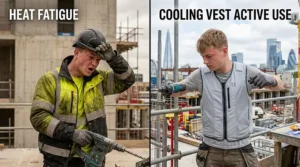
Summer 2025 was one of the warmest on record, and the Met Office expects hotter, longer heatwaves through the rest of this decade. For construction workers — the people doing the heaviest physical work, outside, for the longest hours — that’s not just uncomfortable. It’s dangerous.
A cooling vest for construction workers is, at its core, a wearable personal climate system. Depending on the type, it either absorbs heat through evaporation, locks cold via phase-change materials, or actively circulates chilled air or water around your torso. The best ones are lightweight enough to wear under PPE all day without slowing you down. The worst ones — and there are a few — are little more than damp polyester shirts with inflated price tags.
This guide cuts through the noise. We’ve researched seven real products available on Amazon.co.uk, cross-referenced HSE guidance, and looked at what UK construction workers are actually saying in reviews. Whether you’re a groundworker in Birmingham, a roofer in Edinburgh, or a site manager on a Manchester residential development, there’s a vest in this list for you.
Quick Comparison: Top 7 Cooling Vests for UK Construction Workers
| Product | Type | Cooling Duration | Best For | Price Range |
|---|---|---|---|---|
| Ergodyne Chill-Its 6665 | Evaporative polymer | Up to 4 hours | All-round site work | Under £40 |
| GYZOUKA Fan Cooling Vest | Fan-powered (USB) | Battery-dependent | High-heat prolonged shifts | £30–£55 |
| TBRFP Evaporative Vest | Water-activated PVA | 2–4 hours | Budget buyers, outdoor work | Under £25 |
| TAILIKANG Evaporative Vest | Water-activated fabric | 2–3 hours | Casual outdoor labouring | Under £20 |
| Mepase Ice Pack Vest (2-pack) | Ice pocket vest | 1.5–3 hours | Value teams & pairs | Under £35 |
| Oreq Water Circulation Vest | Water circulation pump | Extended with refill | Premium continuous cooling | £40–£75 |
| Industrial Vortex Tube Vest | Compressed air vortex | Continuous (air-fed) | Confined spaces, welders | £60–£120+ |
What the table tells you: Evaporative vests dominate the budget end — they’re cheap, no-power-required, and genuinely effective on warm dry days. Fan-powered and circulation vests cost more but work in any humidity. The vortex tube option is a different beast entirely — not for your average groundworker, but extraordinary if you’re working in sealed industrial spaces where no other cooling method is practical.
💬 Just one click — help others make better buying decisions too! 😊
✨ Don’t Miss These Exclusive Deals!
🔍 Take your workwear to the next level with these expert-selected cooling vests. Click any highlighted product name to check current pricing and availability on Amazon.co.uk — your body temperature will thank you before lunchtime.
Top 7 Cooling Vests for Construction Workers: Expert Analysis
1. Ergodyne Chill-Its 6665 Evaporative Cooling Vest
Ergodyne’s Chill-Its 6665 is the workhorse of the cooling vest world — trusted by outdoor professionals across the US for years and now well-established on Amazon.co.uk. The outer layer is quilted 100% nylon with mesh side panels; inside, polymer-embedded fabric absorbs water and releases it slowly through evaporation. Soak it for 2–5 minutes in cold water, wring it out, and you’ve got up to four hours of cooling relief — all without cables, batteries, or faffing about with ice cubes at 7am.
What makes it genuinely useful for UK construction sites is the water-repellent interior lining, which keeps your shirt reasonably dry while the outside does the evaporating. The hi-vis lime colourway is particularly sensible for site workers who need to meet visibility requirements. Sizing runs from Medium to 3XL, and the zipper closure makes it fast to get on and off during breaks.
There’s an honest caveat, though: UK buyers have noted it works best on warmer, lower-humidity days — say, 22–30°C with a bit of a breeze. On grey, muggy days (which, let’s face it, British summer specialises in), the evaporation slows and so does the cooling effect. Still, for the price, it’s remarkably capable kit.
✅ Lightweight and packable — fits under a hi-vis jacket
✅ No batteries or power source needed
✅ Reusable indefinitely with a simple resoak
❌ Reduced effectiveness in high humidity
❌ Vest exterior stays damp to the touch
Price range: under £40. Genuinely good value for the cooling duration you get.
2. GYZOUKA Cooling Fan Vest with Reflective Stripes
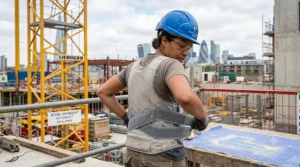
This is where things get a bit more technical. The GYZOUKA fan cooling vest runs two removable USB-powered fans — positioned at the back and shoulder — that pull air through the vest’s polyester shell, evaporating sweat and creating a personal wind-tunnel effect. It’s USB rechargeable via a power bank (not included — you’ll need to buy that separately, which is worth flagging before you get on site and realise your vest is essentially a gilet).
The reflective shoulder stripes are a smart touch. On UK construction sites, high-visibility compliance isn’t optional, and having your cooling gear already featuring reflective material means one less layer of faff. Made from breathable polyester, it’s sun-resistant and lighter than it looks.
The key trade-off versus evaporative vests: it actually works in humid conditions. If you’re in a drainage ditch on a muggy August afternoon in Bristol, evaporation is your enemy — fans are your friend. Battery life varies depending on the power bank you pair it with, but buyers report a comfortable full shift on a decent 10,000mAh bank.
UK site note: you’ll want a rugged case for your power bank if it’s going to live in a tool pocket all day. A few UK buyers mentioned dust ingress in the fan housings after several months, which is worth being aware of on dusty demolition or groundwork sites.
✅ Works regardless of humidity
✅ Reflective stripes aid site visibility compliance
✅ Fans are removable for washing
❌ Requires a separate power bank (additional cost)
❌ Fan housing can accumulate dust on dry sites
Price range: £30–£55. Mid-range cost, but the added functionality justifies it if you’re on a long, humid shift.
3. TBRFP Evaporative PVA Cooling Vest
For builders watching the budget, the TBRFP evaporative vest is the one to consider first. It uses water-activated PVA-style fabric that absorbs a significant volume of water and releases it gradually through evaporation — the same principle as sweating, but with the vest doing the work rather than your body. Soak it in cold water (tap water is fine, no ice needed), wring it out until it’s no longer dripping, and you’re good.
It’s unisex and fits most body types up to 90kg without restriction. For someone doing lighter construction work — a labourer on a landscaping job, say, or a traffic management operative baking in the summer sun on a road closure — this is an honest, practical option that doesn’t require you to spend a fortune.
Where it falls short is durability. At this price point, the stitching and fabric aren’t engineered for daily punishment, and UK buyers note it’s better as a personal purchase than a fleet buy for an entire site crew. Still, for the money, it delivers genuine cooling for two to four hours per soak.
✅ Very affordable — under £25
✅ No power source required
✅ Reusable — just resoak and go
❌ Less durable than premium alternatives
❌ Feels visibly damp against your skin
Price range: under £25. A solid starter vest for individuals who want to test the concept before committing to a pricier model.
4. TAILIKANG Adjustable Evaporative Cooling Vest
Listed on Amazon.co.uk in March 2026, the TAILIKANG vest is a newer entrant with an adjustable strap design that makes sizing genuinely flexible — useful for site crews where multiple workers might share equipment, or where workers are wearing bulkier PPE underneath. The water-activated fabric works similarly to the TBRFP model above, soaking up cold tap water and releasing it gradually.
The listed application scenarios include workshop welding, kitchen environments, and construction — which tells you it’s designed with workers in mind rather than joggers. The adjustable closure means you can loosen it over a hi-vis layer or tighten it underneath for more direct skin contact when maximum cooling is needed.
At this price point, it’s firmly in the casual outdoor labouring category. It’s not going to outperform a polymer-embedded vest from Ergodyne or a fan-powered model, but for a groundworker doing a few hot weeks in summer, it does what it says on the tin.
✅ Adjustable fit works across sizes
✅ Suitable for use under or over PPE layers
✅ Simple activation — cold tap water is all you need
❌ Shorter effective cooling window than premium evaporative vests
❌ Limited UK customer review data at the time of writing
Price range: under £20. Best for individual purchase rather than site fleet.
5. Mepase Ice Vest Cooling Vest with Ice Packs (2-Pack)
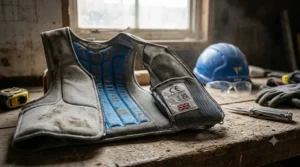
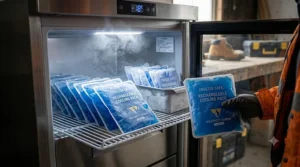
Here’s the clever bit: the Mepase listing on Amazon.co.uk comes as a two-pack, which immediately makes it appealing for small contractors or working pairs. Each vest features multiple interior pockets — on the back and sides of the torso — designed to hold the included ice packs. Load up the pockets in the morning from a cool box, and you’ve got active cold therapy sitting against your core for the best part of a morning shift.
The phase-change logic here is simple: ice absorbs heat as it melts, and your body benefits from the extraction of that heat. Unlike evaporative vests, this approach works regardless of humidity or wind conditions. The trade-off is the logistics — you need ice packs, you need a cool box, and you need somewhere to refreeze them at lunchtime (or a second set to swap in).
For site managers, this two-pack value proposition is the selling point. Buy two sets, freeze overnight, swap at lunch. The vest itself is breathable and lightweight enough to wear under a hi-vis without becoming unbearable.
✅ Two-pack value — excellent for working pairs
✅ Effective in any weather or humidity conditions
✅ No power source needed
❌ Requires pre-frozen ice packs and a cool box on site
❌ Cooling duration limited to pack melt time (~1.5–3 hours)
Price range: under £35 for both. Exceptional value if you factor in getting two functional vests.
6. Oreq Water Circulation Cooling Vest with Self-Suction Pump
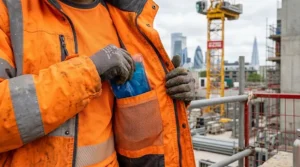
This is where we move from “budget cooling gear” into “professional heat management.” The Oreq water circulation vest connects to a self-suction pump that circulates cold water through integrated channels within the vest. There’s no relying on evaporation rate or ambient humidity — cold water physically flows around your torso and carries heat away continuously. Think of it as a portable radiator working in reverse.
Available on Amazon.co.uk in both size ranges (M/L and 3XL/4XL), it’s made from polyester and TPU, and the circulation system can be refilled with fresh cold water to extend cooling duration well beyond what any evaporative or ice vest manages. It’s explicitly listed for railway workers and construction workers — a UK-relevant audience — and the self-suction pump means it’s self-contained without needing external equipment.
The honest limitation: the setup is more involved than soaking a vest in water. There’s a learning curve, and the pump adds weight. This is firmly a choice for workers in sustained extreme heat environments — steel fixers working in roofed concrete structures in summer, for example, or workers in confined spaces where air movement is poor.
✅ Continuous cooling independent of humidity or ambient conditions
✅ Larger size options suit more body types
✅ Refillable for extended shifts
❌ More complex setup than passive vests
❌ Heavier due to pump and water channels
Price range: £40–£75. A premium investment for professional sites where heat stress is a genuine daily concern.
7. Industrial Vortex Tube Air Cooled Vest
This is a fascinating piece of kit — and probably the most misunderstood on the list. The vortex tube vest works by connecting to a compressed air supply (the kind you’d find on any professional building site with pneumatic tools) and uses swirl tube technology to split compressed air into hot and cold streams. The cold air is routed through the vest. No batteries, no ice, no water. Just physics and air pressure doing work.
Available on Amazon.co.uk in the DIY & Tools category — which tells you exactly who it’s for — it’s constructed with aluminium alloy and welded steel components and is explicitly marketed at welders, factory workers, and construction professionals. This isn’t a vest you’d buy for a general labourer; it’s for someone working in a roofing workshop, a steel fabrication unit, or a tight basement dig where conventional cooling solutions are impractical.
The running cost is essentially zero beyond the compressed air already on site. It requires no power bank, no refrigeration, and no pre-activation. Hook it up, open the valve, and you’re cooling. Genuinely clever engineering.
✅ No batteries or ice required — runs from compressed air supply
✅ Continuous cooling during operation
✅ Robust aluminium alloy construction for demanding environments
❌ Requires access to a compressed air source — not practical for all sites
❌ Higher upfront cost
Price range: £60–£120+. Niche but extraordinarily effective when the site setup supports it.
How to Choose the Right Construction Site Cooling Vest in the UK: A Practical Framework
Buying the wrong vest isn’t just a waste of money — on a British site in July, it can mean the difference between a productive afternoon and a heat exhaustion incident. Here’s how to think through it properly.
1. Identify your humidity environment. This is the single most important factor most UK buyers miss. Evaporative vests — the cheap, water-soak variety — work brilliantly in warm, breezy conditions. They underperform badly on muggy, overcast British days when the air is already saturated. If you’re in the south of England during a heatwave: evaporative works. If you’re in a basement or enclosed structure: go ice pack or fan-powered.
2. Think about power access. A fan vest is great. But if your nearest socket is a 110V transformer at the other end of a muddy site, recharging a power bank mid-shift gets tiresome quickly. Off-grid workers — roofers, groundworkers, traffic management — will often find passive vests more practical despite the performance ceiling.
3. Consider your PPE stack. If you’re already wearing a Class 2 hi-vis, safety harness, and work gloves, adding a bulky vest underneath creates a heat trap rather than a solution. Lightweight evaporative or thin ice-pocket vests profile better under PPE than fan vests with rigid motor housings.
4. Match cooling duration to shift pattern. Most evaporative vests last 2–4 hours per soak. If your lunch break is the only opportunity to resoak, check you have access to water on site. Many construction welfare units have standpipes — use them.
5. Budget realistically in GBP. Under £25: basic evaporative. £25–£55: better evaporative or fan-powered. £55–£120+: circulation, PCM, or vortex tube. The cheap options genuinely work; the expensive ones work better and longer. Know your shift pattern before deciding what’s worth the premium.
Real-World Scenarios: Which Vest Suits Which UK Site Worker?
The Roofer in Leeds (Summer): Working 8–4 on a residential terrace conversion, full sun, no shade, harness on all day. A lightweight evaporative vest like the TBRFP or Ergodyne Chill-Its 6665 is ideal — soak it at 7am, resoak at lunch in the welfare unit sink. No power needed, no bulk under the harness.
The Steel Fixer on a Manchester High-Rise: Working inside a concrete frame in humid, airless conditions. A fan vest (GYZOUKA) with a fully charged power bank before the shift is the smarter call. Evaporation won’t cut it. The reflective stripes also keep him visible on upper floors.
The Site Manager on a Major Infrastructure Project: Moving between office, site, and welfare facilities. Budget isn’t the primary constraint; comfort and professional appearance are. The Oreq water circulation vest provides all-day cooling and can be topped up at the welfare unit. Worth the premium for long shifts in supervisory roles.
The Groundworker on a Tight Budget: A pair of Mepase ice vests bought as a two-pack gives two workers a full morning of proper cooling for well under £35 combined. Freeze the packs overnight, pack them in the cool box with lunch. Practical, affordable, effective.
UK Heat Stress Law: What Every Contractor Actually Needs to Know
Most site workers know roughly that there are health and safety rules around heat. Fewer know the specifics — and the specifics matter when someone collapses on site at 2pm on a 34°C August afternoon.
According to the HSE, heat stress occurs when the body’s internal temperature regulation starts to fail. This isn’t just about air temperature — work rate, humidity, PPE, and individual health factors all play a role. Critically, there is no maximum legal working temperature in the UK. The law, under the Workplace (Health, Safety and Welfare) Regulations 1992, simply requires temperatures to be “reasonable.”
Reasonable is doing a lot of heavy lifting there. In practice, the HSE is clear that a heat stress risk assessment is a legal requirement, not an optional nicety. The Construction (Design and Management) Regulations 2015 impose specific welfare duties on contractors, including the provision of rest areas and drinking water. Cooling PPE — including vests — falls under the risk control measures employers must consider.
The TUC has long called for a maximum indoor working temperature of 30°C, or 27°C for strenuous work, though this has not yet been legislated. In the meantime, the practical upshot is this: if a worker shows signs of heat exhaustion — heavy sweating, dizziness, nausea, rapid pulse — that is a worksite emergency, not a reason to tell them to drink some water and crack on. A cooling vest for construction workers doesn’t replace sensible rest scheduling and hydration; it works alongside it.
✨ Don’t Miss These Exclusive Deals!
🔍 Stay safe and cool on site this summer. Click any highlighted vest to check current stock and pricing on Amazon.co.uk — because proper heat management isn’t optional kit. It’s professional kit.
Cooling Vest Types: What the Technology Actually Means on a British Site
There are three main technologies you’ll encounter, and understanding the differences saves you from buying the wrong one for your conditions.
Evaporative vests (TBRFP, TAILIKANG, Ergodyne Chill-Its 6665) work identically to sweat — moisture on the vest surface draws heat away from your body as it evaporates. The critical word is evaporates. On a still, overcast, muggy British day in July — which is, let’s be honest, a fairly common summer scenario — this process slows considerably. If humidity is above roughly 70%, evaporative cooling becomes noticeably less effective. These vests are brilliant on a hot, breezy day; less impressive in a damp trench.
Ice and phase-change vests (Mepase, Ergodyne Chill-Its PCM range) remove heat actively — cold contacts warm skin and absorbs thermal energy, regardless of what the air is doing. This makes them weather-independent, which is worth the extra faff of managing frozen packs. True Phase Change Material (PCM) vests hold a steady temperature rather than the rapid melt of straight ice, delivering more consistent cooling with less shock. They typically cost more but perform more predictably.
Fan-powered and circulation vests (GYZOUKA, Oreq) bridge the gap — they enhance evaporation mechanically (fans) or extract heat via circulating cold water. They work in humidity, they work in enclosed spaces, and they work for longer than passive alternatives. The trade-off is power dependency and additional weight.
| Technology | Humidity Performance | Duration | Cost Range | Power Needed? |
|---|---|---|---|---|
| Evaporative | Poor in high humidity | 2–4 hrs | £15–£45 | No |
| Ice/PCM packs | Excellent in all conditions | 1.5–3 hrs | £25–£80 | No (freezer to recharge) |
| Fan-powered | Good | Shift-length | £30–£60 | Yes (USB/power bank) |
| Water circulation | Excellent | Extended | £40–£80+ | No (manual pump) |
| Vortex tube | Excellent | Continuous | £60–£120+ | Compressed air |
The table above should make your decision considerably clearer. If your site has shade, water access, and a breeze on most days, evaporative is the easy and economical choice. If you’re regularly working indoors, underground, or in sealed environments: phase-change or circulation is the call.
Common Mistakes When Buying a Construction Site Cooling Vest
Buying for a British heatwave and expecting it to work on a typical British summer day. The two are genuinely different conditions. A 35°C dry August day is the best-case scenario for evaporative vests. A 24°C, 85% humidity overcast Thursday in Birmingham is their worst-case. Know your local conditions.
Ignoring PPE compatibility. A vest that works brilliantly over a T-shirt may create dangerous heat build-up under a Class 2 hi-vis jacket with no ventilation panels. Check the breathability of your existing PPE before selecting a vest type.
Buying US-voltage products. Some fan or electronic cooling products on the market are designed for 110V operation. Always check the product listing confirms USB charging compatibility with standard UK power banks or 230V adaptors — this is rarely an issue with the products in our list, but worth verifying on lesser-known brands.
Underestimating the logistics of ice-pack vests. They’re brilliant in theory. In practice, they require a cool box, pre-frozen packs, and either a nearby freezer at lunch or a two-pack rotation system. On a remote rural development without welfare facilities nearby, this becomes an operational headache.
Choosing size based on your clothing size rather than the vest. Cooling vests designed to be worn over PPE layers often size differently to normal workwear. If in doubt, size up — a slightly loose vest that allows airflow underneath performs better than a tight one that restricts movement.
Frequently Asked Questions
❓ Are cooling vests legal to wear on UK construction sites as PPE?
❓ How long does a water-activated cooling vest last between soaks on a UK summer site?
❓ Can I wear a cooling vest under a hi-vis jacket?
❓ Does Amazon.co.uk deliver cooling vests quickly enough for a coming heatwave?
❓ What's the difference between an evaporative vest and a phase change cooling vest?
Conclusion: The Vest on Your Chest Could Be the Most Important Safety Decision This Summer
Heat stress isn’t a problem that’s going away. It’s getting worse, summer by summer, as the UK’s climate shifts and building sites get hotter. The good news is that the solution is inexpensive, widely available, and genuinely effective when you match the right technology to your working conditions.
For most UK construction workers, the Ergodyne Chill-Its 6665 is the reliable first choice — proven, affordable, and available on Amazon.co.uk with Prime delivery. If you’re working in humid or enclosed conditions, the GYZOUKA fan vest or Oreq circulation vest justifies the additional spend. And for a small team on a tight budget, the Mepase two-pack is one of the better value propositions on the market right now.
Stay hydrated. Take breaks in the shade. And invest in a decent cooling vest for construction work before you need it — not during the first heatwave of the year when they’ve all sold out.
✨ Don’t Miss These Exclusive Deals!
🔍 Click any highlighted product to view current availability and pricing on Amazon.co.uk. Prime members get next-day delivery — which could matter a great deal come the first hot week of July.
Recommended for You
- Best High Vis Cooling Vest UK 2026: 7 PPE-Compliant Picks for Hot Site Days
- 7 Best Ice Pack Cooling Vests UK 2026 – Stay Cool & Safe
- Best Evaporative Cooling Vest UK 2026: 7 Picks That Actually Work
Disclaimer: This article contains affiliate links. As an Amazon Associate, I earn from qualifying purchases. If you purchase products through these links, we may earn a small commission at no additional cost to you.
✨ Found this helpful? Share it with your mates! 💬🤗
