
In This Article
Fancy keeping cool without watching your electricity metre spin like a whirlwind? You’re not alone. As UK energy prices continue to climb—with the current price cap sitting at 27.69p per kWh—more Brits are turning to renewable energy solutions that don’t require an electrician or a remortgage.

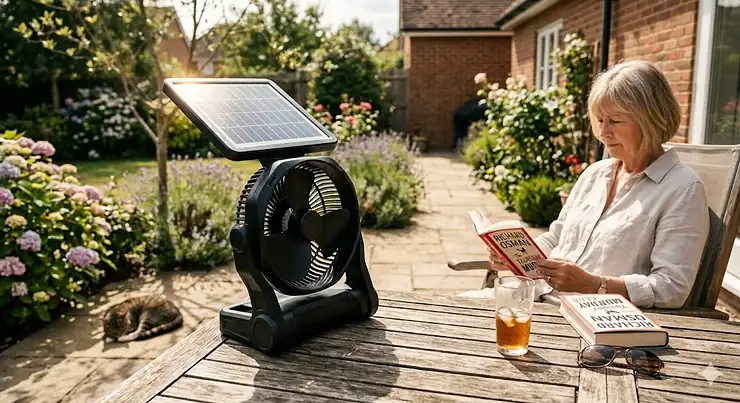
A solar powered fan harnesses the sun’s energy to keep air circulating in your home, greenhouse, shed, caravan, or even your tent on a camping trip. Unlike traditional electric fans that add pounds to your monthly bills, these clever devices convert sunlight directly into cooling power. What’s particularly brilliant about solar powered ventilation fan technology is that it works hardest when you need it most—on those gloriously sunny days when temperatures soar.
According to recent UK government data, solar energy adoption has increased by 68% since 2020, with homeowners recognising that even our famously cloudy British weather provides sufficient sunlight for efficient solar operation. The technology has evolved considerably, with modern panels capable of generating power even on overcast days—a crucial feature for our unpredictable climate.
Whether you’re looking to reduce condensation in your garden shed, maintain optimal temperatures in your greenhouse, or simply fancy a portable cooling solution for outdoor adventures, there’s a solar powered fan designed for your needs. In this comprehensive guide, I’ll walk you through the seven best options currently available on Amazon.co.uk, helping you make an informed decision that suits both your requirements and your budget.
Quick Comparison Table: Top Solar Powered Fans at a Glance
| Product Name | Type | Power Output | Price Range (£) | Best For | Rating |
|---|---|---|---|---|---|
| Solar Power SOLARVENT1 | Ventilator | 1W | £26-34 | Sheds, Boats, Caravans | 4.0/5 |
| Portable Solar Camping Fan 10400mAh | Portable | 7W | £35-48 | Camping, Outdoor Use | 4.1/5 |
| Solar Greenhouse Exhaust Kit 15W | Ventilation | 15W | £48-72 | Greenhouses, Chicken Coops | 4.4/5 |
| Mini USB Solar Fan 3W | Clip-on | 3W | £10-22 | Travel, Desks, Cars | 3.8/5 |
| Solar Roof Vent Fan 5W | Extractor | 5W | £39-55 | Lofts, Motorhomes | 4.1/5 |
| Large 20W Solar Floor Fan | Floor Standing | 20W | £54-70 | Patios, Workshops | 4.2/5 |
| 50W High-Speed Solar Exhaust | Industrial | 50W | £68-89 | Large Sheds, Garages | 4.0/5 |
💬 Just one click – help others make better buying decisions too! 😊
Top 7 Solar Powered Fans: Expert Analysis
1. Solar Power SOLARVENT1 Ventilator – Best Budget Option for Compact Spaces
If you’re after a no-fuss, affordable solution for basic ventilation, the Solar Power SOLARVENT1 deserves serious consideration. This ABS plastic ventilator measures just 150mm in diameter and sits only 56mm high, making it ideal for spaces where a low profile matters.
Key Specifications:
- 1W monocrystalline solar panel
- Airflow capacity: 11.6 CFM (cubic feet per minute)
- Operating sunlight requirement: 8,000-40,000 lux
- Dimensions: 150mm diameter × 56mm height
UK Customer Feedback: British buyers consistently praise its reliability, with one Yorkshire reviewer noting it “works brilliantly in our metal shed to reduce moisture,” whilst a boat owner from Cornwall mentioned it’s “ideal for yacht ventilation with very quiet operation.” However, some users point out that it only functions during daylight hours as there’s no battery storage—something to bear in mind if you need 24/7 ventilation.
Pros:
✅ Extremely affordable entry point (£26-34)
✅ Weather-resistant construction for UK conditions
✅ Works even on moderately cloudy days
Cons:
❌ No battery means night-time operation isn’t possible
❌ Lower airflow compared to powered alternatives
This SOLARVENT1 sits perfectly in the “does what it says on the tin” category. It won’t transform a sweltering conservatory into an arctic paradise, but for preventing condensation build-up in sheds, boats, or caravans, it’s a solid performer at a price that won’t make you wince.

2. Portable Solar Camping Fan with 10400mAh Battery – Best for Outdoor Adventures
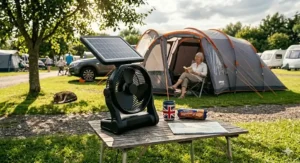
The portable solar camping fan with built-in 10400mAh battery represents excellent value for anyone who enjoys the great outdoors. This dual-powered unit (solar panel plus USB charging) combines a 7W solar panel with LED lighting, making it a versatile companion for camping trips, festivals, or emergency preparedness.
Key Specifications:
- 10400mAh rechargeable battery
- 7W monocrystalline solar panel
- 4 adjustable speed settings
- Integrated LED lantern with 3 brightness levels
- Runtime: 36 hours on low speed, 8 hours on high
UK Customer Feedback: A Lake District camper raved that it “kept our tent comfortable during a heatwave weekend,” whilst a festival-goer from Reading mentioned the LED light feature was “absolutely brilliant for late-night trips to the loo.” The solar charging capability means you’re not reliant solely on USB power, though full solar charging requires 5-6 hours of decent sunlight.
Pros:
✅ Long battery life suitable for extended trips
✅ Dual power sources provide flexibility
✅ Built-in lighting eliminates need for separate lantern
Cons:
❌ Heavier than basic camping fans (approximately 850g)
❌ Solar charging slower than mains USB charging
For £35-48, this represents outstanding value for outdoor enthusiasts. The combination of fan and light in one unit means less kit to pack, and the substantial battery capacity ensures you won’t be left sweltering halfway through your camping holiday.
3. Solar Greenhouse Exhaust Kit 15W – Best for Serious Gardeners
Greenhouse owners, this one’s for you. The 15W solar greenhouse exhaust kit delivers professional-grade ventilation that keeps your plants thriving even during scorching summer days. With dual fans and a substantial 15-watt panel, this system moves considerably more air than budget alternatives.
Key Specifications:
- 15W high-efficiency solar panel
- Dual 4.7-inch (12cm) waterproof fans
- IPX7 waterproof rating
- 13-foot (4-metre) cable with on/off switch
- Airflow: 120.5 CFM per fan
UK Customer Feedback: A Welsh greenhouse owner reported that “condensation issues disappeared completely within a week,” whilst a Devon tomato grower noted the system “kept temperatures 5-7°C cooler during July heatwaves.” The waterproof construction has proven reliable even during typical British downpours, with several reviewers mentioning year-round outdoor performance.
Pros:
✅ Powerful airflow suitable for spaces up to 6ft × 6ft
✅ Completely weatherproof for UK climate
✅ Separate fans allow flexible positioning
Cons:
❌ Higher initial investment (£48-72)
❌ Requires adequate mounting space for panel
This kit represents a genuine investment in your greenhouse productivity. According to the Royal Horticultural Society, proper ventilation is critical for preventing fungal diseases and maintaining optimal growing temperatures—making this system virtually essential for serious horticulturalists.
4. Mini USB Solar Fan 3W – Best Portable Desk Solution
Sometimes you don’t need industrial-strength airflow—just a gentle breeze whilst working at your desk or relaxing in the garden. The 3W mini USB solar fan delivers exactly that, with a compact design that’s genuinely pocket-sized.
Key Specifications:
- 3W 6V solar panel
- USB-powered operation
- Dimensions: Approximately 10cm diameter
- Clip-on base for versatile mounting
UK Customer Feedback: Office workers particularly appreciate its whisper-quiet operation, with one London reviewer stating it “doesn’t disturb video calls at all.” Caravan owners report it’s “perfect for keeping air moving in small spaces without draining leisure batteries.” The consensus suggests it’s best viewed as a personal cooling device rather than a room cooler.
Pros:
✅ Incredibly affordable (£10-22)
✅ Ultra-portable for travel
✅ Silent operation ideal for offices
Cons:
❌ Limited cooling power for larger spaces
❌ Requires decent sunlight for solar operation
At this price point, it’s almost a no-brainer if you want personal cooling that costs virtually nothing to run. Think of it as your eco-friendly alternative to those battery-guzzling handheld fans—plus you’ll look considerably more sophisticated.
5. Solar Roof Vent Fan 5W – Best for Caravans and Motorhomes
The 5W solar roof vent fan has become something of a cult favourite among the UK caravan community. Its aerodynamic, low-profile design (only 50mm high) means it doesn’t catch the wind or look unsightly, whilst the 950 CFH extraction rate keeps moisture and cooking odours under control.
Key Specifications:
- 5W high-efficiency solar panel
- Extraction capacity: 950 CFH (cubic feet per hour)
- Brushless motor for longevity
- 82mm installation hole required
- Built-in capacitors for operation during brief cloud cover
UK Customer Feedback: A Somerset motorhome owner described it as “absolutely essential for preventing winter condensation,” noting that it “starts operating within 20 seconds of sunlight exposure.” Reviewers consistently mention the intelligent design that adjusts fan speed based on available sunlight, ensuring maximum efficiency.
Pros:
✅ Low profile won’t affect aerodynamics
✅ Intelligent speed adjustment maximises efficiency
✅ Works intermittently even in overcast conditions
Cons:
❌ May not function well during winter months
❌ Installation requires cutting appropriate-sized hole
Priced between £39-55, this represents excellent value for motorhome and caravan owners. The Energy Saving Trust notes that proper ventilation in recreational vehicles prevents costly moisture damage—making this a wise investment rather than an optional extra.
6. Large 20W Solar Floor Fan – Best for Workshops and Patios
When you need serious cooling power that’s still portable, the 20W solar floor fan steps up to the challenge. This substantial unit combines the convenience of cordless operation with the power output you’d expect from a mains-powered fan.
Key Specifications:
- 20W monocrystalline solar panel
- 32800mAh rechargeable battery
- 14-inch (35.5cm) fan diameter
- Runtime: 4-6 hours (high), 40-60 hours (low)
- 360-degree tilt adjustment
- USB-A output for charging devices
UK Customer Feedback: Workshop users rave about its “surprisingly powerful airflow” that “keeps a single-car garage comfortable during summer.” Garden party enthusiasts mention it’s “perfect for outdoor dining” with battery life lasting “an entire afternoon and evening.” The ability to charge phones via USB has proven unexpectedly popular during garden gatherings.
Pros:
✅ Powerful airflow rivals mains-powered fans
✅ Exceptional battery capacity for extended use
✅ Acts as emergency phone charger
Cons:
❌ Bulkier and heavier (approximately 3.5kg)
❌ Higher price point (£54-70)
This fan occupies the sweet spot between portability and power. Whilst it’s not pocket-sized, the wireless operation means you can position it anywhere—from your garage workbench to the garden patio—without wrestling with extension cables.
7. 50W High-Speed Solar Exhaust Fan – Best for Large Spaces
For industrial-scale ventilation, the 50W high-speed solar exhaust fan delivers professional performance. This robust system handles large sheds, garages, and agricultural buildings with ease, moving substantially more air than residential alternatives.
Key Specifications:
- 50W solar panel
- High-speed brushless motor
- Suitable for spaces up to 200 square feet (18.5 square metres)
- Weather-resistant construction
- Professional mounting hardware included
UK Customer Feedback: A Midlands garage owner reported it “transformed a stuffy workshop into a comfortable workspace,” noting the “immediate temperature drop of 8-10°C on sunny days.” Agricultural users mention it’s “brilliant for livestock shelters” and “keeps chicken coops ventilated perfectly.”
Pros:
✅ Industrial-strength performance for large spaces
✅ Durable construction suitable for commercial use
✅ Significant temperature reduction capability
Cons:
❌ Premium pricing (£68-89)
❌ Requires professional-level installation skills
This represents the top tier of residential solar powered fan technology. If you’re ventilating anything larger than a garden shed, the investment pays dividends in improved air quality and temperature control.
How Solar Powered Ventilation Works in UK Weather
One question I hear repeatedly is whether solar powered fans genuinely function in Britain’s notoriously cloudy climate. The short answer? Absolutely, though understanding the technology helps set realistic expectations.
Modern solar panels—particularly monocrystalline varieties—can generate electricity even under overcast skies. According to research from Cambridge University’s Department of Engineering, solar panels in the UK typically operate at 10-25% capacity during cloudy conditions, compared to 100% in direct sunlight. This might sound limiting, but consider that ventilation needs also decrease when temperatures drop on cloudy days.
The Science Behind Solar Ventilation
Solar powered fans operate through photovoltaic cells that convert sunlight into direct current (DC) electricity. Unlike grid-tied solar panels that feed excess energy into your home’s electrical system, these standalone units use generated power immediately to drive brushless DC motors. The beauty of this system lies in its simplicity—no inverters, no wiring, no electrician required.
Many premium models incorporate small capacitors or batteries that store excess energy, allowing the fan to continue operating briefly when clouds pass overhead or to provide limited operation during evening hours. The Solar Power SOLARVENT1, for instance, uses built-in capacitors to smooth out power delivery, whilst the portable camping models feature substantial lithium batteries for extended runtime.
UK Performance Expectations
During British summer months (May through September), expect excellent performance from solar powered ventilation fans. Even on partially cloudy days, modern panels generate sufficient power for meaningful airflow. Winter performance diminishes considerably—particularly in northern regions—though south-facing installations in southern England often maintain adequate operation throughout the year.
The Met Office data shows that UK locations receive between 1,200-1,700 hours of sunshine annually, concentrated heavily in summer months. This seasonal variation means solar fans work brilliantly when you need them most (during warm weather) whilst naturally reducing operation when cooling requirements decrease.
Top Features to Consider When Choosing a Solar Powered Fan
Power Output and Airflow Capacity
Solar panel wattage directly correlates with potential airflow. Budget models (1-5W) suit small, enclosed spaces like sheds or caravans, moving 10-50 CFM (cubic feet per minute). Mid-range options (10-20W) handle greenhouses and workshops effectively, whilst premium units (25W+) provide robust ventilation for larger structures.
Don’t automatically assume “more power equals better”—matching capacity to your space prevents unnecessary expenditure whilst ensuring adequate performance.
Battery Storage vs Direct Drive
Direct drive systems operate only when sufficient sunlight strikes the panel, whilst battery-equipped models store energy for extended or evening operation. For greenhouse ventilation, direct drive works brilliantly as peak solar performance coincides with maximum cooling needs. Camping or emergency preparedness applications benefit enormously from battery storage, ensuring operation regardless of sunshine availability.
Weather Resistance Ratings
UK weather demands proper waterproofing. Look for IP ratings—IP55 (splash-proof) suits sheltered installations, whilst IP67 (submersible) handles exposed outdoor mounting. The solar panel typically requires only IP55 protection, but fans mounted externally need IP65 minimum.
Mounting Options and Installation Complexity
Roof-mounted ventilators require cutting appropriate-sized holes and ensuring weatherproof sealing—not complicated, but requiring basic DIY skills. Portable models eliminate installation entirely, whilst clip-on varieties offer maximum flexibility with minimal commitment.
Consider access to sunlight when planning installations. South-facing positions in the UK provide optimal performance, though east or west orientations work adequately. North-facing locations struggle significantly, particularly during winter months.
Detailed Comparison: Solar Powered Fans vs Traditional Alternatives
| Feature | Solar Powered Fan | Mains Electric Fan | Battery Fan |
|---|---|---|---|
| Running Cost | £0 per year | £15-45/year | £8-20/year (batteries) |
| Installation | Simple DIY | Requires power socket | None |
| Portability | Excellent (portable models) | Limited by cable | Excellent |
| Operating Hours | Daylight dependent | Unlimited | 4-40 hours |
| Environmental Impact | Zero emissions | Grid electricity (mixed sources) | Battery disposal concerns |
| Reliability | Weather dependent | Very high | Battery life dependent |
| Initial Cost | £10-90 | £15-60 | £10-40 |
| Maintenance | Minimal (clean panel) | Minimal | Regular battery replacement |
✨ Don’t Miss These Exclusive Deals!
🔍 Take your eco friendly solar cooling to the next level with these carefully selected products. Click on any highlighted item to check current pricing and availability on Amazon.co.uk. These tools will help you create authentic renewable energy solutions your family will love!
Environmental Benefits and Energy Savings
Carbon Footprint Reduction
Every kilowatt-hour generated by solar panels prevents approximately 0.233kg of CO₂ emissions (based on UK grid averages). A 15W solar powered ventilation fan operating six hours daily during summer months generates roughly 0.54kWh weekly, preventing about 7kg of CO₂ emissions annually—equivalent to driving approximately 25 kilometres in an average petrol car.
Multiply this across millions of potential users, and the collective impact becomes substantial. The UK government’s commitment to achieving net-zero emissions by 2050 relies partly on widespread adoption of distributed renewable energy solutions like solar ventilation.
Long-Term Cost Savings
Let’s crunch the numbers. A typical mains-powered extractor fan rated at 15W running six hours daily costs approximately £8.50 annually at current electricity rates (27.69p/kWh). Over a ten-year lifespan, that’s £85 in electricity costs. Meanwhile, a solar powered alternative costs zero to operate after initial purchase.
Factor in the environmental cost of grid electricity generation, transmission losses averaging 8%, and the infrastructure required to deliver power to your home, and solar becomes increasingly attractive from both economic and ecological perspectives.
Maintenance and Longevity
Quality solar panels typically last 20-25 years with minimal degradation (usually under 20% power loss over 25 years). Brushless DC motors in modern fans often exceed 30,000 hours of operation. Contrast this with mains-powered fans requiring periodic replacement every 5-10 years, and the lifetime value proposition strengthens considerably.
Annual maintenance involves simply wiping dust from solar panels to maintain efficiency—hardly onerous compared to traditional ventilation systems requiring filter changes and professional servicing.
Installation Guide: Setting Up Your Solar Powered Fan
Tools and Materials Required
Most installations need minimal equipment:
- Tape measure
- Pencil for marking
- Hole saw (for ventilator installations)
- Screwdriver set
- Silicone sealant (for weatherproofing)
- Safety glasses and dust mask
Step-by-Step Installation Process
For Roof-Mounted Ventilators:
First, identify an optimal location. South-facing roof sections receive maximum sunlight in the UK, though east or west orientations work adequately. Avoid shaded areas—even partial shading can reduce performance by 40-60%.
Mark the required hole size carefully, typically 80-130mm diameter depending on your specific model. Drill a pilot hole from inside to outside, ensuring you haven’t miscalculated the position. Use a hole saw from the exterior, cutting steadily to prevent splintering or cracking.
Test-fit the ventilator before applying sealant, ensuring flush mounting and proper orientation. Apply a generous bead of marine-grade silicone sealant around the opening, press the ventilator firmly into place, and secure with provided screws. Clean excess sealant immediately—it’s far easier than removing cured silicone later.
For Portable Units:
Simply position in desired location, angle the solar panel towards the sun, and switch on. Seriously, that’s it. The beauty of portable models lies in their simplicity and flexibility.
For Greenhouse or Shed Installations:
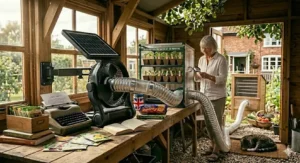
Wall-mounted fans require similar hole-cutting procedures as roof installations, with added consideration for positioning relative to sun exposure. Many greenhouse owners install panels on exterior walls or roofs whilst positioning fans near the apex where hot air accumulates naturally.
Common Installation Mistakes to Avoid
The biggest error I see repeatedly involves inadequate waterproofing. UK weather tests every seal mercilessly—don’t scrimp on quality sealant. Marine-grade silicone costs marginally more than basic varieties but prevents leaks that can cause substantial damage.
Second, ensure panels aren’t shaded by trees, buildings, or other structures during peak sun hours (roughly 10am-4pm). Even small shadows can dramatically reduce output. Check throughout the day before finalising installation positions.
Finally, don’t overtighten screws when mounting. ABS plastic housings can crack under excessive pressure, whilst overtightening screws into wooden structures can strip threads, reducing security.
Maintenance Tips for Maximum Performance
Regular Cleaning Schedule
Solar panels accumulate dust, pollen, bird droppings, and general grime that reduces efficiency. Quarterly cleaning maintains optimal performance—more frequently if you live near busy roads or in agricultural areas where airborne particles are prevalent.
Use lukewarm water and a soft cloth; avoid abrasive cleaners or rough materials that can scratch panel surfaces. Small scratches seem insignificant but accumulate over time, reducing light transmission and decreasing efficiency.
Seasonal Checks
Before summer arrives, inspect mounting hardware for corrosion or looseness. UK coastal locations particularly require vigilance—salt air accelerates corrosion. Replace corroded screws promptly; they’re inexpensive insurance against structural failure.
Check fan blades for damage or debris accumulation. Insects sometimes nest in fan housings during winter months, and clearing these obstructions prevents motor strain.
Battery Maintenance (Where Applicable)
Models incorporating rechargeable batteries benefit from occasional full discharge-recharge cycles—perhaps quarterly—to maintain capacity. However, modern lithium batteries are far less fussy than older technologies, requiring minimal intervention.
Store portable units indoors during winter if they won’t see use, partially charged rather than fully depleted. This preserves battery longevity significantly.
Troubleshooting Common Issues
Fan not operating despite sunlight: First, verify the panel isn’t shaded. Second, check connections—loose wiring prevents proper power delivery. Third, ensure built-in switches are in the “on” position (obvious, but you’d be surprised how often this is the culprit).
Reduced airflow: Usually indicates dust accumulation on blades or within motor housing. Careful cleaning typically resolves the issue.
Intermittent operation: Often points to marginal power supply—the panel generates just enough power to start the motor but insufficient for sustained operation. This suggests inadequate sun exposure or panel degradation requiring cleaning or, eventually, replacement.
Solar Powered Fans for Specific Applications
Greenhouse Ventilation
Greenhouses face unique challenges—intense heat build-up during sunny days, high humidity levels promoting fungal growth, and the need to maintain optimal growing temperatures. Solar powered ventilation fans address these challenges brilliantly.
Position exhaust fans near the apex where hot air naturally accumulates, with intake vents at ground level to encourage proper air circulation. The Royal Horticultural Society recommends complete air exchange every 1-2 minutes during hot weather, which a properly sized solar powered fan achieves effortlessly.
Caravan and Motorhome Use
Condensation represents the number one enemy of recreational vehicles, causing mould, mildew, and potentially costly structural damage. Continuous ventilation—even at low levels—prevents moisture accumulation whilst you’re away from your vehicle.
Solar roof vents work constantly during daylight hours, extracting humid air and drawing in fresh air through existing vents or cracked windows. Many caravan owners report dramatic improvements in interior air quality and virtual elimination of condensation problems after installing solar ventilation.
Shed and Garage Applications
Garden sheds and garages often lack windows or other ventilation, leading to musty smells, moisture damage, and generally unpleasant conditions. Solar powered fans transform these spaces into genuinely usable workshops or storage areas.
For sheds storing garden chemicals, paint, or petrol equipment, proper ventilation isn’t just comfortable—it’s essential for safety. Fume accumulation in sealed spaces presents genuine health risks that adequate ventilation eliminates.
Off-Grid and Emergency Preparedness
The beauty of solar powered fans lies partly in their independence from grid infrastructure. During power cuts—increasingly common during severe weather events—these fans continue operating, providing crucial ventilation and comfort.
Outdoor enthusiasts, festival-goers, and emergency preparedness enthusiasts particularly value portable solar powered fans with battery storage. They’re genuinely useful kit that doesn’t depend on civilisation’s infrastructure remaining intact.
Price Range & Value Analysis: Finding Your Perfect Match
| Budget Tier | Price Range | Typical Power Output | Best Applications | Value Rating |
|---|---|---|---|---|
| Entry Level | £10-25 | 1-3W | Personal use, small sheds | ⭐⭐⭐⭐ |
| Mid-Range | £25-50 | 5-15W | Greenhouses, caravans, medium sheds | ⭐⭐⭐⭐⭐ |
| Premium | £50-90+ | 20W+ | Large workshops, industrial applications | ⭐⭐⭐⭐ |
Budget-Conscious Choices
If you’re operating on a tight budget, the £10-25 bracket offers surprisingly capable options. The Mini USB Solar Fan (£10-22) and Solar Power SOLARVENT1 (£26-34) both deliver reliable performance for basic applications. Yes, they lack the power and features of premium alternatives, but they’ll keep your shed or small greenhouse adequately ventilated without breaking the bank.
Mid-Range Sweet Spot
The £25-50 range represents exceptional value for most users. Products like the Portable Solar Camping Fan (£35-48) and Solar Greenhouse Exhaust Kit (£48-72) balance performance, features, and affordability brilliantly. This tier offers sufficient power for most residential applications whilst incorporating useful features like battery storage and weatherproof construction.
Premium Performance
Beyond £50, you’re paying for industrial-grade performance and durability. The Large 20W Solar Floor Fan (£54-70) and 50W High-Speed Solar Exhaust (£68-89) justify their premium pricing through superior construction, higher power output, and extended lifespans. Commercial users and serious greenhouse gardeners find this tier represents better long-term value despite higher initial outlay.
✨ Special Savings Available Now!
🛒 Transform your space with sustainable cooling solutions that pay for themselves. Browse highlighted products for current Amazon.co.uk deals and join thousands of satisfied UK customers enjoying bill-free ventilation!
FAQ: Your Solar Powered Fan Questions Answered
❓ Do solar powered fans work during cloudy UK weather?
❓ Can I run a solar powered fan at night?
❓ How long do solar powered fans typically last?
❓ Are solar powered fans powerful enough for large spaces?
❓ Do solar powered fans require professional installation?
Conclusion: Investing in Sustainable Cooling
Solar powered fans represent more than just cooling devices—they’re stepping stones towards energy independence and environmental responsibility. As UK electricity prices remain elevated and climate consciousness grows, these ingenious devices offer practical solutions that benefit both your wallet and the planet.
The seven models I’ve reviewed cover virtually every conceivable application, from compact personal cooling to industrial-scale ventilation. Whether you’re protecting your greenhouse plants, preventing caravan condensation, or simply seeking relief during summer heatwaves without inflating your electricity bills, there’s a solar powered fan suited to your needs.
Remember that even modest solar ventilation makes a meaningful difference. The Solar Power SOLARVENT1 at £26 might seem insignificant compared to whole-home renewable systems costing thousands, but it delivers immediate, tangible benefits whilst requiring minimal investment. Sometimes the smallest steps create the most sustainable journeys.
As solar technology continues advancing and prices decrease, we’ll see even more efficient, powerful, and affordable options emerge. But why wait? Today’s solar powered fans already offer compelling value, proven reliability, and genuine environmental benefits. Take the plunge—your future self (and the planet) will thank you.
The transition to renewable energy needn’t be dramatic or expensive. Start small, learn what works for your circumstances, and expand from there. Solar powered ventilation represents an accessible entry point into sustainable living that delivers immediate gratification alongside long-term benefits.
Recommended for You
- 7 Best Rechargeable Tower Fan UK 2026 | Cordless Cooling Expert Guide
- 7 Best Rechargeable Fan for Camping UK 2026
- 7 Best Rechargeable Desk Fans UK 2026
Disclaimer: This article contains affiliate links. If you purchase products through these links, we may earn a small commission at no additional cost to you. Prices shown are approximate and may vary.
✨ Found this helpful? Share it with your mates! 💬🤗
