
In This Article
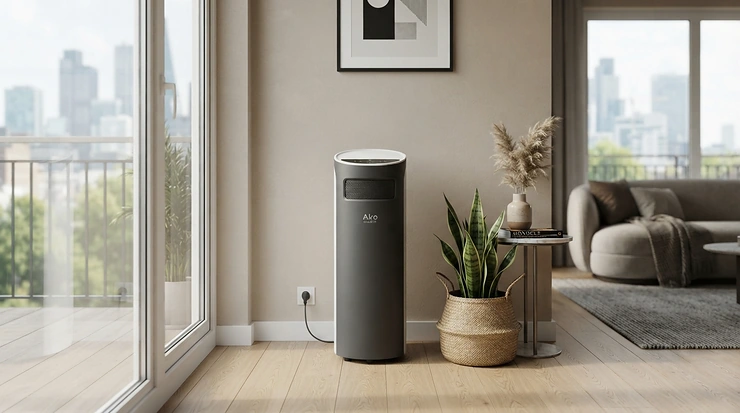
A holiday home cooler is any portable, plug-in appliance that keeps a cottage, second home or holiday let comfortable without anything permanent being installed. It might be an evaporative air cooler, a powerful fan or a portable air conditioner. The best ones store away neatly between seasons, make sense to a guest on night one and won’t wreck your electricity bill.
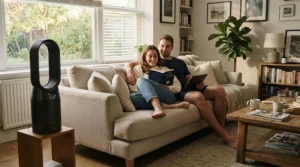
Here’s the thing about British holiday properties: many were built to hold heat in, not let it out. Thick stone walls, low ceilings, a bedroom tucked under a slate roof. Lovely in January, positively tropical in July. And because the place sits empty for chunks of the year, you can’t simply “see how it goes” the way you might at your main address.
So what actually works? The Energy Saving Trust is refreshingly blunt: fans are the cheapest way to stay comfortable, though they cool you rather than the room, while portable air conditioners cost far more to buy and to run. That one distinction, cooling a person versus cooling a room, decides almost every purchase below.
One honest note before we start. I haven’t tested these products myself. Everything here is built from manufacturer specifications, published tests from UK outlets and the patterns that repeat across them, and I’ll flag where the evidence is thin. Think of it as a holiday home cooling review assembled from the best available evidence, with some opinionated analysis on top.
You’ll get seven real products, a plain-English look at holiday let comfort, practical advice on seasonal home appliances (storage, upkeep, the lot) and three summer cottage scenarios you can borrow. Right then, let’s cool things down.
Quick Comparison: Which Holiday Home Cooler Fits Your Property?
Here’s the shortlist at a glance. Prices are ranges based on what UK retailers and reviewers listed at the time of research, so check current price before you buy.
| Product | Type | Price range | Best For |
|---|---|---|---|
| Swan Nordic 2-in-1 Evaporative Air Cooler | Evaporative tower | £65–£80 | Small bedrooms and low running costs |
| Dreo TurboCool 516S | Misting fan | £90–£110 | Sofas, desks and compact rooms |
| Dreo Cruiser TF518 | Tower fan | £85–£100 | Slim spaces and strong airflow on a budget |
| Symphony Diet 3D 20i | Evaporative tower (20L) | £120–£160 | Daytime living rooms, fewer refills |
| Dreo TurboCool 765S | Misting tower | £170–£200 | Quiet, stronger-chill premium option |
| MeacoCool MC Series Pro 10000 | Portable air conditioner | £370–£430 | Genuinely hot bedrooms and loft rooms |
| Dyson Cool AM07 | Bladeless tower fan | Mid-£300s | Families and low-fuss guest rooms |
Looking at the table, the Swan Nordic 2-in-1 Evaporative Air Cooler and Dreo Cruiser TF518 are sensible starting points for most properties: both sit under £100 and cost pennies to run. If one room genuinely bakes, the MeacoCool MC Series Pro 10000 is the only option here that removes heat rather than shuffling it about, which is why it costs roughly four times as much. Buyers wanting a premium, fuss-free fan for a family space should note that the Dyson Cool AM07 buys design and safety rather than extra cooling.
💬 Just one click — help others make better buying decisions too!😊
Top 7 Holiday Home Cooler Picks: Expert Analysis
Each pick follows the same pattern: what it does, what the numbers mean in a real room, who it suits and what reviewers keep saying. Prices are ranges only, so check current price on Amazon before buying.
1. Swan Nordic 2-in-1 Evaporative Air Cooler — lowest running cost in this lineup
Few appliances sip electricity like this tower, which draws roughly 26W on its top setting. That’s less than most laptop chargers. The 5-litre tank, remote and 24 fan speeds matter more than they sound, because guests can find their sweet spot instead of choosing between “gentle” and “gale”. Two ice packs add a little extra chill on stuffy afternoons. Tested airflow was around 0.9 m/s, so expect a sea breeze rather than a wind tunnel.
On paper, that makes the Swan Nordic ideal for a single bedroom or snug where one or two people sit within a few metres. Testers recorded the room thermometer dropping by around 1°C within the first hour or so. That’s modest but noticeable, and about what physics allows in humid British air. It’s the strongest case for an air cooler for summer holiday home use if low bills are your priority.
Published tests consistently praise how quiet and good-looking it is. The recurring complaints are a gurgling sound from water in the pipes and no drain bung, so it has to be tipped out when nearly empty. I couldn’t verify a large pool of independent buyer ratings, so treat this as professional-test sentiment rather than a customer average.
Pros:
- ✅ Very low running cost at roughly 26W
- ✅ 24 fan speeds give guests fine control
- ✅ Light, attractive and easy to move between rooms
Cons:
- ❌ Gentle airflow won’t satisfy heat-lovers
- ❌ No drain bung makes emptying awkward
Expect roughly £65–£80, which is fair value for a bedroom-sized job.
2. Dreo TurboCool 516S — compact misting fan with serious airflow
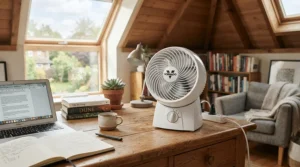
The headline here is punch per square inch: airflow of up to 5 m/s from a body small enough for a bedside table. The trade-off is a 1.3-litre tank, so it needs refilling often. A 150-degree oscillation arc means one unit can cover a sofa and the person beside them. App control and up to 12 hours of runtime let you set it before bed. One national newspaper test put its running cost at roughly a penny an hour.
Based on the spec comparison, the Dreo TurboCool 516S suits a summer cottage snug or a holiday let’s desk-and-sofa corner, not a whole open-plan room. Misting adds a little moisture, so in a damp coastal cottage use it in short bursts. The many settings can feel overcomplicated, so I’d leave a one-line instruction card for guests.
The Independent rated it 5/5 and named it best overall in its air cooler test, praising the airflow and wide sweep. Complaints centred on the small tank and fussy settings. Individual Amazon buyer ratings change constantly and I couldn’t verify them, so check recent reviews for leaks and refilling gripes.
Pros:
- ✅ Very strong airflow for such a small body
- ✅ Wide 150-degree oscillation covers more seating
- ✅ App control with up to 12 hours runtime
Cons:
- ❌ Small 1.3-litre tank needs frequent refills
- ❌ Settings can feel overcomplicated for guests
At roughly £90–£110, it’s strong value if guests will sit close to it.
3. Dreo Cruiser TF518 — best-regarded tower fan for slim spaces
If your property is more “fan weather” than “fridge weather”, this is the cooling fan for holiday home use that reviewers keep rating. The footprint is slim (32 × 32 × 106 cm), and there are nine speeds, 90-degree oscillation and a 0–12 hour timer. A sleep mode gradually lowers speed, and an auto mode adjusts to room temperature. At full power it draws 29W and delivers around 3.6 m/s of airflow.
One newspaper test measured 60dB at top speed from a metre away, far from the 25dB the maker bills, though the two lowest settings were inaudible. Translation: run it on low to sleep and on high to cool down fast. The Dreo Cruiser TF518 works best as the default cooling fan for holiday home bedrooms, where the sleep mode saves guests from fumbling for the remote at 2am. At 29W it costs roughly 1p an hour.
The Guardian named it best tower fan, with testers liking how windy and cooling it feels at full power. The criticisms are that it uses relatively high energy for a fan and has nowhere to clip the remote. In a holiday let, remotes wander, so a small adhesive pocket on the wall is a cheap fix. As elsewhere, I haven’t verified a wider pool of buyer reviews.
Pros:
- ✅ Slim footprint suits narrow bedrooms and landings
- ✅ Feels windy and cooling at full power
- ✅ Sleep and auto modes reduce guest fiddling
Cons:
- ❌ Louder than advertised at top speed
- ❌ Nowhere to store the remote
Around £85–£100 makes it a genuinely good-value fan.
4. Symphony Diet 3D 20i — 20-litre tank for long, thirsty days
Fill it in the morning, forget it until teatime. The Symphony Diet 3D 20i pairs a 20-litre tank with a honeycomb cooling pad, remote, castors, drain plug, timer and empty-tank alarm. It stands around 83cm tall and weighs 7.5kg. A UK seller rates it for rooms up to roughly 13 m², and the maker lists airflow of 960 m³/h.
In the Guardian’s test it was the fastest cooler, dropping the room by over 1°C in half an hour, ahead of the Swan Nordic 2-in-1 Evaporative Air Cooler. The price was noise (around 60dB), bulk and the highest power draw in that group, and the timer was too noisy for sleeping. Power figures differ between sources, with one measured figure far below the listed wattage, so budget somewhere between 2p and 4p an hour.
That profile makes it a daytime workhorse for a summer cottage living room, not a bedroom machine. Twenty litres of water also means a bigger hygiene duty: drain it fully after every stay (more in the safety section).
Reviewers describe it as powerful and effective but loud, bulky and costlier to run than rivals. Again, this reflects professional tests, not a verified buyer average.
Pros:
- ✅ Fastest cooling in a UK newspaper test
- ✅ Huge tank means fewer refills
- ✅ Drain plug and remote make it practical
Cons:
- ❌ Loud at top speed
- ❌ Bulky and power-hungry versus rivals
Expect roughly £120–£160, good value if raw evaporative performance is the goal.
5. Dreo TurboCool 765S — quietest misting tower of the group
Quiet and cool rarely arrive together, which is what makes the Dreo TurboCool 765S interesting. It offers a 6-litre tank, 12 speeds, smart controls and airflow up to around 5.7 m/s, drawing about 85W when misting. The Independent found it very quiet, as low as 20dB, while the Guardian measured 65dB at top speed and said the mist adds a noticeable chill indoors.
Testers disagree about top-end loudness, probably because they measured differently, so treat low-setting hush as the selling point and max speed as “audible”. It’s a fair pick for couples who bicker over fan noise. It costs more to run than the fans here, roughly 2p an hour, but far less than the MeacoCool MC Series Pro 10000, though it can’t cool as deeply. Because it adds moisture, it works best in drier, ventilated rooms.
The Independent scored it 4/5 as best quiet option, and the Guardian called it best for cooling. Gripes were higher energy use and hard-to-read remote buttons, which matters in a dim bedroom.
Pros:
- ✅ Very quiet on low settings
- ✅ Large 6-litre tank
- ✅ Smart controls and noticeable misting chill
Cons:
- ❌ Higher power draw than ordinary fans
- ❌ Remote buttons are hard to read
At roughly £170–£200, it’s a premium for quiet; worth it only if noise is your pain point.
6. MeacoCool MC Series Pro 10000 — the only true room-cooler here
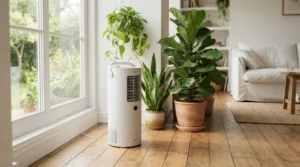
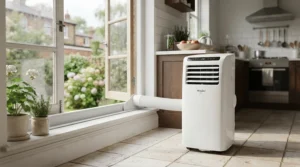
This is a proper portable air conditioner: 10,000 BTU, suited to rooms of roughly 18–28 m² according to Meaco. It ships with two window kits, a remote and app control, and four modes (cool, fan, dry and sleep) plus a washable filter. Expert Reviews recorded up to 1,120W in cooling mode, which works out near 28p an hour at current rates. Noise measured around 54dB on low and 60dB on max, so it’s probably too loud for light sleepers.
Weight is the other catch. Portable air conditioners in Which?’s tests range from roughly 20kg to over 30kg, so this lives in one room. For a top-floor bedroom or loft that genuinely cooks, though, the MeacoCool MC Series Pro 10000 is the only product here that actually lowers room temperature. Use the app or timer to pre-cool before guests arrive. At a ceiling of eight hours a day, expect up to about £16 a week.
Mumsnet’s tester praised the effective cooling, included window kits and castors, and T3 found it works quickly. T3 also flagged that it’s fairly loud, heavy and the exhaust duct is cumbersome. Meaco’s own site lists a three-year warranty.
Pros:
- ✅ Genuinely lowers room temperature
- ✅ Two window kits plus app timer for pre-cooling
- ✅ Dry mode helps in damp cottages
Cons:
- ❌ Loud, around 54–60dB measured
- ❌ Heavy with a bulky exhaust hose
Roughly £370–£430 puts it mid-market, and it’s money well spent only if the room is truly hot.
7. Dyson Cool AM07 — premium bladeless tower for family-friendly rooms
No exposed blades, no grille to poke small fingers through. The Dyson Cool AM07 stands about 105cm tall, weighs 2.85kg and offers 10 airflow settings, oscillation, a magnetic remote and a sleep timer from 15 minutes to 9 hours. A UK retailer lists it at 56W with a two-year guarantee, and Dyson claims up to 500 litres of air per second. The loop wipes clean with a dry or damp cloth, which is no small thing at changeover.
Let’s be clear about what the premium buys. Like any cooling fan for holiday home use, it moves air rather than lowering temperature. What you’re paying for is safety around toddlers, easy cleaning and low running costs of roughly 1.4p an hour. Dyson advises against extension cables and against carrying it by the loop, so plan a socket position in advance.
Dyson’s own UK page shows over 1,100 reviews, 871 of them five-star, with 88% saying they’d recommend it. That’s manufacturer-hosted, so it likely skews positive, and I haven’t verified an independent aggregate.
Pros:
- ✅ No exposed blades, easy to wipe clean
- ✅ Magnetic remote and up to 9-hour timer
- ✅ Established brand with a two-year guarantee
Cons:
- ❌ Expensive for a fan that doesn’t cool air
- ❌ No extension cable use limits placement
At mid-£300s, it’s a premium pick for families; check Amazon for current availability and price.
Spec Comparison: Power, Capacity and Noise
| Product | Type | Capacity | Power (top) | Reported noise | Price range | Best For |
|---|---|---|---|---|---|---|
| Swan Nordic 2-in-1 Evaporative Air Cooler | Evaporative | 5L | ~26W | ~40–45dB | £65–£80 | Small bedrooms |
| Dreo TurboCool 516S | Misting fan | 1.3L | About 1p/hour | ~40dB (turbo) | £90–£110 | Desk and sofa |
| Dreo Cruiser TF518 | Tower fan | – | 29W | Up to ~60dB measured | £85–£100 | Slim bedrooms |
| Symphony Diet 3D 20i | Evaporative | 20L | ~87W measured (listed higher) | ~60dB | £120–£160 | Daytime living rooms |
| Dreo TurboCool 765S | Misting tower | 6L | ~85W | ~20dB low (65dB top reported) | £170–£200 | Quiet premium |
| MeacoCool MC Series Pro 10000 | Portable AC | – | Up to 1,120W | ~54–60dB | £370–£430 | Hot bedrooms |
| Dyson Cool AM07 | Bladeless fan | – | 56W | Not stated | Mid-£300s | Families |
Read across the rows and a pattern emerges: price rises with cooling honesty, not just with features. The Dreo Cruiser TF518 and Swan Nordic 2-in-1 Evaporative Air Cooler are cheap to run, while only the MeacoCool MC Series Pro 10000 reliably cools a room. The Dreo TurboCool 765S and Dyson Cool AM07 sit in the middle, paying for hush and polish.
✨ Ready to Cool Things Down?
🔍 Take your holiday property’s comfort to the next level with these carefully selected products. Click any highlighted item to check current pricing and availability on Amazon. These picks will help you create a calm, comfortable stay your guests will remember for the right reasons!
How to Choose a Holiday Home Cooler: 7 Steps That Actually Matter
Match the appliance to the problem: fans for “warm”, evaporative coolers for “dry and stuffy” and portable air conditioners for “genuinely hot”. Work through these seven steps before you buy:
- Check the climate first. Evaporative coolers work best when relative humidity is below about 60% and a window or door is open. A damp coastal cottage will blunt their effect.
- Size to the room. A 10,000 BTU unit like the MeacoCool MC Series Pro 10000 suits roughly 18–28 m². The Symphony Diet 3D 20i is rated for far less, around 13 m².
- Decide what you’re cooling. A fan cools bodies, a portable air conditioner cools the room. Which? measures cooling effectiveness by how quickly a unit drops a room by 10°C, a useful benchmark.
- Check noise on the lowest setting. Bedrooms demand it. Maker claims and measured figures can differ wildly, as with the Dreo Cruiser TF518.
- Think about weight and storage. Portable air conditioners are heavy, and seasonal home appliances must fit a cupboard or loft over winter.
- Work out running costs for a week. Multiply watts by hours by roughly 25p per kWh. Fans cost pennies, air conditioners pounds.
- Pick guest-proof controls. Simple remotes, sleep timers and clear instructions beat clever apps for a holiday home cooler that strangers use.

Air Cooler vs Fan vs Portable Air Conditioner for a Holiday Home
Three technologies, three personalities. A fan is the dependable mate: cheap, simple, honest that it only cools you. An evaporative air cooler is the optimist, promising air-con vibes at fan prices. A portable air conditioner is the expensive specialist who actually delivers.
The Energy Saving Trust has said that running a portable air conditioner all day can cost roughly 20 times as much as a typical freestanding fan. Several UK buying guides add that air coolers are of limited use in humid British weather, because adding moisture to already damp air blunts the effect. Test results back that up: in the Guardian’s air cooler tests, some models barely changed the room temperature, with one managing only about 0.3°C at best.
| Fan | Evaporative air cooler | Portable air conditioner | |
|---|---|---|---|
| Cools the room? | No | Modestly, in dry, ventilated rooms | Yes |
| Cools people? | Yes | Yes | Yes |
| Running cost | Around 1p/hour | Around 1–4p/hour | Up to ~28p/hour |
| Setup | Plug in | Fill with water | Window kit and hose |
| Humidity effect | None | Adds moisture | Can dehumidify |
| Best For | Dreo Cruiser TF518, Dyson Cool AM07 | Swan Nordic 2-in-1 Evaporative Air Cooler, Symphony Diet 3D 20i | MeacoCool MC Series Pro 10000 |
The table shows why most owners should start with a fan and add a second tier only if one room demands it. A property that’s merely warm gains little from the extra cost and effort of air conditioning. If a bedroom reaches the point where guests complain in reviews, the MeacoCool MC Series Pro 10000 earns its keep. An evaporative option like the Swan Nordic 2-in-1 Evaporative Air Cooler is the middle path, as long as you accept its limits.
Cooling Fan for Holiday Home Use: Getting the Airflow Right
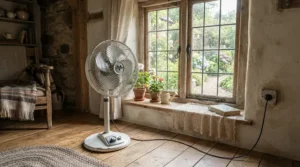
A cooling fan for holiday home use is the unfashionable hero of this guide. The Energy Saving Trust puts continuous fan use at roughly 20p–40p per 24 hours, and a model like the Dreo Cruiser TF518 can run all day for the price of a biscuit.
The trick is placement. In the evening, once it’s cooler outside than in, point a fan out of an open window to extract warm air, and open a window on the shaded side of the property to pull cooler air in. It’s the cheapest air conditioning ever invented, and old cottages with high ceilings and multiple openings are good at it.
Choose the shape to suit the room. Tower fans like the Dreo Cruiser TF518 hug the wall in tight bedrooms. Bladeless designs such as the Dyson Cool AM07 earn their place where children visit, and timers and sleep modes matter more than raw power because guests rarely read manuals.
Oscillation widens coverage, but the cooling effect comes from air moving over skin, so don’t aim it across the room hoping to chill the walls. For a summer cottage with several bedrooms, two modest fans beat one heroic one. As a cooling fan for holiday home use, buy for the quiet end of the speed range, because that’s where guests spend their nights.
Air Cooler for Summer Holiday Home Use: Honest Expectations
Let’s be straight: an air cooler for summer holiday home use is a conditional purchase. Evaporative cooling works when air is dry enough to absorb moisture. UK buying guides suggest humidity under about 60% and fresh air flowing in through an open window. Close the room up, and the cooler recirculates damp air and fades.
Where does it help? Inland properties during dry spells, conservatories and garden rooms with doors open, and any space where you sit near the unit. One tester’s advice was that evaporative coolers do best blowing on you, where moisture on skin helps, rather than trying to change the room’s temperature.
The Swan Nordic 2-in-1 Evaporative Air Cooler and Symphony Diet 3D 20i show the range: roughly 1°C of cooling in about an hour or less, per the Guardian’s tests. That’s helpful, not transformative. Ice packs, where supplied, add a little extra bite.
If your property is by the sea, in a valley or in a notoriously damp area, an air cooler for summer holiday home use may disappoint. In that case, spend the money on shading, night ventilation and a fan, and keep the evaporative option for a drier second property.
Holiday Home Cooling Review: What Testers Agree On
Reading across the published tests, a holiday home cooling review comes down to a handful of recurring truths:
- Evaporative coolers deliver modest drops. Typical measured improvements are fractions of a degree up to around 1°C.
- Air conditioners are the only reliable room-cooling option. Which? tests 45 models, scoring cooling speed, evenness, noise and efficiency.
- Noise claims need a pinch of salt. The Dreo Cruiser TF518 measured far louder than its 25dB claim, and the MeacoCool MC Series Pro 10000 measured around 54–60dB.
- Maintenance is the hidden cost. One 2026 air cooler test flagged a model that can get smelly if you don’t clean it.
- Stock is patchy. Several coolers in the Guardian’s test were listed out of stock at the time.
What I can’t give you is a trustworthy Amazon star average for each model, because customer ratings shift weekly and I couldn’t verify them. Before buying, scan recent verified reviews for water leaks, noise on low settings and anything about guest use. In holiday home cooling review terms, that’s the due diligence worth ten minutes.
Holiday Let Comfort: What Guests Notice (and Remember)
Holiday let comfort isn’t about luxury; it’s about nothing going wrong. A bedroom that’s stifling at 11pm will dominate a review more than a missing coffee machine ever will.
Think room by room. Top-floor and loft bedrooms deserve the strongest cooling. Living rooms need airflow while guests are awake, so a quiet tower like the Dreo TurboCool 765S or the Dyson Cool AM07 fits. Kitchens and bathrooms rarely need dedicated cooling.
Then make it guest-proof. Leave a laminated card by each unit explaining speeds and how to refill water. Choose models with sleep timers, since guests shouldn’t need to wake up to turn off a fan. Store remotes with the appliance, and note that the Dreo Cruiser TF518 has nowhere to clip theirs.
Finally, decide how running costs fit your pricing. A fan costs pennies, but a portable air conditioner can reach roughly £16 a week at full tilt. If you include electricity in the rate, it’s worth knowing. Good holiday let comfort is mostly forethought, and a well-chosen holiday home cooler is one of the cheapest forms of it.
Seasonal Home Appliances: Setup, Storage and Care
Seasonal home appliances live a strange life: months in a cupboard, then sudden heavy use. A little routine goes a long way.
First-use setup:
- Read the manual, especially warnings about extension leads (Dyson advises against them).
- Fit the window kit on a portable air conditioner before guests arrive, and test it.
- Fill evaporative tanks with fresh water, and add ice packs only if supplied.
Weekly maintenance in season:
- Clean air conditioner filters. Which? notes some models want cleaning weekly, others fortnightly.
- Empty and wipe evaporative tanks and pads between guests.
- Wipe fan grilles or the Dyson loop with a dry or damp cloth.
Reduce the heat before it starts. Official “Beat the heat” advice recommends keeping sun-facing rooms shaded during the day, opening windows when it’s cooler outside and using light-coloured curtains, since metallic blinds and dark curtains can make rooms hotter.
End-of-season storage: drain tanks completely, dry pads, store upright and box remotes with the unit. Meaco publishes guidance on storing air conditioners and fans for autumn, which is worth following for the MeacoCool MC Series Pro 10000. Treat seasonal home appliances like garden furniture: cleaned, dried and labelled before the cupboard door closes.
Summer Cottage Cooling: Three Real-World Scenarios
Scenario 1: The coastal summer cottage. A two-bedroom stone cottage in Cornwall, used about six weeks a year, budget around £200, humid sea air. Evaporative coolers will struggle here. The better plan is night ventilation plus a Dreo Cruiser TF518 in each bedroom, around £170–£200 for two, with timers for sleep.
Scenario 2: The top-floor city holiday let. A loft-conversion flat in a city, with guests staying three or four nights and a bedroom that hits sauna temperatures. Budget around £400. The MeacoCool MC Series Pro 10000 pre-cooled by timer before check-in is the realistic answer. Leave the exhaust hose set up and the app instructions ready, and warn guests it’s audible.
Scenario 3: The family holiday home inland. A four-bedroom house in a drier region, toddlers visiting, budget around £500, used most summer weekends. Place the Dyson Cool AM07 in the living area for safety, and use the Symphony Diet 3D 20i during the day in an open-plan room with windows open. Keep the Swan Nordic 2-in-1 Evaporative Air Cooler for the quietest bedroom.
The common thread is that every summer cottage and holiday property is different. Match the product to humidity, room use and how often the place is occupied, rather than to the biggest number on the box.
Common Mistakes When Buying a Holiday Home Cooler
Most disappointments with a holiday home cooler come from the same handful of errors:
- Buying an air cooler for humid places. Coastal and valley properties blunt evaporative cooling, as test results show.
- Trusting noise claims. A “silent” fan that measures 60dB at top speed will annoy a bedroom.
- Ignoring window fit. Roof lights, sashes and tilt-and-turn windows can complicate a portable air conditioner’s hose. Check the kits supplied.
- Forgetting weight. A 20–30kg air conditioner up a cottage staircase is a two-person job.
- Leaving water in tanks between stays. Standing water is a hygiene risk and a smell waiting to happen.
- Overbuying cooling power. A cooling fan for holiday home bedrooms often suffices; air conditioning for a merely warm room wastes money.
- Ignoring guest usability. Overcomplicated apps and tiny remote buttons, as reviewers flagged on the Dreo TurboCool 765S, frustrate people on their first night.
Avoid those and you’ll be ahead of most buyers.
Long-Term Cost and Maintenance: What a Holiday Home Cooler Really Costs
Purchase price is only half the story. At a rough 25p per kWh (close to recent price-cap levels), here’s what running costs look like for a week at eight hours a day, using top-setting power figures:
| Product | Approx. power | Cost per hour | Cost for 7 days × 8 hours | Best For |
|---|---|---|---|---|
| Dreo Cruiser TF518 | 29W | About 0.7p | About 40p | Low-cost bedrooms |
| Swan Nordic 2-in-1 Evaporative Air Cooler | 26W | About 0.65p | About 35p | Budget comfort |
| Dyson Cool AM07 | 56W | About 1.4p | About 80p | Families |
| Dreo TurboCool 765S | ~85W | About 2p | About £1.20 | Quiet rooms |
| Symphony Diet 3D 20i | 87–145W (sources differ) | About 2–4p | About £1.20–£2.00 | Daytime living rooms |
| MeacoCool MC Series Pro 10000 | Up to 1,120W | Up to ~28p | Up to ~£16 | Hot bedrooms |
The numbers show a stark gulf: fans and evaporative coolers cost pennies, while the MeacoCool MC Series Pro 10000 is a pounds-per-week commitment at full whack. Compressors cycle, so real bills may be lower, but treat £16 as a prudent ceiling. If you include electricity in the nightly rate, even that is easily absorbed.
Maintenance matters for total cost of ownership too. Cleaning filters and pads protects performance, and warranties help: Meaco lists three years, and the Dyson Cool AM07 was listed with two years. Seasonal home appliances that are cleaned and dried each autumn tend to survive more summers, which spreads the purchase price thinner.
Safety, Water and Compliance Guide for Holiday Home Coolers
Safety is where a holiday home cooler stops being a gadget and becomes a landlord’s responsibility.
Water and hygiene. The HSE’s guidance on landlords’ legionella responsibilities stresses assessing and controlling risks, with particular care where properties stand empty and water can stagnate. That guidance is aimed at plumbing, not air coolers. Still, a warm, still tank of water is a sensible thing to avoid. My precautionary reading: empty and dry evaporative tanks between stays, and never leave them filled in an unoccupied property.
Electrical and product standards. Buy appliances carrying UKCA or CE marking from reputable sellers, and avoid extension leads where makers advise against them, as Dyson does. Smart models in the UK are subject to product security rules, and Meaco publishes a statement of compliance for its MC series. Many owners also keep portable appliance testing records for peace of mind.
Practical safety. Don’t leave appliances running in an empty property. Never block fire exits with a window hose. Keep cables away from walkways. For vulnerable guests, remember that heat is a genuine health issue, not just comfort.
FAQ: Holiday Home Cooler Questions Answered
❓ What is the best holiday home cooler for a bedroom under the eaves?
❓ Is an air cooler for summer holiday home use worth it on the coast?
❓ How much does it cost to run a holiday home cooler for a week?
❓ Can I leave a cooling fan for holiday home guests running overnight?
❓ Which holiday home cooler comes with the longest warranty?
Conclusion: Choosing Your Holiday Home Cooler
So which holiday home cooler should you actually buy? If your property is merely warm, start with the Dreo Cruiser TF518 or the Swan Nordic 2-in-1 Evaporative Air Cooler: both cost pennies to run, and the first is the best-regarded fan of the pair. If you want something compact with real punch, the Dreo TurboCool 516S is a clever pick, and the Dreo TurboCool 765S is the one for noise-sensitive sleepers. A big daytime living space might suit the Symphony Diet 3D 20i, and families will appreciate the safety of the Dyson Cool AM07.
If one room cooks, accept the cost and get the MeacoCool MC Series Pro 10000; no fan can do its job.
The wider lessons hold whatever you choose. Holiday let comfort is built from small decisions, from shading and ventilation to guest-friendly controls. Seasonal home appliances reward a little autumn care. A good holiday home cooling review is honest about limits, and a summer cottage rarely needs more than a thoughtful fan and an open window at the right time.
Buy before the first heatwave rush, since several tested models were out of stock at the time of research.
Recommended for You
- Portable Air Conditioners For Hotel Rooms: 7 Proven Picks (2026)
- Portable Cooler For Hotel Room: 7 Best Picks To Beat The Heat (2026)
- Handheld Fan For Hot Flushes: 7 Best Cooling Picks (2026)
Disclaimer: This article contains affiliate links. As an Amazon Associate, I earn from qualifying purchases. If you purchase products through these links, we may earn a small commission at no additional cost to you.
✨ Found this helpful? Share it with your friends! 💬🤗
