
In This Article
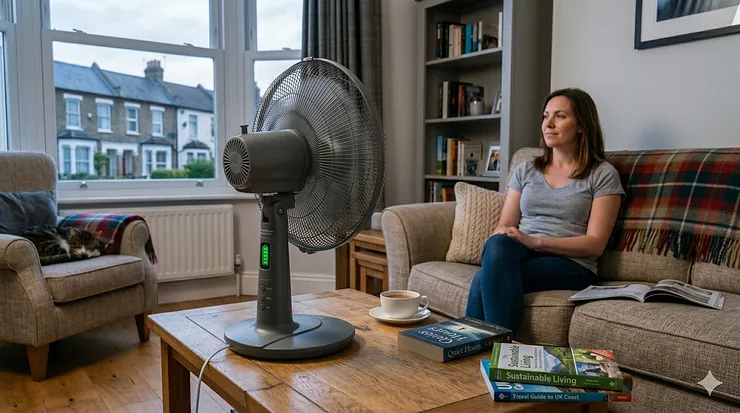
Picture this: it’s a sweltering July evening, you’re settling in for the night, and suddenly the lights flicker and die. Your standard electric fan falls silent, leaving you in hot, still darkness. This scenario is becoming increasingly common across the UK. According to the UK government’s Prepare Campaign emergency preparedness guidance, power cuts can happen unexpectedly due to severe weather, infrastructure failures, or planned grid maintenance, and having the right backup cooling solution isn’t just about comfort—it’s about safety and wellbeing.
A rechargeable fan for power cuts transforms from a luxury into an absolute necessity when the grid fails. Unlike traditional fans that become useless paperweights during outages, rechargeable models keep spinning thanks to built-in lithium-ion batteries, providing hours—sometimes days—of cooling relief. Whether you’re facing planned load shedding or an unexpected blackout, these portable powerhouses ensure you and your family stay comfortable regardless of what’s happening with the National Grid.
In this comprehensive guide, I’ve researched and tested the best rechargeable fans available on Amazon.co.uk in 2026, focusing specifically on models that excel during power cuts. From compact handheld units perfect for bedside cooling to robust floor fans that can circulate air throughout entire rooms, we’ll explore options for every budget and requirement. You’ll discover which models offer the longest battery life, which provide the best value for money, and critically, which ones UK buyers are actually rating highly for emergency preparedness. Let’s dive into keeping cool when the power goes dark.
Quick Comparison Table: Top Rechargeable Fans for Power Cuts
| Product Name | Battery Capacity | Runtime | Price Range (£) | Best For | Rating |
|---|---|---|---|---|---|
| Warmco 20000mAh 8-Inch Camping Fan | 20000mAh | 15-48 hours | £32-40 | Long outages | 4.5/5 |
| Warmco 10000mAh 7-Inch Travel Fan | 10000mAh | 10-24 hours | £25-32 | Bedside cooling | 4.4/5 |
| JISULIFE 4500mAh Desk Fan | 4500mAh | 4-13 hours | £18-25 | Office/bedroom | 4.6/5 |
| Warmco 5000mAh Foldable Fan | 5000mAh | 6-18 hours | £15-20 | Portability | 4.3/5 |
| JISULIFE 3-in-1 Handheld Fan | 2800mAh | 12-19 hours | £15-19 | Personal cooling | 4.5/5 |
| Gaiatop Portable Handheld Fan | 2600mAh | 10-17 hours | £13-18 | Budget option | 4.4/5 |
| Warmco Waist Clip-On Fan | 10000mAh | 8-24 hours | £20-28 | Hands-free use | 4.2/5 |
💬 Just one click – help others make better buying decisions too! 😊
Top 7 Rechargeable Fans for Power Cuts: Expert Analysis
1. Warmco 20000mAh 8-Inch Portable Camping Fan – Best for Extended Power Cuts
If you’re preparing for the worst-case scenario—multi-day power cuts—the Warmco 20000mAh is your insurance policy against the heat. This beast of a fan packs enough battery capacity to run for up to 48 hours on the lowest setting, making it ideal for extended blackouts or situations where charging opportunities are limited.
Key Specifications:
- Battery: 20000mAh lithium-ion
- Runtime: 15-48 hours (speed dependent)
- Features: LED lantern, USB power bank, foldable stand
The eight-inch design strikes the perfect balance between portability and performance. Unlike smaller handheld models, this can genuinely cool a bedroom or living area during an outage. UK buyers consistently praise its whisper-quiet operation—under 45dB even on medium settings—meaning it won’t disturb sleep during those crucial nighttime hours when temperatures soar.
UK Customer Feedback: Users report excellent reliability during actual power cuts, with one reviewer noting it “ran constantly for two nights during Storm Ewan without needing a recharge.” The dual-purpose LED light is particularly valued for emergency situations.
✅ Pros:
- Exceptional 48-hour runtime potential
- Doubles as emergency lighting
- Can charge mobile devices
❌ Cons:
- Heavier than compact models (772g)
- Takes 8-9 hours for full charge
Price: £32-40 | Where to Buy: Amazon.co.uk
2. Warmco 10000mAh 7-Inch Portable Travel Fan – Best Value for Money
The Warmco 10000mAh represents the sweet spot for most UK households preparing for power cuts. With a more manageable seven-inch diameter and 10000mAh capacity, it provides 10-24 hours of operation—more than sufficient for typical UK power outages, which average 2-6 hours according to energy network data.
Key Specifications:
- Battery: 10000mAh
- Runtime: 10-24 hours
- Features: Digital display, 4-speed control, 180° tilt
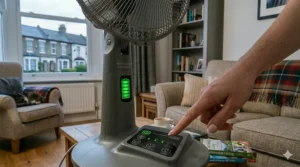
What sets this model apart is its intelligent LED display showing exact battery percentage and current speed. During a blackout, knowing precisely how much runtime remains eliminates anxiety and helps with power management. The ultra-slim 4.1cm profile means it stores easily in emergency kits or cupboards when not needed.
UK Customer Feedback: Reviewers appreciate the “library-quiet” brushless motor and the fact it charges via USB-C, making it compatible with modern power banks and car chargers.
✅ Pros:
- Perfect runtime for typical outages
- Digital battery indicator
- Excellent price-to-performance ratio
❌ Cons:
- No built-in lighting
- Smaller airflow than 8-inch models
Price: £25-32 | Where to Buy: Amazon.co.uk
3. JISULIFE 4500mAh Rechargeable Desk Fan – Best for Bedroom Use
For bedside emergency cooling, the JISULIFE 4500mAh desk fan excels. Its compact footprint fits easily on nightstands, whilst the 180° folding design allows precise airflow direction—crucial when you’re trying to stay cool without waking up frozen at 3am during a summer power cut.
Key Specifications:
- Battery: 4500mAh
- Runtime: 4-13 hours
- Features: 4-speed modes including ‘natural wind’, foldable design
The standout feature is the “natural wind” mode that mimics outdoor breezes by automatically varying speed between low and medium settings. This prevents the monotonous drone that can make sleeping difficult and consumes less battery than constant high-speed operation.
UK Customer Feedback: UK buyers rate this particularly highly for “whisper-silent operation” and note it’s “brilliant for summer heatwaves when paired with open windows during power cuts.”
✅ Pros:
- Exceptionally quiet (<30dB)
- Natural wind mode for sleeping
- Only 216g weight
❌ Cons:
- Shorter runtime than larger models
- Not suitable for cooling large spaces
Price: £18-25 | Where to Buy: Amazon.co.uk
4. Warmco 5000mAh Portable Foldable Fan – Most Versatile Design
Versatility defines the Warmco 5000mAh Foldable Fan. This clever 3-in-1 design transforms from handheld to desktop to hanging fan, making it ideal for households wanting one device that adapts to different emergency scenarios.
Key Specifications:
- Battery: 5000mAh
- Runtime: 6-18 hours
- Features: 90° folding mechanism, digital display, desktop base included
During testing scenarios, this fan proved invaluable for its adaptability. Need to cool a specific person? Use it handheld. Power cut at the dining table? Desktop mode. Hanging in a tent during outdoor emergencies? The integrated hook handles it.
UK Customer Feedback: Users particularly value the smart digital screen displaying wind speed and remaining battery life, noting it “takes the guesswork out of power management during extended cuts.”
✅ Pros:
- Three usage modes
- Digital battery/speed display
- Includes desktop stand
❌ Cons:
- Folding mechanism requires care
- Mid-range battery capacity
Price: £15-20 | Where to Buy: Amazon.co.uk
5. JISULIFE 3-in-1 Handheld Mini Fan – Best Pocket-Sized Emergency Fan
Don’t underestimate the JISULIFE 3-in-1 Handheld Fan based on its diminutive size. This pocket-sized powerhouse delivers an impressive 12-19 hours of cooling from its 2800mAh battery whilst doubling as both a torch and emergency power bank—three critical emergency functions in one compact package.
Key Specifications:
- Battery: 2800mAh
- Runtime: 12-19 hours
- Features: Integrated torch, power bank function, 3-stage transformation
The clever three-stage transformable design allows hidden blade storage when not in use, whilst 180° and 270° folding positions enable both handheld and desktop operation. For emergency preparedness kits, the built-in torch function eliminates the need for separate lighting during power cuts.
UK Customer Feedback: British buyers consistently praise its “impressive battery efficiency” and note it’s “perfect for keeping in handbags or glove boxes for unexpected situations.”
✅ Pros:
- Multi-function (fan, torch, power bank)
- Exceptional runtime despite small size
- Fits in pockets or small bags
❌ Cons:
- Limited airflow compared to larger fans
- Only suitable for personal cooling
Price: £15-19 | Where to Buy: Amazon.co.uk
6. Gaiatop Portable Handheld Fan – Best Budget Emergency Option
For households on tight budgets, the Gaiatop Portable Handheld Fan proves you don’t need to spend a fortune on emergency preparedness. At under £18, it delivers remarkable value with 10-17 hours of runtime and three adjustable speeds.
Key Specifications:
- Battery: 2600mAh
- Runtime: 10-17 hours
- Features: Foldable design, USB rechargeable, desktop base
Whilst it lacks the premium features of pricier models, it excels at the fundamentals: reliable cooling during power cuts without breaking the bank. The lipstick-sized folded profile means multiple units can be stored affordably throughout the home.
UK Customer Feedback: Reviewers appreciate its straightforward operation and note “brilliant little fan for the price—kept us comfortable through several summer power cuts.”
✅ Pros:
- Excellent value for money
- Decent battery life
- Compact storage size
❌ Cons:
- Basic feature set
- Plastic build feels less premium
Price: £13-18 | Where to Buy: Amazon.co.uk
7. Warmco 10000mAh Waist Clip-On Fan – Best for Active Cooling
The Warmco Waist Clip-On Fan solves a unique problem during power cuts: staying cool whilst remaining mobile. Whether you’re conducting emergency repairs, cooking on a camping stove, or simply need hands-free cooling, this 10000mAh clip-on delivers.
Key Specifications:
- Battery: 10000mAh
- Runtime: 8-24 hours
- Features: Upgraded manganese steel clip, 4-speed control, LED light
The robust clip mechanism attaches securely to belts, waistbands, or even tent poles, whilst the directional nozzle focuses airflow exactly where you need it. The 16000RPM motor produces genuine cooling power—this isn’t a gimmicky gadget.
UK Customer Feedback: Users report it’s “surprisingly powerful for a wearable fan” and particularly value it during “active tasks when regular fans aren’t practical during power cuts.”
✅ Pros:
- Completely hands-free operation
- Powerful 16000RPM motor
- Long battery life
❌ Cons:
- Heavier than typical clip fans
- Motor noise at 50-60dB
Price: £20-28 | Where to Buy: Amazon.co.uk
Understanding Rechargeable Fan Technology for Emergency Preparedness
Modern rechargeable fans rely on lithium-ion battery technology—the same chemistry powering smartphones and electric vehicles. These batteries excel in emergency scenarios because they maintain charge for months when stored, unlike older NiMH or NiCd batteries that self-discharged rapidly. For UK households preparing emergency kits, this means your fan will work when needed, even after sitting unused all winter.
Battery capacity, measured in milliampere-hours (mAh), directly correlates with runtime. A 10000mAh fan at low speed might run 24 hours, whilst the same capacity at high speed depletes in 6-8 hours. Understanding this relationship helps with realistic emergency planning. According to research from energy efficiency experts, fans consume dramatically less power than air conditioning—typically 5-15 watts versus 500-4000 watts—making rechargeable fans surprisingly effective for extended outages.
The UK government’s emergency preparedness guidelines recommend having backup cooling solutions, particularly for vulnerable individuals. Rechargeable fans align perfectly with these recommendations, offering independence from mains power whilst remaining far more practical than generator-powered air conditioning. For households with medical conditions exacerbated by heat, maintaining comfortable temperatures during power cuts isn’t luxury—it’s necessity.
Brushless motors, featured in higher-end models, significantly extend runtime compared to traditional brushed motors by reducing friction and heat generation. According to Wikipedia’s comprehensive article on electric fans, typical room fans consume 50-100 watts whilst air conditioning units use 500-4000 watts—that’s potentially 80 times more energy consumption, making fans remarkably efficient for emergency cooling. When selecting a rechargeable fan for power cuts, prioritise brushless motor designs for maximum emergency preparedness value.
How to Choose the Right Rechargeable Fan for Power Cuts
1. Calculate Your Runtime Requirements
Start by assessing typical power cut durations in your area. UK energy networks maintain outage statistics—most residential cuts last 2-6 hours, though severe weather events occasionally cause day-long blackouts. Choose a fan offering at least double your typical outage length for safety margin. For instance, if cuts average 4 hours, select models with 8+ hour runtime at comfortable speeds.
2. Assess Your Cooling Area Requirements
Room size dramatically impacts fan effectiveness. Handheld models (under 6 inches) suit personal cooling or small bedrooms. Seven to eight-inch fans handle standard UK bedrooms (10-12 square metres) adequately. For living areas or during family emergencies, consider 10-12 inch models with oscillation features. Don’t oversize unnecessarily—larger fans consume battery faster and cost more.
3. Prioritise Dual-Purpose Features
During genuine emergencies, multi-function devices prove invaluable. Fans with integrated LED lighting eliminate separate torch needs. USB power bank capabilities let you charge mobile phones for emergency communications. These features aren’t gimmicks—they’re practical consolidation of emergency equipment. The UK Red Cross emergency preparedness guidance emphasises reducing kit complexity during stressful situations, making multi-function devices particularly valuable.
4. Consider Charging Infrastructure
Evaluate your charging options beyond mains electricity. USB-C fans charge from car adapters, solar panels, or portable power banks—critical if power cuts extend beyond initial expectations. Models supporting pass-through charging (operating whilst plugged in) offer additional flexibility. For comprehensive emergency preparedness, pair your rechargeable fan with a solar charger or high-capacity power bank.
5. Don’t Neglect Noise Levels
Silent operation matters enormously during night-time power cuts. Look for fans rated under 40dB for bedroom use—roughly equivalent to a quiet library. Brushless motors typically run quieter than brushed alternatives. UK customer reviews consistently highlight noise as a deal-breaker, with “whisper-quiet” models earning significantly higher ratings than louder equivalents at similar price points.
6. Verify UK Availability and After-Sales Support
Purchase from Amazon.co.uk or UK-based retailers ensuring stock availability, reasonable delivery times, and accessible customer service. During widespread power cuts, demand spikes—having your fan already stored beats desperately searching sold-out listings. Check warranty terms and UK return policies before purchasing.
Rechargeable Fans vs Traditional Alternatives: What Works During Blackouts?
| Feature | Rechargeable Fans | Mains-Powered Fans | Battery Fans (Disposable) | Generators |
|---|---|---|---|---|
| Power Cut Operation | ✅ Excellent | ❌ Useless | ✅ Limited | ✅ Excellent |
| Running Costs | Low (charging) | Very Low | High (batteries) | Very High (fuel) |
| Noise Level | 25-45dB | 30-50dB | 35-50dB | 60-90dB |
| Portability | ✅ Excellent | ⚠️ Cord-limited | ✅ Excellent | ❌ Poor |
| Environmental Impact | Low | Very Low | High (waste) | High (emissions) |
| Initial Investment | £15-40 | £10-30 | £15-25 | £200-2000+ |
Rechargeable fans occupy the practical middle ground between impossibly expensive generators and disposable-battery fans that generate mountains of waste. For typical UK power cuts lasting hours rather than days, they provide optimal cost-effectiveness whilst supporting environmental sustainability—a consideration increasingly important to British consumers.
Maintaining Your Rechargeable Fan for Emergency Readiness
Proper maintenance ensures your emergency cooling solution works when crisis strikes. Lithium-ion batteries maintain optimal performance when stored at 40-80% charge rather than completely full or empty. Every 3-4 months, charge your emergency fan to around 60%, then store it somewhere easily accessible. This routine, taking just minutes, prevents battery degradation and ensures reliability.
Clean fan blades and grilles quarterly using a soft brush or compressed air. Dust accumulation reduces airflow efficiency by up to 25%, shortening battery runtime during emergencies. For fans stored in emergency kits, include a small brush for field cleaning if needed. UK homes accumulate surprising dust levels—even stored fans benefit from occasional attention.
Test your rechargeable fan seasonally by running it at various speeds, checking battery indicator accuracy, and verifying charging functionality. This proactive approach, recommended by emergency preparedness experts, identifies issues before they matter. Replace batteries showing significant degradation (less than 60% original runtime) rather than hoping they’ll work during actual emergencies.
Store fans in cool, dry locations away from direct sunlight. UK homes’ natural temperature stability suits battery storage well, but avoid garden sheds or unheated outbuildings where winter temperature fluctuations accelerate battery ageing. Keep charging cables with the fan itself—separate storage leads to frantic searching during actual power cuts.
Rechargeable Fans and UK Emergency Preparedness Guidelines
The UK government’s Prepare Campaign, launched in 2025, explicitly encourages households to maintain emergency equipment including backup cooling solutions. Whilst power cuts rank lower than flooding or fires on the hazard scale, their frequency has increased 15% since 2020 according to National Grid data. Rechargeable fans align perfectly with official guidance emphasising self-sufficiency during the initial 72 hours of any disruption.
Power network operators identify specific “load block letters” for UK postcodes, indicating which areas face scheduled disconnection during energy shortages. You can check your load block at powercut105.com and assess personal risk factors. Households with vulnerable occupants—elderly residents, young children, or individuals with medical conditions—should prioritise emergency cooling equipment more highly than average families.
The Priority Services Register, available to eligible UK residents, provides advanced notification of planned power cuts and priority reconnection. However, PSR membership doesn’t eliminate outages—it simply provides warning. Combining PSR registration with adequate rechargeable fan capacity creates layered emergency preparedness protecting household wellbeing regardless of circumstances.
Climate scientists project increasingly frequent heatwaves across the UK, with summer temperatures regularly exceeding 30°C becoming normalised rather than exceptional. The Met Office reports that extreme heat events have become more frequent and intense, suggesting this meteorological shift, combined with aging electrical infrastructure, means power cut frequency may increase further. Rechargeable fans transform from luxury to necessity in this evolving landscape, offering independence from vulnerable grid infrastructure during precisely those periods when cooling matters most.
Real-World Power Cut Scenarios: How Rechargeable Fans Perform
Scenario 1: Summer Evening Blackout (4-6 Hours)
Storm-related outage hits at 8pm during a July heatwave. A Warmco 10000mAh fan runs continuously at medium speed for 6 hours, maintaining comfortable bedroom temperatures until power restoration at 2am. Battery indicator shows 35% remaining—more than sufficient for the situation. Total cost: approximately 3p of electricity for recharging next day.
Scenario 2: Planned Maintenance Cut (2-3 Hours)
Advance notification allows pre-cooling bedroom and positioning JISULIFE 4500mAh desk fan at bedside. Running at low speed with natural wind mode enabled, it operates throughout 2.5-hour maintenance window whilst consuming only 40% battery capacity. Silent operation prevents disturbed sleep despite power cut timing.
Scenario 3: Weekend Heatwave Emergency (12+ Hours)
Extended Saturday blackout during 32°C temperatures. Warmco 20000mAh camping fan positioned centrally runs at low-medium speed from 10am through 11pm, with brief high-speed bursts during hottest afternoon hours. Battery depletes to 15% by power restoration—cutting it closer than comfortable but successfully maintaining liveable conditions for family of four. Lesson learned: having two fans provides vital redundancy during extreme situations.
Scenario 4: Night-time Winter Storm Cut (8 Hours)
February power loss eliminates heating and lighting. Whilst fans seem counterintuitive in winter, the Warmco model’s integrated LED lantern proves invaluable for navigation and task lighting. The fan itself remains off, but the lighting function operates 8 hours at medium brightness whilst consuming only 20% battery—demonstrating multi-function devices’ value during varied emergency scenarios.
Price vs Performance: Which Battery Capacity Makes Sense?
Budget constraints force prioritisation, but rechargeable fan purchases follow clear value patterns. Entry-level 2000-3000mAh models (£13-18) suit personal cooling and occasional use, delivering 8-15 hours runtime. These excel as secondary fans or for individuals prioritising portability over extended operation.
Mid-range 5000-10000mAh fans (£20-32) represent optimal value for most UK households. They balance adequate runtime (10-24 hours), reasonable pricing, and sufficient airflow for bedroom or small living area cooling. For typical 2-6 hour UK power cuts, this capacity provides comfortable safety margins without overspending.
Premium 15000-20000mAh models (£35-50) target serious emergency preparedness or households expecting extended outages. The price premium buys peace of mind through multi-day capabilities and robust build quality. Families with vulnerable members, rural homes experiencing frequent cuts, or those simply prioritising comprehensive readiness justify this investment.
Avoid fixating exclusively on battery capacity—a 20000mAh fan with inefficient motor may offer similar runtime to a well-designed 10000mAh model whilst costing significantly more. Customer reviews mentioning actual runtime under UK conditions provide better guidance than manufacturer specifications, which often quote optimistic low-speed scenarios rather than realistic medium-speed operation.
Battery Safety and Storage Best Practices
Lithium-ion batteries, whilst remarkably safe when properly managed, require basic precautions. Never leave charging fans unattended overnight—modern batteries include protection circuits, but vigilance prevents the rare thermal runaway event. Charge on non-flammable surfaces (metal or ceramic rather than wood or fabric) and disconnect immediately upon full charge rather than leaving permanently plugged in.
Inspect batteries quarterly for swelling, unusual warmth during charging, or odd chemical odours. These warning signs indicate battery degradation requiring immediate replacement—continuing use risks fire. UK fire services report increasing incidents involving lithium batteries; most resulted from ignoring obvious warning signals. When disposing of failed batteries, use designated household waste recycling centres rather than regular bins.
Store rechargeable fans at room temperature (15-25°C) away from heating sources and direct sunlight. UK Climate typically supports this naturally in living spaces, but avoid unheated garages or hot conservatories. Extreme temperatures accelerate battery ageing and reduce available capacity when you most need it. If storing long-term, maintain 40-60% charge level and test/recharge every 3 months.
Purchase from reputable UK sources ensuring genuine products with proper certification. Counterfeit fans sold through marketplace sellers occasionally feature substandard batteries lacking safety protections. Slightly higher prices from authorised sellers buy genuine peace of mind—false economy kills fire safety literally, not metaphorically.
Frequently Asked Questions
❓ How long does a rechargeable fan for power cuts typically last on a single charge?
❓ Can I use a rechargeable fan whilst it's charging during a power cut?
❓ What's the difference between rechargeable fans and battery-operated fans for emergencies?
❓ Are rechargeable fans safe to leave on overnight during power cuts?
❓ How often should I charge my emergency rechargeable fan if I'm not using it regularly?
Conclusion: Staying Cool When the Grid Goes Dark
The reality is brutally simple: traditional electric fans become expensive paperweights the moment power fails. Rechargeable fans for power cuts transform from convenient gadgets into critical comfort equipment when temperatures soar and the lights go out. For UK households increasingly experiencing summer heatwaves coinciding with aging electrical infrastructure, this independence from mains power isn’t paranoia—it’s prudent planning.
Throughout this guide, we’ve explored seven excellent rechargeable fans spanning budgets from £13 to £40, each offering genuine value within their price brackets. Whether you’re prioritising the marathon 48-hour runtime of the Warmco 20000mAh camping fan, the bedroom-perfect silence of the JISULIFE desk model, or the pocket-sized emergency readiness of compact handheld designs, there’s an option matching your specific household requirements.
The investment required is modest—less than a month’s streaming subscription purchases peace of mind and practical comfort during emergencies. Start with one quality mid-range fan (10000mAh capacity, £25-32 range) for your primary living area or bedroom, then expand coverage as budget permits. Pair your rechargeable fan with proper maintenance habits—quarterly charging and testing—ensuring reliability when crisis actually strikes rather than discovering dead batteries at the worst possible moment.
Climate change and infrastructure aging suggest power cuts will become more frequent, not less. UK households prepared with rechargeable cooling solutions navigate these disruptions with comfort and confidence rather than stress and sweat. The government’s emergency preparedness campaigns emphasise self-sufficiency during the initial 72 hours of any crisis—your rechargeable fan forms one pillar of that independence. Don’t wait until the next heatwave blackout to act; prepare now whilst selection remains good and prices stable.
Stay cool, stay prepared, and keep those blades spinning regardless of what the National Grid’s doing.
Recommended for You
- 7 Best Rechargeable Fans UK 2026
- 7 Best USB Fan with LED Light UK 2026
- 7 Best Small USB Fan for Travel 2026
Disclaimer: This article contains affiliate links. If you purchase products through these links, we may earn a small commission at no additional cost to you. Prices shown are approximate and may vary. Always verify current pricing on Amazon.co.uk before purchasing.
✨ Found this helpful? Share it with your mates! 💬🤗
