

In This Article
There’s a particular kind of misery reserved for British summers: the ones where the office doesn’t have air con, the Tube feels like a kiln, and your fringe is stuck to your forehead by 9am. A bladeless neck fan solves a specific slice of that misery. It hangs around your neck like a pair of headphones, blows air upward across your face and throat, and — crucially — does it without a spinning blade anywhere near your hair, your fingers, or your toddler’s curious hands. That last part matters more than marketing copy usually lets on, and it’s exactly why this style of fan has quietly taken over from the old handheld plastic propeller you used to buy from a seaside gift shop.

This guide digs into what a bladeless neck fan actually is, how the turbine-style airflow inside one works, and — because it’s the question everyone actually types into Google — whether it’s genuinely safe for hair. We’ve researched seven real, currently available products spanning budget hanging fans through to app-controlled neck air conditioners, pulled in aggregated review sentiment from independent UK testers, and built out proper buying guidance so you’re not left guessing between two nearly identical Amazon listings. Somewhere around the mid-£20s to £250 mark, there’s a genuine range here, and the right pick depends far more on your daily routine than on which one has the flashiest packaging.
We’ve also leaned on independent testing data from Which?’s handheld and neck fan reviews, which has put fans from brands including Boots, Dyson, Shark and JisuLife through structured lab testing, so you’re getting more than just spec-sheet guesswork here.
Quick Comparison Table
| Product | Type | Battery | Runtime (claimed) | Best For |
|---|---|---|---|---|
| JISULIFE Portable Neck Fan | Bladeless, turbine | 4000mAh | Up to 16 hrs (low) | Everyday budget pick |
| JISULIFE Neck Fan Upgraded | Bladeless, turbine | 5000mAh | Up to 16.5 hrs | Longer commutes |
| JISULIFE Four Turbo Neck Fan | Bladeless, dual turbine | 4000mAh+ | 3-7 hrs (high output) | Strongest raw airflow |
| Amacool Bladeless Neck Fan | Bladeless, wingless | 5000mAh | Up to 9 hrs (low) | Family/all-neck-sizes |
| TORRAS COOLiFY Air | Bladeless + Peltier chip | 6000mAh | Up to 7 hrs (fan only) | Active cooling on a mid budget |
| TORRAS COOLiFY 2S | Bladeless + Peltier chip, app | 5000mAh | Up to 28 hrs (eco) | Tech-lovers, year-round use |
| Boots Menopause & Me Wearable Neck Fan | Bladeless, turbine | Rechargeable | Several hours (varies) | Hot flush relief |
Looking at the spread here, the split isn’t really “cheap vs expensive” — it’s “moving air vs actively chilling air.” The four JISULIFE-style and Amacool Bladeless Neck Fan models are pure airflow devices: light, simple, and built to last all day on a single charge at low speed. The two TORRAS COOLiFY models add a semiconductor cooling plate on top of the fan, which is a genuinely different technology with its own trade-offs in weight, price and battery drain. The Boots Menopause & Me Wearable Neck Fan sits in the budget-airflow camp but earns its place through targeted marketing at a specific and very real use case.
💬 Just one click — help others make better buying decisions too!😊
Top 7 Bladeless Neck Fans: Expert Analysis
1. JISULIFE Portable Neck Fan — best all-round budget pick
The JISULIFE Portable Neck Fan is the model most people picture when they hear “neck fan,” and for good reason — it’s sold in enormous volumes and has become something of a default recommendation. It uses a wraparound, headphone-style bladeless design with 78 individual air outlets spread across both sides, which spreads the airflow rather than blasting it from one point. The 4000mAh battery is rated for 4 to 16 working hours depending on which of the 5 speed settings you pick, and it charges via USB-C in a few hours.
Weighing roughly 260g, this is genuinely light enough to forget you’re wearing it, and the soft silicone band means it won’t dig into your collarbone on a long commute. What most buyers overlook about this model is that the speed range matters more than the headline battery figure — on speed 1 you get a gentle, all-day breeze, while speed 5 delivers a proper blast that will drain the battery in a few hours, so the “16 hours” claim only applies at the lowest setting.
Independent UK testers have put this exact model through structured trials rather than just a quick unboxing. Mumsnet’s review team rated it on effectiveness, battery life, ease of use and value, and came away impressed by the comfortable, lightweight silicone build and the even spread from its 78 air outlets. On the downside, the same testers felt it wasn’t quite powerful enough to properly cut through heavy sweating, noted it was pricier than some rivals, and picked up on a bit of extra audible noise at higher speeds.
Pros:
- ✅ Genuinely all-day battery life on low speed
- ✅ 78-outlet design spreads airflow evenly
- ✅ Lightweight silicone band, comfortable for hours
Cons:
- ❌ Underpowered against heavy sweating or humid heat
- ❌ Noticeably louder on the top two speed settings
At around £20-£30, this sits firmly in entry-level pricing, and for the money it’s hard to argue with — reviewers rate it as one of the most balanced options for everyday use rather than extreme heat.
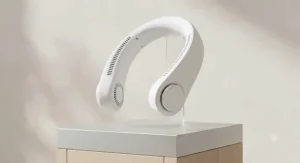
2. JISULIFE Neck Fan Upgraded — best for longer runtime needs
Where the standard JISULIFE model tops out at a 4000mAh cell, the JISULIFE Neck Fan Upgraded bumps that to 5000mAh and pairs it with a redesigned “neckbrace” shape intended to reduce pressure on longer wears. It keeps the same 5-speed adjustment and wingless bladeless build, but the manufacturer claims up to 16.5 hours of runtime — worth roughly an hour more than its sibling, though real-world results depend heavily on ambient temperature and which speed you actually use.
The bigger practical change is ergonomic rather than electrical: the band curves to follow the natural line of the neck more closely, which matters if you’re the kind of person who wears one through an entire 8-hour shift rather than a short commute. Reviewers describe it as noticeably less fatiguing over a full working day than flatter, straighter designs.
Aggregated buyer sentiment around this upgraded line points to the same strengths and weaknesses as the original — praise for comfort and battery stamina, some complaints about wind noise at maximum speed, and a recurring note that colder climates or draughty offices make the fan feel unnecessary within minutes of switching it on.
Pros:
- ✅ Larger 5000mAh cell for extended shifts
- ✅ Curved band reduces neck pressure over time
- ✅ Same reliable 5-speed bladeless turbine design
Cons:
- ❌ Only a modest runtime gain over the standard model
- ❌ Bulkier fit than slimmer competitors
Typically priced a little above the standard JISULIFE, in the £25-£35 range, this is worth the small premium if you genuinely wear a neck fan for most of your working day rather than short bursts.
3. JISULIFE Four Turbo Neck Fan — strongest raw airflow in this line-up
If the previous two models are about stamina, the JISULIFE Four Turbo Neck Fan is about raw power. It uses two separate turbines on each side of the neck — four in total — specifically engineered to move more air, more quickly, than a single-turbine design. The brand claims it cools you down within seconds of switching on, and the wider vent count (around 58-60 outlets) is designed to compensate for the shorter runtime that comes with pushing that much air.
In practice, this is the model to reach for if you find standard neck fans too gentle to actually feel on a properly hot day. The trade-off is battery life: expect roughly 3-7 hours rather than the 16+ hours of the standard model, because moving more air simply costs more power. The brushless motor design keeps noise reasonably contained given the extra output, which is a genuine engineering win — cheaper “powerful” fans tend to get considerably louder as airflow increases.
Because this is a more niche, performance-oriented pick, aggregated review data is thinner than for the brand’s flagship models, but the recurring theme across owner feedback is that it’s the strongest-feeling JISULIFE neck fan without stepping up to active (Peltier) cooling.
Pros:
- ✅ Four turbines deliver noticeably stronger airflow
- ✅ Wide vent count keeps cooling spread evenly
- ✅ Brushless motor keeps noise contained despite output
Cons:
- ❌ Runtime drops sharply compared with single-turbine models
- ❌ Heavier and bulkier due to the dual-turbine housing
Priced similarly to the upgraded JISULIFE model, around £25-£35, this is the pick for short, intense bursts of heat rather than long, low-key use — think festivals and gardening, not a full office shift.
4. Amacool Bladeless Neck Fan — best for varied neck sizes and family use
The Amacool Bladeless Neck Fan takes a slightly different approach to the fit problem: instead of a fixed curve, it’s built with flexibility in mind so it comfortably suits both adult and smaller (child) neck sizes without the band feeling like it’s about to spring open. It runs on a 5000mAh battery through 60 large fan outlets and offers three speed settings, with a claimed runtime of up to 9 hours on the lowest setting.
Where this model earns its place isn’t raw power — reviewers were consistent that it wasn’t the most forceful fan tested — but comfort and adaptability across a household with different-sized necks, which is a genuinely underserved niche in a market mostly designed around a single “average adult” fit. Its lightweight, bladeless build also means there’s minimal risk if a child grabs at it mid-blast, which matters more than spec sheets tend to acknowledge.
Independent testing backs this positioning up directly. Mumsnet’s hands-on neck fan testing found the Amacool Bladeless Neck Fan was designed to comfortably fit any neck size, including both adults and children, with its 60 large fan outlets producing a nice, even breeze — though testers noted it wasn’t the most powerful fan in their line-up.
Pros:
- ✅ Flexible band genuinely fits both adults and children
- ✅ 60 outlets give a smooth, even breeze
- ✅ Lightweight and low-risk around younger family members
Cons:
- ❌ Weakest airflow output of the fans tested here
- ❌ Battery life shorter than similarly priced rivals
At around £30-£40, this isn’t the cheapest bladeless option, but for families wanting one style of fan that fits everyone, it solves a real fitting problem the single-size competitors don’t address.
5. TORRAS COOLiFY Air — best entry point into active cooling
This is where the category shifts from “moving air” to “actively lowering temperature.” The TORRAS COOLiFY Air uses a Ku 4.0 Peltier semiconductor chip — the same thermoelectric principle used in premium cool boxes — to physically chill a contact plate against your neck, rather than relying purely on airflow to evaporate sweat. Independent testing found that this Peltier system can drop skin contact temperature by a claimed 18°F within seconds, and does so independently of ambient temperature, which is a meaningfully different proposition to any of the pure-airflow models above.
The bladeless housing uses a metal honeycomb mesh rather than an open turbine, and at a measured 31 decibels it runs quietly enough for office use. Battery life reflects the extra hardware: a 6000mAh cell gives roughly 7 hours in fan-only mode but drops to around 4 hours with active cooling engaged, since running the Peltier plate draws considerably more power than spinning a turbine.
Reviewer sentiment is broadly positive on the core cooling tech but flags some inconsistency. One in-depth review noted that while many users appreciate the cooling effect, some report the fan can blow warm air in certain conditions if the Peltier system isn’t engaged, and a few owners mention occasional rattling noises despite the otherwise quiet decibel rating.
Pros:
- ✅ Peltier chip delivers genuine active cooling, not just airflow
- ✅ Quiet 31dB operation suits office and quiet settings
- ✅ Metal mesh housing avoids hair entanglement entirely
Cons:
- ❌ Battery drains far faster with cooling mode active
- ❌ Some reported inconsistency in cooling engagement
Sitting in the low-to-mid £100s range, this is a genuine step up in capability over the JISULIFE-style fans, and worth it specifically if plain moving air has never quite cut it for you on the hottest days.
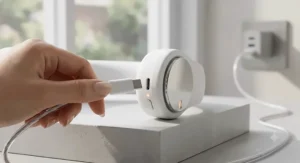
6. TORRAS COOLiFY 2S — best for tech-focused, year-round comfort
The TORRAS COOLiFY 2S is the most feature-dense product in this round-up. Beyond active Peltier cooling, it adds a heating mode for cold weather, smartphone app control over fan speed and temperature, and a claimed instant temperature swing — the brand states it can begin cooling within one second of activation. An independent surface-temperature test backed this up in practice, with one reviewer’s informal thermometer test recording a 21-degree Fahrenheit drop on the cooling plate within minutes of switching to maximum cooling.
Battery performance is genuinely the standout spec here. Running eco/fan-only mode, testers consistently clocked around 27.5 to 28 hours of runtime, dropping to roughly 11.5-12 hours in normal cooling mode, and just under 4 hours on the most aggressive turbo cooling setting. That’s a huge spread, and it tells you something useful: this device rewards users who dial in the right mode for the moment rather than leaving it on maximum constantly.
It’s worth being upfront about where this device sits price-wise, because it’s a genuine jump from the airflow-only fans above. Reviewers have noted a UK price point in the region of £176-£231 depending on which variant you choose, positioning this firmly as a premium buy rather than an impulse purchase.
Pros:
- ✅ Dual cooling and heating modes for year-round use
- ✅ Exceptional 28-hour battery life on eco mode
- ✅ App control adds genuine fine-tuning over airflow and temperature
Cons:
- ❌ Considerably pricier than airflow-only alternatives
- ❌ Bulkier and heavier due to the extra hardware
At roughly £175-£230, this is a considered investment rather than a summer impulse buy — but for anyone who wants active climate control on tap, nothing else in this list matches its feature set.
7. Boots Menopause & Me Wearable Neck Fan — best for hot flush relief
The Boots Menopause & Me Wearable Neck Fan takes a different route to the rest of this list: rather than being marketed on turbine count or battery milliamp-hours, it’s positioned specifically around a real, common need — rapid, discreet relief from hot flushes. It’s a bladeless, USB-C rechargeable design available through a high-street retailer that’s built genuine trust with UK shoppers over decades, which matters when you’re buying something you might reach for at short notice, sometimes at 3am.
This model has been independently assessed alongside more mainstream competitors as part of dedicated UK fan testing, which is notable given how few personal-cooling products get evaluated specifically for menopause symptom relief rather than general comfort. As Which?’s testing programme highlights, common symptoms of menopause like hot flushes and night sweats can be eased by cooling the skin, and the Boots Menopause & Me Wearable Neck Fan is specifically marketed with that use case in mind.
Because the branding leans into a specific audience rather than broad “best overall” positioning, aggregated feedback tends to focus less on maximum airflow and more on discretion, ease of one-handed operation, and how quickly it delivers relief when a flush hits — all more relevant metrics for this particular buyer than raw wind speed.
Pros:
- ✅ Purpose-built for fast hot flush and night sweat relief
- ✅ Backed by a trusted, accessible high-street retailer
- ✅ Simple one-handed operation for discreet, quick use
Cons:
- ❌ Less emphasis on maximum airflow than performance-focused rivals
- ❌ Narrower colour and style range than tech-brand competitors
Priced in a similar bracket to the budget JISULIFE and Amacool models — think £25-£35 — this is less about specs and more about matching a very specific, very real symptom with a product designed around it.
Practical Usage Guide: Getting the Most From Your Neck Fan
Getting a bladeless neck fan out of the box and onto your neck takes about ten seconds, but a few habits make a real difference to how well it performs over its lifetime. First, charge it fully before first use — most arrive partially charged as a shipping safety measure, and running a lithium battery flat repeatedly in its first weeks shortens its long-term capacity. Second, resist the urge to leave it permanently on the highest speed; not only does this drain the battery in a couple of hours, it’s also the setting most likely to cause the “whooshing in your ears” complaint that shows up repeatedly in reviews.
Wipe the vents and any mesh grille weekly with a dry or barely damp cloth — dust and hair fibres do accumulate in the air ducts even on genuinely bladeless designs, and a clogged vent both reduces airflow and increases motor strain. If your model has a Peltier cooling plate, avoid submerging it or spraying cleaning liquid directly onto the contact surface; wipe it separately with a dry cloth once it’s cooled to room temperature. Store the fan somewhere it won’t get crushed in a bag — the flexible neckband can lose its shape if it’s folded tightly for weeks at a time, which affects fit later on.
A common first-30-days mistake is charging via a low-power USB port (like an old laptop socket) and assuming the fan is broken when it charges slowly or not at all — stick to the cable and, ideally, the wattage the manufacturer specifies for reliable results.
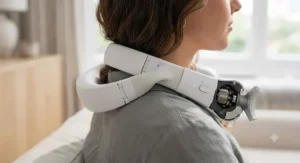
Real-World Scenarios: Which Bladeless Neck Fan Suits You?
Picture three very different people reaching for a fan on the same 30-degree afternoon. The first is a university student commuting 40 minutes on a packed, non-air-conditioned train, carrying a laptop bag and generally short on both money and patience for gadgets that need fiddling. For them, the JISULIFE Portable Neck Fan makes the most sense — cheap, genuinely all-day battery on low speed, and simple enough to switch on and forget about between platforms.
The second is a warehouse or delivery worker moving constantly through direct heat for eight-hour shifts, where a gentle breeze barely registers against real physical exertion. Here, the stronger output of the JISULIFE Four Turbo Neck Fan or the active cooling of the TORRAS COOLiFY Air earns its keep — either genuinely counters heat build-up rather than just circulating warm air around a warm neck.
The third is someone managing menopause symptoms who needs something reliable, quick to reach for, and not fussy to operate one-handed, sometimes in the middle of the night. That’s precisely the gap the Boots Menopause & Me Wearable Neck Fan is designed to fill, and it’s a good reminder that “best” genuinely depends on the problem you’re solving, not just the spec sheet.
How to Choose a Bladeless Neck Fan
- Decide between airflow-only and active cooling first. If you just want a breeze, a turbine-style fan like the JISULIFE range is cheaper and lighter; if you want genuine temperature drop, look at Peltier-equipped models like the TORRAS COOLiFY line.
- Match battery capacity to your actual usage window, not the headline hours figure — remember claimed runtimes are nearly always measured on the lowest speed.
- Check the vent design, not just the “bladeless” label — more outlets generally means gentler, more evenly spread airflow rather than one concentrated blast.
- Weigh comfort over raw power if you’ll wear it for hours — a heavier, more powerful unit that pinches your collarbone by lunchtime isn’t a win.
- Consider your specific use case — commuting, manual work, or symptom relief each favour different trade-offs, as the scenarios above show.
- Look at charging speed and port type — USB-C fast charging matters if you’re topping up between commutes rather than overnight.
- Factor in noise tolerance, especially if you’ll wear it in shared spaces like offices or on public transport, where higher speeds on some models become genuinely distracting.
Bladeless Neck Fan vs Bladed Neck Fan: Which Is Better?
The core difference isn’t really about performance — it’s about safety and comfort. A bladed neck fan uses small exposed propellers, usually shielded by a plastic cage, to move air; a bladeless design routes airflow through internal turbines and vents so there’s nothing spinning that hair, fingers, or jewellery can catch on. That single design choice cascades into most of the practical differences between the two categories.
On raw airflow, bladed fans can sometimes edge ahead, because a spinning propeller can, in theory, move a higher volume of air more efficiently than a ducted turbine of the same size. But that theoretical advantage rarely survives contact with real-world usability: bladed fans need a full safety cage to be usable at all, which adds bulk, and even well-designed cages don’t fully eliminate the entanglement risk that makes many buyers avoid them for children or long hair in the first place.
Where bladeless designs consistently win is in comfort and safety over long wear periods. Because there’s no exposed moving part, manufacturers can build the housing closer to the neck and jaw without a safety guard getting in the way, and the airflow tends to feel more diffuse rather than a single jet aimed at one spot. For most everyday buyers — commuters, parents, anyone prone to hair getting caught in things — bladeless wins on balance, even if a small minority of high-output bladed models can outmuscle them on raw wind speed.
Turbine Airflow Technology: What “Bladeless” Actually Means
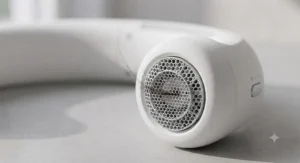
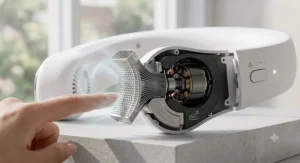
It’s worth being precise here, because “bladeless” is slightly misleading marketing shorthand. These fans do contain a spinning blade — it’s just hidden entirely inside a sealed turbine housing, with air drawn in through a small intake and pushed out through a series of narrow vents around the neckband, rather than blown directly off an exposed propeller. This is essentially the same principle Dyson popularised in its bladeless desk and tower fans, just miniaturised and adapted for a wearable form factor.
The practical upshot is that the moving part never has direct contact with anything outside the sealed unit. Air simply exits through dozens of small outlets — commonly 58 to 78 vents across the models covered here — which also has a secondary benefit: distributing airflow across many smaller outlets tends to feel gentler and more even against the skin than one concentrated blast, even at an equivalent total airflow volume. It’s a genuine engineering trade-off, not just a safety gimmick — the turbine housing does add a small amount of internal resistance compared to an open propeller, which is one reason ducted, turbine-based fans sometimes measure slightly lower peak wind speeds than an unshielded bladed fan of similar motor power.
Is a Hair-Safe Wearable Fan Actually Necessary?
For anyone with long, loose, or fine hair, this isn’t a marginal concern — it’s the entire reason to choose a bladeless model over a cheaper bladed alternative. A spinning blade close to your neck and shoulders, in exactly the zone where loose hair naturally falls, is a genuine entanglement risk, and it’s compounded by the fact that most people wear these fans while moving: walking, cycling, or commuting, where a sudden pull toward your neck is a lot more alarming than it would be sat still at a desk.
The manufacturers behind the JISULIFE range make this a headline feature rather than a footnote, explicitly designing their bladeless housings so wearers don’t have to worry about hair getting caught in the mechanism, which is precisely the anxiety a bladed alternative can’t fully design away, cage or no cage. If you have children who might reach for the fan mid-blast, or simply have hair long enough to fall past your collar, treating “hair-safe” as a genuine requirement rather than a nice-to-have is the sensible call.
Common Mistakes When Buying a Bladeless Neck Fan
The most frequent mistake is buying purely on battery-life headline figures without checking which speed setting that figure applies to — a “20-hour” claim at the lowest, barely-perceptible airflow setting tells you almost nothing about how the fan performs when you actually need it. A close second is ignoring neck circumference and assuming “one size fits most” applies universally; smaller adults and children can find flagship models genuinely uncomfortable or loose, which is exactly the gap products like the Amacool Bladeless Neck Fan are built to close.
Buyers also frequently overlook noise ratings, only to discover the fan is distractingly loud at the speed setting they actually need for real cooling — not an issue in a garden, but a genuine problem on a quiet train or in an open-plan office. Finally, many shoppers assume all “bladeless” fans use the same turbine technology and skip past whether a model includes active Peltier cooling — a meaningful difference in both price and actual cooling performance that’s easy to miss if you’re skimming product titles rather than reading the description.
What to Expect: Real-World Performance
Specs on a page rarely translate directly into how a fan feels in practice, so it’s worth setting expectations honestly. A pure airflow bladeless fan on a moderate setting feels roughly like standing near an open window with a light breeze — pleasant, genuinely refreshing on your face and neck, but not something that will stop you sweating on a properly hot day. Turn it to maximum and that changes to something closer to sticking your head out of a car window at low speed: noticeably stronger, audibly louder, and considerably more battery-hungry.
Active-cooling models like the TORRAS COOLiFY line feel different in kind, not just degree. The Peltier plate against your neck delivers an immediate, localised chill — closer to holding a cold spoon against your skin than a breeze — which is genuinely more effective at cutting through discomfort quickly, but it’s also a smaller cooled area than the broad airflow spread of a turbine-only design. In muggy, high-humidity UK conditions specifically, where sweat struggles to evaporate anyway, that direct-contact cooling can outperform pure airflow, because it doesn’t rely on evaporation to work.
Bladeless Neck Fans for Specific Audiences
For commuters and office workers, discretion and noise matter more than raw power — a quiet, mid-battery model like the standard JISULIFE Portable Neck Fan hits the right balance without drawing attention on a packed train. For parents and families, fit flexibility and entanglement safety top the priority list, which is exactly where the Amacool Bladeless Neck Fan‘s adjustable band earns its keep. For outdoor workers and tradespeople facing direct sun for hours, raw airflow output becomes the deciding factor, favouring higher-output models like the JISULIFE Four Turbo Neck Fan. And for anyone managing menopause-related hot flushes, speed of relief and one-handed operation outweigh almost every other spec, which is precisely the audience the Boots Menopause & Me Wearable Neck Fan was designed around.
Long-Term Cost & Maintenance
Cost of ownership on a bladeless neck fan is refreshingly low compared to most cooling appliances — there’s no filter to replace, no refrigerant, and the main wear component is the rechargeable lithium battery itself, which typically holds meaningful capacity for 300-500 full charge cycles before it noticeably degrades. At realistic seasonal use — a handful of charges a week through a UK summer — that’s several years of useful life for most budget and mid-range models before performance drops enough to justify replacement.
Where the maths shifts is with active-cooling models like the TORRAS COOLiFY 2S: the additional hardware (Peltier chip, larger battery, app connectivity) pushes the upfront cost several times higher than a basic turbine fan, so the “cost per cooling session” only pencils out favourably if you genuinely use the active cooling mode often enough to justify it — occasional users are usually better served financially by a cheaper airflow-only model plus, if needed, a separate desk or pedestal fan for stationary cooling at home.
Features That Actually Matter (And Those That Don’t)
Genuinely worth prioritising: real-world battery life at the speed you’ll actually use, vent count and spread (more outlets generally means gentler, more even airflow), USB-C charging for compatibility with everyday chargers, and — if budget allows — active Peltier cooling for anyone who finds plain airflow insufficient. Also worth checking: how the band flexes, since a rigid design that doesn’t adapt to your specific neck shape will feel far worse over hours than the spec sheet suggests.
Less important than the marketing suggests: headline maximum speed-setting numbers (the top speed is rarely usable for long due to noise and battery drain), app connectivity for basic fan-only models (nice, but rarely essential if you’re not using heating or cooling modes), and cosmetic colour or “fashion” branding, which has zero bearing on actual cooling performance despite how heavily some listings lean on it.
✨ Ready to Beat the Heat This Summer?
🔍 Whichever bladeless neck fan matches your day-to-day, the right pick is the one you’ll actually reach for on a sweltering commute or a long shift outdoors. Compare current prices and availability on the models above, and get set for a noticeably more comfortable summer.
Safety, Regulations and Compliance Guide
Personal cooling devices like these fall under general UK consumer electrical safety regulations, meaning any product sold legitimately on amazon.co.uk should carry a UKCA (or, for the transitional period, CE) marking confirming it meets baseline electrical safety standards. It’s worth checking for that marking on the packaging or listing, particularly with less well-known brands, since counterfeit or unregulated battery-powered devices have occasionally been flagged for overheating risks.
Beyond the device itself, it’s worth remembering that a neck fan is a comfort tool, not a substitute for proper heat-safety precautions during genuine heatwave conditions. Official GOV.UK guidance on staying safe in hot weather is clear that keeping your home shaded, checking local weather forecasts, staying hydrated and avoiding peak-heat outdoor activity matter more than any gadget, and that anyone can become unwell if they get too hot, though some people are at higher risk. The NHS’s advice on coping in hot weather adds that keeping cool with regular cold drinks, a cool shower, and a cool, shaded living space are the fundamentals — a neck fan is a helpful comfort layer on top of that advice, not a replacement for it. If you or someone nearby shows signs of heat exhaustion despite cooling measures, seek proper medical guidance rather than relying on a fan alone.
Buyer’s Decision Framework
If you want the cheapest reliable option for daily commuting, choose a standard turbine-style bladeless fan like the JISULIFE Portable Neck Fan, because it balances battery life, comfort and price without unnecessary extras. If you spend hours outdoors in direct heat and plain airflow never feels like enough, choose an active-cooling model like the TORRAS COOLiFY Air or TORRAS COOLiFY 2S, because a Peltier plate delivers real temperature drop rather than just moving warm air around. If you’re buying for a household with mixed ages or neck sizes, choose an adjustable-fit model like the Amacool Bladeless Neck Fan, because a fixed-size band that fits one person poorly defeats the point of a shared purchase. And if you’re specifically managing hot flushes or night sweats, choose a purpose-marketed model like the Boots Menopause & Me Wearable Neck Fan, because fast, simple, one-handed relief matters more here than any spec on a comparison table.
Problem → Solution: Common Neck Fan Issues
Problem: The fan feels weak even on the highest setting. This is often a fit issue rather than a power issue — if the vents aren’t sitting close enough to your jaw and neck, even strong airflow disperses before it reaches your skin. Try adjusting the band tighter or repositioning the unit slightly higher on the neck.
Problem: Battery drains far faster than advertised. Check which speed you’re actually using — manufacturer runtime claims are almost always measured on the lowest setting, and jumping to maximum can cut claimed hours by 70% or more, especially on Peltier-equipped models with active cooling engaged.
Problem: The fan is too loud for office or public transport use. Drop to the lowest one or two speed settings, which on most turbine designs cuts noise disproportionately more than it cuts airflow, or consider a model specifically reviewed as quiet, like the TORRAS COOLiFY Air’s measured 31dB output.
Problem: It doesn’t fit comfortably around a smaller or larger neck. Look specifically for adjustable-band models marketed for varied neck sizes, such as the Amacool Bladeless Neck Fan, rather than assuming any “one size” product will genuinely suit everyone.
Problem: Hair still gets pulled or tangled despite a “bladeless” label. Check whether long hair is being drawn into the intake vent rather than the outlet vents — tying hair back or wearing the fan slightly further forward usually resolves this, since the intake (not the outlet) is the only part with meaningful suction.
Frequently Asked Questions
❓ Is a bladeless neck fan actually safe for hair?
❓ How long does a bladeless neck fan battery last?
❓ Are bladeless neck fans actually cooler than handheld fans?
❓ Can children safely use a bladeless neck fan?
❓ Do bladeless neck fans help with menopause hot flushes?
Conclusion
A bladeless neck fan isn’t a dramatic piece of technology, but it solves a genuinely annoying problem — being too hot with your hands full — in a way that’s simple, comfortable, and, crucially, safe around hair and small hands. Across the seven real products covered here, the right choice comes down to how you’ll actually use it: a budget turbine fan like the JISULIFE Portable Neck Fan for everyday commuting, a dual-turbine model like the JISULIFE Four Turbo Neck Fan for stronger raw airflow, an adjustable option like the Amacool Bladeless Neck Fan for varied neck sizes across a family, active Peltier cooling from the TORRAS COOLiFY Air or TORRAS COOLiFY 2S for genuine temperature drop rather than just moving air, or a purpose-built pick like the Boots Menopause & Me Wearable Neck Fan for fast, targeted symptom relief.
None of these will replace proper air conditioning on the very worst days, and none should be treated as a substitute for sensible heat-safety precautions during a genuine heatwave. But for the everyday discomfort of a stuffy commute, a hot office, or a long shift outdoors, a well-matched bladeless neck fan is a small, genuinely useful investment — and hopefully this guide has made picking the right one a lot less of a guessing game.
✨ Found Your Perfect Match?
🔍 Check current pricing and availability on any of the models above before the next heatwave hits — stock and prices shift quickly once temperatures rise.
Recommended for You
- Best Neck Fan 2026: 7 Wearable Picks That Actually Cool You
- Cooling Arm Sleeves UK: 7 Best UPF Picks for 2026
- Cooling Neck Wrap: 7 Genuinely Effective Picks for UK Summer 2026
Disclaimer: This article contains affiliate links. As an Amazon Associate, I earn from qualifying purchases. If you purchase products through these links, we may earn a small commission at no additional cost to you.
✨ Found this helpful? Share it with your friends! 💬🤗
