In This Article
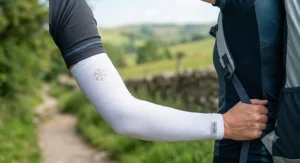
Sunscreen melts off within an hour of proper effort. Long sleeves trap heat you don’t want. Somewhere between those two frustrations sits cooling arm sleeves, a piece of kit that’s gone from niche cyclist accessory to genuinely mainstream sun-safety gear over the last few UK summers. Cooling arm sleeves are lightweight, stretchy fabric tubes worn over the forearm and upper arm that block UV rays (typically rated UPF 50+) while using sweat-wicking or evaporative fabric to feel cooler than bare skin in direct sun.

The appeal is obvious once you’ve tried a decent pair: no reapplying, no greasy residue on your bike grips or steering wheel, and genuinely noticeable cooling on a hot ride, a long shift outdoors, or a slow drive home with the sun streaming through the windscreen. But not all sleeves are built the same, and the difference between a £6 multipack and a properly engineered cycling sleeve is bigger than the price tag suggests. This guide walks through seven real products currently available, breaks down what UPF actually means, and gets into the analysis of which sleeve suits which activity, budget and skin type, based on real specs and genuine aggregated review sentiment rather than marketing copy.
Quick Comparison: Cooling Arm Sleeves at a Glance
Before the full breakdown, here’s how the seven sleeves stack up against each other on the essentials.
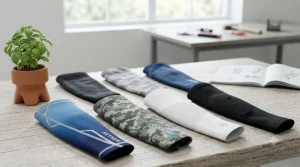
| Product | Category | Price Range | Best For |
|---|---|---|---|
| beister 3 Pairs Cooling Arm Sleeves | Budget multipack | Under £15 | Trying the category cheaply, backup pairs |
| ROXUN Arm Sleeves (2 Pairs) | Budget/general | Under £15 | Daily wear, tattoo cover-up, casual outdoor use |
| Nike Pro Dri-FIT Sleeves 4.0 | Mid-range sports | £15–£25 | General sports, gym, everyday compression |
| GripGrab UPF 50+ Summer Cycling Arm Sleeves | Mid-range cycling | £15–£30 | Road, gravel and MTB riders wanting UV protection |
| Ergodyne Chill-Its 6690 Cooling Arm Sleeves | Mid-range work | £15–£25 | Outdoor labourers, landscapers, tradespeople |
| Megmeister Ultrafris Pro Cool UPF 50+ Arm Sleeves | Premium cycling | £25–£35 | Serious cyclists prioritising active cooling |
| Coolibar Men’s Navagio Sun Sleeves | Premium everyday | £20–£30 | Driving, dermatologist-grade daily UV protection |
Looking across the table, a clear split emerges between activity-specific sleeves and general-purpose ones. What most buyers overlook when shopping on price alone is that a sleeve designed for cycling (grippers, aero fit, reflective detailing) behaves very differently under a steering wheel or a hard hat than one designed for everyday casual wear, and picking the wrong category for your actual use case is the single biggest reason people end up disappointed and never wearing the sleeves they bought.
Top 7 Cooling Arm Sleeves: Expert Analysis
1. beister 3 Pairs Cooling Arm Sleeves — the cheapest way to try the category
For anyone unsure whether cooling arm sleeves are actually worth wearing, beister’s three-pair multipack removes the financial risk almost entirely. Made from a 70% nylon, 30% spandex blend, the sleeves carry a UPF 50+ rating and claim to block around 97% of UVA and UVB rays, with a seamless, V-type knit construction designed to sit flat against the arm without leaving pressure marks.
Based on the spec comparison with single-pair premium sleeves, the value proposition here is straightforward: three colour options for roughly the price of one branded pair, which suits people who want a spare in the car, one in a gym bag, and one at home without thinking twice. Reviewers consistently report a genuinely cooling sensation on contact with sweat, though several note the seamless construction feels slightly less structured than sleeves with reinforced grippers, meaning they can creep down the arm during high-movement activity like a fast bike ride. It’s best suited to gardening, walking, casual driving and general daily wear rather than committed cycling or manual labour, where a more structured sleeve holds up better over a full day.
Pros:
- ✅ Three pairs for the price of most single-pair sleeves
- ✅ UPF 50+ rated with claimed 97% UVA/UVB blocking
- ✅ Seamless knit avoids pressure marks and itching
Cons:
- ❌ Grip band can slip during high-intensity movement
- ❌ Less durable stitching than dedicated sports brands
At well under £15 for three pairs, this is the lowest-risk entry point on this list, and the value case is simple: even if one pair wears out faster than expected, you’ve still got two spares in reserve.
2. ROXUN Arm Sleeves Cooling UV Sun Protection (2 Pairs) — a solid all-rounder for daily wear and tattoo cover
ROXUN’s sleeves lean into a similar nylon-spandex formula (90% nylon, 10% spandex) with a UPF 50+ rating blocking a claimed 98% of UVA and UVB rays, but the seamless, snug construction is specifically marketed around comfort for extended daily wear, including as a tattoo cover-up for workplaces with dress codes — a use case that comes up more often in reviews than the sport-focused marketing suggests.
What most buyers overlook about general-purpose sleeves like this is that sweat-powered cooling fabric works best with some airflow across it, so it performs noticeably better outdoors or in a well-ventilated office than in a stuffy, still indoor environment. Reviewers consistently describe the compression fit as comfortable rather than restrictive, without the circulation-pinching some cheaper alternatives are criticised for, and the two-pair set gives enough colour variation to match different outfits for people using them primarily for coverage rather than sport. It’s best suited to office workers wanting discreet UV and tattoo coverage, casual golfers, and anyone spending moderate time outdoors who doesn’t need the reinforced grip of a dedicated cycling sleeve.
Pros:
- ✅ UPF 50+ with 98% claimed UVA/UVB blocking
- ✅ Comfortable snug fit without circulation issues
- ✅ Doubles well as tattoo cover-up for work settings
Cons:
- ❌ Not reinforced for high-friction sports use
- ❌ Cooling effect is milder without airflow or sweat
At under £15 for two pairs, it sits comfortably alongside beister as a low-cost, general-purpose option, with the tattoo cover-up use case adding genuine everyday value beyond pure sun protection.
3. Nike Pro Dri-FIT Sleeves 4.0 — a recognisable name for general sports and gym use
Nike’s Pro Dri-FIT Sleeves use a polyester-spandex blend with the brand’s Dri-FIT moisture-management technology, designed to wick sweat away during training while providing UVA/UVB protection specifically in the areas the fabric covers (Nike is upfront that exposed skin still needs sunscreen). The stretchy band at the top helps hold the sleeve in place during movement, and the fabric has flat, abrasion-resistant seams designed to avoid chafing during repetitive motion.
Here’s what the spec sheet won’t tell you, but reviewers note repeatedly: these sleeves are built primarily for gym and court sports rather than sustained outdoor sun exposure, so while the UV protection is genuine within the covered area, buyers expecting cycling-grade grippers or all-day outdoor durability are sometimes disappointed. Reviewers who’ve worn multiple Nike sleeve generations describe the 4.0 version as noticeably more compressive and durable than older Nike Pro models, holding shape through repeated washing better than several budget competitors. It’s best suited to weight training, basketball, and general gym-goers who want a recognisable brand and reliable compression fit, more than dedicated outdoor endurance athletes.
Pros:
- ✅ Genuine UVA/UVB protection via Dri-FIT technology
- ✅ Compressive fit holds shape through repeated washing
- ✅ Flat seams reduce chafing during repetitive movement
Cons:
- ❌ Not specifically engineered for cycling or manual work
- ❌ Premium brand pricing relative to UPF performance alone
Priced around £15-£25 depending on retailer, this sits at a brand premium compared with generic alternatives, and the value case rests mainly on durability and fit consistency rather than sun protection specs alone, since several budget sleeves match its UPF rating for less.
4. GripGrab UPF 50+ UV-Protection Summer Cycling Arm Sleeves — purpose-built for cooling arm sleeves cycling demands
GripGrab designed this sleeve specifically around the demands of road, gravel and mountain biking: a polyamide-elastane blend (90/10) with certified UPF 50+ protection, silicone grippers on the top hem to stop slipping during hard efforts, reflective branding for low-light visibility, and left/right-specific construction indicated by a small internal marker.
Based on the spec comparison with general sports sleeves, the grippers are the standout feature here — reviewers and cycling publications alike consistently highlight how well they hold position on sweaty arms during genuinely hard riding, where slipping sleeves are a common complaint with cheaper alternatives. The sleeves are made with 84% recycled fibres in the current version, and GripGrab’s own guidance notes you can lightly wet them for extra cooling on especially hot days, a trick borrowed from evaporative cooling towels. It’s best suited to road and gravel cyclists riding in genuine summer heat, and less suited to anyone needing warmth, since the brand is explicit that these offer zero insulation for cooler rides.
Pros:
- ✅ Silicone grippers prevent slipping during hard effort
- ✅ Certified UPF 50+ with reflective safety detailing
- ✅ Made with 84% recycled fibres
Cons:
- ❌ Offers no warmth — unsuitable for cool-weather riding
- ❌ Left/right specific fit requires checking before wear
At roughly £15-£30 depending on retailer and promotions, this is a genuine mid-range cycling investment, and the value case is strong for anyone who rides consistently through a UK summer, where sudden bright spells catch riders in short sleeves more often than the forecast suggests.
5. Ergodyne Chill-Its 6690 Cooling Arm Sleeves — sun protection arm sleeves outdoor work actually demands
Where the cycling sleeves above are optimised for aerodynamics and grip, Ergodyne’s Chill-Its 6690 is built from the ground up for tradespeople: a soft performance-knit fabric rated UPF 50+, an activation method where soaking the sleeve in cool water triggers evaporative cooling relief, and an anti-odour treatment aimed squarely at people wearing the same sleeves shift after shift.
What most buyers overlook about evaporative cooling sleeves like this is that the cooling effect is genuinely more pronounced than passive UPF fabric alone, but it requires reactivation — dry sleeves still wick sweat and provide UV protection, but the strongest cooling sensation needs a re-soak partway through a long, hot shift. Reviewers in landscaping, construction and warehouse roles consistently praise the light abrasion protection against branches and rough materials as a genuine bonus over sport-focused sleeves, which aren’t built to handle that kind of daily wear and tear. It’s best suited to landscapers, construction workers, delivery drivers and anyone spending full shifts outdoors, where the combination of UV protection, cooling and abrasion resistance earns its keep far more than in occasional recreational use.
Pros:
- ✅ Reactivatable evaporative cooling lasting up to two hours
- ✅ Genuine UPF 50+ with light abrasion protection
- ✅ Anti-odour treatment suited to repeated daily shift wear
Cons:
- ❌ Cooling effect fades between reactivations
- ❌ Bulkier fit than lightweight sport-specific sleeves
At around £15-£25 for a pair, this is squarely mid-range, and the ROI case is compelling for full-time outdoor workers: the HSE’s guidance for outdoor workers and sun exposure makes clear that cumulative daily UV exposure over a career carries real long-term skin risk, making a durable, reusable sleeve considerably cheaper over a working year than constant sunscreen reapplication.
6. Megmeister Ultrafris Pro Cool UPF 50+ Arm Sleeves — the premium pick for compression cooling sleeve cycling
Megmeister’s Ultrafris Pro Cool sleeves take a different engineering approach: a thin, deliberately textured fabric designed to maximise airflow and sweat evaporation, on the principle that more sweating through the fabric equals greater active cooling, tested and confirmed by the brand across multiple hot-weather conditions. Silicone grippers hold the sleeves in place, and they’re available across three sizes for a genuinely tailored fit rather than one-size-fits-most.
Here’s the honest analytical take: independent cycling media testing found the UV protection notably effective, with no sunburn recorded during test rides, and described the construction as distinctly more durable than flimsier budget alternatives, justifying the premium positioning. Reviewers who’ve compared it directly against cheaper generic sleeves consistently note the textured fabric feels genuinely different against the skin — less like a compression garment and more like a technical cooling layer — which some riders love and others find takes a ride or two to get used to. It’s best suited to serious road and gravel cyclists who ride in peak summer heat regularly and are willing to pay a premium for measurably better cooling performance over a basic UPF sleeve.
Pros:
- ✅ Textured fabric engineered specifically for evaporative cooling
- ✅ Independently tested with no recorded sunburn in reviews
- ✅ Three sizes for a genuinely tailored fit
Cons:
- ❌ Premium price relative to basic UPF sleeves
- ❌ Textured fabric feel takes some getting used to
Expect to pay in the £25-£35 range, making this the priciest sleeve on this list, but for riders who log serious summer mileage, the combination of tested cooling performance and durability represents a genuine step up rather than a marketing premium.
7. Coolibar Men’s Navagio Sun Sleeves — driving sun protection arm cover with dermatologist backing
Coolibar holds the distinction of being the first clothing company awarded The Skin Cancer Foundation’s Seal of Recommendation, and the Navagio Sun Sleeves reflect that clinical positioning: a UPF 50+ rated ZnO (zinc oxide-infused) fabric designed for soft, breathable, all-day comfort rather than athletic performance, with open cuffs that slip on and off easily over a short-sleeve shirt.
Based on the spec comparison with sport-focused sleeves, the Navagio’s real advantage is coverage consistency for low-intensity, high-duration exposure — exactly the profile of a long summer drive with the sun streaming through the side window, gardening, or a day spent walking around outdoors. Reviewers consistently describe the fabric as noticeably softer and cooler-feeling than typical compression sports sleeves, though the brand itself is explicit that these aren’t intended for swimming or water sports, since they’re not chlorine or salt-water resistant. It’s best suited to drivers, gardeners, dog walkers and anyone wanting dermatologist-grade daily UV protection without the athletic compression fit that dedicated sports sleeves prioritise.
Pros:
- ✅ Skin Cancer Foundation Seal of Recommendation
- ✅ Soft ZnO fabric prioritises all-day comfort over compression
- ✅ Easy slip-on/off cuffs suit repeated daily use
Cons:
- ❌ Not designed for swimming or water sports
- ❌ Less compressive support than dedicated sports sleeves
At roughly £20-£30, this sits at the premium end for non-cycling sleeves specifically, and the value case rests on clinical credibility: for anyone driving long distances regularly or spending years gardening in strong UK summer sun, a dermatologist-endorsed fabric is a meaningfully different proposition to a generic multipack.
Your Step-by-Step Guide to Choosing and Wearing Cooling Arm Sleeves
Picking the right pair, and actually getting the benefit from them, comes down to a short sequence worth following rather than grabbing whatever’s cheapest online.
Start by identifying your primary use case honestly. A sleeve bought for cycling that mostly ends up worn on the school run, or a driving sleeve bought for someone who actually needs cycling grippers, is the single most common reason people end up disappointed. Check the UPF rating specifically — look for UPF 50+ where possible, since Cancer Research UK notes that a UPF of 30 to 49 offers very good protection while 50+ is rated excellent, and the difference matters over repeated exposure. Measure your bicep circumference before ordering rather than guessing a size, since compression sleeves that are too tight can genuinely restrict circulation over long wear, while too loose a fit lets both cooling airflow and UV coverage suffer.
Once your sleeves arrive, activate any evaporative cooling properly before first use — a quick soak in cool water, followed by a gentle twirl or shake to accelerate the process, makes a genuine difference to sleeves designed around that mechanism. Wear the sleeve over clean, dry skin rather than sunscreen where possible, since fabric and cream can interact in ways that reduce the effectiveness of both. During the first 30 days, wash sleeves according to their care label rather than defaulting to a hot cycle, since heat and harsh detergent are the most common reasons UPF coatings and elastic grippers degrade prematurely. Finally, check the sleeve periodically for thinning fabric or stretched-out grippers, since a worn sleeve provides measurably less UV protection than a fresh one, even without visible damage.
Real-World Scenarios: Which Cooling Arm Sleeves Suit You?
The daily commuter cyclist: Someone riding to work through a UK summer needs grippers that survive a sweaty, stop-start ride and UPF protection that holds up through frequent washing. The GripGrab UPF 50+ sleeves fit this profile well, being purpose-built for exactly this kind of riding without the premium price of a dedicated racing sleeve.
The tradesperson on site all summer: Full shifts outdoors, repeated exposure to branches, rough surfaces and direct sun call for something more durable than a sport sleeve. The Ergodyne Chill-Its 6690, with its reactivatable cooling and light abrasion resistance, is built specifically for this working pattern, and the HSE’s own guidance on outdoor worker sun exposure makes a strong case for treating this as essential kit rather than an optional extra.
The long-distance driver: Hours behind the wheel with one arm consistently exposed to a hot side window is a genuinely common, under-discussed sun exposure pattern. The Coolibar Navagio sleeves, designed for comfortable all-day low-intensity wear rather than athletic performance, suit this use case better than a compression sports sleeve that can feel restrictive over a long drive.
The occasional weekend athlete on a budget: For someone who wants sun protection for the odd summer 5K, a round of golf, or gardening at the weekend, spending £30 on premium cycling-specific sleeves is overkill. A multipack like beister or ROXUN covers the essentials at a fraction of the cost, with enough spares that losing or damaging one isn’t a financial setback.
Common Cooling Arm Sleeve Problems and How to Fix Them
Problem: The sleeve keeps sliding down during activity. This is almost always down to either the wrong size or a sleeve without proper grippers. Sizing up doesn’t fix slipping — sizing correctly and choosing a sleeve with silicone grip bands, like GripGrab or Megmeister, solves it far more reliably than a tighter fit alone.
Problem: The cooling effect disappears after an hour. Passive UPF fabric doesn’t actively cool once your sweat evaporates and dries. For genuinely reactivatable cooling, sleeves like the Ergodyne Chill-Its need a fresh water soak partway through a long day rather than expecting one activation to last a full shift.
Problem: Skin feels itchy or irritated under the sleeve. This is usually a seam or fit issue rather than a fabric allergy in most cases. Seamless construction, as used in beister and ROXUN sleeves, resolves this for most wearers, though anyone with genuinely sensitive skin should patch-test any new fabric before a full day of wear.
Problem: The sleeve has lost its stretch and grip after a few months. Heat is the usual culprit — tumble drying or washing on a hot cycle degrades the elastane and silicone grippers far faster than a cool wash and air dry. Following the specific care label, rather than a generic laundry routine, meaningfully extends sleeve lifespan.
Problem: Sunburn still happens on the hands or wrists. Arm sleeves only protect the skin they cover, and gaps at the wrist or hand are a common miss. Combining sleeves with driving gloves, a watch that covers the wrist gap, or sunscreen on exposed hand skin closes this coverage hole.
How to Choose the Right UPF Arm Protection Sleeve
What is a UPF arm protection sleeve? A UPF arm protection sleeve is a fabric garment worn over the arm, lab-tested and rated for Ultraviolet Protection Factor, that blocks a measured percentage of UVA and UVB radiation from reaching the skin beneath it — UPF 50+ blocks roughly 98% of UV rays.
Working through a short, deliberate checklist beats guessing based on price or packaging alone:
- Confirm the UPF rating is genuine, not just implied. Look for an explicit UPF 50+ label rather than vague “sun protection” language, since not every sleeve marketed for summer wear has been lab-tested to a specific standard.
- Match the sleeve to your actual activity. Cycling sleeves need grippers and aero fit; work sleeves need durability and reactivatable cooling; everyday sleeves need comfort over compression — don’t buy sport-grade kit for casual daily wear or vice versa.
- Measure before you order. Bicep and forearm circumference, not just “small/medium/large” guesswork, determines whether a sleeve compresses correctly or slides and gapes.
- Consider your skin type and typical exposure duration. Fair skin and long, sustained exposure (driving, gardening, full work shifts) benefit most from dermatologist-endorsed fabrics like Coolibar’s ZnO range.
- Factor in wash frequency and care requirements. Daily-wear work sleeves need to survive frequent washing without losing UPF performance; a delicate premium cycling sleeve worn once a week has different durability needs.
- Budget for a spare, not just one pair. Since UPF coatings degrade with wear, having a second pair in rotation extends effective protection across a full summer rather than relying on one aging sleeve.
- Check the UV index before deciding how seriously to take coverage. The Met Office’s UV index forecast shows daily UV levels across the UK, and on days rated moderate (3+) or above, covering up with a genuine UPF sleeve makes a measurable difference over bare skin.
Common Mistakes When Buying Cooling Arm Sleeves
The most common mistake is buying based on the word “cooling” alone without checking whether the sleeve provides active evaporative cooling (like the Ergodyne or Megmeister designs) or simply feels cool to the touch due to thin, breathable fabric with no reactivation mechanism. Both have their place, but expecting passive UPF fabric to behave like a reactivatable cooling sleeve leads to disappointment on the hottest days.
A close second is ignoring left/right-specific sleeves, particularly common in cycling-branded products like GripGrab, where a small internal marker indicates which arm each sleeve belongs to; wearing them mismatched doesn’t ruin the sun protection but does affect how well the grippers and reflective detailing sit. Third is assuming a higher price automatically means better sun protection — UPF 50+ is UPF 50+ regardless of brand, and the premium in sleeves like Megmeister or Coolibar buys genuine improvements in cooling mechanism, fabric feel and durability, not a higher UV block than a budget UPF 50+ multipack already provides. Finally, many buyers forget that sleeves lose effective UPF rating as fabric thins, stretches or fades with repeated washing and sun exposure, meaning a two-year-old sleeve that looks fine may no longer be providing the protection printed on its original label — a genuine risk given that Cancer Research UK confirms UPF can be reduced if material is damaged or weathered.
Cooling Arm Sleeves vs Sunscreen: Which Wins for UV Protection?
This isn’t really an either/or question, but it’s worth understanding where each genuinely outperforms the other. Cooling arm sleeves offer consistent, reapplication-free protection for exactly as long as they’re worn — a UPF 50+ sleeve doesn’t wear off with sweat, doesn’t need topping up every two hours, and doesn’t rub off on a steering wheel, bike grips or gym equipment the way sunscreen can. For sustained exposure during a specific activity — a long ride, a full work shift, a lengthy drive — sleeves are the more reliable, lower-maintenance option.
Sunscreen wins where sleeves can’t reach: hands, neck, face and any exposed skin a sleeve doesn’t cover, which is exactly why the sensible approach layers both rather than choosing one. Sleeves also outperform sunscreen for people who forget to reapply, or who are put off by the greasy residue that interferes with grip on a bike, golf club or steering wheel. Cost-wise, a decent pair of sleeves used across a full summer works out considerably cheaper than the sunscreen it would take to cover the same skin area with the same consistency, though sunscreen remains essential for the areas sleeves simply can’t cover, as reinforced by NHS guidance on preventing and treating sunburn, which stresses covering skin with clothing alongside sunscreen rather than relying on either alone.
Cooling Arm Sleeves for Cycling, Work and Driving: Audience Guide
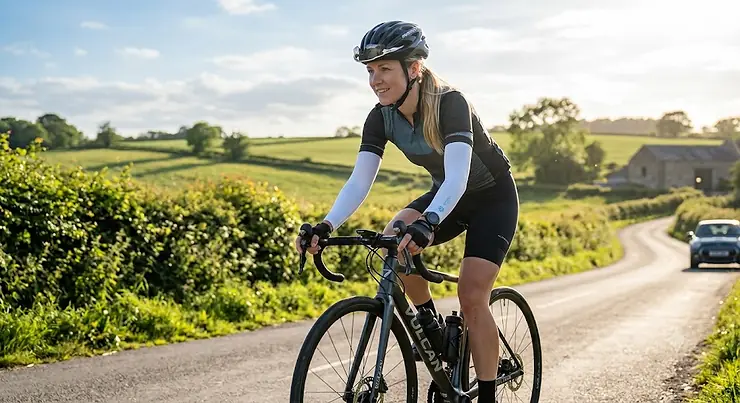
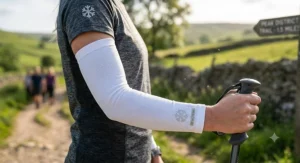
Cyclists need sleeves that survive sweat, hard efforts and repeated washing without sliding down mid-ride. Grippers are non-negotiable, and UPF rating matters more than most riders initially assume, given how much cumulative sun exposure a regular summer cycling habit involves over a season. GripGrab and Megmeister both address this profile directly, at different price points and cooling mechanisms.
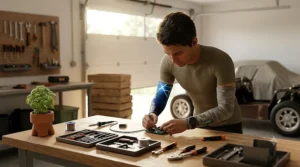
Outdoor workers — landscapers, construction workers, delivery drivers, warehouse staff moving between indoor and outdoor areas — benefit most from durability and reactivatable cooling over aesthetics or aerodynamics. The HSE is explicit that UV exposure should be treated as an occupational hazard, and a sleeve like the Ergodyne Chill-Its, designed specifically around full-shift wear, reflects that reality better than a sport-focused alternative.
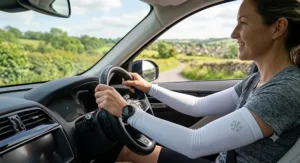
Drivers face an unusual sun exposure pattern: one arm, consistently exposed through a side window, for potentially hours at a stretch on long journeys, often in a UV index that feels lower inside a car than it actually is due to glass filtering out heat but not all UV. A comfortable, low-compression sleeve like the Coolibar Navagio, designed for extended low-intensity wear, suits this pattern better than an athletic sleeve built for high-movement activity.
Compression vs Loose Fit: What Actually Matters for Cooling?
This is a genuinely contested question among cooling arm sleeve buyers, and the honest answer depends on the cooling mechanism the sleeve relies on. Compression sleeves, snug against the skin, work well with evaporative cooling designs because close contact helps transfer the cooling sensation from damp fabric directly to skin, which is why cycling and work sleeves built around reactivatable cooling tend to favour a tighter fit. However, compression that’s too aggressive can restrict circulation over long wear, particularly in hot conditions where blood flow to the skin surface is already working to regulate temperature.
Looser-fitting sleeves, by contrast, rely more on airflow underneath the fabric to carry heat away, which suits passive UPF sleeves designed for comfort over athletic performance — exactly the profile of something like the Coolibar Navagio, which prioritises all-day wearability over compressive support. The nuance most buying guides skip is that neither approach is universally “better” for cooling; it genuinely depends on whether you’re relying on direct-contact evaporative cooling (favouring snugger fit) or airflow-based passive cooling (favouring looser fit), and matching that mechanism to your actual activity matters more than chasing the tightest or loosest option available.
Long-Term Value: Cooling Arm Sleeves vs Reapplying Sunscreen
It’s worth running the numbers on this, because sleeves can feel like an unnecessary extra cost until compared against a full summer of proper sunscreen use.
| Approach | Upfront Cost | Typical Usable Life | Ongoing Cost |
|---|---|---|---|
| Sunscreen only (arms) | £0 | Reapplied every 2 hours of exposure | £30-£60/summer in product |
| Budget sleeve multipack | Under £15 | 1-2 seasons with regular wear | Minimal — occasional wash wear |
| Mid-range activity sleeve | £15-£30 | 2-3 seasons | Minimal — occasional replacement |
| Premium dermatologist/performance sleeve | £25-£35 | 3+ seasons | Minimal — durable fabric and coatings |
Reading the table, the pattern is clear: even a budget sleeve multipack roughly breaks even against a single summer’s sunscreen spend on arm coverage alone, and a durable mid-range or premium sleeve worn across multiple seasons works out meaningfully cheaper over time, without the ongoing hassle of remembering to reapply every couple of hours. That’s before factoring in the harder-to-price benefit of consistency — a sleeve can’t be forgotten halfway through a ride the way a sunscreen reapplication reminder can, and cumulative sun exposure, as public health guidance consistently emphasises, is what drives long-term skin damage risk rather than any single missed application.
FAQ
❓ What UPF rating should I look for in cooling arm sleeves?
❓ Do cooling arm sleeves actually work, or is it just marketing?
❓ Can I wear cooling arm sleeves instead of sunscreen?
❓ How often should I replace cooling arm sleeves?
❓ Are cycling-specific arm sleeves better than general sports sleeves for driving?
Conclusion
Cooling arm sleeves solve a genuinely specific problem: consistent, low-maintenance UV protection for exactly the kind of sustained exposure that sunscreen struggles to keep up with — a long ride, a full outdoor shift, or hours of driving with one arm in direct sun. The pattern across every product on this list comes back to matching the sleeve to the activity rather than assuming one design suits everything. A cyclist needs grippers and aero fit; a tradesperson needs reactivatable cooling and abrasion resistance; a driver needs comfortable, low-compression coverage that doesn’t feel restrictive over hours behind the wheel.
None of the seven sleeves here are wrong choices in isolation, but picking based on your actual use case rather than price or brand recognition alone is what determines whether you’ll still be reaching for them by August. A genuine UPF 50+ rating, checked rather than assumed, combined with a fit and cooling mechanism suited to how you’ll actually wear it, beats any single “best” pick this guide could offer. Build that habit once, and covering up becomes as automatic as reaching for sunglasses on a bright day.
Recommended for You
- Best Cooling Bandana 2026: 7 Top Picks That Actually Work
- Best Cooling Hat 2026: 7 Real Picks for Beating UK Heat
- Best Cooling Towel: 7 Top Picks for UK Gym & Sport 2026
Disclaimer: This article contains affiliate links. As an Amazon Associate, I earn from qualifying purchases. If you purchase products through these links, we may earn a small commission at no additional cost to you.
✨ Found this helpful? Share it with your friends! 💬🤗
