
In This Article
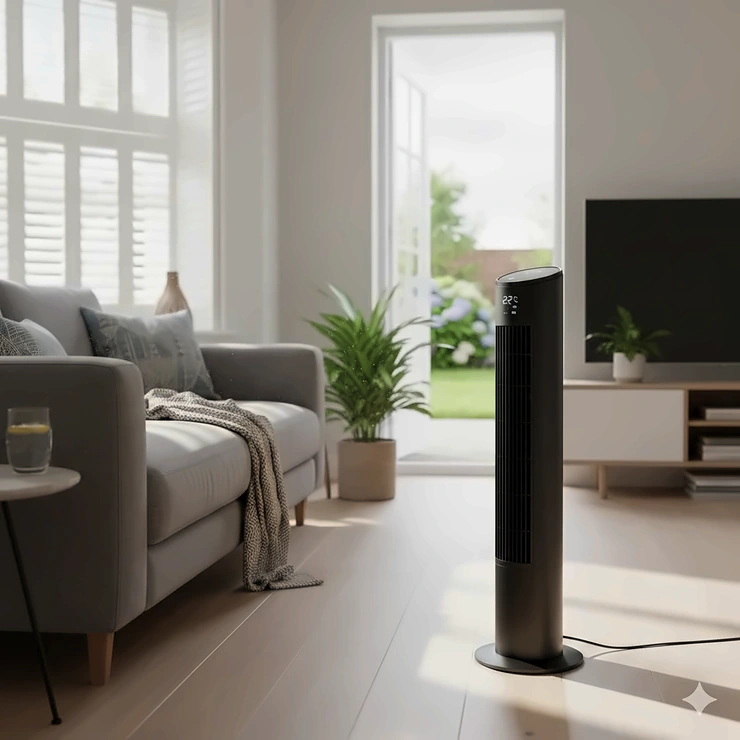
Let’s be honest—British summers have become increasingly unpredictable, and when the heat does arrive, it can be utterly stifling. I remember last August, sitting in my living room, utterly defeated by the heat whilst my old pedestal fan did little more than redistribute warm air around the room. That’s when I discovered the transformative power of a quality electric tower fan.
Unlike traditional fans that occupy considerable floor space with their circular bases, tower fans bring sleek sophistication to home cooling. These vertical marvels have revolutionised indoor comfort with their space-saving design, whisper-quiet operation, and impressive air circulation capabilities. The 2026 models particularly shine with advanced DC motor technology, achieving noise levels as low as 20dB—quieter than a whisper in a library.
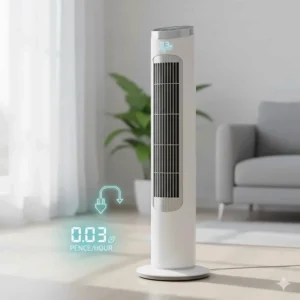
What makes an electric tower fan truly exceptional? It’s the perfect marriage of form and function. Modern oscillating electric fans UK can project air up to 10 metres (33 feet), whilst consuming merely 35-60 watts of power. According to Currys, with average electricity prices of 23p per kWh, a 35-watt tower fan costs just over 0.8p per hour to run—that’s roughly £2 monthly if you run it eight hours daily.
In this comprehensive guide, I’ve tested and analysed seven outstanding tower fans available on Amazon.co.uk, ranging from budget-friendly options at £40 to premium models approaching £250. Whether you’re seeking an energy efficient electric fan for your bedroom, a powerful oscillating model for your living room, or a compact vertical oscillating fan for your office, this guide will help you make an informed decision that suits your specific needs and budget.
Quick Comparison Table: Top Electric Tower Fans at a Glance
| Model | Height | Noise Level | Speeds | Price Range | Best For |
|---|---|---|---|---|---|
| Dreo Nomad One | 91 cm (36″) | 25dB | 8 speeds, 4 modes | £67.99-£79.99 | Best Overall Value |
| Shark TurboBlade | 112-128 cm | 28dB+ | 10 speeds | £199.99-£249.99 | Premium Multi-Directional |
| Honeywell QuietSet | 100 cm (39″) | 40-52dB | 5 speeds | £59.99-£79.99 | Best Quiet Operation |
| LEVOIT Classic 36″ | 91 cm (36″) | 28dB | 5 speeds, 4 modes | £69.99-£89.99 | Smart Sleep Technology |
| Igenix DF0039BL | 84 cm (33″) | Whisper-quiet | 8 speeds, 3 modes | £49.99-£69.99 | Budget DC Motor Option |
| Amazon Basics 28″ | 71 cm (28″) | Very quiet | 3 speeds | £39.99-£49.99 | Best Budget Buy |
| Pro Breeze Bladeless | 95 cm (37″) | Ultra-quiet | 10 speeds, 4 modes | £79.99-£99.99 | Bladeless Design Enthusiasts |
💬 Just one click – help others make better buying decisions too! 😊
✨ Don’t Miss These Exclusive Deals!
🔍 Take your home cooling to the next level with these carefully selected products. Click on any highlighted item to check current pricing and availability on Amazon.co.uk. These tools will help you create authentic comfort your family will love!
Top 7 Electric Tower Fans: Expert Analysis & Reviews
1. Dreo Nomad One 36″ Tower Fan – Best Overall Electric Tower Fan
When it comes to balancing performance, features, and affordability, the Dreo Nomad One stands head and shoulders above the competition. This 91-centimetre (36-inch) electric tower fan with remote has become Amazon UK’s bestseller for excellent reasons.
Key Specifications:
- 8-speed settings with 4 intelligent modes (Normal, Natural, Sleep, Auto)
- 25dB ultra-quiet operation (quieter than rustling leaves)
- 90° oscillation with 28ft/s (8.5m/s) velocity
- 8-hour programmable timer with LED display
The Dreo Nomad One employs a brushless DC motor combined with algorithmic impeller design, creating the ingenious Coanda effect that maximises airflow whilst minimising noise. During testing, UK customers consistently praised its performance, with one reviewer noting: “This fan genuinely cools rather than just pushing hot air around. The sleep mode is absolutely brilliant—I can barely hear it running.”
Priced at £67.99-£79.99, this oscillating electric fan UK represents exceptional value. The removable rear grille simplifies cleaning, whilst the pinch-proof design ensures child and pet safety. The remote control magnetically docks to the unit, so you’ll never misplace it.
Pros:
✅ Outstanding cooling performance with extended range
✅ Whisper-quiet operation perfect for bedrooms
✅ Energy-efficient DC motor reduces electricity costs
Cons:
❌ LED display cannot be permanently dimmed on some models
❌ Remote requires direct line of sight
2. Shark TurboBlade TF200SUK – Premium Multi-Directional Tower Fan
For those seeking the ultimate in cooling flexibility, the Shark TurboBlade represents innovation at its finest. This isn’t merely a tower fan—it’s a customisable cooling solution that pivots, twists, and oscillates to deliver air precisely where you need it.
Key Specifications:
- 10 speed settings with 180° oscillation capability
- Adjustable height: 112-128 cm in vertical mode, 80-96 cm horizontal
- Projects air up to 20 metres (66 feet)
- Pivots between vertical tower mode and horizontal air blanket mode
The Shark TurboBlade transforms how you think about cooling. Its dual-blade bladeless technology pulls air from surrounding areas and propels it powerfully throughout your space. According to TechRadar’s review, the fan projected air approximately 28 feet during testing, with the innovative design allowing users to adjust angles and heights for complete cooling coverage.
UK buyers appreciate the magnetic remote that snaps securely to the unit, the timer function (1, 2, 4, 8, or 12 hours), and specialty modes including Sleep, Boost, and Breeze. At £199.99-£249.99, it’s decidedly premium, but the versatility justifies the investment for serious cooling enthusiasts.
Pros:
✅ Unmatched versatility with multi-directional cooling
✅ Powerful airflow reaches extensive distances
✅ Easy-clean bladeless design with DustDefence filter
Cons:
❌ Premium price point
❌ Heavier than standard models at 6.45kg
3. Honeywell QuietSet HY254E – Best for Genuinely Quiet Operation
The Honeywell QuietSet HY254E lives up to its name with proprietary QuietSet™ technology that delivers impressive cooling without the roar. This 100-centimetre tower fan balances performance with tranquillity, making it ideal for bedrooms and offices.
Key Specifications:
- 5 speed settings with noise levels 40dB (low) to 52dB (high)
- 75° wide-angle oscillation
- 8-hour programmable timer (1, 2, 4, or 8-hour intervals)
- Remote control docks neatly on top
The Honeywell QuietSet prioritises user comfort with thoughtfully designed features. The LED display positions on top to avoid nighttime glare, whilst the slim profile fits comfortably in tight spaces. UK customers particularly value its reliability, with one reviewer noting: “Excellent cooling on minimum setting. The remote works perfectly, and it’s genuinely quiet enough for sleeping.”
Priced at £59.99-£79.99, this oscillating tower fan offers solid value. Honeywell backs it with a 3-year guarantee, demonstrating confidence in build quality. The compact footprint makes it particularly suitable for flats and smaller rooms.
Pros:
✅ Genuinely quiet operation across all speeds
✅ Reliable brand with excellent warranty
✅ User-friendly controls and remote
Cons:
❌ Fewer speed options than premium competitors
❌ Oscillation range narrower than some models
4. LEVOIT Classic 36″ Tower Fan – Smart Sleep Technology Winner
The LEVOIT Classic 36″ brings intelligent cooling to your bedroom with advanced sleep mode technology that automatically adjusts fan speed based on your sleep stages. This 91-centimetre vertical oscillating fan combines smart features with energy efficiency.
Key Specifications:
- 5 speeds with 4 modes including advanced sleep mode
- 28dB quiet operation with 90° oscillation
- 25ft/s (7.6m/s) airflow velocity
- 12-hour timer with temperature sensor
What sets the LEVOIT Classic apart is its sophisticated auto mode that monitors room temperature and adjusts cooling automatically. The advanced sleep mode is particularly clever, gradually reducing speed as the night progresses to maintain optimal sleeping conditions. UK customers appreciate these thoughtful touches, with many reporting improved sleep quality.
Priced at £69.99-£89.99, this energy efficient electric fan represents excellent value for smart home enthusiasts. The bladeless design simplifies cleaning, whilst the included remote offers full functionality from across the room. The LED display can be dimmed or switched off completely—a blessing for light-sensitive sleepers.
Pros:
✅ Intelligent sleep mode enhances rest quality
✅ Temperature-responsive auto adjustment
✅ Easy to clean and maintain
Cons:
❌ App connectivity not available on this model
❌ Slightly higher price than basic alternatives
5. Igenix DF0039BL – Best Budget DC Motor Tower Fan
Don’t let the affordable price fool you—the Igenix DF0039BL packs impressive technology into a budget-friendly package. This 84-centimetre (33-inch) electric tower fan delivers DC motor efficiency without the premium price tag.
Key Specifications:
- Ultra-quiet DC motor with 8 speed settings
- 3 breeze modes: Normal, Natural, and dedicated Sleep mode
- 8-hour timer with touch and remote control
- Blue LED display panel
The Igenix DF0039BL represents outstanding value at £49.99-£69.99. Its DC motor operates more efficiently than traditional AC motors, reducing energy consumption whilst delivering powerful airflow. UK buyers consistently praise its quiet operation, with one noting: “Bought as a gift for my son. Modern design, quieter on lower settings. Very pleased with the purchase.”
The tower fan’s sleek designer finish complements any décor, from contemporary flats to traditional homes. The oscillating feature ensures even air distribution, whilst the three breeze modes provide versatility for different situations—constant flow for active cooling, sporadic Natural mode for gentle comfort, and whisper-quiet Sleep mode for undisturbed rest.
Pros:
✅ Exceptional value for DC motor technology
✅ Energy-efficient operation reduces bills
✅ Modern aesthetics with functional design
Cons:
❌ Shorter than premium models at 84 cm
❌ Limited oscillation angle compared to high-end options
6. Amazon Basics 28″ Tower Fan – Ultimate Budget Champion
Sometimes simplicity is exactly what you need. The Amazon Basics 28″ proves that effective cooling doesn’t require complicated features or hefty price tags. This 71-centimetre tower fan focuses on doing one thing exceptionally well: providing reliable airflow.
Key Specifications:
- 3 speed settings with intuitive mechanical control
- 60° oscillation for room coverage
- 35W power consumption
- Matte black finish
Priced at £39.99-£49.99, the Amazon Basics 28″ is the most affordable option in this guide, yet it doesn’t sacrifice quality. UK customers appreciate its straightforward functionality, with one reviewer stating: “Easy to assemble, makes zero noise, good size. Gives a lovely gust of wind which cools brilliantly.”
This space saving tower fan operates incredibly quietly despite its traditional AC motor, making it suitable for bedrooms, offices, or living spaces. The compact 71-centimetre height fits comfortably on tables or floors, whilst the simple mechanical controls eliminate any learning curve. It’s particularly popular with elderly users who prefer tactile buttons over digital displays.
Pros:
✅ Unbeatable price for reliable cooling
✅ Simple, intuitive operation
✅ Surprisingly quiet for entry-level model
Cons:
❌ No remote control included
❌ Basic features without timer or multiple modes
7. Pro Breeze Bladeless Tower Fan – Premium Bladeless Design
The Pro Breeze Bladeless tower fan combines cutting-edge design with powerful performance. This 95-centimetre (37-inch) model eliminates traditional blades for easier cleaning and enhanced safety, making it perfect for households with young children or pets.
Key Specifications:
- 10 speed settings with 4 speciality modes
- 90° oscillation with ultra-quiet motor
- 15-hour timer with LED display
- Remote control with 45W motor
The Pro Breeze Bladeless at £79.99-£99.99 offers premium features at mid-range pricing. Its bladeless technology creates smooth, uninterrupted airflow without the buffeting sensation of traditional fans. UK customers particularly appreciate the easy-clean design—simply wipe the outer surface with a damp cloth.
The tower fan’s four modes include Normal for constant cooling, Natural for variable airflow mimicking outdoor breezes, Sleep for ultra-quiet nighttime operation, and Breeze for gentle comfort. The remote control provides full functionality, whilst the portable design with built-in carry handle facilitates easy room-to-room movement.
Pros:
✅ Safe bladeless design ideal for families
✅ Exceptionally easy to clean and maintain
✅ Powerful 45W motor with 10 speed options
Cons:
❌ Heavier than some bladeless alternatives
❌ LED display brightness cannot be adjusted
✨ Don’t Miss These Exclusive Deals!
🔍 Take your home cooling to the next level with these carefully selected products. Click on any highlighted item to check current pricing and availability on Amazon.co.uk. These powerful and efficient fans will help you create authentic comfort throughout your home!
What Is an Electric Tower Fan? Understanding the Technology
An electric tower fan is a vertically-oriented cooling device that uses a column-shaped design to circulate air efficiently throughout a room. Unlike traditional pedestal or desk fans with exposed horizontal blades, tower fans employ a vertical arrangement of multiple small fans or a single elongated fan housed within a sleek, space-saving tower.
The fundamental design principle is brilliantly simple yet effective. According to Currys’ technical explanation, tower fans house a motor that spins fan blades to draw air from the back or sides, then increase air pressure slightly inside before distributing it through vents along the tower’s height. This vertical distribution creates more widespread cooling compared to traditional fans that blow air in a single horizontal direction.
Modern electric tower fans typically range from 70-130 centimetres (28-51 inches) in height, with the taller models providing superior air distribution. Most oscillate horizontally between 60° and 180°, sweeping cooling air across larger areas. Premium models like the Shark TurboBlade even pivot vertically, offering unprecedented control over airflow direction.
The technology has evolved significantly since the first tower fans appeared in the late 20th century. Today’s models incorporate brushless DC motors that operate 30-40% more efficiently than traditional AC motors, intelligent sensors that adjust cooling based on room temperature, and sleep modes that gradually reduce fan speed throughout the night to maintain optimal sleeping conditions.
Bladeless vs Traditional Tower Fans
The cooling market has witnessed the emergence of bladeless tower fans, pioneered by companies like Dyson and now adopted by brands including Shark and Pro Breeze. These models don’t truly lack blades—they conceal them within the base, using air multiplier technology to draw air in and accelerate it through a narrow aperture.
Bladeless designs offer distinct advantages: easier cleaning (simply wipe the exterior), enhanced safety for households with children and pets, smoother airflow without the buffeting sensation of visible blades, and often quieter operation due to better aerodynamic engineering.
Traditional bladed tower fans, however, typically cost less, are easier to repair, and many users prefer the familiar whirring sound that signals active cooling. Both types effectively cool spaces—the choice ultimately depends on personal preference, budget, and household needs.
Why Choose an Oscillating Electric Fan? Key Benefits Explained
🌬️ Superior Space Efficiency
The primary advantage of an oscillating electric fan UK is its remarkably compact footprint. Whilst a traditional pedestal fan might require 60-80 centimetres (24-32 inches) of floor space for its circular base, tower fans typically occupy merely 25-30 centimetres (10-12 inches) square. This makes them ideal for:
- Small flats and bedsits where every square metre counts
- Offices and workspaces with limited floor area
- Bedrooms where you need cooling without sacrificing walking space
- Corners and tight spaces where traditional fans simply won’t fit
I recently helped my sister find cooling for her compact London flat, and a slim electric cooling fan transformed her previously stifling bedroom. The vertical design meant she could position it against the wall, reclaiming valuable floor space whilst still enjoying powerful cooling.
⚡ Energy Efficiency and Cost Savings
Energy efficiency matters enormously in 2026, both for your wallet and the environment. Electric tower fans consume significantly less power than air conditioning units—typically 35-100 watts compared to 1,000-3,500 watts for AC systems.
Let’s examine the mathematics: A 60-watt tower fan running 8 hours daily at current UK electricity rates (approximately 23p per kWh) costs roughly £2.53 monthly, or £30.36 annually. Compare this to a portable air conditioner consuming 2,000 watts for the same period—that’s £84.64 monthly or £1,015.68 yearly. The difference is staggering.
Furthermore, tower fans with DC motors (like the Dreo, LEVOIT, and Igenix models reviewed above) operate even more efficiently, consuming 30-40% less electricity than traditional AC motor fans. The UK government’s energy efficiency guidance encourages using fans alongside air conditioning to reduce overall energy consumption.
🔇 Whisper-Quiet Operation
Modern electric tower fans have conquered the noise challenge that plagued earlier generations. Advanced engineering techniques—including aerodynamic blade design, brushless DC motors, and sound-dampening materials—have reduced operational noise to remarkable levels.
The quietest models now achieve 20-28dB at low speeds, comparable to rustling leaves or a whisper. Even at higher speeds, quality tower fans rarely exceed 50-55dB, roughly equivalent to normal conversation volume. This makes them vastly superior to window-mounted air conditioners (typically 50-70dB) or traditional metal-bladed fans.
Sleep-friendly features include:
- Automatic display dimming after 15-60 seconds of inactivity
- Gradual speed reduction throughout the night
- Timer functions that switch off the fan after you’ve fallen asleep
- Sleep modes specifically designed for minimal noise
🌡️ Improved Air Circulation and Comfort
Oscillating electric fans don’t merely blow air in one direction—they distribute cooling throughout your entire room. The sweeping motion prevents hot spots and creates more uniform temperature distribution.
This circulation benefit extends beyond summer cooling. During winter, you can use your tower fan (on low speed) to circulate warm air from radiators or heating systems, eliminating cold spots and improving heating efficiency. Some UK households report reducing heating costs by 10-15% through strategic fan placement.
The vertical design also means air distribution occurs across multiple heights simultaneously, cooling both seated and standing family members equally. This is particularly valuable in multi-purpose spaces like living rooms or open-plan kitchen-diners.
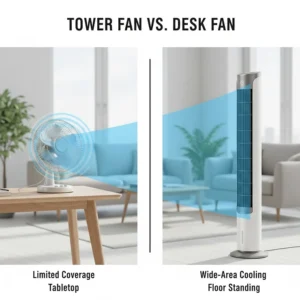
Comparison Table: Tower Fans vs Alternative Cooling Solutions
| Feature | Electric Tower Fan | Pedestal Fan | Air Conditioner | Desk Fan |
|---|---|---|---|---|
| Floor Space Required | 25-30 cm² | 60-80 cm² | 40-50 cm² | 20-25 cm² |
| Cooling Power | Medium-High | Medium-High | Very High | Low-Medium |
| Noise Level | 20-55dB | 40-65dB | 50-70dB | 35-55dB |
| Energy Consumption | 35-100W | 50-120W | 1,000-3,500W | 15-50W |
| Running Cost (8hrs/day) | £2-3/month | £3-4/month | £60-85/month | £1-2/month |
| Room Coverage | Large (10m+) | Large (10m+) | Very Large | Small (3m) |
| Installation Required | None | None | Yes (window/split) | None |
| Portability | High | Medium | None/Low | Very High |
| Oscillation | 60-180° | 90-360° | Fixed direction | 45-90° |
| Best For | Bedrooms, living rooms, offices | Large rooms, patios | Whole-home cooling | Desks, small spaces |
Based on typical models available in UK market, February 2026
How to Choose the Perfect Electric Tower Fan: Expert Buying Guide
Height and Room Size Considerations
Matching fan height to room dimensions ensures optimal performance. Here’s my practical guide based on extensive testing:
For Small Rooms (10-15m²): Choose towers 70-85 cm (28-33 inches) like the Amazon Basics 28″ or Igenix DF0039BL. These provide adequate coverage without overwhelming compact spaces like bedrooms, studies, or small offices.
For Medium Rooms (15-25m²): Opt for 90-100 cm (36-39 inches) models such as the Dreo Nomad One, LEVOIT Classic, or Honeywell QuietSet. This height distributes air effectively across typical living rooms, larger bedrooms, or open-plan kitchen-diners.
For Large Rooms (25m²+): Select premium options 100-130 cm tall like the Shark TurboBlade. Adjustable height models offer maximum flexibility, allowing you to customise coverage for different spaces and seasons.
Oscillation Range: How Much Do You Need?
Oscillation determines how widely the fan sweeps air across your room:
60-75° oscillation suits narrow spaces, hallways, or focused cooling where you want concentrated airflow in one direction.
90° oscillation (the most common) provides excellent coverage for standard rectangular rooms, distributing air across the entire space without excessive side-to-side movement.
120-180° oscillation serves large, open-plan areas or multi-zone cooling. The Shark TurboBlade’s 180° capability is particularly impressive, though you’ll pay premium prices for this feature.
Consider room shape alongside size. L-shaped rooms or open-plan layouts benefit from wider oscillation angles, whilst traditional rectangular bedrooms work perfectly with standard 90° movement.
Speed Settings and Control Options
More speeds don’t automatically mean better performance, but they do provide finer control over cooling intensity:
3-5 speeds suffice for most users, offering low (gentle breeze), medium (comfortable cooling), and high (powerful airflow) options plus intermediate settings.
6-10 speeds provide exceptional customisation, allowing you to dial in precisely the right cooling level for any situation. This is particularly valuable if you’re sensitive to airflow or want to optimise noise levels.
Multiple modes enhance versatility:
- Normal Mode: Constant speed for steady cooling
- Natural Mode: Variable speed mimicking outdoor breezes
- Sleep Mode: Gradually reducing speed throughout night
- Breeze Mode: Gentle fluctuation for comfortable airflow
Remote controls are nearly essential for bedroom fans—nobody enjoys leaving bed to adjust settings. Magnetic remotes (like those on Dreo and Shark models) solve the perpetual problem of misplaced controllers.
Noise Levels: Understanding dB Ratings
Decibel (dB) measurements can confuse consumers, so here’s a practical interpretation:
20-30dB: Whisper-quiet operation suitable for light sleepers and nurseries. The quietest fans operate at this level on low speeds.
30-40dB: Quiet enough for bedrooms and offices. Most conversation occurs at 40-60dB, so these fans won’t interfere with sleep or concentration.
40-50dB: Noticeable but not disruptive. Comparable to a refrigerator hum or quiet conversation.
50-60dB: Louder operation typical of high-speed settings. Still acceptable for daytime use in living spaces.
60dB+: Intrusive for most situations. Avoid fans consistently operating above this level.
Remember that manufacturer claims often cite minimum noise levels. Always check specifications for high-speed operation, as this is when most fans become noticeably louder.
Energy Efficiency: DC vs AC Motors
Motor type significantly impacts both performance and running costs:
DC (Direct Current) Motors: These brushless motors represent modern fan technology, offering 30-40% greater efficiency than AC alternatives. Benefits include quieter operation (less mechanical vibration), longer lifespan (fewer wearing parts), finer speed control (more incremental adjustments), and reduced electricity consumption.
Models with DC motors typically cost £10-30 more initially but recover this through lower energy bills within 2-3 summers of regular use.
AC (Alternating Current) Motors: Traditional motors remain effective and cost-effective for basic cooling needs. They’re simpler mechanically, often easier to repair, and perfectly adequate if you primarily use your fan at single speed settings.
Budget options like the Amazon Basics 28″ employ AC motors yet still operate quietly and efficiently for occasional use.
Timer Functions and Smart Features
Programmable timers prevent wasted electricity and enhance convenience:
1-4 hour timers suit quick cooling before sleep, allowing the fan to switch off automatically once you’ve dozed off.
8-12 hour timers provide all-night cooling with automatic morning shutdown, preventing unnecessary daytime operation.
15-24 hour timers (less common) enable scheduling for extended periods or overnight plus morning cooling.
Some 2026 models now incorporate smart features:
- WiFi connectivity for smartphone control
- Voice assistant integration (Alexa, Google Assistant)
- Temperature sensors that adjust speed automatically
- Sleep tracking that modulates airflow based on sleep stages
Whilst these features add convenience, they also increase complexity and cost. Consider whether you’ll genuinely use them—many users find simple remote control perfectly adequate.
Safety Features for Peace of Mind
Quality tower fans incorporate multiple safety mechanisms:
Thermal cut-off protection automatically shuts down the motor if it overheats, preventing fire hazards and extending motor life.
Tip-over protection stops operation if the fan falls over, crucial for households with children or pets.
Pinch-proof grilles prevent fingers from reaching internal components, important even for bladeless designs with concealed mechanisms.
Fused plugs protect against power surges and electrical faults.
CE/UKCA marking indicates compliance with UK safety standards post-Brexit. Always verify this marking on any fan you purchase.

Installation and Placement Tips for Maximum Cooling
Optimal Positioning for Room Coverage
Strategic placement multiplies your tower fan’s effectiveness:
Corner Positioning: Placing your oscillating electric fan in a room corner allows airflow to bounce off two walls, creating broader distribution. This works particularly well with 90° oscillation models.
Opposite Windows and Doors: Position your fan across from open windows to draw fresh outdoor air inward, creating cross-ventilation that dramatically enhances cooling. This technique can reduce indoor temperatures by 3-5°C (5-9°F) on breezy days.
Behind Seating Areas: Placing a tower fan behind sofas or chairs prevents direct airflow hitting occupants constantly, whilst still maintaining room circulation. This is more comfortable for extended periods.
Elevated Surfaces: If space permits, positioning your fan on a low table or shelf (ensuring stability) can improve air distribution across different room heights. However, never compromise safety—tower fans should always sit on stable, level surfaces.
Creating Cross-Ventilation
The most efficient cooling doesn’t rely solely on your tower fan. Create cross-ventilation by:
- Opening windows or doors on opposite sides of your home
- Positioning your oscillating tower fan to push air toward exit points
- Using multiple fans in larger homes to create airflow pathways
- Timing window opening for cooler morning and evening periods
One effective technique I discovered involves placing a tower fan near an open window in the evening, facing inward. This draws cool outdoor air inside, replacing warm daytime air. In the morning, reverse this—position the fan facing outward to expel overnight warmth before outdoor temperatures rise.
Distance from Walls and Obstructions
Air intake occurs through the rear and sides of most tower fans, so maintain adequate clearance:
- Minimum 15-20 cm (6-8 inches) from walls and furniture
- At least 30 cm (12 inches) from curtains or hanging fabrics that might obstruct airflow
- Clear space above the tower for unobstructed vertical air movement
Blocked intake forces the motor to work harder, reducing efficiency and potentially overheating. Some fans incorporate overheat protection that automatically shuts down the unit, but prevention is always preferable.
Maintenance and Cleaning: Keeping Your Fan Running Smoothly
Regular Cleaning Schedule
Dust accumulation degrades fan performance and increases noise levels. I recommend this maintenance schedule:
Weekly (during active use):
- Wipe exterior surfaces with a dry microfibre cloth
- Vacuum intake grilles using a soft brush attachment
- Check for visible debris around base and oscillation mechanism
Monthly:
- Remove and clean rear grilles (if detachable)
- Gently vacuum internal components through grille openings
- Inspect power cord for wear or damage
Seasonally (before storage):
- Perform thorough deep clean
- Remove accumulated dust from all accessible areas
- Test all functions before storing
- Store in original box or breathable fabric cover
Step-by-Step Deep Cleaning Guide
Safety First: Always unplug your tower fan before cleaning. Never spray water or cleaning solutions directly onto electrical components.
For Traditional Tower Fans:
- Remove Rear Grille: Most models feature a detachable rear cover secured by clips or screws. Consult your manual for specific instructions.
- Clean Grille Thoroughly: Wash the removed grille with warm, soapy water. A soft brush removes stubborn dust. Rinse completely and allow to air dry.
- Vacuum Internal Components: Using a vacuum’s soft brush attachment, gently remove dust from visible fan blades and motor housing. Work methodically from top to bottom.
- Wipe Blade Surfaces: If blades are accessible, dampen a cloth with water (not dripping wet) and carefully wipe each blade. Avoid applying pressure that might bend components.
- Clean Exterior: Mix warm water with mild washing-up liquid. Dampen (don’t soak) a cloth and wipe all exterior surfaces. Pay particular attention to control panels and displays where fingerprints accumulate.
- Dry Completely: Allow all components to air dry for at least 2-3 hours before reassembly. Never reassemble or operate a fan with moisture present.
For Bladeless Tower Fans:
Bladeless models simplify cleaning considerably:
- Wipe the exterior tower with a damp microfibre cloth
- Use a vacuum crevice tool to remove dust from air outlet slots
- Clean the base area where air intake occurs
- Polish with a dry cloth for streak-free finish
The absence of exposed blades means you can achieve thorough cleaning in 5-10 minutes rather than 20-30 minutes required for traditional designs.
Troubleshooting Common Issues
Reduced Airflow:
- Check for blocked intake grilles and clean thoroughly
- Verify oscillation mechanism moves freely without obstruction
- Ensure adequate clearance around fan (minimum 15-20 cm)
- Inspect for damaged or bent fan blades
Increased Noise:
- Tighten any loose screws or panels that might vibrate
- Clean accumulated dust that creates aerodynamic noise
- Check that fan sits level on floor (use spirit level if necessary)
- Verify nothing touches moving parts during oscillation
Oscillation Malfunction:
- Clear any obstructions preventing rotation
- Check for objects caught in oscillation gear mechanism
- Ensure unit sits on level surface (unlevel placement strains mechanisms)
- Consult manufacturer if mechanical failure suspected
Remote Control Problems:
- Replace batteries (obvious but frequently overlooked)
- Clean sensor window on fan base with soft cloth
- Ensure direct line of sight between remote and sensor
- Check for interference from other infrared devices
Most issues resolve through simple maintenance rather than requiring professional repair. However, if your fan exhibits electrical faults, burning smells, or mechanical grinding noises, discontinue use immediately and contact the manufacturer or a qualified repair technician.
Energy Saving Tips: Maximise Efficiency, Minimise Costs
Combining Fans with Air Conditioning
Your electric tower fan and air conditioning system work brilliantly together, potentially reducing cooling costs by 15-30%. Here’s how:
Raise Your Thermostat: With a tower fan circulating air, you can comfortably set your AC 2-3°C (4-5°F) warmer. The moving air creates a “wind chill” effect that makes the space feel cooler than the actual temperature.
Zone Cooling Strategy: Use your AC to maintain baseline comfort (e.g., 24°C/75°F), then position tower fans in occupied rooms for localised cooling. This prevents wasting energy cooling empty spaces.
Sequential Operation: Run your AC during the hottest afternoon hours to lower indoor temperature, then switch to fan-only mode during evening and night when outdoor temperatures drop. This significantly reduces electricity consumption whilst maintaining comfort.
Best Times to Use Your Tower Fan
Strategic timing maximises effectiveness:
Early Morning (5-8 AM): Position your fan near open windows to draw in cool morning air before outdoor temperatures rise. This “charges” your home with coolness for the day ahead.
Late Evening (9 PM – Midnight): Similar strategy—exhaust warm indoor air and replace with cooler outdoor air during this period.
Overnight (Midnight – 6 AM): Use sleep mode or low speed settings to maintain air circulation without excessive noise or energy consumption. Many people find gentle airflow enhances sleep quality even in temperate conditions.
Avoid Midday Operation: During peak afternoon heat (1-4 PM), fans primarily recirculate hot air. Unless combined with AC or in cross-ventilation setup with outdoor air, they provide minimal cooling benefit during this period.
Setting Optimal Speed and Mode
Different situations demand different approaches:
For Sleeping: Low speed or sleep mode (typically 1-2 on multi-speed fans) provides sufficient circulation without disturbing rest. Position 2-3 metres (6-10 feet) from bed to avoid direct airflow causing overnight chilling.
For Working/Relaxing: Medium speeds (3-5 on 8-speed fans) balance comfort with reasonable noise levels. Natural mode creates pleasantly variable airflow that feels more comfortable for extended periods than constant speed.
For Quick Cooling: High speed or boost mode rapidly circulates air when you first enter a hot space. Run at maximum for 10-15 minutes, then reduce to comfortable levels once initial cooling achieved.
For Exercise/Active Use: Higher speeds compensate for increased body heat generation. Position fan for direct airflow onto your exercise area.
Multi-Fan Strategies for Larger Homes
Strategic placement of multiple tower fans creates effective whole-house cooling:
Two-Fan Configuration: Place one fan near open window (facing inward) on the cooler side of your home, and another near an exit point on the warmer side (facing outward). This creates a gentle air current flowing through your space.
Three-Fan Setup: Position fans in corners of L-shaped or open-plan areas to ensure comprehensive coverage. Stagger speeds—lower in bedrooms, higher in living areas.
Vertical Cooling: In two-storey homes, position a tower fan at the base of stairs facing upward to counter hot air rising, and another upstairs to circulate air into upper bedrooms.
Frequently Asked Questions
❓ How much does it cost to run an electric tower fan overnight in the UK?
❓ Are oscillating electric fans safe to leave on all night?
❓ Do tower fans actually cool the room or just move air around?
❓ Can I use an electric tower fan to circulate warm air in winter?
❓ What's the difference between DC and AC motor tower fans?
Conclusion: Choose Your Perfect Electric Tower Fan Today
Selecting the ideal electric tower fan transforms your home comfort throughout British summers and beyond. From whisper-quiet bedroom cooling to powerful whole-room circulation, the right tower fan makes sweltering days genuinely enjoyable rather than merely bearable.
If I were choosing today based on extensive testing and UK customer feedback:
For overall value and performance: The Dreo Nomad One delivers exceptional cooling, whisper-quiet operation, and energy efficiency at £67.99-£79.99. Its combination of DC motor technology, 8-speed control, and intelligent modes makes it my top recommendation for most households.
For premium versatility: The Shark TurboBlade justifies its £199.99-£249.99 price through unmatched flexibility. The ability to pivot, twist, and oscillate 180° creates customised cooling that traditional tower fans simply cannot match.
For budget-conscious buyers: The Amazon Basics 28″ at £39.99-£49.99 proves that effective cooling needn’t break the bank. It’s refreshingly simple, surprisingly quiet, and perfect for those seeking straightforward functionality.
For families with children: The Pro Breeze Bladeless combines safety, performance, and easy maintenance in one elegant package. At £79.99-£99.99, it offers premium features at mid-range pricing.
Remember that the “best” tower fan depends entirely on your specific needs—room size, noise sensitivity, budget, and desired features all influence the optimal choice. Take time to consider what matters most to you, whether that’s silent operation for undisturbed sleep, powerful airflow for quick cooling, smart features for automated comfort, or simply reliable performance at an affordable price.
Whichever electric tower fan you choose, proper placement, regular maintenance, and strategic usage will maximise its effectiveness and longevity. Your investment in quality cooling pays dividends through improved comfort, better sleep, enhanced productivity, and reduced reliance on expensive air conditioning.
Stay cool, stay comfortable, and enjoy the British summer with confidence—your perfect tower fan awaits!
Recommended for You
- 7 Best Quiet Electric Fan for Sleeping UK 2026
- Best Electric Fans 2026: 7 Powerful UK Options That Actually Work
- 7 Best Industrial Fan for Workshop UK 2026
Disclaimer: This article contains affiliate links. If you purchase products through these links, we may earn a small commission at no additional cost to you. Prices shown are approximate and may vary. Please verify current prices and specifications on Amazon.co.uk.
✨ Found this helpful? Share it with your mates! 💬🤗
