

In This Article
Let’s be honest. British kitchens are not exactly known for their lavish square footage. You’re working in a space that might generously be described as “cosy,” cooking a Sunday roast with all the trimmings, and before long the air is a warm, greasy fog that’s slowly migrating into the living room and up the stairs. Sound familiar?
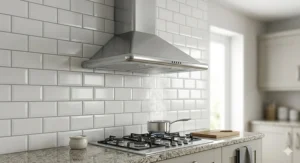
A good kitchen extractor fan isn’t a luxury. It’s the unsung hero of the modern British home — the appliance that quietly (or not so quietly) deals with the smoke, steam, and eau de last night’s fish curry so you don’t have to. More than just a convenience, proper kitchen ventilation is a genuine health matter. According to Which?, inadequate extraction leads to excess moisture, grease build-up, and persistent odours — all of which are unpleasant in a flat and genuinely damaging in a terraced house where condensation and mould can take hold surprisingly fast.
What’s a kitchen extractor fan, exactly? In its simplest form, it’s a mechanical ventilation system — typically mounted above the hob — that removes airborne grease, steam, smoke, and cooking odours from your kitchen by either ducting them outside or filtering and recirculating the air. The minimum extraction rate for a cooker hood positioned directly over the hob is 30 litres per second, as specified by Approved Document F of the UK Building Regulations. If your extractor is positioned elsewhere in the kitchen, that rises to 60 litres per second — a distinction most buyers never realise matters.
In 2026, there are more options than ever across every price bracket. Whether you’re doing up a one-bedroom flat in Leeds, refitting a family kitchen in Bristol, or finally replacing the asthmatic old hood that came with the house, this guide will walk you through the seven best kitchen extractor fans available on Amazon.co.uk right now — with the honest, practical commentary that product listings simply never bother to include.
Quick Comparison: Best Kitchen Extractor Fans UK 2026
| Product | Type | Extraction Rate | Noise Level | Price Range | Best For |
|---|---|---|---|---|---|
| CIARRA CBCS6201 60cm | Chimney Wall | 370 m³/h | ~55 dB | Under £100 | Budget buyers, small kitchens |
| COMFEE’ KWH-PYRA17SS-60 | Chimney Wall | 400 m³/h | ~52 dB | Under £100 | Value seekers, everyday cooking |
| COMFEE’ ANGJ64B-60 Angled | Angled Glass | 550 m³/h | ~58 dB | £100–£160 | Modern kitchens, heavier cooking |
| SIA AGE61BL Angled | Angled Glass | 550 m³/h | ~57 dB | £120–£180 | Design-conscious buyers |
| CIARRA CAS6201A 60cm | Chimney Wall | ~400 m³/h | ~54 dB | £80–£130 | Mid-range, dual-mode flexibility |
| Neff D64BHM1N0B 60cm | Flat Wall | 605 m³/h boost | 47 dB | £300–£450 | Quiet operation, serious cooking |
| CIARRA CBCS9102 90cm Wi-Fi | Chimney Wall | 650 m³/h | ~60 dB | £200–£320 | Large kitchens, tech enthusiasts |
Reading the table: The jump in price from budget to premium is real, but so is the jump in quality. The Neff at 47 dB is notably quieter than anything under £200 — which, when you’re cooking for an hour while trying to hold a conversation, matters quite a bit. Budget picks compensate with surprisingly decent extraction rates, though expect to clean those aluminium grease filters more frequently.
💬 Just one click — help others make better buying decisions too! 😊
✨ Don’t Miss These Exclusive Deals!
🔍 Take your kitchen ventilation to the next level with these carefully selected products. Click on any highlighted item to check current pricing and availability on Amazon.co.uk. These picks will help you find exactly what you need!
Top 7 Kitchen Extractor Fans: Expert Analysis
1. CIARRA CBCS6201 60cm Chimney Cooker Hood — Best Budget Pick
The CIARRA CBCS6201 is one of the most popular kitchen extractor fans on Amazon.co.uk, and with good reason — it punches well above its price bracket in almost every department. At 60cm wide, it sits comfortably above a standard British hob, and its stainless steel finish with an ultra-thin 20mm control panel looks genuinely polished rather than plasticky.
The 370 m³/h extraction rate handles everyday British cooking without breaking a sweat. For weekday pasta, stir fries, and the occasional fried breakfast, that’s ample power. The dual-mode functionality — ducted extraction to the outside or internal recirculation through carbon filters — makes it ideal for renters or anyone who can’t knock a hole through an external wall. UK buyers should note: if recirculating, you’ll need to replace the carbon filters every three to four months depending on cooking frequency. The filters themselves are widely available on Amazon.co.uk.
This is the extractor I’d recommend to someone fitting out a compact kitchen on a tight budget. The LED lighting is genuinely bright, the three speed settings are sensible, and the washable aluminium grease filters mean ongoing costs are minimal. UK customers consistently praise its ease of installation — most report having it up and running in under an hour.
✅ Simple, sturdy construction
✅ Washable aluminium filters reduce ongoing costs
✅ Dual ducting/recirculation modes included
❌ Slightly louder on the highest speed setting
❌ Boost mode not available
Price range: under £100 — exceptional value for the spec. Check current price on Amazon.co.uk.

2. COMFEE’ KWH-PYRA17SS-60 Chimney Cooker Hood — Best All-Rounder Under £100
COMFEE’ has quietly become one of the most trusted budget-to-mid brands on Amazon.co.uk, and the PYRA17SS-60 is a fine example of why. This 60cm chimney-style hood in brushed stainless steel delivers 400 m³/h of extraction — a step up from many rivals at a similar price — and handles the kind of heavy, aromatic cooking that a Sunday curry or a proper fish supper demands with commendable calm.
The motor is notably quiet on the medium setting, which is where most people leave it for the majority of their cooking. One UK reviewer put it well: “400m³/h suction easily handles heavy stir frying — kitchen just clears in seconds.” That’s the practical reality. The LED lighting provides good hob visibility, and the push-button controls are refreshingly straightforward. No app required, no Wi-Fi pairing faff. You press a button, the fan runs. Revolutionary.
For a first kitchen or a rental property refurb, this is the one. It supports both ducted and recirculating installation, it comes with a 1.5m ducting pipe in the box (a genuinely useful inclusion), and the stainless steel body wipes clean without complaint.
✅ 400 m³/h extraction at a budget price
✅ Ducting pipe included
✅ Very quiet on medium speed
❌ No touch controls — push-button only
❌ Carbon filters sold separately for recirculation mode
Price range: under £100. Check current availability on Amazon.co.uk.
3. COMFEE’ ANGJ64B-60 Angled Cooker Hood — Best Mid-Range Angled Hood
Angled cooker hoods divide opinion. Some find them sleek and contemporary; others think they look a bit like a spaceship attempting to dock above the hob. But the COMFEE’ ANGJ64B-60 manages to pull off the angled glass look with enough restraint to suit most modern British kitchens — particularly those with dark or matte cabinetry.
The real story here is the 550 m³/h extraction rate, which is substantially more powerful than most hoods in this price band. That’s the kind of muscle you want if you regularly cook at high heat — think wok cooking, high-temperature roasting, or anything involving a good deal of searing. The angled design also creates noticeably more headroom above the hob compared to a chimney-style hood, which is a practical benefit in kitchens with lower ceiling heights. Touch screen controls add a contemporary edge, and the LED lighting is strong and well-positioned.
The installation kit is comprehensive, and the pre-wired UK plug means no electrician required for a standard installation — a meaningful cost saving. At 58 dB on full power, it’s not the quietest option on the market, but it’s entirely acceptable for the extraction rate it delivers. What most buyers overlook: the angled glass requires wiping down after every cooking session to look its best. If you’re not inclined towards regular cleaning, a brushed stainless steel chimney hood will be more forgiving.
✅ Powerful 550 m³/h extraction
✅ Pre-wired UK plug, simple installation
✅ Touch screen controls with LED display
❌ Glass surface shows grease and fingerprints easily
❌ Louder than premium alternatives at full power
Price range: £100–£160. A strong mid-range option — check current price on Amazon.co.uk.
4. SIA AGE61BL Angled Cooker Hood — Best for Design-Conscious Buyers
The SIA AGE61BL does something quite unusual for a kitchen extractor fan: it has programmable mood lighting. Three-colour LED edge lighting — red, blue, or green — runs along the rim of the glass canopy, which either strikes you as brilliantly atmospheric or slightly nightclub-adjacent, depending on your tastes. To be clear: this isn’t a gimmick. It actually works rather well in open-plan kitchen-dining rooms where ambient lighting matters.
Beyond the party trick, the SIA AGE61BL is a genuinely capable extractor fan. The 550 m³/h extraction rate matches the COMFEE’ angled option, and UK kitchen testers found it made a significant improvement in air quality from the moment it was switched on. SIA is a British brand with UK customer support and Amazon.co.uk stock, which is reassuring — warranty claims and spare parts are straightforward, with no post-Brexit import headaches.
This one is ideal for the buyer who wants their kitchen to look good as well as function properly. The energy-efficient LED task lights offer excellent cooking visibility, and the overall build quality feels a step above its price point. Installation was described by UK customers as “quick and hassle-free,” with the pre-wired 1.5m UK plug making the setup particularly painless.
✅ Unique three-colour mood lighting
✅ British brand with UK support
✅ Strong 550 m³/h extraction
❌ Glass surface demands regular wiping
❌ Not ideal for very compact low-ceiling kitchens
Price range: £120–£180. Check current price on Amazon.co.uk.
5. CIARRA CAS6201A 60cm Chimney Cooker Hood — Best Flexible Mid-Range
The CIARRA CAS6201A is the extractor fan equivalent of a reliable family saloon: not the most exciting thing in the showroom, but consistently well-reviewed, adaptable, and unlikely to let you down. The 60cm stainless steel chimney hood offers dual ducting and recirculation modes as standard, which matters enormously in British terraced houses and period properties where external venting can be genuinely complicated.
The extraction is brisk and effective, and the stainless steel body is resistant to heat and corrosion — a relevant consideration given the grease and moisture a busy British kitchen generates over time. UK customers are particularly enthusiastic about its effectiveness at removing steam, smoke, and cooking smells across simultaneous hob use. The LED lighting illuminates the hob well, and the controls are intuitive from day one.
What puts this ahead of the cheapest options is the build quality: slightly more robust construction, better-quality filters, and a quieter motor at medium speed. For a family in a semi-detached in the Midlands or North West cooking proper meals daily, this represents a sensible, durable choice that won’t need replacing in two years.
✅ Dual ducted/recirculation modes
✅ Robust stainless steel construction
✅ Excellent UK customer reviews
❌ No boost mode
❌ Carbon filters for recirculation sold separately
Price range: £80–£130. Check current price on Amazon.co.uk.
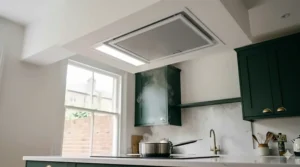
6. Neff D64BHM1N0B 60cm Flat Chimney Hood — Best Premium Wall-Mounted
Now we’re into different territory entirely. The Neff D64BHM1N0B is a flat-profile, wall-mounted chimney hood in brushed stainless steel — and it’s the kind of appliance that makes you realise what you’ve been missing in the budget bracket. At 47 dB on standard settings, it is noticeably, meaningfully quieter than anything we’ve covered so far. To give that context: most people can hold a normal conversation next to it without raising their voice. That alone can be reason enough to spend the extra.
The standard extraction rate of 368 m³/h is solid, but the real headline is the intensive boost mode, which delivers 605 m³/h — enough to clear a heavy cooking session in a larger-than-average kitchen. Three speed settings via touch control, a pair of bright LED lamps, and an adjustable height chimney for flexible installation round out a thoroughly considered package. At its price point, this is a well-established best-seller on Amazon.co.uk for good reason.
Neff is a German brand with strong UK distribution, and spare parts and replacement filters are readily available from UK retailers. For someone renovating a kitchen who wants an appliance that performs for a decade without drama, this is the level at which to buy. The spec sheet won’t tell you this, but the consistent quiet operation is what UK buyers mention most — and when you’re cooking for an hour every evening, that matters more than almost any other feature.
✅ Exceptionally quiet at 47 dB
✅ Powerful 605 m³/h boost mode
✅ Premium build, adjustable chimney height
❌ Significantly higher price than budget options
❌ Premium cost may be hard to justify for very occasional cooks
Price range: £300–£450. Check current price on Amazon.co.uk.
7. CIARRA CBCS9102 90cm Wi-Fi Cooker Hood — Best for Large Kitchens & Tech Enthusiasts
The CIARRA CBCS9102 is 90cm wide, Wi-Fi connected, app-controlled, and capable of 650 m³/h extraction. If your kitchen is larger than average — think open-plan extensions, kitchen-diners, or setups with wide range cookers — the standard 60cm hoods simply don’t cover enough area to do the job properly. This one does.
The Wi-Fi and app connectivity allows you to control speed and lighting from your phone, which sounds like a solution to a problem that doesn’t exist until you realise you can set the fan to switch off automatically after a set time. Genuinely useful if you pop into the living room mid-cook and forget. Four speed settings, touch controls, and carbon filter compatibility for recirculation round out the specification. At 90cm, the chimney design makes a visual statement — this is not a shy appliance — but in a properly proportioned kitchen it looks rather impressive.
UK buyers with larger kitchens consistently find that 60cm hoods leave cooking smells lingering around the edges of the hob, particularly with wide gas burners or induction hobs. The 90cm width addresses this directly. Installation requires the same planning as any 90cm hood, so measure carefully before ordering — returns on large kitchen appliances can be cumbersome.
✅ 650 m³/h extraction for large kitchens
✅ Wi-Fi app control with auto-off timer
✅ 90cm coverage for wide hobs
❌ Overkill (and over-budget) for small kitchens
❌ App setup adds setup complexity
Price range: £200–£320. Check current price on Amazon.co.uk.
How to Choose a Kitchen Extractor Fan in the UK: A Practical Guide
Buying an extractor fan sounds simple until you’re standing in front of seventeen apparently identical stainless steel rectangles on Amazon, each promising to be “powerful and quiet.” Here’s the framework that actually matters.
1. Measure your hob width first. This is the one that trips people up. Your hood should be at least as wide as your hob — ideally slightly wider. A 60cm hood above a 60cm hob is the minimum; 70–90cm is better if space permits, because cooking fumes don’t politely confine themselves to directly above the burner.
2. Decide: ducted or recirculating? A ducted system vents air directly outside and is significantly more effective at removing moisture. A recirculating system filters the air and returns it to the kitchen — easier to install, but it doesn’t help with steam or condensation. Under the UK Building Regulations Approved Document F, new kitchens and major refurbishments typically require a ducted system. If you’re a renter or can’t duct externally, a recirculating model is still far better than nothing.
3. Check the extraction rate. The minimum for a hood over the hob is 30 litres per second (108 m³/h). Most decent domestic hoods offer 350–650 m³/h, which gives you meaningful headroom. A higher rate gives you flexibility to run at lower, quieter speeds during light cooking.
4. Think about noise before you buy. Manufacturers measure in decibels (dB). Under 45 dB is whisper-quiet; 55–65 dB is the typical range for budget models at full power. If noise bothers you — or if you have an open-plan living space — budget at least £250 for something genuinely quiet.
5. Factor in running costs. Carbon filters for recirculating hoods need replacing every two to four months depending on use — budget around £10–£30 per replacement on Amazon.co.uk. Ducted hoods with washable aluminium grease filters are cheaper to run over time.
6. Consider your kitchen’s specific character. A low ceiling (under 2.2m) is tricky with tall chimney hoods. A period kitchen might suit a more integrated or discreet style. An open-plan space might benefit from an island-mounted or downdraft model. The wrong type of hood for your kitchen is worse than a cheaper model of the right type.
7. Check UK compatibility. All the products in this guide are 230V UK-compatible and available on Amazon.co.uk. If buying elsewhere, verify the voltage and plug type before purchase. Post-Brexit, some EU-spec products carry different model numbers for the UK market — always check the Amazon.co.uk listing specifically.
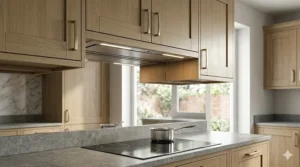
Real British Kitchens, Real Choices: Which Extractor Fan Suits Your Situation?
British homes are not a homogenous category. A Victorian terrace in Manchester has entirely different ventilation challenges from a new-build flat in Reading, which is nothing like a 1970s semi in the Midlands. Here’s how to match the fan to the reality.
The Renter in a City Flat (London, Manchester, Bristol, Edinburgh) You cannot duct to the outside without landlord permission and a significant structural job. You need a recirculating model — the CIARRA CBCS6201 or COMFEE’ PYRA17SS-60 both work well with carbon filters fitted. Keep replacement filters on subscription through Amazon.co.uk (typically every three to four months) and you’ll maintain decent air quality without any lease-breaking wall work. Budget: under £100 for the unit, plus roughly £25–£40 per year in filter replacements.
The Family in a Semi-Detached with Room to Duct This is the ideal scenario for a properly ducted installation — and it makes a transformative difference. The CIARRA CAS6201A or the NEFF D64BHM1N0B are both excellent choices, the latter particularly so if the kitchen opens to a dining area or living space where noise matters. If you’re cooking for four or five people regularly, don’t underbuy: a 400+ m³/h extraction rate is the realistic minimum for a proper family meal.
The Keen Cook with a Wide Range Cooker A 60cm hood above a 90cm range cooker is a common and ineffective arrangement — the fumes simply drift around the sides. The CIARRA CBCS9102 at 90cm is the obvious solution, with its 650 m³/h extraction providing genuine coverage. If budget allows, the Elica or Neff ranges offer superb 90cm options for those willing to invest more substantially.
Common Mistakes When Buying a Kitchen Extractor Fan (That British Buyers Keep Making)
Buying for looks alone. An angled glass hood might photograph beautifully, but if it’s undersized for your hob or too weak for your cooking style, it’s an expensive ornament. Always check the extraction rate against your needs first.
Ignoring the ducting situation. A ducted hood installed in a kitchen without proper external venting is no use whatsoever. Equally, a recirculating hood without carbon filters — or with exhausted carbon filters — makes almost no difference to air quality. If you’re in doubt about your current setup, a quick check against the British Institute of Interior Design’s ventilation guidance is a sensible starting point.
Underestimating condensation in British homes. The UK climate means kitchens generate significant moisture, particularly in autumn and winter when windows are closed and heating is on. A recirculating hood does not remove moisture — only a ducted system does. In a poorly ventilated kitchen, persistent condensation leads to mould on the walls and ceiling, which is both a health issue and a serious structural problem over time.
Buying a US-voltage model. It happens more often than you’d think, particularly when shopping on sites that carry both Amazon.com and Amazon.co.uk listings. All the products in this guide are confirmed 230V UK-compatible. If buying outside this list, check the voltage specification before checkout.
Neglecting filter maintenance. An extractor fan with a clogged grease filter is dramatically less effective — and creates a genuine fire hazard, as grease accumulation in ductwork is a leading cause of kitchen fires. Aluminium grease filters should be washed monthly; carbon filters in recirculating models replaced every two to four months.
✨ Don’t Miss These Exclusive Deals!
🔍 Ready to upgrade your kitchen’s air quality? Click on any highlighted product to check current pricing and Prime availability on Amazon.co.uk — and start cooking without the fog.
UK Ventilation Regulations: What Homeowners Actually Need to Know
This section doesn’t need to be complicated, but ignoring it can get expensive — particularly if you’re selling your home or having building work signed off.
Under Approved Document F of the UK Building Regulations, all new kitchens must have mechanical extract ventilation. The key minimum rates are:
- 30 litres per second — for a cooker hood directly over the hob and ducting externally
- 60 litres per second — if the extractor is positioned elsewhere in the kitchen (not directly over the hob)
These figures apply to new builds, significant renovations, and room conversions that include a kitchen. They don’t retroactively apply to existing kitchens that aren’t being altered — but they’re worth knowing if you’re planning any kitchen work that will go through building control.
For landlords: under the Homes (Fitness for Human Habitation) Act 2018 and the Housing Health and Safety Rating System (HHSRS), persistent damp and mould related to inadequate ventilation can constitute a category one hazard, giving tenants the right to take action. A kitchen extractor fan is genuinely part of your legal compliance framework, not merely a nice-to-have.
One nuance that catches buyers out: the Building Regulations require ongoing maintenance and commissioning as part of compliance — it’s not enough to install a fan and forget it. Regular filter cleaning and replacement form part of what “working ventilation” means under the regulations.
For those who want to go deeper, the GOV.UK planning portal has specific guidance for Wales, while England follows the England-specific Approved Document F — worth checking if you’re working on a building project with a completion certificate.
Ducted vs Recirculating: The Honest Comparison
This comparison comes up in every buyer’s journey, and the internet is full of wishy-washy “both have their merits” answers. Here’s a more direct take.
| Feature | Ducted | Recirculating |
|---|---|---|
| Moisture removal | ✅ Yes — vents outside | ❌ No — moisture stays in kitchen |
| Odour removal | ✅ Excellent | ✅ Good (with fresh carbon filters) |
| Grease removal | ✅ Excellent | ✅ Good (aluminium filters) |
| Installation complexity | Medium–High (requires external ducting) | Low (no external vent needed) |
| Ongoing cost | Low (washable filters only) | Medium (carbon filters every 2–4 months) |
| Best for | New builds, renovations, owned properties | Rentals, flats, period properties |
| UK Building Regs compliance | ✅ Fully compliant for new kitchens | ⚠️ Acceptable in some circumstances — check with building control |
The honest verdict: if you can duct to the outside, do. A ducted kitchen ventilation fan is superior in almost every measurable way. It removes moisture — which recirculating models cannot — and that single difference has enormous long-term implications for the health of your kitchen, your walls, and the air your family breathes. Recirculating models are a perfectly valid solution where ducting is impossible, but they require disciplined filter maintenance to remain effective. A recirculating hood with a saturated carbon filter is barely better than no hood at all.
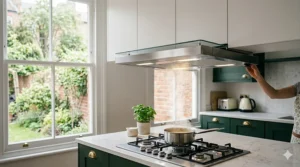
Long-Term Running Costs & Maintenance in the UK: What You’ll Actually Spend
Nobody talks about the running costs of a cooker hood, which is a bit like buying a printer and never asking about ink cartridges. Here’s the honest breakdown.
Energy consumption: Most domestic cooker hoods use between 150W and 250W at full power. Running a 200W hood for one hour per day at the UK average electricity tariff (approximately 24p per kWh as of mid-2026) costs around 5p per day — roughly £18 per year. Completely negligible.
Filter replacement (recirculating models): Carbon filters for popular models (CIARRA, COMFEE’, SIA) typically cost £10–£25 per set on Amazon.co.uk and need replacing every two to four months for regular cooks. Annual cost: £30–£75, depending on cooking frequency and model.
Aluminium grease filters (all models): These are washable and last the lifetime of the unit if maintained. Monthly washing in the dishwasher (most are dishwasher safe) or by hand with degreaser is sufficient.
Motor longevity: A well-maintained domestic cooker hood motor should last eight to fifteen years. Replacement motors for popular brands are available on Amazon.co.uk — but realistically, budget models may be cheaper to replace entirely after eight years than to repair. Premium brands like Neff tend to have better parts availability and longer motor warranties.
The overall message: running costs are low, but filter neglect is expensive — both in filter replacement frequency (a saturated filter makes the motor work harder, shortening its life) and in the condensation damage that builds up in a poorly ventilated kitchen over time.
FAQ: Your Kitchen Extractor Fan Questions, Answered
❓ Do I legally need a kitchen extractor fan in the UK?
❓ What extraction rate do I need for my kitchen extractor fan?
❓ Can I install a kitchen extractor fan myself without a gas engineer or electrician?
❓ What's the difference between a cooker hood and a kitchen extractor fan?
❓ How often should I clean or replace kitchen extractor fan filters?
Conclusion: Clear the Air (Quite Literally)
The best kitchen extractor fan for you depends on three things: your kitchen size, your cooking habits, and your installation situation. If you’re a renter in a compact flat cooking weekday suppers, the CIARRA CBCS6201 under £100 is a pragmatic, reliable choice. If you’re a homeowner with the ability to duct externally and you cook seriously, the Neff D64BHM1N0B is worth every pound of the premium — that 47 dB quiet operation changes the entire character of cooking at home. For large open-plan kitchens with wide hobs, the CIARRA CBCS9102 90cm model is the one to consider.
What all seven of these products have in common: they are considerably better than whatever wheezy, underpowered unit came installed in the average British kitchen five or ten years ago. Modern kitchen ventilation fans are quieter, more energy efficient, and more powerful at every price point than they were even three years ago.
One final thought: don’t buy the cheapest thing and neglect the filters. A well-maintained mid-range extractor fan will outperform a premium one with a clogged grease filter and an exhausted carbon element. The appliance is only as good as the upkeep.
✨ Don’t Miss These Exclusive Deals!
🔍 Found the right kitchen extractor fan for your home? Click on any highlighted product to check current pricing, Prime delivery, and customer reviews on Amazon.co.uk. Your kitchen — and everyone in it — will thank you.
Recommended for You
- Best Fan for Small Bathroom UK 2026: 7 Top Picks Reviewed
- Best Bathroom Fan with Timer 2026: 7 Expert UK Picks Reviewed
- Best Inline Bathroom Extractor Fan UK 2026: 7 Expert Picks
Disclaimer: This article contains affiliate links. As an Amazon Associate, I earn from qualifying purchases. If you purchase products through these links, we may earn a small commission at no additional cost to you.
✨ Found this helpful? Share it with your mates! 💬🤗
