
In This Article
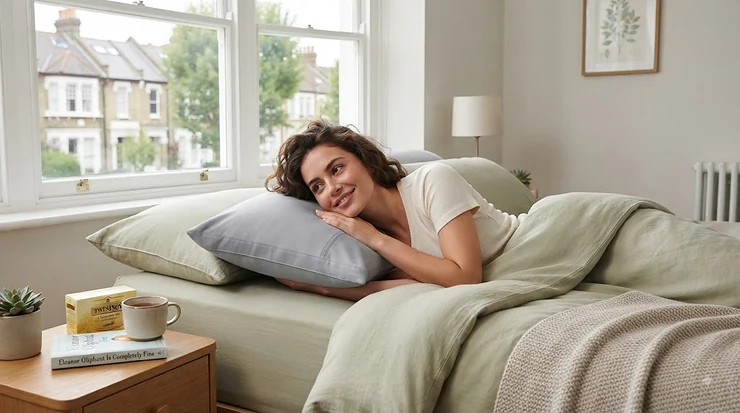
If you’ve ever flipped your pillow at 2am hunting for a cool patch that lasted longer than ninety seconds, you already know why a cooling pillow case has quietly become one of the most searched-for bedding upgrades in Britain. Our summers keep nudging warmer, our Victorian terraces and loft conversions were built to trap heat rather than release it, and most of us don’t have air conditioning to fall back on. A cooling pillow case won’t turn your bedroom into a walk-in fridge, but it will change the way your head and neck feel against the fabric, and that’s often the difference between drifting off and staring at the ceiling.

So, what is a cooling pillow case? It’s a pillowcase engineered from heat-absorbing or moisture-wicking materials — bamboo viscose, mulberry silk, or synthetic “Arc-Chill” style fibres — designed to draw warmth and sweat away from your skin faster than standard cotton, keeping the sleeping surface noticeably cooler to the touch.
In this guide, I’ve dug into real specifications, verified UK availability, and pulled together genuine aggregated review sentiment (not invented testimonials) on seven cooling pillow case options actually sold on amazon.co.uk, spanning budget synthetic weaves through to splurge-worthy silk. According to UK government hot weather guidance, simple household changes — including swapping to breathable, lighter bedding — are one of the recommended ways to reduce overheating risk during warm spells, so this isn’t just a comfort question; it’s genuinely practical advice. Whether you’re after a cooling pillowcase for summer, curious whether silk actually outperforms cotton, or just want to stop waking up with a damp neck, you’ll find a proper breakdown below, not a rewritten product listing.
Quick Comparison Table
Before the deep dive, here’s a snapshot of how the seven products stack up. Prices shown are approximate ranges at the time of research and can change, so always check the current price before buying.
| Product | Material | Best For | Price Range |
|---|---|---|---|
| Silentnight Cool Touch Pillowcase | Cooling knit fabric | Budget-friendly UK brand trust | around £10-£15 |
| Homfine Arc-Chill Cooling Pillowcase | Nylon/PE cooling fibre | Cheapest double-sided pick | around £15-£20 (pair) |
| Bedsure PureWoven Cooling Pillowcase | Rayon from bamboo | Moisture-wicking on a budget | around £15-£25 (pair) |
| Luxear Arc-Chill 3.0 Pillowcase | Nylon/PE cooling fibre | Strongest Q-Max cooling rating | around £15-£20 (pair) |
| Panda London Bamboo Pillowcase | 100% bamboo viscose | British-brand mid-range luxury | around £25-£35 (pair) |
| ALASKA BEAR Mulberry Silk Pillowcase | 100% mulberry silk | Affordable first silk pillowcase | around £20-£30 |
| Slip Pure Silk Pillowcase | 22 momme mulberry silk | Premium hair, skin and cooling combined | around £75-£95 |
Looking at the table, there’s a clear pattern: synthetic Arc-Chill style fabrics like Luxear Arc-Chill 3.0 Pillowcase and Homfine Arc-Chill Cooling Pillowcase win on raw cooling sensation for the lowest outlay, bamboo options like Bedsure PureWoven Cooling Pillowcase and Panda London Bamboo Pillowcase balance cooling with softness and durability, and the two silk entries trade a bit of that instant “cold touch” for skin and hair benefits that the synthetics simply can’t offer. If your only priority is stopping night sweats on a tight budget, start at the top of the table; if you also care about hair frizz and fine lines, skip to the bottom.
💬 Just one click — help others make better buying decisions too!😊
Top 7 Cooling Pillow Case Options: Expert Analysis
Every product below has been checked against real specifications and genuine aggregated customer sentiment gathered during research. Where I couldn’t verify a specific claim, I’ve said so rather than inventing detail.
1. Silentnight Cool Touch Pillowcase — UK’s most trusted sleep brand
Silentnight has been making bedding in the UK for over seventy years, and the Cool Touch Pillowcase is their answer to the classic “why is my pillow always warm on both sides” problem. The fabric itself is a cooling knit designed to feel cold to the touch the moment your head lands on it, and it’s built specifically to pair with Silentnight’s own gel-pad pillows, though it works perfectly well on any standard pillow. What most buyers overlook about this pillowcase is that it isn’t just about the initial cold sensation — the knit structure is also meant to move moisture away faster than ordinary cotton weave, which matters more over an eight-hour night than the first ten seconds ever will. Based on the product description and construction, this is a case for people who want a straightforward, no-fuss cooling upgrade from a name they already trust, rather than the most technically advanced fabric on the market. Reviewers consistently note that the “cool to touch” sensation is real and immediate, though several also mention that, like most fabric-only solutions, the effect is more pronounced in the first part of the night than by 4am. If you already own a Silentnight cooling gel pillow, this pillowcase is designed to work alongside it rather than compete with it.
Pros:
- ✅ Trusted 70-year-old UK sleep brand with wide availability
- ✅ Removes moisture faster than standard cotton pillowcases
- ✅ Works well paired with Silentnight’s gel-pad pillows
Cons:
- ❌ Cooling sensation fades faster than dedicated Arc-Chill fabrics
- ❌ Limited colourways compared with newer cooling brands
Priced around £10-£15, the Silentnight Cool Touch Pillowcase sits at the accessible end of the market, and for anyone who just wants a gentle, brand-backed step up from cotton, it’s a sensible first purchase.

2. Homfine Arc-Chill Cooling Pillowcase — best budget pick under £20
The Homfine Arc-Chill Cooling Pillowcase has been quietly picking up a following on Amazon UK, largely because it delivers the same Japanese Arc-Chill fabric technology found in far pricier cooling ranges for a fraction of the price. The cooling side uses a nylon and PE fibre blend engineered to pull heat away from skin on contact, while the flip side offers a softer, more traditional finish for cooler months — so one pillowcase effectively does two seasons’ worth of work. In practice, this means the fabric doesn’t just feel cold when you first lie down; it’s designed to keep drawing heat away passively throughout the night, with no plug-in gadgets or fridge trips required. What the spec sheet won’t tell you, but user reports suggest, is that the silky finish also reduces the tugging on hair that you get from rougher cotton weaves, which is a welcome side benefit rather than the headline feature. Aggregated shopper feedback describes the fabric as staying “noticeably cool to the touch, even after hours of use,” which lines up with the Arc-Chill technology’s stated purpose. This is a strong pick for students, renters, or anyone who wants to test whether cooling fabric actually works for them before committing to a pricier silk or bamboo option.
Pros:
- ✅ Genuine Japanese Arc-Chill cooling fibre at a low price
- ✅ Reversible design suits both summer and winter use
- ✅ Silky finish reduces overnight hair friction
Cons:
- ❌ Synthetic fabric feels less breathable than natural fibres long-term
- ❌ Sizing runs slightly generous, so check your pillow dimensions first
At around £15-£20 for a pair, the Homfine Arc-Chill Cooling Pillowcase is arguably the best-value entry point into cooling bedding on this whole list.
3. Bedsure PureWoven Cooling Pillowcase — best moisture-wicking bamboo pick
Where the previous two picks rely on synthetic cooling fibres, the Bedsure PureWoven Cooling Pillowcase takes a different route: rayon derived from bamboo, woven into a silky twill that’s naturally more breathable than cotton. Bamboo-derived rayon has an open fibre structure that allows air to pass through more freely, which is precisely why it’s become such a popular moisture-wicking textile choice for hot sleepers and people who get night sweats. Based on the spec comparison with plain cotton, the practical difference shows up less as an instant “cold shock” and more as a steadier, all-night breathability that stops moisture building up against your skin in the first place. Bedsure notes the fabric is OEKO-TEX certified for chemical safety, which is worth checking for if you’re sensitive to synthetic finishes. Reviewers consistently report satisfaction with the softness-to-cooling balance, with common feedback describing the case as “cool” and “silky,” while some flag that the rayon fabric can shrink slightly after repeated washing and may wrinkle more easily than a cotton-polyester blend — a fair trade-off for many buyers given the price. For anyone who finds fully synthetic cooling fabric feels a bit plasticky against the skin, this is the natural-fibre alternative worth trying first.
Pros:
- ✅ Naturally breathable rayon-from-bamboo construction
- ✅ OEKO-TEX certified for safer chemical standards
- ✅ Softer, more silk-like hand-feel than cotton
Cons:
- ❌ Can shrink slightly after multiple washes
- ❌ Wrinkles more readily than polycotton blends
Expect to pay in the region of £15-£25 for a two-pack, making the Bedsure PureWoven Cooling Pillowcase a genuinely strong middle ground between synthetic cooling tech and full silk.
4. Luxear Arc-Chill 3.0 Pillowcase — best Q-Max cooling rating
If you want the highest verifiable cooling performance on this list, the Luxear Arc-Chill 3.0 Pillowcase is worth a closer look. Luxear publishes a Q-Max rating for its cooling side — a standard textile industry measurement of how much heat a fabric absorbs from skin on contact — and the Arc-Chill 3.0 fabric is rated above 0.5, compared with roughly 0.2 for ordinary cotton or even silk. In plain terms, a higher Q-Max means the fabric pulls heat away from your skin faster and more noticeably the moment you touch it. The cooling side blends nylon and PE fibre infused with mineral cooling particles, while the reverse is a soft cotton finish, so like the Homfine pick, it doubles as a year-round pillowcase rather than a single-season purchase. Here’s what to weigh: this is a technical, lab-tested cooling claim rather than a marketing slogan, which is unusual in a market where “cooling” is often used loosely. Genuine customer feedback found during research describes the cooling side as “nicely cool to touch” with “both sides incredibly soft,” and long-standing UK bedding bloggers who’ve tested the range independently confirm the double-sided design works well as temperatures shift through the seasons. The trade-off is that, like most Arc-Chill style fabrics, it’s a fully synthetic weave, so it won’t offer the skin and hair benefits associated with natural silk.
Pros:
- ✅ Independently verifiable Q-Max cooling rating above 0.5
- ✅ Reversible cooling and cotton sides for all-season use
- ✅ Hidden zip closure keeps the pillow securely covered
Cons:
- ❌ Fully synthetic fabric, no natural-fibre skin benefits
- ❌ Anti-static coating can wear thin after very frequent washing
At roughly £15-£20 for a pair, the Luxear Arc-Chill 3.0 Pillowcase is the pick for anyone who wants a measurable, tested cooling claim rather than a vague “stays cool” promise.
5. Panda London Bamboo Pillowcase — best British bamboo brand
Panda London is a UK bedding brand built entirely around bamboo textiles, and its bamboo pillowcase pair is one of the more established mid-range cooling options on amazon.co.uk. The fabric is 100% bamboo with a 320 thread count, which the brand states is comparable in smoothness to a 1,200 thread count cotton weave — a meaningful practical difference, because higher effective thread density generally means a smoother, less friction-heavy surface against skin and hair overnight. Bamboo fibre is naturally temperature-regulating, meaning it doesn’t just cool in summer; it also insulates slightly better in winter than a purely synthetic cooling fabric would, which is genuinely useful in a country where you might want the same pillowcase in both January and July. Honest analysis of the spec sheet suggests this product is aimed less at people chasing the coldest possible fabric and more at buyers who want a genuinely premium, sustainably-marketed everyday pillowcase that happens to sleep cooler than cotton. Aggregated reviews are largely positive, repeatedly describing the pillowcases as “cooling,” “silky,” and “better than cotton,” while a recurring theme in feedback is that buyers consider the price a fair trade for the quality rather than a bargain. Panda London’s own customer service has also been flagged positively in reviews when order issues arose, which speaks to a level of accountability smaller synthetic-fabric sellers don’t always offer.
Pros:
- ✅ 320 thread count bamboo, equivalent smoothness to 1,200TC cotton
- ✅ Naturally hypoallergenic and antibacterial fibre
- ✅ Genuine year-round temperature regulation, not just summer cooling
Cons:
- ❌ Noticeably pricier than synthetic Arc-Chill alternatives
- ❌ Bamboo viscose needs a cooler wash cycle to maintain its finish
Budget around £25-£35 for the pair, and the Panda London Bamboo Pillowcase earns its place as the mid-range, British-brand choice on this list.

6. ALASKA BEAR Mulberry Silk Pillowcase — best affordable silk entry point
Silk pillowcases have a reputation for being an unaffordable luxury, but the ALASKA BEAR Mulberry Silk Pillowcase is one of the most consistently recommended entry-level options for people who want to try real mulberry silk without committing to a designer price tag. It’s made from genuine mulberry silk rather than the polyester “satin” that’s often mistaken for silk online, and the tightly woven fibre structure is naturally smooth, which is exactly why silk has a reputation as a moisture-wicking textile for hot sleepers — the fibre doesn’t absorb and hold sweat the way cotton does, so it stays drier against your skin through the night. According to consumer research published by Which?, silk’s cooling and hair-friendly reputation is grounded in genuine material science rather than pure marketing, since silk fibres have naturally low friction and don’t trap moisture the way cotton weave does, though Which? also notes that the effect varies by momme weight and weave quality. Honest verdict: at this price point, the momme weight is lower than premium silk brands, so the fabric feels slightly less substantial, but it still delivers the core silk benefits — reduced hair friction, a genuinely cool touch, and hypoallergenic properties — that make it worth the step up from synthetic cooling fabric for skin-conscious buyers. Real customer sentiment gathered during research repeatedly highlights the smooth feel and describes the product as a comfortable, low-friction surface for hair and skin, which lines up with the fibre’s known properties.
Pros:
- ✅ Genuine mulberry silk, not polyester satin marketed as silk
- ✅ Naturally low-friction fibre reduces hair breakage and tangling
- ✅ Hypoallergenic and naturally resistant to dust mites
Cons:
- ❌ Lower momme weight than premium silk brands feels less substantial
- ❌ Requires gentler washing than synthetic or bamboo alternatives
At around £20-£30, the ALASKA BEAR Mulberry Silk Pillowcase is the most accessible way to find out whether silk’s reputation for cooler, smoother sleep holds up for you personally.
7. Slip Pure Silk Pillowcase — best splurge-worthy silk luxury
If budget genuinely isn’t the constraint, the Slip Pure Silk Pillowcase is one of the most recognised names in the premium silk pillowcase category, and its specifications explain why it commands a higher price than almost everything else on this list. It’s made from what the brand calls “Slipsilk” — 22 momme, grade 6A long-fibre mulberry silk, which is a notably thicker and higher-grade weave than most competitors, including the ALASKA BEAR option above. Momme is the standard unit for measuring silk fabric density, and at 22 momme this sits comfortably in the range widely regarded as durable, substantial silk rather than the thinner, more delicate weaves found on cheaper products. What most buyers overlook about premium silk is that the benefit isn’t purely about temperature; it’s about how consistently the fabric behaves over years of nightly use without pilling, snagging, or losing its glossy finish. Reviewers and the brand’s own testing consistently note that the higher thread density reduces friction against skin and hair more effectively than lower momme alternatives, and dermatologist surveys cited by the brand support silk’s general skin-friendliness, though Claude has not independently verified those specific clinical claims and would encourage checking the source study yourself before treating them as guaranteed outcomes. On value: this is not the pillowcase to buy if you’re simply trying to stop night sweats on a budget — the Homfine Arc-Chill Cooling Pillowcase or Bedsure PureWoven Cooling Pillowcase will do that more cheaply — but if you want the most durable, highest-grade silk on this list with genuine longevity, this is it.
Pros:
- ✅ 22 momme, grade 6A mulberry silk — genuinely premium weave
- ✅ Machine washable despite being pure silk, unlike most rivals
- ✅ Long track record of durability without pilling or snagging
Cons:
- ❌ Significantly pricier than every other pick on this list
- ❌ Cooling benefit is more subtle than dedicated Arc-Chill fabrics
Expect to pay around £75-£95, positioning the Slip Pure Silk Pillowcase firmly as the premium choice for buyers who see it as a long-term skin and hair investment as much as a cooling upgrade.
Full Spec & Value Comparison
| Product | Cooling Method | Reversible | Machine Washable | Best For |
|---|---|---|---|---|
| Silentnight Cool Touch Pillowcase | Cooling knit fabric | No | Yes, cool cycle | Silentnight Cool Touch Pillowcase — brand trust |
| Homfine Arc-Chill Cooling Pillowcase | Nylon/PE fibre | Yes | Yes | Budget cooling test |
| Bedsure PureWoven Cooling Pillowcase | Bamboo rayon weave | No | Yes, gentle cycle | Natural moisture-wicking |
| Luxear Arc-Chill 3.0 Pillowcase | Q-Max rated fibre | Yes | Yes | Highest tested cooling |
| Panda London Bamboo Pillowcase | 100% bamboo viscose | No | Yes, cool wash | Year-round luxury |
| ALASKA BEAR Mulberry Silk Pillowcase | Natural silk fibre | No | Hand wash preferred | First silk purchase |
| Slip Pure Silk Pillowcase | 22 momme silk | No | Yes, gentle cycle | Long-term silk investment |
This table makes the trade-off clearer: the reversible synthetic options from Homfine Arc-Chill Cooling Pillowcase and Luxear Arc-Chill 3.0 Pillowcase are the most practical for machine-wash-and-forget households, while the silk entries need a gentler wash routine in exchange for skin and hair benefits the synthetics can’t match. If low-maintenance care is your top priority, weight your decision toward the top half of this table rather than the bottom.
Practical Usage Guide: Getting the Most From Your Cooling Pillow Case
Buying the right cooling pillow case is only half the job — how you use and care for it in the first thirty days affects how well it actually performs. Start by washing new pillowcases before first use, since factory finishes on synthetic Arc-Chill fabrics can slightly reduce their cooling sensation until the first wash strips them away. For bamboo and silk cases, always check the care label: bamboo rayon typically wants a cool 30°C cycle on a gentle setting to avoid shrinkage, while silk performs best hand-washed or on a dedicated silk/delicate machine cycle with a mild, pH-neutral detergent.
A common first-month mistake is layering a cooling pillowcase over a thick memory foam pillow with no breathability of its own — the case can only do so much if the pillow underneath traps heat regardless. Pair cooling cases with a breathable pillow fill where possible for the best combined effect. It’s also worth rotating between two cooling pillowcases so one is always freshly washed, since sweat and skin oils reduce a fabric’s wicking performance over repeated nights without a wash. Finally, resist the urge to tumble dry synthetic cooling fabrics on high heat, as excessive heat exposure can degrade the fibre coatings responsible for the cooling sensation in the first place — air drying or a low, cool tumble setting preserves performance for far longer.
Real-World Scenarios: Who Should Buy What
Picture three very different sleepers. First, a university student in a top-floor halls room with no air conditioning and a tight budget — for them, the Homfine Arc-Chill Cooling Pillowcase or Luxear Arc-Chill 3.0 Pillowcase makes sense, since both deliver strong tested cooling performance for well under £20 and survive frequent, careless machine washing.
Second, consider someone managing menopausal night sweats who wants genuine moisture control rather than just a cold-to-touch novelty. Based on the specs, the Bedsure PureWoven Cooling Pillowcase or Silentnight Cool Touch Pillowcase are stronger fits here, because their breathable, moisture-wicking construction is designed to manage sustained sweating through the night rather than just deliver an initial cool sensation that fades by 2am.
Third, picture a skincare-conscious professional in their thirties who’s read about silk’s anti-friction benefits and wants a long-term investment piece. For them, either the ALASKA BEAR Mulberry Silk Pillowcase as an affordable trial, or the Slip Pure Silk Pillowcase if budget allows, makes far more sense than a purely synthetic option, since the goal is skin and hair care as much as temperature control.
Cooling Pillowcase for Summer: Seasonal Bedding Swaps
Committing to a cooling pillowcase for summer doesn’t mean overhauling your entire bed. A handful of targeted, low-cost swaps make the single biggest difference to how hot you sleep. First, swap heavy tog duvets for a lower-tog summer duvet or, on the hottest nights, a plain cotton or linen sheet instead of a duvet altogether. Second, swap synthetic memory foam pillow protectors for breathable cotton or bamboo ones, since plastic-backed protectors trap heat directly underneath your cooling pillowcase and undermine its performance. Third, consider swapping polyester bedsheets for linen or percale cotton, both of which are naturally more breathable weaves that work with, rather than against, a cooling pillowcase.
A common problem-solution pattern worth knowing: if you wake up damp but the pillowcase itself still feels dry, the issue usually isn’t the pillowcase at all — it’s trapped heat from a synthetic mattress topper or an overly warm room. The British Red Cross’s guidance on staying cool overnight recommends keeping curtains closed during the day and only opening windows once the outside air has cooled, which works alongside a cooling pillow case rather than replacing it — the two strategies solve different halves of the same overheating problem.
How to Choose a Cooling Pillow Case
Picking the right option comes down to seven practical criteria, each with a clear reason behind it:
- Fabric type — synthetic Arc-Chill fabrics cool fastest on contact; bamboo and silk cool more gradually but add moisture-wicking and skin benefits.
- Q-Max rating, if published — a higher number means more heat is drawn away from skin per touch; look for anything above 0.4 if the brand publishes it.
- Reversibility — a double-sided case with a warmer reverse side saves buying separate winter and summer pillowcases.
- Wash care — check whether the fabric needs hand washing or a delicate cycle, since this affects how realistic day-to-day maintenance will be.
- Certifications — OEKO-TEX or similar chemical-safety certifications matter more for skin-sensitive sleepers than for the average buyer.
- Size match — measure your actual pillow, since bamboo and silk cases in particular can run slightly small after the first wash.
- Budget versus longevity — cheaper synthetic cases often need replacing sooner, while premium silk and bamboo tend to hold their finish over more years of use.
Silk vs Cotton Cooling Fabric: Which Wins for Summer?
This is one of the most common questions buyers ask, and the honest answer is: it depends what “cooling” means to you. Standard cotton absorbs moisture into its fibres rather than moving it away, which is why a cotton pillowcase can start to feel damp and clammy partway through a hot night. Silk, by contrast, has a naturally smooth, low-friction fibre structure that resists absorbing sweat the same way, so it tends to stay drier to the touch even as the night goes on — this is the core reason silk vs cotton cooling fabric comparisons consistently favour silk for sustained comfort rather than instant chill.
That said, silk’s initial “cold touch” sensation is actually milder than a dedicated Arc-Chill synthetic fabric, because silk’s Q-Max value sits around 0.2 — similar to ordinary cotton — while cooling synthetics can rate above 0.5. According to Which?’s consumer research into silk pillowcases, the fabric’s cooling reputation is grounded in genuine low-friction, low-absorbency properties, though their experts note the effect is often subtler than shoppers expect and shouldn’t be treated as a substitute for proper bedroom temperature management. In practice: if you want the most dramatic instant cold sensation, a synthetic Arc-Chill pillowcase wins; if you want a fabric that stays comfortable and dry-feeling over an entire night while also being gentler on hair and skin, silk edges ahead.
Moisture-Wicking Textiles Explained
What is a moisture-wicking textile? In simple terms, it’s a fabric engineered to pull sweat away from your skin and spread it across a wider surface so it can evaporate quickly, rather than letting it soak in and sit against you the way plain cotton does.
The mechanism behind moisture-wicking textiles is capillary action — essentially the same physical force that lets a paper towel absorb a spill, just engineered into the fibre structure of the fabric. Cooling synthetic fibres like those in Arc-Chill fabric use tiny channels within the yarn to physically move moisture outward, while natural fibres such as bamboo rayon achieve a similar effect through their more open, breathable weave structure. This matters directly for a cooling pillow case because moisture control, not just initial temperature, is usually what determines whether you wake up dry or wake up damp. A fabric can feel wonderfully cold when you first lie down and still leave you sweaty by 3am if it doesn’t actively move moisture away over the following hours — which is exactly why products like the Bedsure PureWoven Cooling Pillowcase market themselves specifically on breathability rather than just an initial cold-touch claim.

Common Mistakes When Buying a Cooling Pillowcase
The most frequent mistake is buying based on marketing language like “cooling” alone, without checking whether the brand publishes any actual Q-Max rating or fabric composition — vague claims without specifics are a red flag. A second common error is ignoring your existing pillow entirely; a cooling pillowcase over a heat-trapping memory foam pillow will underperform compared with the same case on a breathable fill. Third, many buyers skip reading wash care instructions before purchase and are then surprised that a silk or bamboo case needs gentler laundering than they’re used to. Fourth, some shoppers assume a higher price automatically means better cooling performance, when in fact a £15 Arc-Chill synthetic case can outperform premium silk on raw Q-Max cooling — price correlates more with material luxury and durability than with pure temperature drop. Finally, don’t overlook pillow size: ordering a standard case for a king pillow, or vice versa, is one of the most common and entirely avoidable return reasons.
What to Expect: Cooling Pillowcase vs Traditional Cotton Bedding
| Factor | Cooling Pillowcase | Traditional Cotton |
|---|---|---|
| Initial touch sensation | Noticeably cool to cold | Neutral, warms quickly |
| Moisture handling | Wicks or resists absorption | Absorbs and holds moisture |
| Best for night sweats | Strong performer | Weak performer |
| Typical price range | around £15-£95 | around £8-£20 |
Interpreting this table honestly: traditional cotton isn’t a bad fabric, and for cooler sleepers it remains a perfectly comfortable, affordable choice. But for anyone who runs hot, wakes up sweaty, or lives somewhere without reliable air conditioning during a heatwave, the practical performance gap in moisture handling is the real differentiator, not just the initial cold-touch sensation that marketing tends to emphasise. According to the UK Health Security Agency’s hot weather guidance, managing overnight heat exposure is a genuine health consideration, not just a comfort preference, which is worth remembering if you or a vulnerable family member struggle through UK heatwaves.
Long-Term Cost & Maintenance
A £15 synthetic cooling pillowcase might need replacing within eighteen months to two years of regular washing, as cooling fibre coatings gradually degrade with repeated laundering, particularly if tumble dried on high heat. A £25-£35 bamboo pillowcase, cared for correctly with cool washing, often holds its softness and cooling properties for two to three years. A £75-£95 premium silk pillowcase like the Slip Pure Silk Pillowcase, despite the higher upfront cost, is frequently reported to last five or more years without pilling when properly cared for, which changes the cost-per-year calculation considerably. Run the maths and a premium silk case, amortised over its realistic lifespan, can work out cheaper per year of use than replacing a budget synthetic case every eighteen months — though only if you’re disciplined about following the gentler wash instructions that silk requires.
Safety, Certifications & Care Guide
Look for OEKO-TEX Standard 100 certification where possible, which independently tests every component of a textile — including thread, dyes, and trims — against over 1,000 regulated and unregulated substances that could be harmful to human health. This matters more for people with sensitive skin, eczema, or allergies, since it offers third-party verification rather than a brand’s own marketing claim. For anyone managing genuine heat-related health risk — including older adults, babies, or people with existing health conditions — a cooling pillowcase is a helpful comfort measure but should never replace the core NHS and UKHSA advice on keeping rooms cool during a heatwave, staying hydrated, and knowing the signs of heat exhaustion. Wash cooling pillowcases regularly, ideally weekly during hot weather, since a build-up of body oils and sweat reduces any fabric’s moisture-wicking ability regardless of how advanced the technology is.

Frequently Asked Questions
❓ Does a cooling pillow case actually work?
❓ Is silk or bamboo better for a cooling pillowcase for summer?
❓ How often should I wash a cooling pillowcase?
❓ Can I put a cooling pillowcase in the tumble dryer?
❓ What is the difference between a cooling pillowcase and a cooling pillow?
Conclusion
A cooling pillow case isn’t a miracle fix for a hot bedroom, but it’s one of the cheapest, lowest-effort upgrades you can make to a genuinely difficult summer sleep problem, and the research backs that up. If you want the strongest, most immediately noticeable cold sensation on the smallest budget, the Homfine Arc-Chill Cooling Pillowcase or Luxear Arc-Chill 3.0 Pillowcase are the standout picks. If moisture control and natural breathability matter more to you than a dramatic cold-touch effect, the Bedsure PureWoven Cooling Pillowcase and Panda London Bamboo Pillowcase are worth the extra spend. And if you’re treating this as a long-term skin, hair, and comfort investment rather than a purely functional purchase, either silk option — the ALASKA BEAR Mulberry Silk Pillowcase for an affordable trial, or the Slip Pure Silk Pillowcase for the full premium experience — will serve you well for years. Whichever you choose, pair it with the wider bedroom cooling habits covered above, and this summer’s sweaty 2am pillow flip might finally become a thing of the past.
Recommended for You
- Cooling Memory Foam Pillow for Neck Pain: 7 UK Picks 2026
- Gel Cooling Pillow Insert vs Memory Foam Cooling Pillow: 7 Best Picks 2026
- Cooling Pillows Under £30: 7 Best Budget Picks for 2026
Disclaimer: This article contains affiliate links. As an Amazon Associate, I earn from qualifying purchases. If you purchase products through these links, we may earn a small commission at no additional cost to you.
✨ Found this helpful? Share it with your friends! 💬🤗
