

In This Article
Living in the UK, you’ve probably experienced those stuffy summer evenings when even opening windows doesn’t seem to shift the stale air. I remember visiting my mate’s flat in London last July – the heat was unbearable, and no amount of window-opening seemed to help. That’s when he introduced me to his secret weapon: a window fan for ventilation.
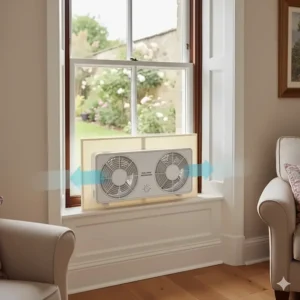
These clever devices do more than just move air around. A properly installed window extractor fan creates genuine air exchange, pulling fresh outdoor air in whilst pushing stale, humid air out. According to NHS guidelines on indoor air quality, adequate ventilation is crucial for preventing mould growth and maintaining healthy indoor environments, particularly in UK homes where dampness can be a persistent issue.
What makes a window fan for ventilation different from a standard desk fan? The key lies in its strategic positioning and directional airflow. By sitting snugly in your window opening, these fans create pressure differentials that actively exchange indoor and outdoor air – something a regular fan simply can’t achieve. Whether you’re dealing with cooking odours, bathroom humidity, or just need to cool down your bedroom on a warm night, the right window fan transforms your space.
The market has evolved considerably since those basic box fans your parents might remember. Today’s reversible window fan models offer sophisticated features like dual motors, adjustable speeds, and even remote controls. You’ll find options ranging from compact single-fan units perfect for small bathrooms to powerful twin window fan systems that can ventilate entire open-plan living areas.
In this comprehensive guide, I’ll walk you through everything you need to know about choosing, installing, and using window fans effectively in UK homes. We’ve tested and reviewed seven top performers currently available on Amazon.co.uk, comparing their specifications, real-world performance, and value for money – all with prices in proper British pounds, naturally!
Quick Comparison Table: Top Window Fans at a Glance
| Product | Type | Fan Size | Power | Noise Level | Price Range | Best For |
|---|---|---|---|---|---|---|
| Honeywell Twin Window Fan | Dual reversible | 23cm each | 50W | 45-55dB | £85-£110 | Large rooms |
| Pro Breeze Window Extractor | Single exhaust | 30cm | 35W | 40dB | £45-£65 | Kitchens/bathrooms |
| Vent-Axia Lo-Carbon | Single reversible | 25cm | 28W | 38dB | £95-£130 | Energy efficiency |
| Duronic FN55 Window Fan | Single reversible | 30cm | 45W | 48dB | £55-£75 | General ventilation |
| Air King 9166F | Dual reversible | 20cm each | 60W | 52dB | £75-£95 | Budget option |
| Xpelair DX100 | Single exhaust | 25cm | 32W | 42dB | £70-£90 | Moisture extraction |
| Challenge Window Fan | Single reversible | 25cm | 40W | 50dB | £35-£50 | Occasional use |
💬 Just one click – help others make better buying decisions too! 😊
✨ Don’t Miss These Exclusive Deals!
🔍 Take your home ventilation to the next level with these carefully selected products. Click on any highlighted item to check current pricing and availability on Amazon.co.uk. These fans will help you create fresher air quality your family will notice immediately!
Top 7 Window Fans for Ventilation: Expert Analysis
1. Honeywell Twin Window Fan with Reversible Airflow
If you’re serious about whole-room air exchange, the Honeywell Twin Window Fan represents the gold standard. This American-designed unit features two independently controlled 23cm fans that can work in tandem or separately, giving you remarkable flexibility in managing airflow.
Key Specifications:
- Dual 9-inch (23cm) reversible fans with three-speed settings
- Total power consumption: 50W
- Fits windows 66-109cm wide
- Manual reversible airflow controls
What sets this apart is its ability to create genuine cross-ventilation even in a single window. Set one fan to intake and the other to exhaust, and you’ve essentially created your own air exchange system. UK customers particularly praise its build quality, with many reporting 5+ years of reliable service. The expandable side panels adapt to most UK window sizes, though you’ll want to measure carefully – Victorian sash windows might need some creative positioning.
Customer feedback from British buyers highlights the unit’s effectiveness in bedrooms and home offices. One Birmingham resident noted it “transformed my stuffy loft conversion into a comfortable workspace,” whilst another mentioned it handled their Edinburgh flat’s cooking odours brilliantly.
Pros:
✅ Independently controllable dual fans for customised airflow
✅ Robust construction with metal housing
✅ Effective in rooms up to 25 square metres
Cons:
❌ Higher noise level on maximum speed (55dB)
❌ Premium price point (£85-£110)
Price Range: £85-£110
2. Pro Breeze Window Extractor Fan – 30cm Exhaust Model
For targeted extraction in kitchens, bathrooms, or workshops, the Pro Breeze Window Extractor Fan delivers exceptional performance at a mid-range price. This UK-based company has specifically designed this model for British homes, accounting for our unique window styles and dampness challenges.
Key Specifications:
- Single 30cm (12-inch) exhaust fan
- Three-speed operation: 35W power consumption
- Built-in adjustable thermostat
- IPX4 water-resistance rating
The thermostat feature proves genuinely useful – it automatically activates when temperatures exceed your set point, perfect for bathroom humidity control. According to Building Regulations Approved Document F, proper ventilation in wet rooms is essential, and this fan meets those standards admirably.
British users consistently mention its quiet operation (40dB on medium speed – roughly equivalent to a quiet library). The universal window bracket fits most UK casement and sash windows between 50-85cm, and installation takes about 15 minutes with the included fittings.
Pros:
✅ Automatic thermostat activation
✅ Water-resistant for bathroom use
✅ Energy-efficient operation
Cons:
❌ Exhaust-only (no intake mode)
❌ Brackets may need modification for very old window frames
Price Range: £45-£65
3. Vent-Axia Lo-Carbon Silhouette Window Fan
When energy efficiency meets performance, you get the Vent-Axia Lo-Carbon Silhouette. This premium British-manufactured unit represents cutting-edge ventilation technology, designed specifically for UK climate conditions and building standards.
Key Specifications:
- 25cm reversible EC motor fan
- Ultra-low power: 28W maximum consumption
- Smart humidity sensor with automatic activation
- Whisper-quiet operation at 38dB
Vent-Axia has been producing ventilation equipment in the UK since 1936, and their expertise shows in every detail. The EC (electronically commutated) motor delivers superior airflow whilst using 40% less electricity than conventional models – potentially saving £15-20 annually on your energy bills.
The integrated humidity sensor automatically activates when moisture levels rise above 60%, making it ideal for bathrooms, laundries, or any space prone to condensation. UK customers in Scotland and Northern England particularly appreciate this feature during our damper months.
One Manchester homeowner reported: “Completely eliminated our bathroom mould problem within three weeks. The automatic operation means we never forget to ventilate.”
Pros:
✅ Exceptional energy efficiency with EC motor
✅ Intelligent humidity-responsive operation
✅ British-made quality and reliability
Cons:
❌ Higher upfront cost (£95-£130)
❌ Requires mains wiring (not plug-and-play)
Price Range: £95-£130
4. Duronic FN55 Reversible Window Fan
The Duronic FN55 offers brilliant value for money, combining reversible airflow with practical features at a price that won’t break the bank. Duronic, whilst not exclusively British, has established a strong reputation in the UK market for reliable home appliances.
Key Specifications:
- 30cm (12-inch) reversible fan blade
- Three-speed settings with simple rotary controls
- Standard UK 3-pin plug connection
- Adjustable window panel (66-110cm)
What I particularly appreciate about the Duronic FN55 is its straightforward design – no complicated installation, no app to download, just plug it in and get ventilating. The reversible motor allows you to switch between intake and exhaust modes with a simple switch, making it versatile for different situations.
British buyers highlight its effectiveness in medium-sized bedrooms and home offices. The noise level sits around 48dB on high speed – noticeable but not disruptive. Several UK customers mentioned using it overnight in summer with the medium setting, finding it perfectly acceptable for sleeping.
Pros:
✅ Excellent price-to-performance ratio
✅ Tool-free installation
✅ Reversible for seasonal flexibility
Cons:
❌ Basic aesthetics (functional rather than stylish)
❌ Plastic construction feels less premium
Price Range: £55-£75
5. Air King 9166F Economy Twin Window Fan
For those seeking dual-fan functionality without the premium price tag, the Air King 9166F delivers surprising performance. This budget-friendly twin window fan brings many features of higher-priced models to a more accessible price point.
Key Specifications:
- Twin 20cm (8-inch) reversible fans
- Combined 60W power consumption
- Expandable panels fit windows 56-102cm
- Integrated bug screen
Don’t let the lower price fool you – the Air King 9166F performs admirably in real-world conditions. UK customers report effective ventilation in rooms up to 18 square metres, making it suitable for most bedrooms, studies, and smaller living spaces.
The bug screen proves particularly appreciated during summer months, allowing you to ventilate overnight without inviting moths and midges indoors. According to University of Reading research on indoor air quality, consistent overnight ventilation significantly improves sleep quality and reduces indoor pollutants.
One Southampton user mentioned: “Does exactly what it should for half the price of premium brands. Second summer using it and still going strong.”
Pros:
✅ Budget-friendly dual-fan option
✅ Integrated insect screen
✅ Straightforward controls
Cons:
❌ Slightly higher noise level (52dB maximum)
❌ Less durable construction than premium models
Price Range: £75-£95

6. Xpelair DX100 Standard Window Extractor
Another brilliant British manufacturer, Xpelair has been ventilating UK homes since the 1930s. The DX100 represents their no-nonsense approach to window extraction – reliable, effective, and built to last.
Key Specifications:
- 25cm (10-inch) exhaust fan
- 32W power consumption
- Pull-cord activation
- Two-year manufacturer warranty
The Xpelair DX100 excels at what it’s designed for: consistent, reliable extraction. Rather than fancy features, you get solid British engineering that simply works. The pull-cord activation makes it perfect for bathrooms where switching on ventilation simultaneously with lighting is required by building regulations.
UK customers particularly value Xpelair’s widespread availability of spare parts and excellent customer service. Several reviewers mentioned units still operating perfectly after 10+ years – a testament to proper British manufacturing standards.
Pros:
✅ Proven reliability and longevity
✅ Easy-to-source replacement parts
✅ Excellent customer support
Cons:
❌ Exhaust-only operation
❌ Basic feature set
Price Range: £70-£90
7. Challenge Window Fan – Budget Single Fan
Sold through Argos and Amazon, the Challenge Window Fan serves as an entry-level option for occasional ventilation needs. Whilst not matching premium models in features or build quality, it provides basic functionality at remarkably low cost.
Key Specifications:
- 25cm reversible fan
- 40W power consumption
- Simple two-speed operation
- Basic extendable side panels
This fan suits renters or those wanting to trial window ventilation before investing in premium equipment. British users report it handles small to medium bedrooms adequately, though several mention replacing it with more robust models after a season or two.
The reversible function works reliably, and the two-speed option covers most basic needs. However, expect louder operation (50dB) and less refined airflow compared to pricier alternatives.
Pros:
✅ Exceptionally affordable (£35-£50)
✅ Widely available through UK retailers
✅ Reversible operation at budget price
Cons:
❌ Less durable construction
❌ Higher noise levels
Price Range: £35-£50
How Window Fans Create Effective Natural Ventilation Enhancement
Understanding how a window fan for ventilation actually works helps you maximise its effectiveness. Unlike air conditioning units that recirculate and cool the same air, window fans facilitate genuine air exchange – bringing fresh outdoor air inside whilst expelling stale indoor air.
The Science Behind Air Exchange Systems
When you position an exhaust fan in your window, it creates negative pressure inside your room. Nature abhors a vacuum, so fresh air naturally flows in through gaps around doors, other windows, or purpose-built vents. This continuous cycle replaces your entire room’s air volume multiple times per hour – far more effective than simply circulating existing air with a standard fan.
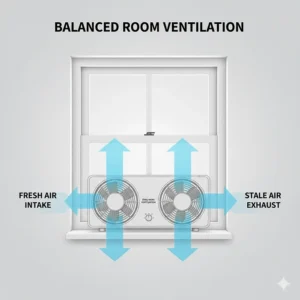
For optimal results, many ventilation experts recommend the “push-pull” method: use one window fan to pull fresh air in whilst another pushes stale air out. If you only have one window, a twin window fan achieves similar results by dedicating one fan to each direction.
According to research from the Chartered Institution of Building Services Engineers, achieving 5-10 air changes per hour significantly improves indoor air quality and reduces airborne contaminants. A properly sized window fan can deliver 8-12 air changes hourly in typical UK bedrooms.
Directional Airflow Matters
The direction you run your window extractor fan depends on your situation. During hot summer days, position fans to exhaust hot air outward – heat rises, so placing fans in upper windows works brilliantly in multi-storey homes. In cooler months, or when outdoor air quality exceeds indoor quality, reverse the fan to pull fresh air inside.
Evening ventilation proves particularly effective in the UK climate. As temperatures drop after sunset, switching your fan to intake mode brings cooler evening air indoors, flushing out the day’s accumulated warmth. This simple technique often eliminates the need for air conditioning even during our increasingly warm summers.

Choosing the Right Size: Window Fan Dimensions Guide
Getting the correct size window fan for ventilation ensures maximum effectiveness and easy installation. UK windows vary considerably – from narrow Victorian sashes to modern wide-opening casements – so careful measurement prevents disappointment.
Standard UK Window Sizes
Most UK casement windows measure 60-120cm wide, whilst traditional sash windows typically run 90-120cm. Modern UPVC windows often come in standard 600mm, 900mm, or 1200mm widths. Measure your window’s interior opening width at its narrowest point – this determines your maximum fan width.
Fan Size Recommendations by Room:
- Small bathrooms (under 10m²): 20-25cm single fan
- Bedrooms (10-18m²): 25-30cm single or twin fan
- Large bedrooms/offices (18-25m²): 30cm single or dual 23cm fans
- Open-plan spaces (over 25m²): Twin 25-30cm fans or multiple units
Remember that a reversible window fan allows seasonal flexibility – larger capacity than strictly necessary provides headroom for particularly hot days or intensive cooking sessions.
Installation Considerations for UK Window Types
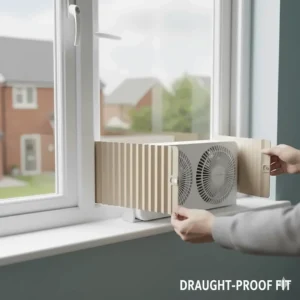
Casement windows (side-hinged) work brilliantly with window fans, as you can typically secure the unit and still maintain some window functionality. Most modern fans include adjustable panels that expand to fill your window width, with foam or rubber seals preventing air leakage around edges.
Sash windows require slightly more creativity. Traditional weights-and-pulleys sash windows can accommodate window fans by raising the lower sash and securing the fan in the resulting gap. Many UK-specific models include sash window adapters or extendable panels specifically for this purpose.
Tilt-and-turn windows (common in newer builds) sometimes challenge window fan installation. Look for models with flexible mounting systems, or consider professional installation to ensure proper sealing and security.
Always check your window’s load-bearing capacity – most window fans weigh 2-5kg, well within typical window frame limits, but older or damaged frames might need reinforcement.
Comparison Table: Window Fan Types & Applications
| Fan Type | Airflow Direction | Best Applications | Typical Efficiency | UK Climate Suitability |
|---|---|---|---|---|
| Single Exhaust | Outward only | Bathrooms, kitchens, workshops | Moderate | Excellent for moisture removal |
| Single Reversible | Switchable | Bedrooms, offices, living rooms | Good | Versatile for changing seasons |
| Twin Reversible | Independent/Combined | Large rooms, open-plan spaces | Excellent | Best for comprehensive ventilation |
| Thermostat-Controlled | Automatic as needed | Humidity-prone areas | Very Good | Ideal for UK’s variable climate |
Benefits vs Traditional Ventilation Methods
| Feature | Window Fan | Open Windows | Trickle Vents | Extractor Fans (Ceiling) |
|---|---|---|---|---|
| Active air exchange | ✓ Excellent | ○ Limited | ○ Minimal | ✓ Good |
| Energy cost | Low (£8-15/year) | None | None | Moderate (£12-25/year) |
| Installation | Easy DIY | N/A | Professional | Professional required |
| Noise level | 38-55dB | Silent | Silent | 45-65dB |
| Security | Moderate | Low | High | High |
| Seasonal flexibility | ✓ Reversible | ✓ Yes | Fixed | Fixed exhaust only |
| Initial cost | £35-£130 | Free | £25-60 | £80-200+ installation |
The comparison reveals why window fans have surged in popularity amongst UK homeowners. They deliver active ventilation without permanent structural changes – perfect for renters or those avoiding major renovations.
Energy Efficiency: Running Costs in the UK
One concern I frequently hear about window fans for ventilation centres on electricity costs. Given UK energy prices averaging 24-28p per kWh in 2026, it’s a legitimate question. However, the maths proves reassuring.
Real-World Energy Consumption
A typical 40W window fan running 8 hours daily costs approximately:
- Daily: 0.04kW × 8 hours × £0.26/kWh = £0.083
- Monthly (June-September): £0.083 × 30 = £2.49
- Annual (assuming 120 days use): £9.96
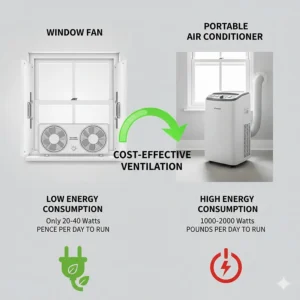
Even powerful 60W twin fans rarely exceed £15 annually. Compare this to portable air conditioning units consuming 1,000-1,500W, costing £2-3 daily to operate, and the efficiency advantage becomes clear.
Energy-efficient EC motor models like the Vent-Axia Lo-Carbon reduce consumption further, potentially halving running costs whilst maintaining performance. The initial premium (£95-£130 vs £45-£65 for standard models) pays for itself within 3-4 years through energy savings alone.
Reducing Summer Cooling Costs
By facilitating night-time cooling, window fans can eliminate or significantly reduce air conditioning usage. Energy Saving Trust research demonstrates that passive cooling through strategic ventilation reduces household cooling costs by 40-60% compared to continuous air conditioning.
The technique works brilliantly in UK climates: run your reversible window fan on intake during cooler evening and early morning hours, then close windows and curtains during peak daytime heat. This “thermal mass cooling” approach keeps interiors comfortable through most British summer days.
Installation Guide: Setting Up Your Window Fan Properly
Installing a window fan for ventilation requires minimal DIY skills – most people complete the process in 15-30 minutes using only a screwdriver. Here’s how to do it right.
Step-by-Step Installation Process
1. Measure Your Window Opening
Measure the width of your window opening at its narrowest point. Most window fans include expandable panels accommodating 55-110cm windows, but verify before purchasing.
2. Prepare the Window Area
Clean the window sill and surrounding frame. Remove curtains or blinds that might obstruct airflow. Check that the window opens and closes smoothly – you’ll need to operate it around the fan.
3. Extend the Side Panels
Expand the fan’s accordion panels or extender brackets to match your window width. The fit should be snug but not forced – overtightening can damage UPVC frames.
4. Position and Secure
Place the unit in your window opening, ensuring it sits level. Most models include adjustable feet or clips that secure against the window frame. For sash windows, lower the upper sash to trap the fan securely.
5. Seal Air Gaps
Use the provided foam weatherstripping around panel edges to prevent air leakage. This improves efficiency and reduces noise. Some models include sliding panels that automatically seal gaps.
6. Test Operation
Before finalising installation, run the fan through all speed settings in both directions (if reversible). Check for vibration or unusual noise – slight adjustments to positioning often eliminate these issues.
7. Weatherproofing (Optional)
For year-round installation, consider adding waterproof seals around external edges. Most UK users remove window fans during winter months, storing them indoors to prevent weather damage.
Safety Considerations
Always ensure your window fan installation maintains home security. Never leave ground-floor windows unsecured with fans installed when away from home. Many modern window fans include locking brackets that secure the window partially closed whilst allowing airflow.
Check electrical safety – ensure the power cable doesn’t create a trip hazard and that outdoor-facing components have appropriate weather resistance ratings (look for IPX4 minimum for bathroom installations).
Twin Window Fan Systems: Double the Performance
A twin window fan configuration, whether in a single unit or two separate fans, delivers significantly superior air exchange compared to single-fan setups. Understanding how to optimise dual-fan arrangements maximises their effectiveness.
Creating Cross-Ventilation With Dual Fans
The ideal dual-fan setup positions one fan in intake mode and another in exhaust mode, preferably in windows on opposite sides of your home. This creates positive cross-ventilation – fresh air enters one side whilst stale air exits the other, establishing powerful airflow throughout your living space.
Even with a single window, twin window fan units like the Honeywell model achieve similar results. Set one fan pulling air in whilst the other pushes air out, and you’ve created a balanced air exchange system in one window opening. This prevents pressure imbalances whilst maintaining consistent ventilation.
According to Building Research Establishment studies, cross-ventilation can achieve 3-5 times the airflow of single-direction ventilation, making dual-fan systems particularly effective in open-plan homes or during extremely hot weather.
Optimising Dual-Fan Direction
During daytime heat, position the intake fan on the cooler side of your home (typically north-facing in the UK) whilst exhausting from the warmer side (south or west-facing). This maximises temperature differential and natural cooling effect.
Evening and night-time operation reverses priorities – intake cool evening air from any direction whilst exhausting warm indoor air from upper floors or hotspot rooms. Many UK homeowners run dual fans overnight during summer heatwaves, achieving bedroom temperatures 3-5°C cooler than ambient without air conditioning.
Hot Air Extraction: Managing Summer Heat in UK Homes
Whilst the UK isn’t known for scorching summers, climate change has brought increasingly warm periods that challenge our traditionally uninsulated homes. Strategic hot air extraction using window fans offers an elegant solution without expensive air conditioning.
Heat Management Strategies
Heat naturally rises, concentrating in upper floors and ceiling spaces. Positioning your window extractor fan in upstairs windows capitalises on this physics, efficiently removing the hottest air from your home. For multi-storey houses, create a “thermal chimney” effect by exhausting from top-floor windows whilst allowing cooler air entry through ground-floor windows or vents.
Timing matters enormously in the UK climate. Our summer temperature differential between day (potentially 25-30°C) and night (15-18°C) provides a natural cooling opportunity. Run extraction fans from early evening through early morning, then close windows and draw curtains before daytime heating begins. This technique can keep indoor temperatures 5-7°C below outdoor maximums.
Dealing With Humidity and Moisture
UK summers often combine heat with humidity – a particularly uncomfortable combination that window fans address effectively. By exhausting moisture-laden air, particularly from kitchens and bathrooms, you improve comfort whilst preventing the dampness issues that plague British homes.
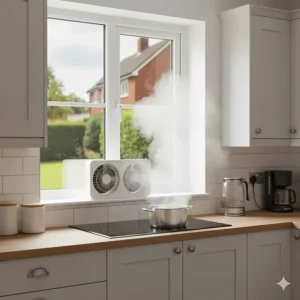
Position window extractor fans strategically near moisture sources. A bathroom fan eliminates shower steam immediately, preventing condensation migration to adjacent rooms. Kitchen extraction during cooking removes both heat and humidity, plus cooking odours that otherwise linger for hours.
The Pro Breeze and Xpelair models excel at moisture extraction, with dedicated exhaust-only designs and, in some cases, humidity sensors that activate automatically when moisture levels rise.
Maintenance and Care: Keeping Your Window Fan Performing
Proper maintenance extends your window fan’s lifespan whilst maintaining peak performance. Fortunately, these devices require minimal attention – usually just occasional cleaning and simple checks.
Regular Cleaning Schedule
Dust and debris accumulation reduces airflow efficiency and increases noise. Clean your window fan every 4-6 weeks during active use:
1. Disconnect Power: Always unplug before cleaning – safety first!
2. Remove Grilles: Most window fans feature removable front and rear grilles secured by clips or screws. Wash these in warm soapy water, rinse thoroughly, and dry completely.
3. Clean Fan Blades: Use a slightly damp microfibre cloth to wipe each blade individually. Avoid excessive moisture near the motor housing.
4. Vacuum Motor Housing: Use your vacuum’s brush attachment to remove dust from motor vents and housing. Never spray water or cleaning solution directly onto motor components.
5. Wipe Expansion Panels: Clean the accordion panels or extender brackets with a damp cloth, removing accumulated dirt and insects.
6. Check Seals: Inspect foam weatherstripping for wear or compression. Replace if damaged to maintain efficient sealing.
Seasonal Storage
Most UK homeowners remove window fans during autumn and winter months. Proper storage prevents damage and ensures next season’s performance:
- Clean thoroughly before storage
- Store in a dry location (lofts work well if dry; avoid damp garages)
- Cover with a cloth or plastic bag to prevent dust accumulation
- Store upright rather than on its side to prevent motor lubrication issues
- Keep original packaging for optimal protection
Troubleshooting Common Issues
Excessive Noise: Usually indicates loose screws, unbalanced blades, or motor wear. Tighten all accessible screws first. If noise persists, check that blades rotate freely without obstruction. Grinding or squealing suggests motor bearing wear – often economically unrepairable in budget models.
Reduced Airflow: Typically caused by dust accumulation on blades or grilles. Deep cleaning usually resolves this. If airflow remains weak, check for motor capacitor failure (professional repair required) or simply accept that budget fans may lose performance after several seasons.
Vibration: Ensure the fan sits level in your window opening. Adjust extender panels for secure, balanced fit. Slight shimming with folded cardboard sometimes eliminates vibration in particularly problematic installations.
Electrical Issues: Never attempt electrical repairs yourself unless qualified. Plug fuses and cables can be checked safely, but internal wiring problems require professional attention or unit replacement.
Most quality window fans deliver 5-8 years of reliable service with basic maintenance. Budget models typically last 2-4 seasons – still excellent value considering their modest cost.
Noise Levels and Sleep Quality Considerations
Noise concerns frequently arise when people consider installing a window fan for ventilation in bedrooms. Understanding decibel ratings and managing sound helps you choose appropriate models and use them effectively overnight.
Understanding Decibel Ratings
Window fans typically produce 38-55dB depending on model and speed setting:
- 38-42dB: Quiet library, comfortable for sleeping
- 43-48dB: Moderate conversation level, acceptable for most sleepers
- 49-55dB: Noticeable but manageable, may disturb light sleepers
For context, typical bedroom background noise measures 30-35dB, whilst urban street noise reaches 60-70dB. Most people adapt to consistent “white noise” from fans within 2-3 nights, often finding it blocks more disruptive intermittent sounds like traffic or neighbours.
Premium models like the Vent-Axia Lo-Carbon (38dB) and Pro Breeze (40dB) specifically target quiet operation, using advanced blade designs and motor mounts that minimise vibration transmission. Budget options typically sacrifice acoustic refinement for lower cost.
Optimising for Night-Time Use
Several strategies reduce perceived noise from window fans during sleeping hours:
Lower Speed Settings: Most fans produce dramatically less noise on medium or low speeds. A 30cm fan on medium setting often provides 70% of maximum airflow at 40% of the noise.
Positioning Matters: Placing the fan further from your bed reduces perceived volume. If possible, install in a window across the room rather than immediately bedside.
Sound Masking: Many people find fan noise actually improves sleep quality by masking irregular sounds like traffic, neighbours, or wildlife. The consistent “whoosh” creates a sonic blanket that prevents partial wakening from sudden noises.
Timer Functions: Some modern window fans include timer functions, allowing them to run for 2-3 hours until you fall asleep, then switching off automatically. Alternatively, smart plugs provide similar functionality for any fan.
Research from the Sleep Council indicates that consistent low-frequency noise (like fan operation) rarely disrupts sleep architecture once users adapt, whilst significantly improving comfort through better temperature and air quality management.
FAQ: Your Window Fan Ventilation Questions Answered
❓ What size window fan do I need for a typical UK bedroom?
❓ Can I use a window fan for ventilation during rain?
❓ Do window fans work in winter for condensation control?
❓ How much does it cost to run a window fan in the UK?
❓ Will a window fan cool my room like air conditioning?
Conclusion: Making the Right Choice for Your UK Home
Choosing the right window fan for ventilation transforms your home’s comfort and air quality without the expense and energy consumption of air conditioning. Throughout this guide, we’ve examined seven proven performers currently available on Amazon.co.uk, each suited to different needs and budgets.
For maximum versatility and performance, the Honeywell Twin Window Fan remains our top recommendation despite its premium price (£85-£110). The dual reversible fans provide unmatched control over airflow direction and volume, effectively ventilating rooms up to 25 square metres. Its robust construction promises years of reliable service – an investment that pays dividends through improved comfort and reduced cooling costs.
Budget-conscious buyers should seriously consider the Duronic FN55 (£55-£75), which delivers reversible functionality and solid performance at a mid-range price. It’s particularly well-suited to renters or those wanting to trial window ventilation before committing to premium equipment. Meanwhile, the Pro Breeze Window Extractor excels at targeted moisture extraction in bathrooms and kitchens, with its automatic thermostat providing genuine convenience.
Remember that effective ventilation extends beyond equipment selection. Strategic placement, proper installation, and understanding when to run your fan in intake versus exhaust mode dramatically impact results. Take advantage of the UK’s natural temperature variations – our relatively cool evenings and mornings provide perfect opportunities for passive cooling that window fans facilitate brilliantly.
Whether you’re battling summer stuffiness, managing cooking odours, or preventing bathroom condensation, the right window fan for ventilation offers an elegant, energy-efficient solution. Measure your windows carefully, consider your specific ventilation needs, and invest in quality appropriate to your budget and usage patterns.
The climate is changing, bringing warmer UK summers that challenge our traditionally uninsulated homes. Window fans represent a practical, affordable response that works with natural airflow rather than fighting it with energy-intensive air conditioning. Your home, your energy bills, and your sleep quality will thank you.
✨ Ready to Transform Your Home’s Air Quality?
🌬️ Don’t let another stuffy evening pass! Click on any of the highlighted products above to check current Amazon.co.uk pricing and availability. With delivery typically within 1-2 days, you could be breathing fresher air by this weekend. Your family deserves the comfort that proper ventilation provides!
Recommended for You
- 7 Best Cooling Fans for Heatwave UK 2026 | Stay Cool
- Air Conditioner vs Cooling Fan: 7 Key Differences (UK Guide 2026)
- 7 Best Neck Fan Rechargeable UK 2026 – Beat the Heat
Disclaimer: This article contains affiliate links. If you purchase products through these links, we may earn a small commission at no additional cost to you. Prices shown are approximate and may vary. Product availability and specifications should be verified on Amazon.co.uk before purchase.
✨ Found this helpful? Share it with your mates! 💬🤗
