
In This Article
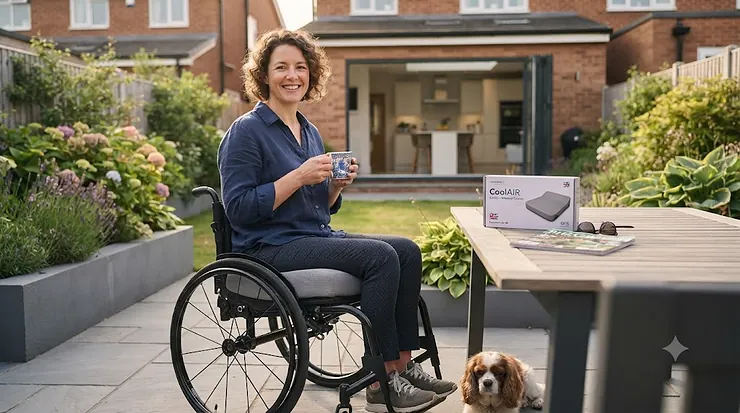
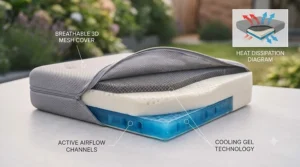
Summer in a wheelchair has a very specific kind of misery to it. It’s not just the heat — it’s the heat that has nowhere to go. Sit on a standard foam cushion for three hours and you’ll know exactly what we mean: that damp, prickling warmth that builds under you like a slow oven, no matter how many times you shift your weight. A cooling cushion for wheelchair users tackles this directly, using gel, air cells or ventilated foam to pull heat and moisture away from the skin instead of trapping it against a solid block of memory foam.
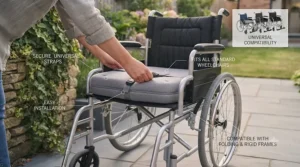
So, what is a cooling cushion for wheelchair users? It’s a seating support built with heat-dissipating materials — gel layers, honeycomb air channels or breathable covers — designed to reduce skin temperature and moisture build-up during long periods of sitting, while also redistributing pressure to lower the risk of pressure sores.
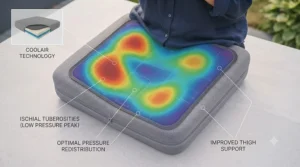
That second part matters just as much as the temperature. Wheelchair users who sit for six-plus hours a day are at genuinely elevated risk of pressure injuries, and heat is one of several contributing factors alongside prolonged pressure and shear force, as background research on wheelchair cushion design makes clear. This guide walks through seven real, currently available cushions spanning budget gel pads to clinically-graded air systems, with honest analysis of who each one actually suits — not just a list of specs copied off a product page. We’ve dug into real specifications, aggregated review sentiment, and UK-specific buying considerations so you can make a properly informed decision, whatever your budget or care needs happen to be.
Quick Comparison Table
Before we get into the detail, here’s the shape of the market at a glance. Prices are approximate ranges — always check current pricing before buying, since retailer prices shift constantly.
| Cushion | Cooling Type | Best For | Price Range |
|---|---|---|---|
| EcoNour Cooling Gel Seat Cushion | Honeycomb gel | Budget everyday use | under £35 |
| AUVON Ventilation Cooling Gel Seat Cushion | Gel + ventilated foam | Value with waterproofing | £30-£45 range |
| Drive Medical Titanium Gel/Foam Wheelchair Cushion | Dual-chamber gel bladder | Moderate pressure risk | £70-£110 range |
| Putnams T-Gel Wheelchair Cushion | Viscoelastic gel | UK clinical-grade needs | £90-£140 range |
| Alerta GelCube Air-Gel Pressure Relief Cushion | Honeycomb air-gel cells | High-risk & bariatric users | £130-£190 range |
| Vicair Vector O2 Cushion | SoftCell air modules | Long-term daily wheelchair use | £280-£380 range |
| ROHO Quadtro Select High Profile Cushion | Four-compartment air | Very high pressure-sore risk | £350-£450 range |
Looking at this spread, the split isn’t really “cheap vs expensive” — it’s “maintenance-free vs adjustable.” Gel cushions like the EcoNour Cooling Gel Seat Cushion and AUVON Ventilation Cooling Gel Seat Cushion need zero setup and work straight out of the box, which suits anyone who just wants reliable comfort without fiddling. The air-cell systems at the top of the table, the Vicair Vector O2 Cushion and ROHO Quadtro Select High Profile Cushion, trade that simplicity for precision pressure redistribution that’s genuinely clinical-grade, which is why NHS wheelchair services lean on them for higher-risk patients. Your correct pick depends less on budget alone and more on how many hours a day you’re sitting and what your skin risk actually looks like.
💬 Just one click — help others make better buying decisions too!😊
Top 7 Cooling Cushions for Wheelchair Users: Expert Analysis
We’ve grouped these from budget through to premium, covering gel, foam-gel hybrid and true air-cell technology so there’s a genuine option here whatever your situation and clinical need.
1. EcoNour Cooling Gel Seat Cushion — best budget entry point
The EcoNour Cooling Gel Seat Cushion is the cushion equivalent of a good pair of trainers you didn’t expect to love — cheap, unfussy, and quietly better than it has any right to be at this price. Its double-layer honeycomb gel structure is built with a lattice of internal vents rather than a single solid gel puck, which is the detail that actually matters: more surface area exposed to air means heat has somewhere to escape instead of pooling against your skin. Underneath the gel sits a firm foam base that stops the whole thing from collapsing flat within a few weeks, a common failure point on cheaper imitators.
Based on the spec comparison with pricier rivals, this is squarely a comfort-and-cooling cushion rather than a clinical pressure-relief device — a distinction worth being honest about. It’s the right call for wheelchair users who are low-to-moderate risk for pressure sores and mainly want relief from that sweaty, sticky feeling during long sitting sessions, whether that’s a daily commute or an afternoon out. Reviewers consistently note the immediate cooling sensation on first sitting down, alongside a common complaint that the gel can migrate slightly over months of use, softening the honeycomb structure’s support.
Pros:
- ✅ Genuinely noticeable heat reduction versus plain foam
- ✅ Non-slip base keeps it anchored on a wheelchair seat
- ✅ Widely stocked and easy to replace if needed
Cons:
- ❌ Gel can flatten and migrate with heavy daily use
- ❌ Not positioned as a clinical pressure-injury solution
At around £25-£35, this sits at the affordable end of the market — solid value for anyone testing whether gel cooling suits them before committing to something pricier.
2. AUVON Ventilation Cooling Gel Seat Cushion — best waterproof everyday pick
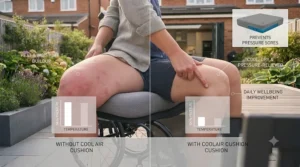
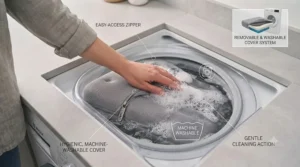
Where the EcoNour Cooling Gel Seat Cushion leans purely on gel, the AUVON Ventilation Cooling Gel Seat Cushion hedges its bets with a memory foam core wrapped around a gel layer, finished in a waterproof stretch cover. That layering means you get some of memory foam’s contouring comfort alongside the gel’s cooling effect — a sensible middle ground rather than picking one property over the other. The cover itself is worth dwelling on: it’s genuinely wipeable, which for a device sat on for hours a day, potentially with continence considerations, is not a minor feature.
What most buyers overlook about this model is the built-in carrying handle, a small addition that transforms it from “wheelchair accessory” into something you can move between a wheelchair, a car seat and a dining chair without a second thought. It’s designed to fit most standard wheelchair seat widths, and the anti-slip base keeps it from sliding during transfers. Aggregated review sentiment is broadly positive on comfort and cooling, with a recurring theme that the firmer memory-foam feel suits people who find pure gel cushions too soft or unstable underneath them.
Pros:
- ✅ Waterproof cover simplifies hygiene and cleaning
- ✅ Foam-gel blend balances contouring with cooling
- ✅ Carry handle makes it genuinely portable
Cons:
- ❌ Firmer feel may not suit those wanting a softer sit
- ❌ Limited size options versus made-to-measure alternatives
Priced in the £30-£45 range, it’s a smart step up from pure gel for anyone who moves between seats throughout the day.
3. Drive Medical Titanium Gel/Foam Wheelchair Cushion — best for moderate pressure-relief needs
Here’s where things start getting properly clinical. The Drive Medical Titanium Gel/Foam Wheelchair Cushion uses a dual-chamber gel bladder set into a dense foam base, specifically shaped with a medium contour designed to gently support the greater trochanters — the bony points at your hips that take a beating during long sitting. On paper this means better ischial and coccyx pressure relief than a flat gel pad, because the contour actively guides your pelvis into a more stable, aligned position rather than just cushioning wherever you happen to land.
Drive Medical is a long-established name in clinical mobility equipment, and that pedigree shows in the build: a low-shear, fluid-resistant cover designed to protect skin tissue during transfers, and a non-skid base for stability. This is the cushion to reach for if you’ve been told you’re at moderate risk of pressure injury but don’t yet need a full air-cell system — it bridges the gap between “comfort cushion” and “clinical device” more convincingly than most gel-only options. What the spec sheet won’t tell you, but reviewers note, is that the dual-chamber gel genuinely reduces that hot, damp feeling versus single-layer gel pads, even though the trade-off is a noticeably heavier cushion to lift in and out of a car boot.
Pros:
- ✅ Contoured shape supports proper pelvic alignment
- ✅ Dual-chamber gel targets ischial and coccyx pressure points
- ✅ Trusted clinical-supply brand with UK availability
Cons:
- ❌ Heavier than gel-only or foam-only alternatives
- ❌ Contour won’t suit everyone’s seating posture
Expect to pay somewhere in the £70-£110 range, positioning it as a genuine mid-tier clinical option rather than a comfort accessory.
4. Putnams T-Gel Wheelchair Cushion — best UK-made medical-grade gel option
If you’d rather buy British, the Putnams T-Gel Wheelchair Cushion is one of the more established UK clinical seating brands, and it shows in the details most imported gel cushions skip entirely. It’s built around a viscoelastic gel layer over a shaped foam base, available in genuine clinical depths rather than a single one-size profile, with a zip-off, fully waterproof cover designed for infection control in care settings as much as home use.
Based on the spec comparison against generic gel imports, the viscoelastic formulation is the standout feature — it responds more slowly to pressure than standard gel, moulding around bony prominences rather than pushing back immediately, which is exactly the behaviour that reduces localised hot spots and shear. Here’s what to weigh: this is a cushion built for people who’ve had a formal seating assessment or are managing an existing skin integrity concern, not a casual comfort upgrade. Reviewers and clinical users consistently note the easy-clean cover as a standout for anyone managing incontinence or requiring frequent laundering, a detail that matters enormously in day-to-day care but rarely gets mentioned in marketing copy.
Pros:
- ✅ Viscoelastic gel moulds precisely to bony prominences
- ✅ Zip-off waterproof cover suits infection-control needs
- ✅ UK brand with clinical seating pedigree
Cons:
- ❌ Premium pricing versus imported gel alternatives
- ❌ Heavier profile reduces portability between chairs
Typically priced in the £90-£140 range depending on size, it’s a strong pick for anyone wanting clinical-grade gel without stepping up to air-cell pricing.
5. Alerta GelCube Air-Gel Pressure Relief Cushion — best hybrid for high-risk users
The Alerta GelCube Air-Gel Pressure Relief Cushion sits in an interesting middle category — not pure gel, not pure air, but a honeycomb structure of individual air-gel cells that react independently to the smallest shifts in body weight. That independence is the whole point: rather than one solid gel mass compressing as a unit, each cell in the honeycomb flexes on its own, which on paper means pressure gets spread across dozens of tiny points instead of concentrating under the sit bones.
What most buyers overlook about this model is its bariatric-friendly weight capacity, making it a genuinely rare option for larger wheelchair users who are frequently underserved by standard cushion ranges. Based on the spec comparison, the honeycomb design is specifically engineered to prevent “hot spots” — localised pressure and heat combined — which is precisely the mechanism the NHS identifies as contributing to pressure ulcer formation. The fully washable cover is a genuine practical win for care environments. Aggregated user feedback consistently praises the noticeable reduction in overheating compared to solid gel cushions, alongside occasional comments that the honeycomb profile adds a little extra seat height, worth checking against your wheelchair’s arm-height clearance before buying.
Pros:
- ✅ Independent air-gel cells reduce localised hot spots
- ✅ Higher weight capacity suits bariatric users
- ✅ Fully washable cover for hygiene-critical settings
Cons:
- ❌ Added thickness can raise effective seat height
- ❌ Pricier than single-material gel cushions
Sitting in the £130-£190 range, it earns its premium through genuinely differentiated engineering rather than branding alone.
6. Vicair Vector O2 Cushion — best low-maintenance medical-grade air system
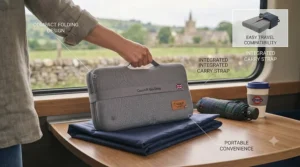
The Vicair Vector O2 Cushion takes a genuinely different approach to air-cell design, and it’s worth understanding why. Instead of inflatable chambers that need regular pumping and pressure checks, it uses what the brand calls SoftCells — small, individually mobile air-and-foam packed elements inside a fixed-volume cushion that self-mould around the body without any manual inflation. That’s a meaningful practical difference: no pump to lose, no daily pressure check, no risk of a slow puncture leaving you unknowingly under-supported.
Here’s what to weigh: this cushion is used across NHS wheelchair services precisely because it combines genuine pressure redistribution — the SoftCells shift and flow around bony prominences, reducing shear as you move — with far lower ongoing maintenance than traditional air-cell systems. On paper this means it suits wheelchair users who need clinical-level pressure management but don’t want, or can’t manage, the upkeep that traditional inflatable cushions demand. Reviewers and clinicians consistently note the stability during transfers as a standout, since the fixed-volume design doesn’t shift unpredictably underfoot the way loosely inflated cushions can. The trade-off is straightforward: you’re paying a genuine premium for engineering, and most users benefit from a proper seating assessment before buying rather than guessing at sizing.
Pros:
- ✅ No pump or daily inflation checks required
- ✅ SoftCells reduce shear during movement and transfers
- ✅ Used across NHS wheelchair seating services
Cons:
- ❌ Significant investment versus gel alternatives
- ❌ Best fitted following a professional seating assessment
Expect a price range of roughly £280-£380, reflecting genuinely clinical-grade engineering rather than a comfort accessory.
7. ROHO Quadtro Select High Profile Cushion — best for very high pressure-sore risk
If there’s a household name in clinical wheelchair cushioning, it’s this one. The ROHO Quadtro Select High Profile Cushion uses four independently adjustable air compartments, each one controllable via its own valve, letting a clinician or carer fine-tune firmness across different zones of the seat — softer under bony prominences, firmer where more stability is needed. That level of adjustability is precisely why it’s a long-standing staple of NHS and private wheelchair seating clinics for users at very high risk of pressure injury.
Based on the spec comparison against every other cushion on this list, the four-compartment system is the most clinically sophisticated option here: it doesn’t just cushion, it lets you actively sculpt pressure distribution to an individual’s specific risk areas, something no single-material gel or foam cushion can replicate. It’s also strikingly light for what it does, at only a few pounds, which matters for anyone self-propelling or transferring the cushion between chairs regularly. What the spec sheet won’t tell you, but decades of clinical use confirm, is that air cushions like this need routine maintenance — checking compartment pressure regularly and watching for slow leaks — because an under-inflated ROHO can actually increase risk rather than reduce it. Reviewers with long-term use consistently describe it as transformative for existing pressure sores, alongside occasional notes on the learning curve of getting the pressure balance right initially.
Pros:
- ✅ Four independent compartments allow precise pressure tuning
- ✅ Long-established NHS and clinical seating standard
- ✅ Lightweight design despite sophisticated engineering
Cons:
- ❌ Requires regular pressure checks and maintenance
- ❌ Vulnerable to punctures with careless handling
Positioned at £350-£450, it’s the most expensive cushion here, but for very high-risk users the clinical case for it is hard to argue with.
Practical Usage Guide: Getting the Most From Your Cooling Cushion
Buying the right cushion is only half the job — how you set it up and live with it day to day makes a real difference to both comfort and skin health. Start by getting the orientation right: most gel and air cushions have a clearly marked front and back, and sitting on one backwards flattens the pressure-relief zones exactly where you need them most. During the first 30 days, do a daily skin check morning and evening, particularly around the sit bones and tailbone, since this is when you’ll notice early on whether a cushion is genuinely working for your body or not.
For air-cell cushions like the ROHO Quadtro Select High Profile Cushion, check compartment pressure weekly at minimum — a quick “hand check” under each thigh, feeling for roughly a finger’s width of air between you and the base, catches slow leaks before they become a problem. Gel cushions like the EcoNour Cooling Gel Seat Cushion need far less fuss, but do periodically knead the gel through the cover to redistribute it evenly, since gel naturally migrates toward wherever you sit most heavily. One common first-month mistake is over-tightening wheelchair seat straps around a new cushion, which compresses the very structures designed to redistribute your weight — leave enough slack for the cushion to do its job properly.
Cleaning matters more than people expect. Waterproof covers, like those on the AUVON Ventilation Cooling Gel Seat Cushion and Putnams T-Gel Wheelchair Cushion, should be wiped down weekly and laundered per the manufacturer’s instructions to prevent the moisture build-up that undermines the whole point of a cooling cushion in the first place.
Real-World Scenarios: Matching Cooling Cushions to Mobility Aids and Lifestyles
Cooling cushions don’t exist in isolation — they’re one piece of a broader set of mobility aids, and the right choice depends heavily on how the rest of your setup works. Take Priya, a 34-year-old graphic designer who self-propels a lightweight manual wheelchair for around eight hours a day at a desk job. Her priority is portability alongside pressure care, which makes the AUVON Ventilation Cooling Gel Seat Cushion — light, wipeable, and easy to move between her wheelchair and a standard office chair — a genuinely sensible fit rather than an air-cell system she’d need to deflate and reinflate constantly.
Compare that with Tom, 61, who uses a powered wheelchair full-time following a spinal cord injury and has a documented history of sacral pressure sores. For Tom, the clinical case points firmly toward something like the ROHO Quadtro Select High Profile Cushion or Vicair Vector O2 Cushion, ideally following a formal seating assessment through NHS wheelchair services, because his risk profile genuinely demands adjustable, clinically validated pressure redistribution rather than general comfort cooling. Then there’s Margaret, 78, who transfers between a wheelchair and mobility scooter throughout the day and mainly wants to stay comfortable without managing complex equipment — the EcoNour Cooling Gel Seat Cushion or Drive Medical Titanium Gel/Foam Wheelchair Cushion would suit her far better than a cushion demanding weekly pressure checks. If you’re weighing up other mobility aids alongside a cushion — from powered add-ons to pressure-relieving mattresses at home — it’s worth checking your eligibility for wider support such as the Blue Badge parking scheme for disabled drivers and passengers, which can make transporting bulkier clinical cushions and equipment considerably easier.
Problem → Solution: Fixing Common Cooling Cushion Complaints
Problem: The cushion feels hot again after a couple of hours. This is usually a cover issue rather than a cushion issue — thick, non-breathable fabric covers trap heat regardless of what’s underneath. Solution: switch to a mesh or moisture-wicking cover, or check that a cushion like the Alerta GelCube Air-Gel Pressure Relief Cushion is being used with its intended washable cover rather than an aftermarket substitute.
Problem: Gel cushions feel flat within a few months. Gel naturally migrates over time under sustained body heat and weight. Solution: knead the gel through the cover weekly to redistribute it evenly, and rotate the cushion front-to-back occasionally if the manufacturer allows it, to spread wear more evenly across the gel pack.
Problem: An air cushion feels unstable or “bouncy.” This is almost always an over-inflation issue. Solution: release a small amount of air until you can just feel the base beneath your sit bones through the cushion — that’s the correct pressure-relief setting for most compartmentalised systems like the ROHO Quadtro Select High Profile Cushion.
Problem: New pressure marks appear despite using a cushion. Solution: this warrants a proper reassessment rather than a product swap — speak to a GP or wheelchair services team, since shear stress and reduced blood flow at pressure points are just as significant as heat and pressure alone, and a formal seating review can identify the actual cause.
Problem: Uncertainty over which size to buy. Solution: measure your actual wheelchair seat width and depth rather than relying on your own body measurements, since an oversized cushion reduces effective support and a too-small one leaves bony prominences unsupported at the edges.
How to Choose a Cooling Cushion for Wheelchair Users
- Assess your actual pressure-sore risk first. If you’ve had a pressure ulcer before, or sit for more than six hours daily, start with a clinical seating assessment rather than guessing at a product.
- Match the cooling mechanism to your climate and body heat. Gel suits moderate heat management; honeycomb air-gel hybrids and true air-cell systems handle more extreme heat and higher risk simultaneously.
- Check weight capacity carefully. Standard cushions typically max out around 250-275 lbs — bariatric users need models like the Alerta GelCube Air-Gel Pressure Relief Cushion built for higher capacities.
- Factor in maintenance tolerance. If you won’t reliably check air pressure weekly, a low-maintenance option like the Vicair Vector O2 Cushion or a gel cushion suits you better than a traditional inflatable system.
- Consider portability needs. Anyone transferring between multiple seats daily should prioritise lighter, wipeable options over heavier clinical cushions.
- Verify cover material and washability. Waterproof, zip-off covers matter enormously for hygiene, particularly in care settings.
- Buy from a seller offering clear returns. UK consumers purchasing online retain a statutory 14-day cancellation right under the Consumer Contracts Regulations, which specify the cancellation period ends 14 days after goods reach the consumer — always confirm this before buying from a third-party marketplace seller.
Cooling Cushions vs Traditional Wheelchair Cushions
| Factor | Cooling Cushion | Traditional Foam Cushion |
|---|---|---|
| Heat management | Actively dissipates heat via gel/air/ventilation | Traps body heat over hours |
| Moisture control | Reduces sweat build-up significantly | Prone to trapped moisture |
| Pressure redistribution | Often superior, especially air-cell types | Basic, compresses uniformly |
| Best For | Long sitting hours, higher pressure-sore risk | Short-term or lower-risk occasional use |
| Typical Price | £25-£450 depending on technology | Often under £30 |
The price gap looks intimidating until you consider what you’re actually paying for. Standard foam cushions are cheap because they’re doing one job — providing a soft surface — while cooling cushions are managing temperature, moisture and pressure simultaneously, which is precisely why clinical guidance on pressure ulcer prevention treats skin temperature and moisture as key contributing risk factors alongside pressure itself. For anyone sitting more than a few hours daily, that functional gap translates into a real difference in skin health outcomes, not just comfort — which is arguably the whole reason this category exists.
✨ Don’t Miss These Exclusive Deals!
🔍 Take your seating comfort to the next level with cushions genuinely built for long days in the chair. Click through on any cushion above to check current pricing and availability — the right pick could make every hour of sitting noticeably more bearable.
Medical-Grade Cushioning: What It Actually Means
“Medical-grade” gets thrown around loosely in product listings, so it’s worth being precise about what it should actually signify. In genuine clinical seating, medical-grade cushioning typically means the product has been engineered and tested specifically for pressure redistribution and skin protection — not just general comfort — and is often available or recommended through formal wheelchair seating services rather than sold purely as a retail comfort accessory. Cushions like the ROHO Quadtro Select High Profile Cushion and Vicair Vector O2 Cushion fall firmly into this category, having been used across NHS seating clinics for decades with a substantial body of clinical use behind them.
That doesn’t mean gel cushions like the Putnams T-Gel Wheelchair Cushion don’t qualify — viscoelastic gel formulations designed specifically for pressure relief, with clinical depth options and infection-control covers, sit in a genuine mid-tier medical category too. What actually separates medical-grade from comfort-grade is the evidence and intent behind the design: was it engineered to manage a known clinical risk, tested against that risk, and validated through use in care settings? NHS guidance on pressure sores notes that reducing pressure, shear and moisture at the skin surface is central to prevention — and it’s exactly this framework that separates a genuinely medical-grade cushion from a well-marketed comfort product wearing the same label.
Common Mistakes When Buying a Cooling Cushion
The single biggest mistake is buying on comfort alone without considering actual pressure-sore risk — a cushion that feels lovely in a shop for five minutes can behave very differently after six hours of real use. A close second is ignoring sizing: buyers regularly choose a cushion based on their own body width rather than their wheelchair’s actual seat dimensions, leading to a cushion that either overhangs uselessly or leaves the edges of the seat unsupported.
Another recurring error is assuming all “cooling” claims are equal. A cushion with a thin gel strip marketed heavily as “cooling” behaves very differently to a genuine honeycomb air-gel structure like the Alerta GelCube Air-Gel Pressure Relief Cushion — read the actual construction details, not just the marketing headline. Buyers also frequently skip checking weight capacity, which matters enormously since an overloaded cushion compresses fully and stops redistributing pressure altogether, effectively becoming a flat, unsupportive pad. Finally, plenty of people buy a premium air-cell system without accounting for the maintenance it demands — an under-inflated ROHO-style cushion can genuinely increase pressure-sore risk rather than reduce it, so honesty about your own willingness to do weekly checks should factor directly into the buying decision.
Long-Term Cost & Maintenance
| Cushion Type | Typical Lifespan | Ongoing Maintenance | Approx. Replacement Cost |
|---|---|---|---|
| Gel (e.g. EcoNour Cooling Gel Seat Cushion) | 12-18 months | Minimal — occasional kneading | £25-£45 range |
| Gel-foam hybrid (e.g. Drive Medical Titanium Gel/Foam Wheelchair Cushion) | 18-24 months | Low — regular wipe-down | £70-£140 range |
| Air-gel hybrid (e.g. Alerta GelCube Air-Gel Pressure Relief Cushion) | 2-3 years | Moderate — cover washing | £130-£190 range |
| Air-cell (e.g. ROHO Quadtro Select High Profile Cushion) | 3-5 years with care | High — weekly pressure checks | £350-£450 range |
Looking at total cost of ownership rather than sticker price flips the value picture somewhat. A £30 gel cushion replaced every 15 months works out to roughly £24 a year, while a £400 air-cell cushion lasting five years with proper care works out closer to £80 a year — more expensive overall, but arguably better value if it’s genuinely preventing a pressure ulcer, which can involve significant medical treatment costs and quality-of-life impact if left untreated. Whichever category you buy into, remember your statutory rights: online purchases from a UK retailer carry a 14-day cancellation window under the Consumer Contracts Regulations noted earlier, so keep packaging until you’re confident the cushion is right for you.
Safety, Regulations and Pressure Sore Prevention Guide
Pressure sore prevention sits at the heart of why this whole product category exists, so it’s worth grounding the advice in what actually causes them. The contributing factors generally recognised include insufficient blood flow at bony prominences under sustained pressure, moisture collecting on the skin from inadequate airflow, localised areas of elevated temperature, and shear stress on the skin — which is precisely why a genuinely effective cooling cushion needs to address heat, moisture and pressure together, not just one of the three.
For UK wheelchair users, the safest route to a medical-grade cushion, particularly for anyone at moderate-to-high risk, is a referral to NHS wheelchair services or an occupational therapist for a formal seating assessment, rather than self-selecting a premium air-cell cushion online. If you’re managing risk independently, daily skin checks remain the single most reliable early-warning system — catching redness or discomfort before it develops into a break in the skin. It’s also worth checking your entitlement to VAT relief on disability equipment purchases, and confirming whether your chosen retailer clearly discloses their returns policy, since third-party marketplace sellers don’t always mirror the protections offered by “Sold and Dispatched by” listings. None of the products in this guide are medical devices in the strictest regulatory sense unless specifically marketed as such, so always check current CE/UKCA marking status and manufacturer documentation for any cushion being used to manage an existing pressure injury.
Frequently Asked Questions
❓ What is the best cooling cushion for wheelchair users?
❓ Do cooling gel cushions actually help prevent pressure sores?
❓ How often should I check or replace my wheelchair cushion?
❓ Can I use a cooling cushion with any wheelchair?
❓ Is a cooling cushion covered by the NHS or eligible for VAT relief?
Conclusion
Choosing a cooling cushion for wheelchair users really comes down to being honest with yourself about two things: how many hours you’re actually sitting, and how much ongoing maintenance you’re genuinely willing to do. There’s no shame in picking the low-fuss EcoNour Cooling Gel Seat Cushion over a premium air-cell system if your risk profile doesn’t demand it — and equally, no point saving money on a basic gel pad if you’re managing an existing pressure injury that needs the precision of something like the Vicair Vector O2 Cushion or ROHO Quadtro Select High Profile Cushion.
What all seven of these products share is that they take heat and moisture management seriously in a way flat, dense foam simply doesn’t — and for anyone who’s spent a summer afternoon peeling themselves off a hot cushion, that alone makes the investment worthwhile. Whatever you choose, pair it with regular skin checks, honest maintenance habits, and — for anyone with an existing or previous pressure sore — a proper conversation with your GP or wheelchair services team before relying on a product page alone to make the decision for you.
Recommended for You
- Cooling Car Seat Cushion 2026: 7 Best Picks for Hot Drives
- Office Chair Cooling Pad vs Gaming Chair Cooling Pad (2026 Guide)
- 7 Best Cooling Seat Cushions Under £30 (2026 UK Buying Guide)
Disclaimer: This article contains affiliate links. As an Amazon Associate, I earn from qualifying purchases. If you purchase products through these links, we may earn a small commission at no additional cost to you.
✨ Found this helpful? Share it with your friends! 💬🤗
