
In This Article
Picture this: it’s a sweltering summer afternoon in Birmingham, and your upstairs bedrooms feel like a sauna. Your air conditioning is working overtime, yet the bills keep climbing. The culprit? Your loft space, which can reach temperatures exceeding 65°C (150°F) on hot days, radiating heat down into your living areas like an enormous storage heater you never asked for.
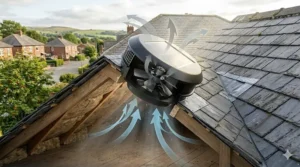
Enter the solar attic fan – a brilliantly simple solution that’s been transforming UK homes since the technology became affordable. These roof-mounted or gable-mounted fans harness free solar energy to actively ventilate your loft space, expelling hot air and moisture without adding a penny to your electricity bill. Unlike passive vents that rely on natural convection, active ventilation using solar power creates the pressure needed to force stagnant air out and draw fresh air in through your existing soffit or gable vents.
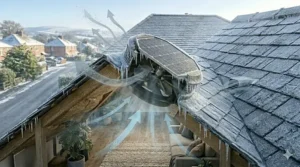
The beauty of solar powered attic ventilation lies in its timing: these fans work hardest precisely when you need them most – during peak sunlight hours when attic temperatures soar. According to research from Solatube UK, proper loft cooling can reduce attic temperatures by 20-50°F (11-28°C), dramatically easing the load on your HVAC system whilst protecting your roof structure from heat damage. In winter, they combat moisture accumulation that leads to mould, wood rot, and those dreaded ice dams.
For UK homeowners navigating stricter Building Regulations on ventilation, solar attic fans offer a compliant, eco-friendly upgrade that pays for itself through reduced energy consumption. Whether you’re battling condensation in your loft or simply want to stop cooking your family during heatwaves, this guide examines the seven best solar attic fans available in the UK market for 2026.
Quick Comparison Table: Top Solar Attic Fans at a Glance
| Product | Power | CFM Rating | Coverage Area | Price Range (£) | Best For |
|---|---|---|---|---|---|
| ECO-WORTHY 25W Gable Kit | 25W | 1,960 CFM | Up to 205 m² | £130-£160 | Budget-conscious DIYers |
| Luqeeg 100W Panel Kit | 100W | 2,000 CFM | Up to 232 m² | £85-£115 | Maximum airflow value |
| Solar Powered 50W Compact | 50W | 1,850 CFM | Up to 167 m² | £75-£95 | Greenhouses & sheds |
| Solatube RM1500 16W | 16W | 1,050 CFM | Up to 111 m² | £380-£450 | Premium quality & warranty |
| ECO-WORTHY 100W Fan System | 100W | 2,000 CFM | Up to 232 m² | £170-£210 | Large attics & barns |
| 10W Monocrystalline Portable | 10W | 800 CFM | Up to 70 m² | £45-£65 | Small spaces & temporary use |
| 35W Smart Hybrid AC Backup | 35W | 2,100 CMH | Up to 167 m² | £140-£180 | 24/7 operation needed |
💬 Just one click – help others make better buying decisions too! 😊
✨ Don’t Miss These Exclusive Deals!
🔍 Take your loft ventilation to the next level with these carefully selected products. Click on any highlighted item to check current pricing and availability on Amazon.co.uk. These tools will help you create authentic comfort your family will love!
Top 7 Solar Attic Fans: Expert Analysis
1. ECO-WORTHY 25W Solar Powered Attic Ventilator with 30W Foldable Panel
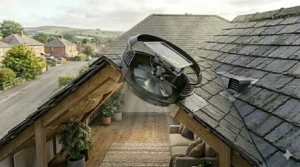
The ECO-WORTHY 25W stands as one of the most popular choices amongst UK homeowners, and for good reason. This gable-mounted system combines a robust 25-watt brushless DC motor with a separate 30-watt poly foldable solar panel, giving you installation flexibility that roof-mounted all-in-one units simply can’t match.
Key Specifications:
- Airflow: 1,960 CFM (cubic feet per minute)
- Coverage: Suitable for lofts up to 2,200 square feet (approximately 205 m²)
- Motor: High-efficiency brushless DC with roller bearings
- Panel: 30W poly foldable solar panel (707mm × 350mm when open)
What sets this unit apart is its ability to operate at remarkably low voltage – just 4V minimum. This means you’ll still get decent ventilation even on Britain’s notoriously cloudy days. The foldable solar panel includes an adjustable angle mount and 4.8-metre (16-foot) cable, allowing you to position it for optimal sun exposure regardless of your roof’s orientation.
UK customers consistently praise its whisper-quiet operation, with one London homeowner noting: “Installed it myself in our Victorian terrace – runs so quietly I forget it’s there, but the temperature difference in the bedrooms below is remarkable.” The 304 stainless steel shell and aluminium alloy blades promise longevity, with the motor rated for over 10,000 hours of operation.
✅ Pros:
- Excellent low-light performance
- Adjustable solar panel angle maximises efficiency
- DIY-friendly installation with pre-drilled mounting holes
❌ Cons:
- Requires separate mounting for panel and fan
- Higher initial cost than basic models
Price: £130-£160 | UK Availability: Ships from Amazon UK within 3-5 days
2. Luqeeg 100W Solar Panel Fan Kit – Weatherproof Attic Ventilator
For those seeking maximum bang for their buck, the Luqeeg 100W delivers professional-grade airflow at a surprisingly accessible price point. This complete kit includes a 100-watt monocrystalline solar panel paired with a 12V, 10-inch (254mm) exhaust fan, creating a powerhouse ventilation system.
Key Specifications:
- Airflow: 2,000 CFM
- Coverage: Handles spaces up to 2,500 square feet (232 m²)
- Panel Power: 100W monocrystalline
- Waterproof Rating: IP65 (suitable for outdoor installation)
The real strength here is the generous 100-watt panel, which continues generating useful power even under partial cloud cover. Several UK greenhouse owners have reported impressive results, with one Newcastle user stating: “Transformed our polytunnel – no more scorched tomatoes and the humidity issues vanished within a week.”
The IP65 waterproofing protects against dust and water jets from any direction, crucial for withstanding British weather. However, note that this kit lacks integrated battery storage, meaning it only operates during daylight hours. For attics requiring moisture control overnight, you’d need to add an external battery system or consider a hybrid model.
✅ Pros:
- Powerful 100W panel ensures consistent operation
- Exceptional value for the airflow capacity
- IP65 protection handles harsh weather
❌ Cons:
- No power storage function (sunlight only)
- Larger panel requires more mounting space
Price: £85-£115 | UK Availability: In stock via Amazon UK
3. Solar Powered 50W Compact Fan Kit with Integrated Panel
The Solar Powered 50W Compact hits the sweet spot for medium-sized applications – greenhouses, garden sheds, small workshops, and compact lofts. This integrated design places the solar panel directly atop the fan housing, creating a streamlined all-in-one unit that’s remarkably simple to install.
Key Specifications:
- Airflow: 1,850 CFM
- Coverage: Up to 1,800 square feet (167 m²)
- Panel Power: 50W monocrystalline integrated design
- Dimensions: Compact 38cm diameter
The integrated approach means just one penetration in your roof or gable, reducing potential leak points – always a wise consideration in the UK’s damp climate. The fan activates automatically when sunlight hits the panel, requiring absolutely no wiring, switches, or manual intervention.
Several Surrey chicken coop owners have praised its set-and-forget reliability: “Fitted it to our chicken house last spring. Through summer heat and winter dampness, it’s never missed a beat. The girls are noticeably more comfortable.” The automatic operation is particularly valuable for remote structures like garden buildings where you can’t easily check conditions daily.
✅ Pros:
- Truly plug-and-play installation
- Compact all-in-one design
- Ideal for outbuildings and small lofts
❌ Cons:
- Less flexible panel positioning
- Mid-range power limits it to smaller spaces
Price: £75-£95 | UK Availability: Ships within 2-4 days
4. Solatube RM1500 16W Solar Star Roof Mount (Premium Choice)
When you want the Rolls-Royce of roof space ventilation, British homeowners turn to Solatube RM1500. This premium unit represents the gold standard, combining superior engineering with whisper-quiet operation and an industry-leading warranty that actually means something.
Key Specifications:
- Airflow: 1,050 CFM
- Coverage: Designed for lofts up to 1,200 square feet (111 m²)
- Panel Power: 16W high-efficiency monocrystalline
- Warranty: 10 years on components, 5 years on electrical parts
What justifies the premium price? Solatube’s proprietary motor design delivers exceptional efficiency, converting every watt of solar energy into maximum airflow. The unit features a brushless DC motor with ultra-low vibration and sound – certified under 30 decibels, quieter than a whisper.
The aerodynamic pitched roof flashing captures sunlight from dawn to dusk, whilst the optional ClimaSense™ technology upgrade enables intelligent climate control based on temperature and humidity sensors. Professional installation is recommended, though confident DIYers with roofing experience can tackle it over a weekend.
According to reviews from UK installers: “We fit dozens of attic fans yearly. Solatube units simply outlast everything else – we’ve seen 15-year-old units still running perfectly.” The brand’s UK presence through Solatube Direct ensures replacement parts and support remain accessible.
✅ Pros:
- Exceptional build quality and longevity
- Whisper-quiet operation (< 30dB)
- Comprehensive UK warranty and support
❌ Cons:
- Premium pricing
- Lower CFM than budget high-power options
Price: £380-£450 | UK Availability: Order through Solatube UK distributors
5. ECO-WORTHY 100W Solar Attic Fan System – Large Airflow Kit
For substantial roof voids, converted barns, large workshops, or Victorian properties with expansive lofts, the ECO-WORTHY 100W Solar Attic Fan System brings commercial-grade ventilation power. This comprehensive kit includes a 25W DC fan paired with a massive 100W solar panel, creating stable airflow even in Britain’s variable weather.
Key Specifications:
- Airflow: 2,000 CFM
- Coverage: Recommended for spaces up to 2,500 square feet (232 m²)
- Panel Power: 100W monocrystalline
- Shell Material: Corrosion-resistant steel with anti-rust coating
The integrated stamping process on the fan housing simplifies installation whilst extending the unit’s lifespan by creating seamless, weather-resistant joints. The 100W panel ensures the fan receives consistent power throughout the day, maintaining steady airflow rather than the fluctuating performance you get with underpowered panels.
One Scottish farmhouse owner reported: “Our converted barn loft was borderline unusable in summer. Installed this system last May – it handles the entire 230 m² space brilliantly. Temperature dropped from unbearable to comfortable within three days.” The powerful airflow creates positive pressure, actively forcing hot air out rather than waiting for passive convection.
The kit arrives in two parcels (hence the “DELIVERY IN 2 PARCELS” designation), containing all necessary mounting brackets, connectors, and weatherproof wiring. Clear instructions make DIY installation feasible for those comfortable working on roofs.
✅ Pros:
- Commercial-grade airflow capacity
- 100W panel ensures consistent operation
- Complete kit with all mounting hardware
❌ Cons:
- Requires space for large panel
- Two-parcel delivery can arrive on different days
Price: £170-£210 | UK Availability: Amazon UK Prime eligible
6. 10W Monocrystalline Portable Solar Exhaust Fan
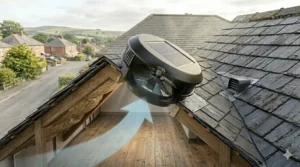
Not every space demands industrial-strength ventilation. The 10W Monocrystalline Portable fills the niche for small lofts, garden sheds, pet houses, caravans, and temporary installations where you need effective air circulation without permanent mounting.
Key Specifications:
- Airflow: 800 CFM
- Coverage: Best for spaces up to 750 square feet (70 m²)
- Panel Power: 10W monocrystalline
- Weight: Lightweight 1.2kg design
The portable design allows seasonal repositioning – use it in your greenhouse during summer, then relocate it to your workshop for winter moisture control. The waterproof construction (though exact IP rating isn’t specified) handles outdoor conditions, and the silent monocrystalline technology ensures you won’t hear it running.
UK allotment holders particularly appreciate its versatility: “Keep it in my polytunnel spring through autumn, then move it to my tool shed for winter. Stops everything from rusting and prevents that musty smell.” The modest 10W panel limits it to smaller applications, but for appropriate spaces, it performs admirably whilst keeping costs rock-bottom.
Installation requires no special skills – simply position the fan where needed, angle the panel toward the sun, and let physics do the rest. The lightweight construction means you can use simple mounting methods without reinforcing your roof structure.
✅ Pros:
- Exceptional value for small spaces
- Truly portable for seasonal repositioning
- Minimal installation complexity
❌ Cons:
- Limited coverage area
- Lower airflow unsuitable for larger lofts
Price: £45-£65 | UK Availability: Usually ships next day
7. 35W Smart Hybrid Solar Attic Fan with AC Backup Adapter
The 35W Smart Hybrid solves the fundamental limitation of pure solar fans – what happens when the sun sets but your loft still needs ventilation? This innovative unit automatically switches to mains power (via the included 15V/2A AC adapter) when solar input drops, ensuring 24/7 moisture and temperature control.
Key Specifications:
- Airflow: 2,100 CMH (cubic metres per hour) / approximately 1,237 CFM
- Coverage: Up to 1,800 square feet (167 m²)
- Panel Power: 35W monocrystalline (508mm × 457mm)
- Smart Features: Auto-start at 25°C+, remote control included
The smart thermostat activates ventilation when your loft exceeds 25°C (77°F), then deactivates once temperatures drop below 18°C (65°F). The 65-foot wireless remote lets you control the fan from ground level – no more climbing into your loft to adjust settings. During daylight, the system achieves zero grid power consumption, switching to AC only when necessary.
The brushless DC motor operates at whisper-quiet levels (<30dB), whilst the IP68-rated aluminium housing withstands winds up to 130mph – reassuring for Scottish Highlands properties or exposed coastal locations. The unit reduces attic heat by 5-10°C faster than standard vents, according to manufacturer testing.
One Cambridge homeowner noted: “The hybrid aspect sold me – our loft gets intense morning sun but needs overnight moisture control for the bathroom below. This handles both scenarios perfectly without manual intervention.”
✅ Pros:
- 24/7 operation with automatic AC backup
- Smart thermostat for hands-free control
- Robust weather resistance (IP68)
❌ Cons:
- Higher purchase price
- Requires mains power connection for night operation
Price: £140-£180 | UK Availability: Amazon UK, ships in 3-5 days
What Is a Solar Attic Fan? (Complete Explanation)
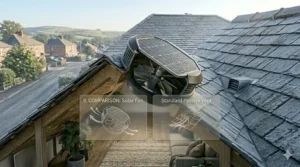
A solar attic fan is a roof-mounted or gable-mounted ventilation device powered entirely by photovoltaic solar panels, designed to actively remove hot air and moisture from your loft space without consuming household electricity. Unlike passive ventilation systems that rely on natural convection and wind currents, solar attic fans create active airflow by converting sunlight into electrical energy that powers a built-in fan motor.
The system typically consists of three main components: a weatherproof solar panel (either integrated into the fan housing or mounted separately), a brushless DC motor optimised for low-power operation, and a fan assembly with protective housing. When sunlight strikes the photovoltaic cells, they generate direct current electricity that powers the motor, which drives the fan blades to expel air from your attic through the fan unit whilst drawing fresh air in through existing soffit, ridge, or gable vents.
The elegance of this system lies in its self-regulating nature. During peak summer heat when your loft temperature soars, the solar panel receives maximum sunlight and generates more power, causing the fan to spin faster and move more air precisely when cooling is most needed. Conversely, on cloudy winter days when heat retention matters more than cooling, reduced solar input means the fan operates at lower speeds or stops altogether – creating a naturally balanced ventilation system.
Modern solar attic fans commonly incorporate brushless DC motors that operate efficiently at low voltages (some as low as 4V), ensuring operation even in Britain’s frequently overcast conditions. Premium models may include thermostats, humidistats, or hybrid power adapters that supplement solar energy with mains electricity for continuous operation regardless of weather or time of day.
Key Benefits of Solar Powered Attic Ventilation
1. Dramatic Reduction in Cooling Costs
Your loft acts as a massive heat reservoir during summer months. Without active ventilation, temperatures routinely exceed 60°C (140°F), radiating heat downward into your living spaces and forcing your air conditioning or fans to work overtime. Solar attic fans can reduce loft temperatures by 11-28°C (20-50°F), according to studies by solar ventilation specialists. This temperature reduction translates directly to reduced cooling loads on your HVAC system, potentially cutting cooling costs by 15-30% during summer months.
2. Protection Against Moisture and Mould
British homes face relentless moisture challenges – from showering and cooking to simply drying clothes indoors. Warm, moist air naturally rises into your loft where it encounters cold roof surfaces, causing condensation. This creates the perfect environment for black mould growth, wood rot, and deterioration of insulation effectiveness. Active solar ventilation continuously removes moisture-laden air, maintaining healthier humidity levels and protecting your home’s structural integrity. According to UK Building Regulations Approved Document F, proper loft ventilation is essential for preventing condensation-related damage.
3. Extended Roof Lifespan
Excessive heat accelerates the degradation of roofing materials. Asphalt shingles, in particular, can become brittle and crack when subjected to sustained high temperatures. By maintaining cooler loft temperatures, solar attic fans reduce thermal stress on your roof structure, potentially extending roof life by several years and delaying expensive replacement costs.
4. Zero Operating Costs
Unlike electric attic fans that add £50-£100 annually to your electricity bill, solar attic fans operate entirely on free solar energy. Once installed, they require no ongoing power costs, making them financially attractive over their 15-20 year lifespan.
5. Environmental Benefits
Each solar attic fan prevents roughly 100-200 kg of CO₂ emissions annually by reducing your home’s air conditioning load. For environmentally conscious UK homeowners, this represents a tangible contribution to reducing your carbon footprint whilst improving home comfort.
6. Building Regulations Compliance
Modern solar attic fans help meet UK Building Regulations requirements for loft ventilation, particularly important during loft conversions or when upgrading insulation to meet current thermal performance standards.
Solar Attic Fans vs Traditional Electric Fans: Comparison
| Feature | Solar Attic Fan | Traditional Electric Fan |
|---|---|---|
| Installation Cost | £45-£450 | £150-£400 (plus wiring) |
| Annual Operating Cost | £0 | £50-£100 (electricity) |
| Wiring Required | None | Yes (professional electrician) |
| Peak Performance | Automatic during hottest hours | Manual control or thermostat |
| Environmental Impact | Zero emissions | Ongoing grid power consumption |
| Building Regs Compliance | Straightforward | Requires electrical certification |
| Maintenance | Minimal (clean panel annually) | Motor servicing, electrical checks |
| Noise Level | Very quiet (30-40dB) | Moderate (40-55dB) |
How to Choose the Right Solar Attic Fan for Your UK Home
Step 1: Calculate Your Loft Area
Measure your loft’s length and width in metres, then multiply to get total floor area. For example, a 10m × 8m loft = 80 m² (or approximately 860 square feet). This determines the minimum CFM (cubic feet per minute) rating you’ll need.
Step 2: Determine Required Airflow (CFM)
As a general rule, you want to exchange your loft’s air volume approximately 10-12 times per hour. Calculate: Loft area (sq ft) × ceiling height (typically 3-4 feet in UK lofts) × 10 air changes per hour ÷ 60 minutes = minimum CFM required.
Simplified UK approach: Multiply your loft area in square metres by 0.7 for the minimum CFM needed. For an 80 m² loft: 80 × 0.7 = 56 CFM minimum. However, most experts recommend choosing a fan with 1,200-2,000 CFM for typical UK residential lofts to ensure effective ventilation.
Step 3: Consider Your Roof Type and Orientation
Pitched roofs: Work well with roof-mounted fans that can be angled toward the sun. South-facing slopes receive maximum solar exposure in the UK.
Flat or low-pitch roofs: May require gable-mounted fans with separate solar panels positioned for optimal sun exposure.
Tile roofs: Ensure your chosen fan includes appropriate flashing for tile integration. Some manufacturers offer proprietary tile flashings designed for seamless weatherproofing.
Step 4: Assess Your Ventilation Needs
Summer cooling only: A basic solar fan without thermostat or battery works perfectly, operating during peak heat when you need it most.
Year-round moisture control: Consider hybrid models with AC backup or battery storage for continuous winter ventilation.
Greenhouse/workshop use: Portable or lower-wattage models provide targeted ventilation without permanent installation.
Step 5: Check Building Regulations Compliance
Ensure adequate intake ventilation exists (soffit vents, ridge vents, or gable vents) to replace expelled air. Your attic fan should be sized appropriately – oversized fans can create pressure imbalances. If uncertain, consult your local Building Control officer or a qualified installer.
Step 6: Budget Considerations
Budget range (£45-£95): Suitable for small sheds, greenhouses, or compact lofts under 70 m². Expect basic functionality without advanced features.
Mid-range (£100-£180): Offers reliable performance for standard UK residential lofts up to 200 m², often with better build quality and warranties.
Premium (£200-£450): Professional-grade units with superior warranties, quiet operation, and advanced features like smart thermostats or hybrid power options.
Step 7: Installation Complexity
DIY-friendly models: All-in-one roof-mount units or gable fans with simple bracket mounting. Ideal if you’re comfortable on roofs and following instructions carefully.
Professional installation recommended: Tile roof installations, hybrid models requiring electrical connections, or situations where proper flashing is critical for waterproofing.
Installation Guide: What UK Homeowners Need to Know
Installing a solar attic fan ranges from straightforward DIY projects to jobs best left to professionals, depending on your roof type, the fan model, and your comfort level working at height. Here’s what you need to know before starting.
Safety Considerations
Working on roofs carries inherent risks. The Health and Safety Executive recommends proper fall prevention measures for any roof work. If you’re uncomfortable working at height, hiring a professional roofer or handyman (typically £150-£300 for installation) is money well spent.
Typical Installation Steps
For roof-mounted solar fans:
- Select location: Choose a spot near the ridge, ideally on a south-facing slope for maximum UK solar exposure. Ensure the location sits between rafters and avoids wiring, pipes, or ductwork.
- Mark cutting template: Most fans include a template. Centre it between rafters, trace the outline, and verify clearance below before cutting.
- Cut opening: From inside the loft, drill starter holes at corners, then use a jigsaw or reciprocating saw to cut the opening. Work carefully to avoid damaging surrounding roofing materials.
- Install flashing: Apply roofing mastic to the underside of the flashing base, slide it under the shingles above the opening, and secure with roofing screws. Proper flashing installation is crucial for preventing leaks.
- Mount fan: Secure the fan housing to the flashing according to manufacturer instructions. Most use pre-drilled holes and self-tapping screws.
- Position solar panel: If using a separate panel, mount it at the optimal angle and connect to the fan using the provided weatherproof wiring.
For gable-mounted fans:
Installation is typically simpler – mount the fan behind your existing gable vent (or cut a new opening), secure with brackets, and position the solar panel on your roof with appropriate flashing. This approach avoids roof penetrations, reducing leak risk.
UK Building Regulations Compliance
Most solar attic fan installations qualify as “minor works” under UK Building Regulations and don’t require Building Control notification if you’re not altering the roof structure. However, if you’re installing as part of a loft conversion or major renovation, check with your local Building Control authority.
Ensure you don’t obstruct existing ventilation pathways at eaves or soffits – blocked airflow defeats the purpose of adding active ventilation.
Post-Installation Checks
After installation, verify:
- ✅ No water ingress around flashing during rain
- ✅ Fan operates when sunlight hits the panel
- ✅ Airflow is noticeable at the fan outlet
- ✅ Soffit vents remain unobstructed for air intake
- ✅ Roof structure shows no signs of damage
Maintenance Tips: Keeping Your System Running Efficiently
One of solar attic fans’ greatest advantages is their minimal maintenance requirements. Unlike electric fans with complex wiring and components that wear out, solar fans feature simple, robust designs built for decades of service. However, a few basic maintenance tasks ensure optimal performance.
Annual Solar Panel Cleaning
Britain’s weather deposits dust, pollen, bird droppings, and atmospheric grime on solar panels, reducing their efficiency by 15-25% over time. Once or twice yearly (ideally spring and autumn), clean your panel with warm water and a soft cloth or sponge. Avoid abrasive materials that could scratch the protective coating. For roof-mounted panels, use a long-handled brush or hire a window cleaner if you’re uncomfortable on the roof.
Check Fan Blades Quarterly
Inspect fan blades for debris accumulation – leaves, insects, and dust can build up over time. Remove any obstructions and wipe blades clean. This five-minute check maintains airflow efficiency and prevents motor strain.
Verify Weatherproofing Annually
Before winter, inspect flashing and mounting seals for any gaps, cracks, or deterioration. Apply fresh roofing mastic if needed. Check that all mounting screws remain tight, as thermal expansion and contraction can gradually loosen them.
Monitor Performance
Pay attention to changes in attic temperature or moisture levels. If you notice performance decline despite clean panels and clear blades, the motor bearings may be wearing (typical after 10-15 years). Most quality units offer replacement motors rather than requiring complete unit replacement.
Winter Considerations
Some UK homeowners disable their solar attic fans during winter to retain heat. However, moisture control remains important – condensation from bathrooms, kitchens, and showers continues rising into your loft year-round. Consider running your fan throughout the year unless you have a hybrid model with a thermostat that automatically manages seasonal operation.
Common Mistakes to Avoid
Mistake 1: Choosing Insufficient CFM Rating
The most common error is selecting an underpowered fan for your loft size. A 600 CFM fan in a 200 m² loft won’t meaningfully improve conditions. Calculate your required airflow properly and choose accordingly.
Mistake 2: Blocking Intake Ventilation
Active exhaust fans only work if replacement air can enter. Ensure adequate soffit, ridge, or gable vents exist to supply fresh air. A powerful fan with blocked intakes will struggle, reduce efficiency, and potentially draw conditioned air from your living spaces.
Mistake 3: Installing on North-Facing Roofs Without Panel Repositioning
In the UK, south-facing surfaces receive optimal solar exposure. Installing your panel on a north-facing slope significantly reduces power generation. Use models with separate panels that can be positioned independently for better sun exposure.
Mistake 4: Ignoring Proper Flashing Installation
Rushed or improper flashing installation is the primary cause of solar fan leaks. Take time to install flashing correctly, using adequate roofing mastic and ensuring shingles overlap properly. When in doubt, hire a professional roofer for the flashing stage.
Mistake 5: Expecting Instant Room Cooling
Solar attic fans cool your loft space, not your living areas directly. The benefit comes from reducing radiant heat transmission through your ceiling. Expect noticeable improvements within 3-7 days as your loft temperature stabilises at lower levels, but don’t expect immediate air conditioning-like effects.
UK Regulations and Standards for Loft Ventilation
Homeowners upgrading loft ventilation must navigate UK Building Regulations, particularly Approved Document F (Ventilation) and Part L (Conservation of Fuel and Power). Here’s what you need to know.
Ventilation Requirements
Habitable rooms in loft conversions require background ventilation of 4,000mm² equivalent area (typically trickle vents above windows). Bathrooms and ensuites need mechanical extract fans providing minimum 15 m³/hour airflow. However, simple loft space ventilation (not converted to living space) falls under different, less stringent requirements focused on preventing condensation and maintaining roof structure integrity.
Minimum U-Values and Thermal Performance
When upgrading loft insulation to current standards (recommended 270-300mm depth achieving U-value of 0.16 W/m²K), adequate ventilation becomes even more critical. Improved insulation prevents heat loss but can trap moisture if ventilation is inadequate. Solar attic fans help maintain the airflow needed to prevent condensation whilst maximising insulation effectiveness.
Conservation Areas and Listed Buildings
Properties in conservation areas or with listed building status may require planning permission for visible external alterations, including roof-mounted solar panels or fans. Low-profile models or gable-mounted options with discreet panels minimise visual impact. Consult your local planning authority before proceeding if your property has special designation.
Professional Installation vs DIY
While DIY installation is permissible for solar attic fans (they don’t involve electrical wiring to your mains supply), roof work carries risks. The HSE recommends proper fall prevention equipment and training. If you’re not confident working safely at height, professional installation costs £150-£300 depending on your location and roof complexity – modest expense for peace of mind.
Real Customer Experiences: What UK Users Say
Sarah from Bristol: “Transformed Our Victorian Terrace”
“We bought a three-storey Victorian terrace with a converted loft bedroom that was unbearable in summer. Even with windows open and a fan running, our daughter’s bedroom hit 28°C regularly. We installed the ECO-WORTHY 25W gable fan last April. The difference was remarkable within days – temperatures dropped to 22-23°C even on hot days. Installation took my husband about three hours on a Saturday morning. Best £145 we’ve spent on the house.”
James from Edinburgh: “Moisture Problem Solved”
“Our loft had persistent condensation issues every winter – water droplets forming on the underside of the roof, mould spots appearing on the rafters. We’d had three ‘specialists’ look at it with no improvement. Finally tried a solar attic fan (the 35W hybrid model so it runs overnight). Within two weeks, the condensation disappeared. A year on, zero mould, zero moisture. Should have done it years ago.”
Priya from Manchester: “Greenhouse Game-Changer”
“I run a small market garden and our polytunnel was cooking plants during the summer heatwave. Installed the Luqeeg 100W kit on the gable end. The ventilation is incredible – temperatures dropped from 45°C to manageable 30°C levels. Tomato yields improved dramatically. Paid for itself in better harvests within one season.”
Tom from Cornwall: “Not a Magic Solution”
“I’ll be honest – we had unrealistic expectations. We thought it would cool our upstairs bedrooms immediately like air conditioning. It doesn’t work that way. But over about five days, we noticed the rooms weren’t as stuffy in the evening. Ceiling felt cooler to touch. Temperature gauge showed about 3-4 degrees cooler in the bedrooms after a fortnight. Worth it, but manage your expectations about how quickly it works.”
FAQ: Your Solar Attic Fan Questions Answered
❓ How much does it cost to run a solar attic fan in the UK?
❓ Will a solar attic fan work on cloudy days in the UK?
❓ Do I need Building Regulations approval to install a solar attic fan?
❓ Can solar attic fans help prevent ice dams on UK roofs?
❓ How long do solar attic fans typically last?
Conclusion: Make the Smart Choice for Your UK Home
Solar attic fans represent one of the most cost-effective home improvements available to UK homeowners in 2026. By harnessing free solar energy to actively ventilate your loft space, these systems deliver year-round benefits: cooler summer temperatures, reduced air conditioning costs, protection against winter moisture damage, extended roof lifespan, and improved overall home comfort.
The seven products reviewed in this guide span the spectrum from budget-friendly portable units for small spaces (£45-£65) to premium professional-grade systems with advanced features (£380-£450). Whether you’re tackling condensation in a Victorian terrace, cooling a converted loft bedroom, or maintaining optimal conditions in a greenhouse, there’s a solar attic fan ideally suited to your specific needs.
Key takeaways for making your selection:
Choose the right size – Calculate your required CFM based on loft area, and don’t undersize. Most UK residential lofts benefit from 1,500-2,000 CFM models.
Consider your roof type – Pitched roofs work well with integrated roof-mount units, whilst complex roof layouts may benefit from gable-mounted fans with separate solar panels.
Think long-term – A £150 mid-range unit that lasts 15 years delivers better value than a £50 budget model requiring replacement every 3-4 years.
Don’t neglect intake ventilation – Ensure adequate soffit, ridge, or gable vents exist to supply replacement air for expelled hot air.
Installation matters – Proper flashing installation prevents leaks. When in doubt, invest in professional installation (£150-£300) for peace of mind.
By following the guidance in this comprehensive review, you’re equipped to select, install, and maintain a solar attic fan that will serve your home reliably for decades whilst reducing energy costs and protecting your property investment. The British weather may be unpredictable, but your loft ventilation doesn’t have to be.
Recommended for You
- 7 Best Solar Fan for Greenhouse UK 2026 – Save Energy Today
- 7 Best Solar Powered Fans UK 2026
- 7 Best Rechargeable Tower Fan UK 2026 | Cordless Cooling Expert Guide
Disclaimer: This article contains affiliate links. If you purchase products through these links, we may earn a small commission at no additional cost to you. Prices shown are approximate and may vary.
✨ Found this helpful? Share it with your mates! 💬🤗
