
In This Article
Picture this: it’s 6:30 in the morning. You slip into the bathroom, trying your level best not to wake the rest of the house. Then you flick the light switch. And with an ear-splitting roar that sounds somewhere between a small hovercraft and a distressed cat, your extractor fan announces itself to the entire household, the neighbours, and possibly a few puzzled birds in the garden.
Sound familiar? You’re not alone. Millions of British homes are still running noisy, inefficient bathroom ventilation that was probably installed when shell suits were considered fashionable. The good news is that a quiet bathroom extractor fan — genuinely, whisper-quiet, near-silent bathroom ventilation — is no longer an expensive luxury. It’s surprisingly affordable, and the difference it makes to your morning routine is nothing short of transformative.
But here’s the thing the spec sheet won’t tell you: not all fans marketed as “silent” actually are. Some are merely quieter than a lawnmower. Others are genuinely peaceful — operating below 30 dB(A), which is roughly the ambient noise of a library at night. In a British bathroom, in a semi-detached on a quiet street, that difference is everything.
In this guide, we’ve done the legwork: seven real products available on Amazon.co.uk, tested against real-world British conditions — the damp autumn mornings, the steamy post-shower condensation on your bathroom mirror, the en-suite that absolutely must not wake the baby at 2 a.m. We’ve rated them for noise, extraction power, energy efficiency, and honest value for money in pounds sterling.
Let’s get to it.
Quick Comparison: Quiet Bathroom Extractor Fans at a Glance
| Fan | Noise Level | Extraction Rate | Key Feature | Price Range | Best For |
|---|---|---|---|---|---|
| Envirovent SIL100T Silent-100 | 26.5 dB(A) | 95 m³/h | Motor on elastic blocks | £30–£45 | Best all-rounder |
| Xpelair DX100BTS Simply Silent | 22–34 dB(A) | 54–76 m³/h | Twin-speed Ghost Air tech | £25–£40 | Budget buyers |
| Vent-Axia Lo-Carbon Svara | 17 dB(A) trickle | 30 l/s boost | Bluetooth app control | £90–£130 | Smart home fans |
| Airflow iCON 30 | 33.3 dB(A) | 33 l/s (118 m³/h) | Iris shutter, modular | £70–£110 | Larger bathrooms |
| Manrose QF100T | ~28 dB(A) | 75 m³/h | UK-made, reliable timer | £20–£35 | Budget/rental |
| Bosch Fan 1500 DH 100mm | 39 dB(A) | 95 m³/h | Adjustable humidistat | £45–£70 | Brand-loyal buyers |
| Blauberg Calm Design 100T | ~28 dB(A) | 90 m³/h | Stylish slim profile | £35–£55 | Design-conscious |
Reading the table above, it’s immediately clear that decibel levels don’t tell the whole story. The Bosch Fan 1500 DH has excellent extraction and a trusted brand name, but its 39 dB(A) rating is noticeably louder than the competition at this price point — something worth weighing carefully if noise is your primary concern. Meanwhile the Envirovent SIL100T threads the needle beautifully: genuinely quiet, genuinely powerful, and priced well under £50. The Vent-Axia Svara is the premium outlier — its 17 dB(A) trickle mode is almost surreally quiet, but you’re paying for the privilege.
💬 Just one click — help others make better buying decisions too! 😊
✨ Don’t Miss These Exclusive Deals!
🔍 Take your bathroom ventilation to the next level with these carefully selected quiet fans. Click on any highlighted product name to check current pricing and availability on Amazon.co.uk — these picks will help you find exactly the right fan for your home.
Top 7 Quiet Bathroom Extractor Fans: Expert Analysis
1. Envirovent SIL100T Silent-100 Axial Extractor Fan — Best All-Round Quiet Bathroom Fan
The Envirovent SIL100T is the fan that keeps cropping up in every sensible discussion about low noise bathroom fans — and with good reason. Its motor is mounted on silent elastic blocks, a design detail that matters far more than it sounds: rather than transmitting vibration directly through the casing and into your walls (which is how cheaper fans become irritating resonating boxes), the SIL100T absorbs it. The result is a measured 26.5 dB(A) at three metres, an extraction rate of 95 m³/h, and a modest 8W power draw.
For most British bathrooms — the standard 4 m² to 8 m² that most of us are dealing with in our terraced houses, flats, and Victorian semis — 95 m³/h is more than sufficient. Building Regulations Approved Document F requires at least 15 litres per second (54 m³/h) for bathrooms, so the SIL100T clears that bar with room to spare. The adjustable overrun timer (1–30 minutes) is a practical touch: you can set it to run long enough after your shower to genuinely clear the steam, rather than switching off prematurely and leaving your mirror fogged for the next twenty minutes.
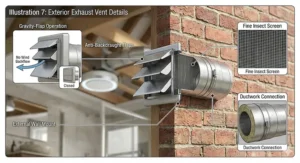
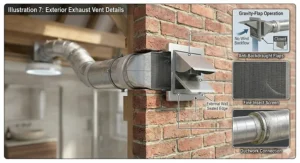
UK buyers will appreciate the 5-year guarantee (certain models offer 7 years), the IP45 rating for moisture zones, and a back-draught shutter that keeps cold draughts from whistling back in during a British winter. Amazon.co.uk customers rate it highly, with recurring praise for how quiet it actually is — not just how quiet the box claims it is.
✅ Genuinely ultra-quiet operation
✅ Strong 95 m³/h extraction rate
✅ Excellent long-term warranty
❌ Plastic adjuster for the timer is a touch fiddly
❌ Not the most exciting design — functional over fashionable
Price range: around £30–£45 — outstanding value for the performance on offer.
2. Xpelair DX100BTS Simply Silent Bathroom Extractor Fan — Best Budget Quiet Fan
Xpelair has been making British bathroom fans for over 70 years, and the DX100BTS Simply Silent is the product that justifies the brand’s longevity. Its headline trick is “Ghost Air Movement” technology — a fancy name for an engineering approach that reduces blade turbulence and mechanical friction. In practice, it means you can select between two speeds during installation: low (22 dB(A), 54 m³/h) for everyday use, and high (34 dB(A), 76 m³/h) when things get properly steamy after a long shower.
This flexibility is more useful than it might appear. For a downstairs cloakroom where you mostly want background odour control, low speed is blissfully inaudible. For a family bathroom where four people are showering back-to-back on a cold Monday morning, high speed clears the air efficiently. Independently tested by the Institute of Sound and Vibration Research (ISVR) — a worthwhile stamp of credibility — and IPX4 rated for bathroom zones, it also complies fully with Building Regulations F1 ventilation requirements.
The DX100BTS is regularly cited by UK tradespeople as a go-to reliable recommendation. At this price point, you’re not getting Bluetooth connectivity or app control, but you are getting a solidly engineered fan from a trusted brand that British electricians have been fitting for decades. Amazon.co.uk Prime customers can often receive it next day, making it an excellent solution when your existing fan finally gives up the ghost.
✅ Two-speed flexibility for different scenarios
✅ Budget-friendly price
✅ IPX4 rated, ISVR independently tested
❌ Not quite as quiet on high speed as some rivals
❌ Only a one-year guarantee
Price range: around £25–£40 — the best value quiet bathroom fan in the UK market.
3. Vent-Axia Lo-Carbon Svara Smart Extractor Fan (409802) — Best Premium Quiet Fan
The Vent-Axia Svara is a genuinely remarkable piece of engineering dressed up in Scandinavian-influenced styling. Its name is derived from its Swedish design heritage, and it shows — this is a fan that looks at home in a modern bathroom, not like an afterthought bolted to the wall. But aesthetics aside, the technical story is compelling: 17 dB(A) on low trickle mode. That figure is extraordinary. For context, 17 dB(A) is quieter than a soft whisper. You will genuinely not know it’s running unless you hold your hand near the grille.
What makes the Svara stand out further is Bluetooth app control — a feature that sounds like marketing fluff until you actually use it. The app lets you adjust humidistat sensitivity, set “silent hours” (preventing the fan from boosting overnight, which is a genuine quality-of-life improvement in bedrooms with en-suites), configure holiday airing mode, and tweak the light sensor delay so that a quick 3 a.m. bathroom trip doesn’t trigger a full boost cycle. The light sensor is intelligent enough to distinguish between shadows caused by people in the room and headlight flashes from cars outside — a thoughtful detail that prevents nuisance running.
At 4W running power, the Lo-Carbon credentials are real. It draws essentially nothing on your electricity bill. The 5-year guarantee reflects Vent-Axia’s confidence in the build quality. This is the fan for the renovated bathroom, the discerning homeowner, or the person who simply wants the very best quiet bathroom ventilation available on Amazon.co.uk.
✅ Industry-leading 17 dB(A) trickle noise level
✅ Bluetooth app with intelligent controls
✅ Ultra-low 4W energy consumption
❌ Premium price point — significantly more expensive than rivals
❌ Requires permanent live wiring to unlock full smart functionality
Price range: around £90–£130 — expensive, but justified if silent running is genuinely non-negotiable.
4. Airflow iCON 30 Extractor Fan (100mm Duct) — Best for Larger Bathrooms
The Airflow iCON 30 is the fan that architects and bathroom designers tend to reach for when the brief is “powerful, quiet, and looks good in a tiled ceiling.” Its slim circular profile sits flush and unobtrusive; the iris shutter — which opens automatically when the fan activates and closes silently when it stops — prevents back-draughts without the rattling backdraught shutters you’d find on cheaper models. It’s a genuinely clever design detail.
Extraction-wise, the iCON 30 pulls 33 litres per second (118 m³/h) — meaningfully higher than many competitors, which matters in larger family bathrooms or rooms with longer duct runs. A key real-world fact: every extra metre of ducting costs you roughly 10–15% of extraction efficiency. If your bathroom vent has to travel through a wall, across a loft space, and exit through a soffit, you need a fan that starts with headroom to spare. The iCON 30 provides that headroom. At 10.7W, its brushless DC motor is also notably energy-efficient for its output class.
The modular design is the iCON range’s defining philosophy: you buy the base fan, then add snap-in modules for timer control, humidity sensing, PIR motion detection, or pull cord switching — each sold separately. This is either flexible or irritating, depending on your perspective. For a first-time buyer, it can feel unnecessarily complex. For an installer fitting multiple rooms, the ability to customise each unit precisely is rather elegant. The 3-year warranty and strong UK customer reviews underline the iCON 30’s reputation for longevity.
✅ High 118 m³/h extraction for larger rooms
✅ Elegant iris shutter design
✅ Modular — customise to your exact needs
❌ Add-on modules cost extra — total price creeps up
❌ Requires a 160mm installation hole (larger than standard)
Price range: around £70–£110 (base unit) — excellent for family bathrooms and longer duct installations.
5. Manrose QF100T Quiet Extractor Fan with Timer — Best Budget Reliable Option
Manrose is about as British as it gets in the extractor fan world — the brand manufactures in the UK and has a deep understanding of local installation standards and building regulations. The QF100T is their workhorse quiet model, and it earns its place on this list through sheer reliability rather than headline-grabbing specifications. It’s not the quietest fan here, but for a budget price it performs very respectably — around 28 dB(A) — and the straightforward 0–20 minute adjustable timer is easy to set up without any fiddling with apps or potentiometers.
For landlords fitting out rental properties, for homeowners replacing a broken fan quickly, or for anyone who just wants something that works without any drama, the QF100T is the right answer. UK reviewers on Amazon.co.uk consistently praise its ease of installation (described as a simple like-for-like replacement by many) and its noticeably quieter operation compared to older budget fans. It draws a modest power consumption, meets current Building Regulations F1 requirements, and carries a 5-year manufacturer’s guarantee — rather better than you’d expect at this price point.
The spec sheet won’t tell you this, but what most UK buyers overlook about this model is the value of Manrose’s UK parts and support network. If something goes wrong in year three, you’re dealing with a company that actually has UK stock and UK customer service. That peace of mind is worth something.
✅ Very competitive budget price
✅ Simple, reliable UK-made product
✅ 5-year guarantee
❌ Not as quiet as premium rivals
❌ Basic feature set — no humidistat option on this specific model
Price range: around £20–£35 — the pragmatic choice for straightforward bathroom ventilation.
6. Bosch Fan 1500 DH 100mm Bathroom Extractor Fan — Best for Brand Confidence
Bosch’s entry into the bathroom fan market trades on the brand’s engineering reputation, and on most fronts it delivers. The Fan 1500 DH features an adjustable humidity sensor (40–90% relative humidity) that triggers the fan automatically when condensation starts building — useful for the inevitable British scenario of someone taking a twenty-minute shower and forgetting to turn the fan on at all. The run-on timer is adjustable between 3 and 30 minutes, covering the bases well.
The honest note here is that 39 dB(A) at three metres is louder than most of the competition on this list at a similar price. It’s not unpleasant — this is not the roaring monster of old — but if you’re in a house with thin walls between bathroom and bedroom, or if you have a light sleeper anywhere within earshot, you’ll notice it. On the other hand, UK reviewers praise the build quality and the satisfying solidity of the unit, and Bosch’s customer support infrastructure is well-established in Britain.
Where the 1500 DH shines is when reliability and brand recognition genuinely matter — for a landlord wanting something tenants recognise, or for a homeowner who simply trusts the Bosch name above others. Its 95 m³/h extraction rate is strong, and the non-return valve is a quality inclusion that cheaper fans often omit. Just go in clear-eyed: this is a well-made fan from a trusted brand, not the quietest option in its price range.
✅ Trusted Bosch engineering
✅ Adjustable humidistat and timer
✅ Strong 95 m³/h extraction
❌ Louder than rivals at 39 dB(A)
❌ Some UK buyers report occasional humidistat sensitivity issues
Price range: around £45–£70 — solid mid-range choice for brand-conscious buyers.
7. Blauberg Calm Design 100T Quiet Timer Bathroom Fan — Best for Slim Profile Design
The Blauberg Calm Design 100T is the dark horse of this list — less well-known than the headline brands, but quietly (pun entirely intended) impressive. Its defining characteristic is a genuinely slim profile that sits almost flush with the wall or ceiling, making it far less visually intrusive than the bulkier square fans that dominate the budget end of the market. For anyone who’s spent money tiling a bathroom beautifully and then felt deflated by a clunky beige box in the corner, the Calm Design offers a notably more considered aesthetic.
Performance-wise, it pulls approximately 90 m³/h at a noise level around 28 dB(A), positioning it comfortably in the “very quiet” bracket — you’d have to be actively listening to notice it from the next room. The adjustable overrun timer is straightforward to set, IPX4 rated for bathroom zones, and the unit is available on Amazon.co.uk with Prime delivery available to most UK postcodes. UK buyers on Amazon note that the installation is clean and the fan runs reliably without any vibration noise — that last point matters, because vibration-induced hum is the most common complaint with budget fans in UK properties.
What Blauberg offers here is the combination of near-silent bathroom ventilation and a product that won’t make your renovated en-suite look like an afterthought. For a design-conscious buyer who doesn’t want to spend Svara money, this is the answer.
✅ Slim, low-profile design
✅ Quiet ~28 dB(A) operation
✅ Good extraction for bathroom size
❌ Less well-known brand — fewer UK customer reviews
❌ Optional features like humidistat not included on this model
Price range: around £35–£55 — excellent value for the aesthetics and performance combination.
How to Match the Right Fan to Your Specific Bathroom: Three UK Scenarios
Understanding specifications is one thing. Knowing which fan to actually buy for your bathroom is rather more useful. Here are three realistic UK buyer profiles and honest product recommendations for each.
Scenario A — The London Flat Renter (or Urban Landlord). You have a compact bathroom in a purpose-built flat, probably around 4–5 m², with a short external wall duct run. Noise matters because the walls are thin, neighbours are close, and you either live here or your tenants do. Budget is probably under £40. The Xpelair DX100BTS on low speed is the answer here: genuinely quiet, inexpensive, easy to install, and robust enough for rental conditions. The Manrose QF100T is the penny-pinching alternative if the Xpelair stretches the budget.
Scenario B — The Family Semi-Detached (Suburban Classic). You have a family bathroom that takes serious punishment — multiple showers per morning, steamy baths, the works. The duct run might be a few metres through an internal wall. Noise matters, but extraction power matters equally. The Envirovent SIL100T is the near-perfect choice: 95 m³/h shifts steam efficiently, 26.5 dB(A) won’t wake sleeping children, and the 5-year guarantee covers the years ahead. If your duct run is longer than 4–5 metres, upgrade to the Airflow iCON 30 for its superior extraction headroom.
Scenario C — The Renovated En-Suite (The Discerning Homeowner). You’ve just spent a meaningful sum on your master en-suite. The tiles are lovely. The bath is freestanding. You are not fitting a beige plastic box to the wall. The Vent-Axia Lo-Carbon Svara is your fan: a design that doesn’t embarrass itself, 17 dB(A) trickle operation that won’t disturb your partner at night, and app-controlled silent hours. If the price feels steep, the Blauberg Calm Design 100T offers a more affordable route to a slim, unobtrusive aesthetic.
How to Choose a Quiet Bathroom Extractor Fan in the UK: 6 Things That Actually Matter
Buying a bathroom fan shouldn’t require an engineering degree, but a few key considerations are genuinely worth understanding before you part with your money.
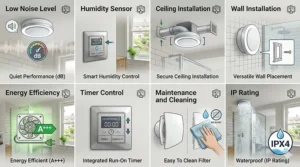
1. Noise Level (dB(A)) — And What The Numbers Mean Decibels are logarithmic, which means a 3 dB difference is actually double the sound energy. A fan rated at 26 dB(A) is meaningfully quieter than one at 32 dB(A) — not just slightly. Anything below 30 dB(A) at three metres qualifies as genuinely quiet. Below 25 dB(A) is near-silent by any reasonable standard. The Quiet Mark certification (awarded by the UK’s Noise Abatement Society) is a useful independent indicator — products bearing it have been independently tested, not just rated by their own manufacturers.
2. Extraction Rate — Does Your Fan Actually Clear Steam? UK Building Regulations (Approved Document F) require bathroom fans to extract at a minimum of 15 litres per second (54 m³/h). This is a floor, not a target. A small cloakroom might scrape by at 54 m³/h; a steamy family shower room genuinely benefits from 85–120 m³/h. And remember: every bend in your duct run reduces effective extraction by roughly 10–15%. If your installation involves any bends, choose a fan rated well above the minimum.
3. IP Rating — Moisture Protection for UK Bathrooms An IP (Ingress Protection) rating tells you where in the bathroom a fan can safely be installed. IPX4 (protected against water splashing from any direction) is the minimum for Zone 1 and Zone 2 applications — which covers the vast majority of standard bathroom ceiling and wall positions. The UK’s wet climate makes moisture resistance especially relevant; skimping here is a false economy.
4. Timer and Humidistat — Are They Worth It? Yes, almost always. A timer that continues running for 15–20 minutes after you leave the room clears residual steam that an instant-off fan would leave to condense on your walls and grout. A humidistat takes this further, activating and deactivating automatically based on actual humidity levels rather than room occupancy. For British bathrooms — where damp is a year-round concern, not just a winter problem — the NHS recommends adequate ventilation as a key factor in preventing mould growth that can trigger respiratory conditions. A humidistat-equipped fan is a meaningful investment in your home’s fabric.
5. Energy Consumption — The Long-Term Running Cost A fan running 24/7 in continuous trickle mode at 8W costs roughly £5–£7 per year at current UK electricity rates. One running at 30W costs four times that. For most intermittent-use fans the difference is negligible, but if you’re installing a fan that runs continuously, the wattage matters. Brushless DC motors — found on higher-end models like the Airflow iCON 30 — are meaningfully more efficient than traditional AC motors and will save money across a decade of use.
6. Regulations and Compliance — Don’t Skip This Bit Under UK Building Regulations Approved Document F, any new bathroom or replaced extractor fan in a wet room must meet minimum extract ventilation rates. For bathrooms, that’s at least 15 l/s (54 m³/h) intermittent extraction. Scotland, Wales, and Northern Ireland have their own equivalent standards that mirror these requirements closely. All products on our list comply. If you’re in a rented property and replacing a fan yourself, it’s worth checking whether your tenancy agreement requires a qualified electrician — most wiring work in bathroom zones does.
Common Mistakes When Buying a Quiet Bathroom Extractor Fan (And How to Avoid Them)
Buying the quietest fan without checking extraction power. There’s a myth in the UK bathroom fan market that quieter always means better. In reality, a 20 dB(A) fan that only shifts 40 m³/h will leave your shower room dripping for an hour. Extraction rate and noise level are both essential — don’t sacrifice one entirely for the other.
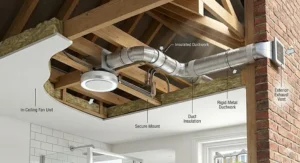
Ignoring the duct run length. The fan you fit in your bathroom is only as effective as the duct run it’s connected to. A 95 m³/h fan connected to 8 metres of 100mm ducting with two bends might effectively deliver 50 m³/h at the external grille. This is how people end up wondering why their expensive new fan isn’t clearing steam. Measure your duct run, count the bends, and size up accordingly.
Buying a US-voltage fan. Sounds obvious, but it happens — particularly when browsing Amazon and clicking without reading carefully. UK mains voltage is 230V/50Hz. Any fan designed for the American 110V/60Hz market will either fail immediately or underperform and overheat. Every product on our list is explicitly UK-compatible. When in doubt, check for the UK plug type G and 230V specification before purchasing.
Assuming all fans labelled “silent” are equal. Marketing teams are creative. A fan described as “whisper quiet” by its manufacturer might measure 38 dB(A) at one metre — perfectly audible from a bedroom next door in a typical British semi. Always look for the measured dB(A) figure at a stated distance (typically 1 metre or 3 metres), and compare like for like. Look for Quiet Mark-certified products or fans tested by independent bodies like the ISVR.
Neglecting maintenance. A quiet fan that isn’t cleaned gradually becomes a noisy one. Dust build-up on the impeller unbalances the rotor, introducing vibration and hum. Most of the fans on this list have removable front covers for easy cleaning. Plan to wipe down the grille and impeller every six months — takes five minutes and makes a significant difference to noise levels and airflow.
What to Expect: Real-World Performance in British Conditions
British bathrooms present a specific set of challenges that American and European test conditions don’t always account for. Our homes are smaller — the average UK bathroom is around 4–5 m², compared to considerably larger American equivalents. Our walls are frequently thinner, particularly in terraced housing and Victorian conversions. And our climate is persistently damp: the Met Office records average humidity levels in the UK typically between 70–85% RH, meaning bathroom extractor fans here are often running against a background of already-humid air.
What this means in practice: a fan rated for a 10 m² bathroom in the manufacturer’s test conditions might struggle in a poorly insulated Victorian bathroom where the walls are already cold and damp is endemic. This is one reason why genuine extraction headroom — buying a fan rated meaningfully above the minimum — pays dividends in real British homes.
It also means that humidistats matter more in the UK than in drier climates. A humidity sensor set to 70% RH in a dry Arizona bathroom would barely activate; the same setting in a Manchester bathroom in October might find itself running almost continuously. Most UK-appropriate fans allow adjustment between 60–90% RH — set it to around 75–80% for a typical British bathroom, and adjust upward if the fan seems to run too frequently outside shower times.
Finally: winter performance. Cold air is denser, which means backdraught through an open duct grille is a real issue in British winters. All of the fans on our list feature back-draught shutters or iris shutters that prevent cold air infiltration when the fan isn’t running. This isn’t a luxury feature — on a January evening in Yorkshire, it’s a practical necessity.
UK Regulations, Safety Standards & What You Need to Know
The legal and regulatory framework around bathroom extractor fans in the UK is relatively straightforward, but worth understanding clearly.
Building Regulations Approved Document F is the primary reference for ventilation requirements in England. Wales, Scotland, and Northern Ireland have equivalent documents with similar requirements. From 2022, the document was significantly updated to reflect the reality of increasingly airtight modern homes — the better-insulated your property, the more essential mechanical ventilation becomes. The 2026 edition (effective March 2027 for new builds in England) continues this direction of travel. The minimum extraction rate for bathrooms remains 15 l/s (54 m³/h); for rooms with no external windows, the fan must also continue running for at least 15 minutes after the room is vacated.
IP Ratings and Zone Compliance. UK wiring regulations (BS 7671) divide bathrooms into zones based on proximity to water sources. Zone 0 (inside the bath or shower) requires IPX7; Zone 1 (above the bath up to 2.25m) requires IPX4; Zone 2 (within 60cm of the bath or shower) requires IPX4. Most ceiling and wall-mounted extractor fans are positioned in Zone 2, making IPX4 the standard requirement. All seven fans in this guide meet this standard.
Electrical Installation. In England and Wales, any new circuit or significant alteration in a bathroom must be carried out by a Part P-registered electrician or notified to your local authority building control. Replacing an existing fan on an existing circuit is generally considered a like-for-like replacement and doesn’t trigger formal notification, but if in doubt — and especially if you’re extending wiring — always consult a qualified tradesperson. The Planning Portal’s guidance on bathroom ventilation requirements is a useful starting point.
As of 2024, UKCA marking has replaced CE marking for most electrical products placed on the UK market. Products without appropriate marking for the UK market may not be legally sold here after the transition period. All products on our list are sold through legitimate UK retail channels and meet current UK conformity requirements.
FAQ: Quiet Bathroom Extractor Fans in the UK
❓ What decibel level is considered a truly quiet bathroom extractor fan?
❓ Do I need a qualified electrician to fit a bathroom extractor fan in the UK?
❓ What extraction rate do UK Building Regulations require for a bathroom fan?
❓ Are the bathroom fans on this list compatible with UK mains voltage?
❓ Will a quiet extractor fan prevent mould in a typical British bathroom?
Conclusion: Stop Putting Up With a Fan That Sounds Like a Small Aircraft
The humble bathroom extractor fan is one of those home improvements that pays dividends every single day — in quieter mornings, in mirrors that clear faster, in grout that doesn’t turn that dispiriting shade of black, and in walls that stay dry year-round. The British climate is not your bathroom’s friend. A genuinely effective, genuinely quiet bathroom extractor fan is one of the most cost-effective investments you can make in the fabric of your home.
Our overall recommendation remains the Envirovent SIL100T for most UK buyers: it’s the sweet spot of quiet operation, proper extraction, excellent value, and long-term reliability. If your budget stretches further and your priority is absolute silence, the Vent-Axia Lo-Carbon Svara is in a class of its own. And if you’re fitting out a rental or need a reliable workhorse under £40, the Xpelair DX100BTS and Manrose QF100T both serve that purpose admirably.
Whatever you choose from this list, you’ll be sleeping better — literally — and your bathroom will thank you for it.
✨ Don’t Miss These Exclusive Deals!
🔍 Click on any highlighted product name in this article to check current pricing and availability directly on Amazon.co.uk. Prime members get free next-day delivery on most of these picks — a rather civilised way to upgrade your bathroom ventilation by tomorrow morning.
Recommended for You
- Best Bathroom Extractor Fans UK 2026: 7 Silent, Powerful Picks
- Best Wall Mounted Conservatory Fan UK 2026: Top 7 Picks
- 7 Best Portable Conservatory Fan UK 2026
Disclaimer: This article contains affiliate links. As an Amazon Associate, I earn from qualifying purchases. If you purchase products through these links, we may earn a small commission at no additional cost to you.
✨ Found this helpful? Share it with your mates! 💬🤗
