
In This Article
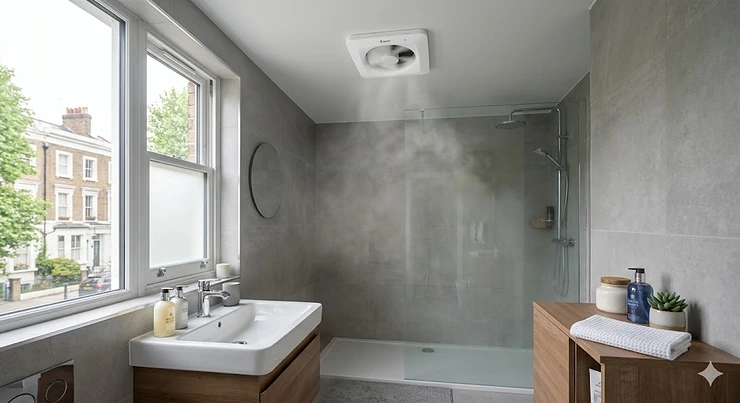
Let’s be honest: the average British bathroom is a thermodynamic disaster. You step out of a hot shower into a room barely larger than a generous wardrobe, the mirror is completely fogged, and somewhere behind the skirting board, a colony of black mould is quietly getting on with its day. This is not a personal failing. It is simply physics meeting British housing stock.
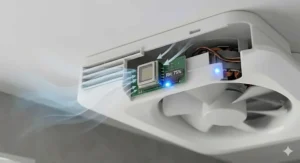
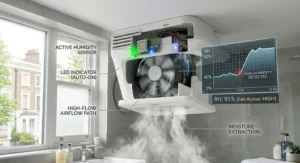
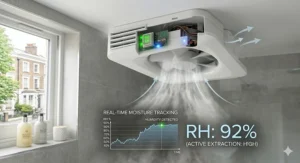
A bathroom fan with humidity sensor changes the equation entirely. Rather than relying on you — a person who is likely running late, half-awake, and already thinking about whether you left the hob on — the fan monitors the moisture in the air and switches itself on and off automatically. Humidity spikes after a shower? Fan on. Air returns to normal? Fan off. Simple, automatic, rather clever.
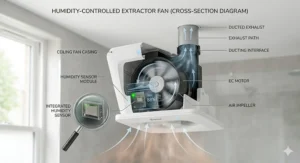
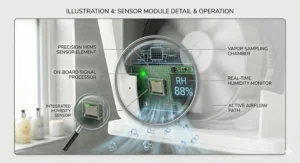
What exactly is a bathroom fan with humidity sensor? It is an extractor fan fitted with a humidistat: a small electronic sensor that continuously measures relative humidity (RH) in the room. When moisture levels rise above a set threshold — typically between 60% and 80% RH — the fan activates without any manual input. This makes it fundamentally different from a basic extractor, which only runs when you remember to flip a switch.
In a country where condensation and damp affect roughly a quarter of all homes, this kind of passive, always-on protection is not a luxury. It is quietly essential. And given that UK Building Regulations Approved Document F mandates adequate extract ventilation in all wet rooms — including bathrooms — getting this right matters both for your health and, if you ever sell or let the property, for compliance too.
I have spent considerable time working through the options currently available on Amazon.co.uk, reading through UK buyer reviews, and cross-referencing specifications with real-world British usage conditions — smaller rooms, longer duct runs in terrace houses, and the persistent British drizzle that keeps indoor humidity elevated for eight months of the year. Here are the seven best options for 2026.
Quick Comparison Table: Top Bathroom Fans with Humidity Sensor (UK 2026)
| Product | Noise Level | Extraction Rate | Duct Size | Humidistat Adjustable? | Price Range (GBP) | Best For |
|---|---|---|---|---|---|---|
| Xpelair C4HTS Simply Silent | ~26 dB | 23 l/s | 100mm | Yes (50–90% RH) | £50–£65 | Most UK bathrooms |
| Vent-Axia Lo-Carbon VASF100HTV | ~12 dB | 23 l/s | 100mm | Yes (variable) | £95–£130 | Bedrooms/en-suites |
| Bosch Silent 1900 DH W100 | ~34 dB | ~21 l/s | 100mm | Yes | £55–£75 | German build quality fans |
| Envirovent SIL100HT | ~26.5 dB | 26 l/s | 100mm | Yes | £55–£75 | Powerful + quiet balance |
| Blauberg TRIO-100-H | ~25 dB | 25 l/s | 100mm | Yes | £45–£65 | Budget-conscious buyers |
| Airflow QT100HT | ~25 dB | 25 l/s | 100mm | Yes | £80–£110 | QuietMark certified |
| Kair Smart Fan Plus 100mm | Varies | 26 l/s | 100mm | Yes + timer + pullcord | £120–£160 | Smart homes / landlords |
The table above reveals an interesting truth: at the quiet end of the market, several models cluster around the same noise and extraction figures. Where they diverge — and where your money actually makes a difference — is in build quality, sensor responsiveness, and long-term reliability. The Vent-Axia’s 12 dB rating is genuinely remarkable; most people cannot perceive sounds below 20 dB. The Kair Smart Fan justifies its premium through features that a basic fan simply cannot offer. Budget buyers should note the Blauberg delivers solid airflow at a very agreeable price, though the adjustability of its sensor is more limited than the pricier options.
💬 Just one click — help others make better buying decisions too! 😊
✨ Don’t Miss These Exclusive Deals!
🔍 Take your bathroom ventilation to the next level with these carefully selected fans. Click any highlighted product to check current pricing and availability on Amazon.co.uk. These picks will help you find exactly what your bathroom needs!
Top 7 Bathroom Fans with Humidity Sensor — Expert Analysis
1. Xpelair C4HTS Simply Silent Contour — The Reliable All-Rounder
The Xpelair C4HTS is, frankly, the bathroom fan that most UK homes should have. It is the #1 bestseller in its Amazon.co.uk category, and that ranking is entirely deserved rather than merely the result of aggressive marketing.
The C4HTS runs at around 26 dB — roughly equivalent to a gentle whisper — at its standard extraction rate of 23 litres per second (l/s). The humidistat is adjustable between 50% and 90% relative humidity, which matters in practice because a bathroom in a period terrace in Sheffield sits at a different ambient humidity than a modern flat in London. Being able to tune the trigger point to your actual environment is the difference between a fan that works correctly and one that either runs continuously or never kicks in at all.
What makes the C4HTS genuinely stand out is its “Ghost Air Movement” technology — a term Xpelair use for the combination of precisely engineered motor mounts, impeller blade geometry, and internal baffling that eliminates the turbulence-related noise that makes cheap fans so irritating. It comes with both square and round fascia covers in the box, which is a small but thoughtful touch for those replacing an existing fan in a tiled wall. IPX4 rated for spray-zone use, and UKCA compliant at 240V for UK mains.
UK buyers frequently note how simple installation is — the Twist & Click fascia is genuinely tool-free, and the wiring arrangement is conventional enough for a competent DIYer. A 2-year manufacturer’s guarantee is standard. The C4HTS does not have a built-in timer (for that, step up to the C4HTSR), but for many households the humidistat-only version is perfectly sufficient.
✅ Pros:
- Near-silent at 26 dB — genuinely unobtrusive in everyday use
- Adjustable humidistat from 50–90% RH suits varied UK environments
- Comes with both square and round covers — great for like-for-like replacements
❌ Cons:
- No built-in timer (available in the C4HTSR variant at higher cost)
- Some users report sensor takes 2–3 minutes to respond — not instant
Price range: Around £50–£65 on Amazon.co.uk — excellent value for what it delivers.
2. Vent-Axia Lo-Carbon Silent VASF100HTV — The Quietest Fan Money Can Buy
If noise is your primary concern — you have a bathroom next to a bedroom, or a light-sleeping partner who notices every mechanical hum — the Vent-Axia Lo-Carbon Silent VASF100HTV is in a category of its own. At just 12 dB(A), it is virtually imperceptible. Most people’s hearing simply does not register sounds at that level.
The VASF100HTV packs a humidistat and timer, variable speed operation (selectable at installation between low speed at 6 l/s for background ventilation and high speed at 23 l/s for active extraction), and an IPX5 rating — making it suitable even for Zone 1 shower enclosure installation when protected by a 30mA RCD. The backdraught shutters are discreet and effective; when the fan is off, you genuinely cannot hear wind through the grille on a gusty day in a north-facing bathroom.
The real-world implication of variable speed is worth dwelling on. In a typical British semi-detached, the bathroom might go unused for hours but still accumulates low-level ambient moisture — especially in winter, when condensation on cold walls is a persistent problem. Running the VASF100HTV at low speed continuously between uses is barely more expensive than leaving a phone charger plugged in, but it makes a meaningful difference to long-term mould prevention. The 5-year warranty from Vent-Axia — a British brand with proper UK support — provides genuine peace of mind.
The downside is price. The VASF100HTV sits in the £95–£130 range, which is considerably more than the Xpelair. For a rental property or a budget renovation, it is hard to justify. For a master en-suite or a bedroom adjacent to a bathroom, it is arguably the only sensible choice.
✅ Pros:
- Industry-leading 12 dB quiet operation — essentially inaudible
- Variable speed for background + boost ventilation modes
- 5-year warranty and UK-based brand support
❌ Cons:
- Premium price point (£95–£130 range) is a stretch for budget buyers
- Installation slightly more involved due to variable speed wiring
Price range: £95–£130 on Amazon.co.uk — justified for en-suites and noise-sensitive situations.
3. Bosch Silent Bathroom Extractor Fan 1900 DH W100 — German Engineering for British Bathrooms
Bosch entering the bathroom fan market is a bit like a Michelin-starred chef opening a sandwich shop — you expect the fundamentals to be impeccable, and they are. The 1900 DH W100 brings German build quality to a product category that is, frankly, dominated by plasticky disappointments.
This 100mm fan offers a 75.4 m³/h airflow rate with an integrated humidity sensor and timer. At around 34 dB it is slightly louder than the Xpelair and Vent-Axia options, but that noise level still comfortably meets the threshold most people describe as “acceptably quiet” — and in real-world use, it is not intrusive. What Bosch brings is build quality that feels engineered to last a decade rather than be replaced in four years. The integrated check valve (non-return flap) is notably well-constructed, eliminating the whistling backdraft that cheaper alternatives produce on a windy day.
Supports both wall and ceiling installation, requires a 102mm hole (so it works with standard 100mm existing cut-outs), and the humidity and timer settings are straightforward to configure. UK buyers on Amazon consistently highlight the quality of the motor: smoother, more consistent, and with less vibration than equivalent-priced competitors. VAT is included in UK Amazon.co.uk prices, so the £55–£75 range is the true landed cost for British buyers.
✅ Pros:
- Bosch build quality — noticeably more solid than similarly priced alternatives
- Integrated non-return valve prevents wind noise in exposed locations
- Wall and ceiling compatible with standard 100mm duct
❌ Cons:
- Slightly louder at 34 dB than market leaders
- Design is functional rather than particularly stylish
Price range: Around £55–£75 on Amazon.co.uk — strong value for the build quality delivered.
4. Envirovent SIL100HT Silent-100 — The Powerful Extractor That Actually Fits the Rules
The Envirovent SIL100HT is the model that trade professionals in the UK tend to recommend when someone asks for a fan that is both quiet and powerful enough to comply with Building Regulations Part F. It is worth understanding why that combination matters. Part F requires bathroom extract fans to achieve minimum extraction rates — typically 15 l/s for bathrooms and 30 l/s for kitchens — and a surprising number of budget fans on the market fall short of this when tested against real-world duct resistance.
The SIL100HT delivers 26 l/s at 26.5 dB. That extraction rate is higher than most competitors at this noise level, which means it handles the slightly longer duct runs common in UK terrace and semi-detached housing without losing effectiveness. The humidistat and timer combination is reliable; UK electricians who fit these regularly report that the sensor responds quickly and accurately, typically activating within 60–90 seconds of shower start and running on for an appropriate period after humidity drops.
Envirovent are a Yorkshire-based British company, which means warranty claims, technical support, and spare parts are all straightforward within the UK — not a minor consideration when you are dealing with a product fitted inside a wall cavity. The SIL100HT does not look particularly exciting; it is white, round, and about as aesthetically ambitious as a junction box. But it does its job with quiet determination, which is really all you want from a bathroom fan.
✅ Pros:
- 26 l/s extraction comfortably meets Part F requirements, even with longer duct runs
- UK-based manufacturer with proper warranty support
- Reliable, fast-responding humidistat in UK buyer feedback
❌ Cons:
- Appearance is purely functional — no design awards incoming
- Some buyers find the installation instructions could be clearer
Price range: £55–£75 on Amazon.co.uk — well worth it for Part F compliance assurance.
5. Blauberg TRIO-100-H — The Dark Horse That Punches Above Its Price
You may not have heard of Blauberg. That is understandable — they are a Ukrainian-German ventilation manufacturer without the UK brand recognition of Vent-Axia or Xpelair. But the TRIO-100-H has built a quietly devoted following among UK tradespeople and savvy DIYers who have worked out that it delivers very good performance at a price that makes the premium alternatives look somewhat overindulged.
The TRIO-100-H uses a mixed-flow impeller blade design — borrowed from higher-end ventilation engineering — that enables longer duct runs without significant performance loss. In practical terms, this means it works reliably in Victorian terrace houses where the bathroom is at the centre of the property and the duct has to navigate several bends before reaching an external wall. Airflow is 25 l/s at 25 dB(A), powered by a genuine German Blauberg motor backed by a 5-year warranty. The built-in humidity sensor and adjustable run-on timer (2–30 minutes) are configured via two small dials inside the unit.
It is Building Regulations Part F and L compliant, with a specific fan power rating of 0.32 W/l/s — among the most energy-efficient in this roundup. At its price point of £45–£65 on Amazon.co.uk, it is genuinely difficult to fault. The design is contemporary without being fussy, and the brilliant white finish suits most British bathrooms without demanding you redecorate around it.
✅ Pros:
- Mixed-flow technology handles long duct runs in older UK housing stock
- German motor with 5-year warranty at a very fair price
- Low specific fan power — energy-efficient for continuous running
❌ Cons:
- Brand less familiar in UK — may give pause to risk-averse buyers
- Sensor dials inside the unit require removing the fascia to adjust
Price range: £45–£65 on Amazon.co.uk — the best value per litre per second in this list.
6. Airflow QT100HT — QuietMark Certified and Genuinely Impressive
The Airflow QT100HT carries QuietMark certification — a UK-based independent accreditation scheme that tests products for noise in real-world conditions, not just manufacturer-claimed laboratory figures. This matters because a manufacturer can claim 25 dB under optimal conditions, while the actual installed noise in a typical bathroom with a 3-metre duct run and two bends might be 6–8 dB higher. QuietMark independently verifies the claimed figures hold up in practice.
At 25 dB certified quiet, 25 l/s extraction rate, and two-speed operation between 5W and 9W, the QT100HT is remarkably efficient. The humidistat is adjustable, the timer is programmable, and the 3-year warranty is solid. German manufacture (the QT range is made in Germany) means build quality is consistent and the fan tolerates the constant humidity cycling of British bathroom life without the motor bearings deteriorating prematurely — something cheaper fans suffer from after two or three years of daily use.
UK buyers particularly appreciate the instruction documentation: genuinely clear, with proper diagrams, and written in English that seems to have been reviewed by someone who speaks English. A small detail, but rather important when you are connecting live mains wiring in a wet room. The QT100HT sits at £80–£110 on Amazon.co.uk, which positions it between the Blauberg and the Vent-Axia — and for buyers who want independent noise verification rather than trusting a manufacturer’s claims, that premium is justifiable.
✅ Pros:
- QuietMark independently certified — noise claims are verified, not just asserted
- German-made for consistent quality and bearing longevity
- Clear installation instructions — properly useful for DIY installation
❌ Cons:
- Premium price (£80–£110) for a 100mm fan is hard to swallow for simple bathrooms
- The physical design is understated to the point of invisibility
Price range: £80–£110 on Amazon.co.uk — for buyers who want noise certification they can trust.
7. Kair Smart Fan Plus 100mm — The Intelligent Option for Landlords and Smart Homes
The Kair Smart Fan Plus 100mm with humidistat, timer, and pullcord is the most feature-rich option in this roundup, and it occupies a niche that the other six fans do not fill. It is, in short, the fan you buy when you need to prove to a letting agent, building inspector, or anxious tenant that the ventilation is working correctly.
The data logger function is the standout capability. The Kair Smart Fan Plus records humidity data over time, which you can review to confirm the fan is performing as intended. For a landlord managing multiple properties — where damp and mould disputes have become increasingly common following changes to tenant rights legislation — having a documented ventilation log is a genuinely useful piece of evidence. The pullcord activation also makes it suitable for bathrooms where switch wiring is unavailable or inconvenient, such as some older period properties.
The humidistat and timer combination is reliable, extraction rate is 26 l/s, and the unit fits standard 100mm ducting. At £120–£160 on Amazon.co.uk, it is the most expensive option here by some margin. For a domestic bathroom in an owner-occupied home, the data logger is arguably overkill. For HMOs, rental properties, or new-build compliance documentation, it is rather clever.
✅ Pros:
- Data logger records humidity history — invaluable for landlords and compliance
- Pullcord activation suits period properties without conventional switch wiring
- Humidistat + timer combination is comprehensive and well-calibrated
❌ Cons:
- Expensive (£120–£160) — data logger features unnecessary for most homeowners
- Bulkier installation than standard fans — requires slightly more ceiling/wall depth
Price range: £120–£160 on Amazon.co.uk — premium justified for rental properties and compliance-critical installations.
How to Choose a Bathroom Fan with Humidity Sensor in the UK — 5 Things That Actually Matter
With the products laid out, here is a practical framework for narrowing down your choice.
1. Match the extraction rate to your bathroom size — not just the minimum. Building Regulations Part F specifies a minimum of 15 l/s for bathrooms. But minimum compliance and actual performance are different things. A 7 m² bathroom with a daily shower and limited natural ventilation will clear faster and stay drier with a fan achieving 23–26 l/s. Go for more capacity than you think you need — the extra wattage is negligible.
2. Think seriously about noise — especially bedroom proximity. A fan at 34 dB is perfectly acceptable in a downstairs cloakroom. The same fan adjacent to a bedroom where your partner works from home or your child naps is a domestic incident waiting to happen. If the bathroom shares a wall or ceiling with a habitable room, spend the extra money on something below 26 dB. The Vent-Axia’s 12 dB is extraordinary in this context.
3. Consider your duct run honestly. Older British housing — Victorian terrace, 1930s semi, converted flat — often has winding duct paths. A straight-shot 1-metre run to an external wall is a luxury many UK homes do not have. Mixed-flow fans like the Blauberg TRIO handle longer, bending duct runs better than simple axial fans, which lose significant airflow performance around every bend. If your duct has more than one 90-degree elbow, factor this into your choice.
4. The adjustable humidistat is non-negotiable. A fan with a fixed humidity trigger set at, say, 70% RH sounds fine in theory. In practice, a Victorian bathroom with single-glazed windows may sit at ambient 65% RH on a wet November morning before anyone has used the shower. A fixed-trigger fan runs constantly. An adjustable humidistat lets you set the trigger above your ambient baseline — problem solved.
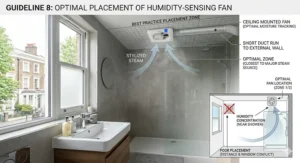
5. Check the IP rating for your bathroom zone. UK wiring regulations define zones in bathrooms (Zone 0, Zone 1, Zone 2, and the area outside). Most of these fans are IPX4 rated (splash-proof) and suitable for Zone 2. The Vent-Axia VASF100HTV’s IPX5 rating makes it suitable for Zone 1 when on a protected circuit. Installing the wrong IP-rated fan in the wrong zone is both a safety risk and potentially an insurance issue — worth five minutes of checking.
Damp British Reality: How These Fans Perform in Three UK Household Scenarios
Understanding specifications is one thing. Knowing which fan suits your actual home is rather more useful.
Scenario A — The Victorian Terrace in Leeds, Family of Four The Hendersons have a single bathroom for four people, positioned in the centre of the house, with a duct run of approximately 4 metres through two bends to reach the side wall. Moisture accumulation is relentless from November to April. Budget is flexible but not unlimited.
Best pick: Blauberg TRIO-100-H or Envirovent SIL100HT. The mixed-flow impeller on the Blauberg handles that duct configuration well, and the 5-year warranty means the Hendersons are not shopping for fans again in three years. The Envirovent is marginally louder but delivers 26 l/s with Part F compliance assurance — valuable if the family ever converts the loft and needs a sign-off.
Scenario B — The New-Build En-Suite in Milton Keynes, Professional Couple Modern construction means the duct run is short and straight. The primary concern is noise — the bathroom shares a wall with the master bedroom. They both work from home.
Best pick: Vent-Axia Lo-Carbon Silent VASF100HTV, without question. At 12 dB, it is not going to interrupt a video call, disturb a night’s sleep, or create any of the low-frequency hum that some fans produce even at their claimed decibel rating. The variable speed means it can tick over quietly between uses, keeping the room consistently dry.
Scenario C — The Rented Flat in Birmingham, Landlord Managing Three Properties Condensation complaints from tenants, potential insurance and licensing implications, and a desire to document that ventilation is working correctly.
Best pick: Kair Smart Fan Plus. The data logger capability is the entire point here. Being able to show a tenant, letting agent, or council environmental health officer a documented record of humidity levels and fan activation is genuinely useful in an era when damp and mould are taken much more seriously in the private rented sector.
The Problem with Standard Extractor Fans — And Why Humidity Sensing Fixes It
This is worth spelling out, because many people upgrade from a basic switch-operated fan without fully appreciating why the humidity sensor makes such a difference.
A standard extractor fan only runs when you manually activate it — typically wired to the bathroom light switch or a separate pull-cord. There are three problems with this arrangement. First, you have to remember to turn it on. Obvious, but we consistently underestimate how often this does not happen, particularly for quick visits rather than showers. Second, it runs for a fixed period regardless of actual humidity — often either too short (the room is still steaming when it cuts off) or long enough to have you wondering whether you left it on. Third, it does nothing when the bathroom accumulates moisture from passive condensation: a cold bathroom in winter, a leaky ceiling in a flat above, a room that simply sits at higher humidity without any obvious human contribution.
The humidity sensor eliminates all three issues. The fan runs when the air needs it and stops when the air is clear. No human input required. In a country where mould and damp are responsible for significant health impacts, particularly respiratory conditions in children, passive moisture management is not a gadget; it is sensible household maintenance.
Common Mistakes When Buying a Bathroom Fan with Humidity Sensor (UK Edition)
Even with good intentions, UK buyers frequently make avoidable errors. Here are the most common ones, and how to avoid them.
Buying a US-market model without checking voltage. Amazon.co.uk listings occasionally include products designed for 110V/60Hz operation — the American standard. UK mains operate at 230V/50Hz. A 110V fan plugged into a UK socket will either fail immediately or, more dangerously, overheat. Always verify the product is specified for 230V UK mains. Every fan in this roundup is confirmed UK-compatible.
Ignoring the IP rating for the installation zone. As noted above, bathroom zones are defined in BS 7671 (the IET Wiring Regulations). IPX4 is sufficient for Zone 2; Zone 1 requires IPX5 or above. Getting this wrong is a compliance and insurance issue, and potentially a safety one.
Choosing a fan based on noise claims without independent verification. Manufacturers test fans under ideal conditions — short, straight ducts, no bends, optimal static pressure. Real UK bathrooms rarely have optimal duct arrangements. Look for independently certified figures (QuietMark, for instance) or corroborate with UK user reviews on Amazon.co.uk, where buyers typically install the product in real homes.
Forgetting that the duct itself needs maintenance. A humidity-sensing fan can only extract what the duct allows. If the duct is kinked, blocked with lint or insulation, or has a non-return flap jammed open by debris, the fan will run but achieve little. Check the existing duct before installing a new fan — you may be surprised what is in there.
Setting the humidistat at the factory default and never adjusting it. Most fans arrive with the sensor set at a generic 70–75% RH. If your ambient bathroom humidity sits at 65% on a damp winter morning, the fan will run constantly. Spend two minutes with the manual, locate the adjustment dial, and set it 10–15% above your actual ambient baseline. The difference is significant.
Long-Term Cost and Maintenance in the UK — What No Specification Sheet Will Tell You
The running cost of a bathroom fan with humidity sensor is lower than most people expect, and considerably lower than the cost of dealing with mould. A 7W fan running for two hours per day costs approximately £10–£15 per year at current UK electricity rates — less than a single tube of anti-mould sealant. Even a 12W fan running more actively adds under £25 annually. Against the cost of redecorating a mouldy ceiling — which you can expect to pay £300–£800 for in most UK cities — a humidity-sensing fan pays for itself before its first service.
Maintenance is minimal but not zero. Every six months, remove the fascia cover and wipe the impeller blades with a damp cloth — dust and hair accumulation noticeably reduces airflow, which the fan compensates for by running harder and longer, increasing noise and energy use. Check the external vent grille annually; in urban areas particularly, bird debris and spider webs can reduce duct effectiveness more than you might expect. The humidity sensor itself requires no maintenance — but if the fan begins running continuously or never activating, the sensor may have failed and the unit likely needs replacing rather than repairing.
For properties with multiple bathrooms, there is a strong argument for budgeting consistently across all wet rooms. Moisture migrates. Treating the main bathroom to a quality humidity-sensing fan while leaving the en-suite with a switch-operated basic extractor means the problem simply shifts — the en-suite becomes the damp room instead.
UK Regulations, Safety Standards & What You Actually Need to Know
This section is, understandably, the one most people skip. Do not skip it.
Part F of the UK Building Regulations specifies minimum extract ventilation rates for wet rooms: at minimum 15 l/s for bathrooms, with fans required to have at least a 15-minute overrun timer for bathrooms without openable windows. The 2026 edition of Approved Document F (which takes effect in England from March 2027 for standard building work) continues to mandate these standards and places increasing emphasis on energy efficiency and intelligent ventilation controls — making humidity-sensing fans the obvious compliance direction for new and renovated properties.
From an electrical safety perspective, bathroom fan installation in the UK falls under Part P of the Building Regulations (electrical safety in dwellings). Notifiable electrical work in a bathroom must either be carried out by a registered competent person (a NAPIT or NICEIC registered electrician) or formally notified to your local building control authority. This is not optional — failure to comply affects your buildings insurance and may cause issues at point of sale.
IP ratings matter and are tested under the IEC 60529 standard. For UK bathrooms, minimum IPX4 (protection against water splashing from any direction) applies in Zone 1 and Zone 2; IPX5 (protection against water jets) is required in Zone 1. Most fans in this roundup are IPX4, appropriate for the vast majority of installations.
UKCA marking (the UK’s post-Brexit replacement for CE marking) is required for electrical products sold on the Great Britain market. All products in this roundup carry appropriate UK market certification.
Price Range & Value Analysis in GBP
| Budget Tier | Price Range | Recommended Option | What You’re Paying For |
|---|---|---|---|
| Budget | £45–£65 | Blauberg TRIO-100-H | German motor, mixed-flow, solid basics |
| Mid-Range | £50–£80 | Xpelair C4HTS / Bosch 1900 DH | Brand reliability, quiet operation, good sensor |
| Upper Mid | £80–£130 | Airflow QT100HT / Envirovent SIL100HT | QuietMark cert / trade-recommended, Part F assured |
| Premium | £95–£160 | Vent-Axia VASF100HTV / Kair Smart Fan Plus | Ultra-quiet or data-logging for landlords |
The value sweet spot for most UK homeowners sits in the mid-range bracket — specifically, the Xpelair C4HTS at around £50–£65. It delivers genuinely quiet operation, an adjustable sensor, and solid reliability without requiring you to make a case to your partner for spending triple digits on a fan. The premium jump to the Vent-Axia VASF100HTV is only worth making if silence is genuinely your priority — in which case, every penny of the extra cost is audible in reverse, because you will not hear the fan at all.
Benefits vs. Switch-Operated Traditional Fans
| Feature | Humidity Sensor Fan | Standard Switch Fan |
|---|---|---|
| Automatic activation | ✅ Yes | ❌ No — human memory required |
| Runs only when needed | ✅ Yes | ❌ Fixed timer or manual off |
| Passive moisture protection | ✅ Yes | ❌ No |
| Energy efficiency | ✅ Higher | ❌ Runs regardless of need |
| Mould prevention | ✅ Continuous | ⚠️ Only if remembered |
| Running cost per year | £10–£25 | £8–£20 |
| Installation complexity | Slightly higher | Simple |
The running costs are comparable — the sensor fan wins on usefulness, not on electricity bills. The real cost difference is in what happens to your walls, ceiling, and grout over five years without proper humidity control. A switch-operated fan that is forgotten half the time is significantly more expensive in the long run than a humidity sensor fan that never forgets.
✨ Still browsing?
🔍 Check current pricing on Amazon.co.uk for all seven fans above — availability and Prime delivery options update daily. Click any product name to see current deals and reader reviews from verified UK buyers.
Frequently Asked Questions
❓ Do I need a bathroom fan with humidity sensor to comply with UK Building Regulations?
❓ What RH setting should I use for my humidistat in a UK bathroom?
❓ Can I install a bathroom extractor fan myself, or do I need an electrician?
❓ Are these fans available with Amazon Prime delivery to the whole of the UK?
❓ How long do bathroom fans with humidity sensors typically last?
Conclusion: The Fan That Thinks for Itself Is the One Worth Having
The bathroom fan with humidity sensor is one of those product categories where the upgrade from the basic option is genuinely, meaningfully better rather than merely more expensive. A standard switch-operated fan depends on human consistency in an environment — early morning, half-awake, running late — where human consistency is at its absolute lowest. A humidity sensor does not have bad mornings. It does not forget. It does not leave the room to steam for forty minutes while you make tea.
For most UK households, the Xpelair C4HTS is the sensible starting point: proven, quiet, widely available on Amazon.co.uk, and capable enough for the overwhelming majority of British bathrooms. For quieter requirements, the Vent-Axia Lo-Carbon Silent VASF100HTV is genuinely extraordinary. For value per pound spent, the Blauberg TRIO-100-H is the dark horse that rewards buyers willing to look beyond the familiar brand names.
Whatever you choose, choose something with an adjustable humidistat. Britain’s ambient humidity makes the fixed-trigger options a gamble you will probably lose.
✨ Ready to upgrade your bathroom ventilation?
🔍 Click any product in this guide to check current pricing and Prime availability on Amazon.co.uk. Your walls, ceiling, and grout will thank you — even if the fan is too quiet for you to notice it’s working.
Recommended for You
- Best Quiet Bathroom Extractor Fans UK 2026: 7 Top Picks
- Best Bathroom Extractor Fans UK 2026: 7 Silent, Powerful Picks
- Best Wall Mounted Conservatory Fan UK 2026: Top 7 Picks
Disclaimer: This article contains affiliate links. As an Amazon Associate, I earn from qualifying purchases. If you purchase products through these links, we may earn a small commission at no additional cost to you.
✨ Found this helpful? Share it with your mates! 💬🤗
