

In This Article
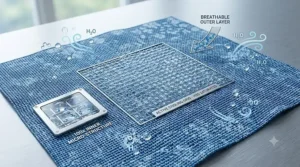
British summers have changed. A decade ago, “heatwave” meant a couple of sticky afternoons. Now it means weeks of the stuff, and your body still hasn’t caught up. That’s where the best cooling bandana earns its keep — a strip of clever fabric that turns a splash of tap water into hours of relief around your neck. So what is a cooling bandana? It’s a reusable piece of headwear or neckwear, usually made from PVA foam, embedded polymer crystals, or a moisture-wicking weave, that activates with water and cools through evaporation, roughly the same trick your own sweat glands use, just far more effectively.

If you’ve never tried one, the appeal is easy to underestimate — until you’re stood on a scaffold in July, or three miles into a run with the sun doing its worst. A good cooling bandana buys you back concentration, comfort, and in some outdoor jobs, genuine safety margin. The NHS explains that heat exhaustion and heatstroke can affect anyone during hot weather or exercise, which is exactly the window this kind of gear is designed to shrink.
This guide rounds up seven real products worth your money in 2026, from budget worksite basics to premium performance brands, with honest analysis of who each one suits. No invented reviews, no exact prices (they shift too often for that), just genuine spec comparison and aggregated review sentiment so you can pick the right one for your neck, your job, or your next long run.
Quick Comparison Table
Before the deep dive, here’s the shape of the market at a glance. These seven span three cooling technologies — PVA foam, embedded polymer crystals, and woven moisture-wicking fabric — each with a slightly different cooling rhythm.
| Product | Cooling Tech | Typical Duration | Best For |
|---|---|---|---|
| Ergodyne Chill-Its 6700CT | PVA foam | Up to 4 hours | Budget worksite use |
| Ergodyne Chill-Its 6702 | Embedded polymer | Up to 4 hours | Hi-vis site work |
| CoolNES Adjustable Cooling Bandana | Woven polyester | 2–3 hours | Everyday discreet wear |
| Coume 6 Pack Cooling Neck Wraps | PVA-style | 2–4 hours | Families, bulk buying |
| GOT Sports UPF 50+ Cooling Bandana | HeiQ Smart Temp weave | 2+ hours | Running and cycling |
| MISSION Cooling Bandana | HydroActive weave | Up to 2 hours | Sport and festivals |
| MISSION Enduracool Cooling Bandana | Radiator-fibre weave | Up to 2 hours | Long-term daily use |
Reading across this table, the split isn’t really budget-versus-premium, it’s technology-versus-use-case. Bear in mind that reusable cooling bandana summer performance always depends on ambient humidity, since evaporative cooling slows down noticeably on muggy days regardless of which technology sits inside the fabric. If your priority is raw duration, PVA and polymer-crystal designs from Ergodyne and Coume generally outlast the woven fabrics from MISSION and GOT Sports, but the latter dry faster and feel less bulky against skin during exercise.
💬 Just one click — help others make better buying decisions too!😊
Top 7 Cooling Bandanas: Expert Analysis
Below are seven genuine products currently sold on Amazon UK, covering budget, mid-range, and premium price points, plus a spread of technologies so there’s something here whether you’re on a building site or a half-marathon start line.
1. Ergodyne Chill-Its 6700CT Cooling Bandana — best budget pick for hard-hat wearers
The standout here is simplicity: soak it, wring it, wear it, and you’re set for hours. The Ergodyne Chill-Its 6700CT uses PVA (polyvinyl alcohol) foam lining, a hyper-evaporative material that activates in around one minute under running water and holds its cooling charge for up to four hours. In practical terms, that means you can wet it once at the start of a shift and not think about it again until lunch. Its low-profile, tie-closure design is built to sit comfortably under a hard hat, which is precisely why it’s become a fixture on UK construction and warehouse sites. Aggregated review sentiment across retailers is consistently positive on cooling performance, though a recurring theme is that the PVA material stiffens noticeably as it dries out, so it needs re-wetting before it turns crunchy rather than after. This is a tool for people who need dependable, no-fuss cooling under protective headwear, not a lifestyle accessory for festivals or fashion.
Pros:
- ✅ Genuinely low-cost entry point into cooling headwear
- ✅ Up to four hours of cooling from one soak
- ✅ Slim enough to wear comfortably under a hard hat
Cons:
- ❌ Goes stiff and board-like once fully dried out
- ❌ Limited colourways compared with lifestyle brands
At around £8-£14, the Ergodyne Chill-Its 6700CT is hard to beat as a first cooling bandana for anyone working outdoors, offering strong functional value even if it won’t win any style points.

2. Ergodyne Chill-Its 6702 Cooling Bandana — best hi-vis option for building sites
Where the 6700CT uses PVA foam, the Ergodyne Chill-Its 6702 switches to embedded polymer crystals woven into a batting material, which Ergodyne markets as “no-slime” technology, since the crystals plump up without turning gloopy or leaking through the fabric. Soak time runs two to five minutes rather than one, and cooling relief again stretches to roughly four hours. What most buyers overlook about this model is the availability of a genuine Hi-Vis Lime colourway, which matters more than it sounds: on a site where visibility is part of the risk assessment, cooling gear that also satisfies a hi-vis requirement removes one more excuse not to wear it. Reviewers on Amazon UK have flagged the tie-back closure as occasionally uncomfortable against sweaty skin during long wear, with one detailed account describing marks left by the strap after a full day of use. That’s a real trade-off worth weighing against the four-hour duration.
Pros:
- ✅ Genuine Hi-Vis Lime option for site visibility rules
- ✅ No-slime polymer avoids leaking or oozing
- ✅ Long four-hour cooling window per soak
Cons:
- ❌ Tie closure can chafe during extended wear
- ❌ Needs a longer 2-5 minute soak to activate
Priced similarly to its PVA sibling, around £8-£15, the Ergodyne Chill-Its 6702 is the smarter pick specifically for anyone whose role already demands hi-vis compliance.
3. CoolNES Adjustable Cooling Bandana — best discreet everyday design
The CoolNES Adjustable Cooling Bandana takes a different approach entirely: no branding, no logos, just a plain 24 x 24-inch square of lightweight polyester with UPF 50+ built in. Based on the spec comparison, the appeal here is versatility — the same piece of fabric works as a headband, neck wrap, or face covering, and the brand explicitly markets multiple tying styles from “classic headband” to bandana-style face coverage. It cools to around 30 degrees below average body temperature within seconds of wetting and holds that for roughly two to three hours, which sits mid-pack against the four-hour PVA options but dries faster and feels noticeably less bulky. What reviewers consistently note is how easily it disappears into a pocket or bag, a genuine advantage for anyone who wants cooling gear that doesn’t scream “workwear” in a non-work setting. Cooling bandana how to use questions from first-time buyers usually come down to one thing with this model: soak fully, wring gently rather than twisting hard, then snap once or twice to distribute moisture evenly through the weave.
Pros:
- ✅ Discreet, no-logo design suits any setting
- ✅ UPF 50+ protection blocks the bulk of UV rays
- ✅ Multiple wearing styles from one square of fabric
Cons:
- ❌ Shorter cooling window than PVA-based rivals
- ❌ Limited colour choice versus branded competitors
At an accessible £8-£13, the CoolNES Adjustable Cooling Bandana suits hikers, dog walkers, and commuters who want low-key cooling without a logo attached.
4. Coume 6 Pack Cooling Neck Wraps — best value multipack for families
Buying one cooling bandana is sensible. Buying six in one go, at a lower cost per unit than most single products on this list, is arguably smarter if you’ve got a household of people who all feel the heat differently. The Coume 6 Pack Cooling Neck Wraps bundle uses the same crystal-and-fabric evaporative principle as the pricier single-item options, marketed specifically for running, walking, and cycling, and the pack format solves a genuinely common problem: someone always loses, forgets, or is mid-wash with theirs when the next hot day arrives. Here’s what to weigh before buying in bulk though — individual build quality on multipacks from lesser-known brands can be more variable than a flagship single product, since manufacturing consistency isn’t always as tightly controlled. Still, for a family that wants a cooling bandana each without matching individual price tags seven times over, this is the pragmatic route, and it doubles as an easy way to keep a spare in the car, the gym bag, and the shed simultaneously.
Pros:
- ✅ Lowest cost-per-unit of any product on this list
- ✅ Enough for a whole household from one order
- ✅ Suits running, walking, and cycling equally well
Cons:
- ❌ Build consistency can vary between individual pieces
- ❌ Fewer premium touches than single flagship products
Typically found in the £12-£20 range for six, the Coume 6 Pack Cooling Neck Wraps deliver reusable cooling bandana summer value that’s genuinely hard to match unit-for-unit.
5. GOT Sports UPF 50+ Cooling Bandana — best all-rounder for runners and cyclists
The GOT Sports UPF 50+ Cooling Bandana leans on HeiQ Smart Temp fabric technology, a Swiss-developed system that reacts to skin temperature rather than simply holding moisture passively. In practice, that means the polyester-spandex blend adjusts its cooling response as you heat up rather than delivering one flat level of relief throughout. This matters most for interval-style efforts, hill repeats on a bike, fartlek runs, anything where your body temperature spikes and dips rather than climbing steadily. What most buyers overlook about this model is the UPF 50+ rating, tested to the American ANSI standard, which blocks around 98% of UVA and UVB rays; combined with the moisture-wicking blend, that’s meaningful sun protection layered onto the cooling function. Reviewers consistently praise the multiple wearing styles, from headband to gaiter to face mask, and the stretch fit that copes with a wider range of head and neck sizes than rigid tie-closure designs.
Pros:
- ✅ HeiQ Smart Temp fabric reacts to real-time body heat
- ✅ UPF 50+ rated to a recognised UV testing standard
- ✅ Stretch fit adapts to more head and neck sizes
Cons:
- ❌ Cooling sensation is subtler than crystal-based rivals
- ❌ Needs re-wetting more often during intense effort
Sitting in the £12-£18 mid-range bracket, the GOT Sports UPF 50+ Cooling Bandana is a genuinely strong all-rounder for anyone training outdoors through a British summer.

6. MISSION Cooling Bandana — best established performance brand
Few names in evaporative cooling headwear carry as much track record as MISSION, whose HydroActive Wet-to-Cool technology cools to roughly 30 degrees below average body temperature within about 30 seconds of activation and holds that for up to two hours per soak. The three-step activation — wet it, wring it, snap it — has become something of an industry template that competitors reference against. On paper this means slightly shorter duration than the four-hour PVA options on this list, but reviewers consistently note the trade-off is worthwhile: the fabric feels notably softer against skin and dries without the cardboard stiffness some PVA products develop. MISSION’s cooling technology is also associated with the Heat and Safety Performance Coalition at the Korey Stringer Institute, a genuine sports-science research body focused on exertional heat illness, which lends the brand a credible, evidence-linked reputation rather than marketing flourish alone. Machine washability and permanent, chemical-free cooling fibres round out a product built for repeat use across an entire season rather than occasional grab-and-go wear.
Pros:
- ✅ Fast 30-second activation with HydroActive technology
- ✅ Soft, comfortable fabric that avoids stiffening when dry
- ✅ Backed by genuine heat-illness research affiliations
Cons:
- ❌ Shorter two-hour window than PVA foam competitors
- ❌ Sits at a higher price point than budget alternatives
Usually priced in the £15-£22 range, the MISSION Cooling Bandana rewards buyers who want a multifunctional cooling wrap from a brand with genuine sports-science credibility behind it.
7. MISSION Enduracool Cooling Bandana — best long-lasting premium pick
The MISSION Enduracool Cooling Bandana takes the brand’s core cooling principle and adds what MISSION describes as a radiator-like fibre construction, designed to draw moisture and perspiration into the fabric’s core and regulate the rate of evaporation more precisely than a standard weave. The result, based on the spec comparison, is a product built for people who wear cooling headwear as daily kit across an entire summer rather than for the odd hot weekend: golfers, groundskeepers, anyone spending six-plus hours outside repeatedly. UPF 50 sun protection carries over from the wider MISSION range, and the same wet-wring-snap activation applies, though the tighter fibre construction means it tends to hold its shape better after repeated wash cycles than cheaper alternatives. Reviewers frequently mention this as the pick they replace least often, a meaningful long-term-value signal even at a higher upfront price. If you’ve already worn through a couple of budget bandanas in a season, this is the natural upgrade.
Pros:
- ✅ Radiator-style fibre regulates evaporation more precisely
- ✅ Holds shape and performance across repeated wash cycles
- ✅ UPF 50 protection layered onto premium cooling tech
Cons:
- ❌ Highest price point of any product covered here
- ❌ Overkill for occasional, once-a-summer use
At around £18-£25, the MISSION Enduracool Cooling Bandana is the sensible premium choice for anyone who wants one bandana to survive an entire season of heavy, daily use.
✨ Don’t Miss These Exclusive Deals!
🔍 Whichever pick suits your budget, getting one of these into your kit bag before the next heatwave lands is a small decision that pays off fast. Click through to check current prices and availability, and get ahead of the next warm snap.
How to Use a Cooling Bandana: Practical Usage Guide
Cooling bandana how to use questions almost always boil down to activation, care, and timing, and getting these right is the difference between genuine relief and a soggy strip of fabric round your neck. First, activation: PVA-based bandanas like the Ergodyne Chill-Its 6700CT need a full minute under running water, while woven fabrics like the MISSION Cooling Bandana activate in as little as 30 seconds. Either way, wring out excess water gently rather than twisting hard, since aggressive wringing can distort the internal fibres or crystal structure over repeated use.
Second, maintenance. Reusable cooling bandana summer performance depends heavily on how you store the thing between wears. Hang it flat or loosely coiled somewhere with airflow rather than balled up in a gym bag, where trapped damp fabric can start smelling within a day in hot weather. Machine-washable models like MISSION’s range can go through a standard cycle every week or two of regular use; PVA and polymer-crystal designs generally prefer hand washing to avoid breaking down the internal material faster than intended.
Third, timing your re-wet. Don’t wait until the bandana feels warm and dry to reactivate it, since by that point you’ve already lost the cooling benefit for a stretch of your day. A sensible habit for anyone working an eight-hour outdoor shift is to re-wet at each scheduled break rather than reactively, which keeps evaporative cooling running continuously rather than in uneven bursts.
Real-World Scenarios: Who Actually Needs a Cooling Bandana?
Scenario one — the site electrician. Working under a hard hat through a July heatwave, budget matters and duration matters more than style. The Ergodyne Chill-Its 6700CT or the hi-vis Ergodyne Chill-Its 6702 both fit this brief precisely: long cooling windows, low-profile fit under PPE, and a price point that survives being one of several tools that go missing on-site.
Scenario two — the marathon-training runner. Someone logging 30-40 miles a week through spring and summer needs fast activation, low bulk, and genuine moisture-wicking rather than maximum duration on any single soak. The GOT Sports UPF 50+ Cooling Bandana, with its HeiQ Smart Temp response to rising body heat, suits interval sessions particularly well, while the MISSION Cooling Bandana covers longer steady runs where UPF protection also matters on exposed routes.
Scenario three — the family with young kids and a dog. Budget, quantity, and simplicity dominate here rather than technical performance. The Coume 6 Pack Cooling Neck Wraps solve the logistics problem of five different people (plus a very warm Labrador) all wanting cooling gear on the same scorching Saturday, without needing to buy premium single units five times over.

Common Cooling Bandana Problems (and How to Fix Them)
Problem: it dries out faster than expected. This is usually down to low humidity or direct sun exposure accelerating evaporation. The fix is simply carrying a small spray bottle to top up moisture between full re-soaks, particularly with woven fabric designs like CoolNES or MISSION products that hold less total water than PVA foam.
Problem: it smells after a few uses. Trapped damp fabric breeds bacteria fast in warm conditions. Hand wash with a mild detergent every few wears and always dry fully in open air, never sealed in a bag, to stop odour building up in reusable cooling bandana summer kit.
Problem: the PVA material feels stiff and board-like. This happens once PVA foam, as used in the Ergodyne Chill-Its 6700CT, has fully dried out. It’s not damaged, just dehydrated; a fresh one-minute soak restores flexibility and cooling function immediately.
Problem: it feels less effective on humid days. Evaporative cooling technology relies on moisture leaving the fabric into the surrounding air, so on genuinely humid days the effect will always feel milder regardless of which product you choose, since the physics of evaporation slows down when the air is already saturated.
Problem: sizing feels wrong. Tie-closure designs like both Ergodyne models adjust to a wide range of neck and head sizes by design, whereas stretch-fit designs like the GOT Sports UPF 50+ Cooling Bandana rely on the fabric’s elasticity, so checking a brand’s stated dimensions before buying avoids a poor fit later.
How to Choose the Best Cooling Bandana
Picking the right one comes down to seven practical questions, each worth running through before you buy:
- What’s your primary use case? Site work favours long duration; sport favours fast activation and low bulk.
- How long do you need cooling to last per soak? PVA and crystal designs stretch to four hours; woven fabrics typically manage two.
- Do you need UPF sun protection built in? Most lifestyle-focused models include UPF 50 or 50+; pure worksite PVA designs sometimes don’t specify a rating.
- Will it sit under other headwear? Hard hats and helmets need a genuinely low-profile design like the Ergodyne Chill-Its 6700CT.
- How often will you wash it? Machine-washable woven fabrics suit frequent use better than hand-wash-only PVA foam.
- Is hi-vis compliance part of your job? Only a handful of models, including the Ergodyne Chill-Its 6702, come in genuine hi-vis colourways.
- Are you buying for one person or a household? Multipacks like the Coume 6 Pack Cooling Neck Wraps solve the maths quickly for families or teams.
Cooling Bandana vs Cooling Towel: What’s the Real Difference
The two categories solve overlapping but distinct problems. A cooling towel, typically a flat microfibre panel, is draped rather than tied, offering a larger cooling surface area for quick post-exercise use but generally less secure fit for anyone moving around continuously. A cooling bandana, by contrast, ties or stretches into place, staying put during a run, a cycle, or a full shift on site, which matters far more than surface area once you’re actually moving. Multifunctional cooling wrap designs like the GOT Sports UPF 50+ Cooling Bandana narrow that gap further by offering several wearing styles from one piece of fabric, effectively behaving like both categories depending on how it’s tied.
| Factor | Cooling Bandana | Cooling Towel |
|---|---|---|
| Fit during movement | Secure, tied or stretch-fit | Loose, drapes only |
| Typical duration | 2-4 hours per soak | 1-2 hours per soak |
| Best For | Ergodyne, MISSION styles for active wear | Post-workout cooldown |
Looking at that comparison, anyone active for extended periods, whether working, running, or cycling, is generally better served by a bandana-style design that won’t slip, while a cooling towel remains a reasonable choice for shorter, stationary cooling moments like the gym floor between sets.
Cooling Bandanas for Outdoor Workers and Tradespeople
Neck cooling bandana outdoor work applications sit at the sharper end of why this product category exists at all. The HSE points out that heat stress risks build up in workplaces where the process itself, or a restricted space, creates a hot environment, and that assessing those risks properly means looking at work rate, the surrounding climate, and the protective clothing involved. That last point is worth dwelling on: PPE that prevents normal sweating and cooling is itself a heat stress risk factor, which is exactly the gap a low-profile cooling bandana under a hard hat or hi-vis vest is designed to help close. For tradespeople specifically, the practical shortlist narrows fast: the Ergodyne Chill-Its 6700CT for straightforward budget cooling, or the Ergodyne Chill-Its 6702 where a hi-vis colourway is also required by site rules. Both give hours of relief from one soak without adding bulk under protective headwear, addressing a genuine occupational health gap rather than a lifestyle preference. Employers running outdoor crews through summer would do well to treat cooling headwear as a small, low-cost addition to a wider heat management plan rather than a token gesture.
Features That Actually Matter (And Those That Don’t)
Marketing copy across this category tends to bundle a long list of features together, but not all of them carry equal real-world weight. UPF rating actually matters, since UV exposure risk doesn’t pause just because you’re focused on staying cool; a genuine UPF 50+ certification, as seen on the CoolNES Adjustable Cooling Bandana and the GOT Sports UPF 50+ Cooling Bandana, is a meaningful, testable claim. Cooling duration also genuinely matters, and the honest gap between PVA foam’s four hours and woven fabric’s two hours is worth factoring into your buying decision based on how long you’ll actually be out in the heat.
What matters less than the marketing suggests: exact temperature-drop claims like “30 degrees below body temperature.” These figures are measured under specific lab conditions and rarely reflect real-world humidity, wind, and skin contact variables precisely, so treat them as a directional comparison between products rather than a guaranteed personal result. Colour and pattern variety, heavily marketed by lifestyle brands, also matters far less than fit and activation speed once you’re actually using the thing in anger on a hot day.
Safety, Regulations and Heat Stress at Work
Employers carry a genuine responsibility to keep working temperatures reasonable, and to introduce local cooling measures wherever a comfortable temperature simply can’t be maintained by other means, and while there’s no single maximum legal working temperature in UK law, the duty of care under the Health and Safety at Work Act still applies fully to heat. For anyone managing outdoor teams, this is worth reading properly rather than skimming: HSE’s heat stress guidance for employers sets out risk factors including work rate, humidity, and protective clothing that combine to create genuine heat stress risk on site.
On the personal safety side, the wider public health message is equally clear. Government hot weather guidance recommends covering up, seeking shade between 11am and 3pm, and recognising the early symptoms of heat exhaustion before they progress. A cooling bandana isn’t a substitute for any of that core advice, but it’s a genuinely useful supplementary layer, particularly for people who can’t simply step indoors when the temperature climbs, whether that’s a scaffolder, a delivery cyclist, or a marshal at a summer event.
Long-Term Cost and Maintenance
Evaporative cooling headwear is inexpensive per unit, but total cost of ownership across a full British summer is worth thinking through properly rather than judging on sticker price alone. A £10 PVA bandana used daily across three months of warm weather works out to just a few pence per wear, assuming reasonable care extends its usable life across the season. Moisture activated cooling fabric in woven designs like MISSION’s range tends to survive more wash cycles without degrading than basic PVA foam, which can start losing its “hyper-evaporative” responsiveness faster if it’s dried out completely and rehydrated repeatedly without proper storage.
| Product Type | Typical Price Range | Realistic Season Length |
|---|---|---|
| Ergodyne Chill-Its 6700CT (PVA) | £8-£14 | One full summer with care |
| MISSION Enduracool (woven) | £18-£25 | Multiple summers |
| Coume 6 Pack (multipack) | £12-£20 for six | One summer per household |
The pattern here is straightforward: premium woven designs like the MISSION Enduracool Cooling Bandana cost more upfront but tend to outlast cheaper PVA alternatives across multiple seasons, so the real cost-per-wear gap narrows considerably once you look past year one.
FAQ
❓ How does a cooling bandana work?
❓ How long does a cooling bandana stay cool?
❓ Can you wash a cooling bandana?
❓ Are cooling bandanas actually reusable?
❓ Do cooling bandanas provide sun protection too?
Conclusion
Choosing the best cooling bandana really comes down to matching technology to how you’ll actually use it, not chasing the biggest marketing claim on the packet. Tradespeople under hard hats are usually best served by PVA foam options like the Ergodyne Chill-Its 6700CT or the hi-vis Ergodyne Chill-Its 6702, both built for long shifts and low bulk. Runners and cyclists get more genuine benefit from responsive woven fabrics like the GOT Sports UPF 50+ Cooling Bandana or the established MISSION Cooling Bandana, while anyone wearing cooling headwear daily across a full season should look seriously at the longer-lasting MISSION Enduracool Cooling Bandana. Families and larger households, meanwhile, get the best value stretching their budget across the Coume 6 Pack Cooling Neck Wraps. Whichever you land on, remember this kind of gear supplements sensible heat-safety habits, it doesn’t replace them, so keep drinking water, seeking shade, and watching for early warning signs through whatever the next heatwave brings.
Recommended for You
- Best Cooling Towel: 7 Top Picks for UK Gym & Sport 2026
- Sports Cooling Shirt 2026: 7 Picks That Beat the Heat
- Best Cooling Work Shirt for Tradesmen in 2026: 7 Top Picks
Disclaimer: This article contains affiliate links. As an Amazon Associate, I earn from qualifying purchases. If you purchase products through these links, we may earn a small commission at no additional cost to you.
✨ Found this helpful? Share it with your friends! 💬🤗
