

In This Article
There’s a specific kind of frustration that comes with flipping your pillow over for the fourth time in an hour, hunting for a cool patch, while your neck is already complaining about yesterday’s desk posture. Heat and neck pain have an unhelpful habit of showing up together at 2am, and standard memory foam — brilliant at contouring, notoriously bad at breathing — often makes both problems worse rather than better.

A cooling memory foam pillow for neck pain is a pillow that combines shaped or contoured memory foam, designed to support the natural curve of the cervical spine, with materials or covers engineered to stop that foam trapping body heat overnight. In practice, that means gel infusions, open-cell “breathable” foam structures, phase-change or moisture-wicking covers, or perforated designs — sometimes several of these layered together.
It’s worth being upfront about what a pillow can and can’t do here. According to NHS guidance on neck pain, symptoms should ease within around two weeks for most people, with a full recovery typically taking four to six weeks, and a pillow is one part of that picture rather than a standalone fix — good daytime posture, movement, and a mattress that isn’t sagging all matter too. General NHS advice also points toward using a low, firm pillow that fills the natural hollow between the head and shoulders, which is exactly the gap that a well-shaped cervical or contour pillow is designed to fill. If pain is severe, spreading into your arm, or linked to numbness or weakness, that’s a conversation for a GP or physiotherapist, not a pillow purchase.
With that context in place, here are seven real, currently available cooling memory foam pillows spanning affordable contour designs through to premium adjustable options, with honest analysis of who each one actually suits.
Quick Comparison Table
| Pillow | Best For | Fill Type | Price Range |
|---|---|---|---|
| EPABO Contour Memory Foam Pillow | Budget-conscious first-time buyers | Gel memory foam | under £30 |
| Panda Bamboo Memory Foam Pillow | Simple, allergy-conscious upgrade | Orthopaedic-grade memory foam | £35-£50 range |
| Emma Original Pillow | Buyers who want adjustable height | Airgocell + HRX foam layers | £40-£60 range |
| Panda Hybrid Bamboo Pillow | Hot sleepers wanting a bamboo cover | CharcoCell bamboo-charcoal foam | £55-£75 range |
| Levitex Sleep Posture Pillow | Dedicated posture and alignment support | Patented Levitex foam | £70-£85 range |
| Simba Hybrid Pillow | Fully customisable height and firmness | Nanocube foam pieces | £85-£110 range |
| TEMPUR Original SmartCool Pillow | Buyers wanting proven, premium support | TEMPUR pressure-adapting material | £150-£200 range |
Looking at this spread, there’s a genuine split between fixed-shape contour pillows (the EPABO Contour Memory Foam Pillow, Panda Bamboo Memory Foam Pillow) and adjustable, layered pillows (the Emma Original Pillow, Simba Hybrid Pillow) that let you tune height and firmness over time. Neither approach is objectively superior — contour pillows suit people who already know roughly what shape works for their neck, while adjustable pillows suit anyone still figuring that out, or whose needs change between side and back sleeping through the night.
💬 Just one click — help others make better buying decisions too!😊
Top 7 Cooling Memory Foam Pillows for Neck Pain: Expert Analysis
1. EPABO Contour Memory Foam Pillow — cheapest genuine cervical contour design
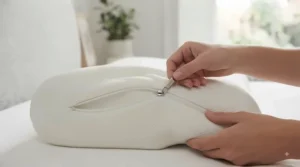
The EPABO Contour Memory Foam Pillow leads with a defining standout feature: two different contour heights built into a single pillow, so you can flip it and choose the loft that suits your build without buying two separate pillows. It’s filled with polyurethane gel memory foam, specifically formulated to promote air circulation through the foam structure rather than trapping heat against your skin, and the whole thing is wrapped in a net jacket with a removable, machine-washable outer case.
Based on the spec comparison with pricier contour pillows further down this list, the EPABO Contour Memory Foam Pillow earns its place through accessibility rather than sophistication — it’s the obvious starting point for anyone who’s never tried a shaped cervical pillow before and doesn’t want to commit serious money to find out if the concept works for them. Reviewers consistently note the dual-height design as genuinely useful, though a recurring theme in aggregated feedback flags inconsistent build quality between batches, with some buyers reporting a stronger-than-expected manufacturing smell on arrival and a fit that doesn’t quite match promotional photos — airing it out for 24-48 hours before use is a sensible precaution.
Pros:
- ✅ Two contour heights in one pillow, no need to buy twice
- ✅ Gel memory foam genuinely aids airflow versus solid foam
- ✅ Removable, machine-washable outer cover
Cons:
- ❌ Reported quality control inconsistency between batches
- ❌ Initial off-gassing smell reported by several buyers
At under £30, it’s a low-risk way to trial a contour shape before spending more on the options further down this list.
2. Panda Bamboo Memory Foam Pillow — simplest orthopaedic-grade upgrade
The Panda Bamboo Memory Foam Pillow stands out for doing one thing well rather than several things adequately: a single block of orthopaedic-grade memory foam, wrapped in a genuinely soft bamboo-fibre cover, backed by a 10-year manufacturer’s guarantee that’s almost unheard of in the pillow market. The foam is designed to contour to your sleeping position — back, side or front — while the bamboo cover is naturally hypoallergenic and antibacterial, which matters if allergies or skin sensitivity factor into your buying decision.
What most buyers overlook about this model is that the bamboo cover’s main job isn’t dramatic active cooling — it’s passive breathability, letting excess heat and moisture escape more readily than a standard polyester or cotton cover would, rather than actively drawing heat away the way the Hybrid version’s charcoal infusion does. Reviewers consistently note that this suits mild-to-moderately warm sleepers well, though genuinely hot sleepers may find the standard Panda Bamboo Memory Foam Pillow less effective than the brand’s own Hybrid model at managing overnight heat. It complies with UK BS 7177 fire safety regulations, which is worth checking for on any UK pillow purchase, branded or otherwise.
Pros:
- ✅ Genuinely long 10-year manufacturer’s guarantee
- ✅ Naturally hypoallergenic, antibacterial bamboo cover
- ✅ Orthopaedic-grade foam contours to your sleeping position
Cons:
- ❌ No height adjustability — one fixed loft only
- ❌ Passive cooling only, less effective for genuinely hot sleepers
Typically priced in the £35-£50 range, it’s a sensible step up from a basic contour pillow for anyone prioritising longevity and simplicity over adjustability.
3. Emma Original Pillow — best pick for buyers who want to fine-tune loft themselves
The Emma Original Pillow‘s standout feature is its removable, three-layer construction — an open-celled Airgocell foam top layer for airflow, a supportive HRX “High Resiliency Extra” middle layer, and a pressure-relieving viscoelastic base — all of which can be taken out individually to change the pillow’s height and feel. That’s a meaningfully different approach from a fixed contour pillow, since it lets one pillow adapt as your preferences or sleeping position change over time.
Here’s what the spec sheet won’t tell you, but reviewers note: the open-pored Airgocell layer specifically targets the “clammy memory foam” complaint that puts many buyers off foam pillows altogether, working alongside Emma’s UltraDry cover technology to manage both temperature and humidity rather than temperature alone. On paper this means a genuinely versatile pillow for anyone who alternates between back and side sleeping through the night, since removing or adding the layers changes support characteristics for each position. Worth noting honestly: Emma discontinued its sleep trial specifically for pillows as of January 2023, so unlike some rivals on this list, you can’t test-drive it risk-free at home before committing.
Pros:
- ✅ Three removable layers genuinely change height and firmness
- ✅ Open-cell Airgocell foam noticeably more breathable than solid foam
- ✅ Adapts well to buyers who switch between sleep positions
Cons:
- ❌ No trial period currently offered specifically on pillows
- ❌ Reconfiguring layers takes some initial trial and error
At around £40-£60, it sits mid-pack on price while offering more genuine adjustability than either budget option above it.
4. Panda Hybrid Bamboo Pillow — best bamboo cover for actively hot sleepers
The Panda Hybrid Bamboo Pillow takes everything in the standard Panda Bamboo pillow and adds a defining standout feature: CharcoCell foam, a bamboo-charcoal-infused memory foam core, paired with a quilted BambooCloud cover specifically engineered to keep sleep “cool and fresh” rather than relying on the bamboo fabric alone. At a generous 70 x 40 x 13cm, it’s also noticeably larger than the brand’s original pillow, and ships with a spare cover included, so you’re never without one while the other’s in the wash.
Based on the spec comparison against the Emma Original Pillow, the Panda Hybrid Bamboo Pillow takes a different route to breathability — rather than an open-cell foam structure, it leans on the charcoal infusion to actively help regulate temperature, plus the layered BambooCloud cover for a plusher feel on top. Reviewers consistently note this combination as a noticeable step up from the standard Panda pillow for genuinely warm sleepers, though the trade-off is a meaningfully higher price for what is, at its core, still a single-piece orthopaedic foam design rather than an adjustable one.
Pros:
- ✅ Bamboo-charcoal CharcoCell foam actively targets heat retention
- ✅ Spare cover included, so you’re never without one
- ✅ Same reassuring 10-year manufacturer’s guarantee as the original
Cons:
- ❌ Noticeably pricier than the standard Panda Bamboo Memory Foam Pillow
- ❌ Large 70cm size may not suit all standard pillowcases
Expect to pay in the £55-£75 range, positioning it as the mid-tier “step up” pick for anyone who found the standard Panda pillow ran a little warm.
5. Levitex Sleep Posture Pillow — best dedicated pick for posture-focused buyers
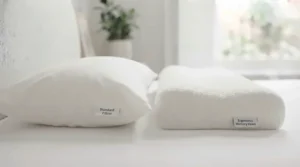
The Levitex Sleep Posture Pillow takes a genuinely different approach from every other pillow on this list, and that’s its defining standout feature: a patented, clinically researched foam specifically engineered not to collapse under the weight of your head, unlike memory foam or feather fill, which the brand argues compromises posture as the night goes on. It’s available in four depth options to suit different body frames, and features an inherent antimicrobial treatment in the foam core alongside a removable, machine-washable cool-touch nylon cover.
What most buyers overlook about this model is that Levitex foam is deliberately bouncier and more responsive than classic memory foam — it’s not trying to be a softer version of the same idea, it’s trying to solve a different problem, which the brand frames as posture, pressure relief, and proprioception (your body’s sense of its own position) working together. Independent reviewers have found it genuinely stays cool overnight and delivers consistent support that resists sinking, though several note a real adjustment period, particularly for anyone used to a softer, more traditional memory foam feel, and its unusual sloped shape means it won’t fill a standard pillowcase the way a rectangular pillow would.
Pros:
- ✅ Clinically researched, patented foam resists collapsing under head weight
- ✅ Four depth options genuinely suit different body frames
- ✅ Reviewers consistently report it stays cool overnight
Cons:
- ❌ Unusual shape doesn’t fit standard pillowcases well
- ❌ Firmer feel takes real adjustment time, especially for front sleepers
Priced typically in the £70-£85 range depending on size, it’s a premium, specialist choice for buyers whose priority is genuinely correcting sleep posture rather than simply softening a sore neck.
6. Simba Hybrid Pillow — best fully customisable option for hot sleepers
The Simba Hybrid Pillow‘s standout feature is its Nanocube fill — small, flexible foam pieces you can physically add or remove to change the pillow’s height and firmness, rather than being locked into a fixed loft the way a contour pillow is. Wrapped around that adjustable core sits Simba’s Stratos cool-touch cover, a premium knit fabric specifically engineered to feel cool against the skin and support airflow through the pillow structure, addressing the “flip to find the cool side” complaint that’s common with dense foam pillows.
On paper this means a pillow that can be tailored fairly precisely to your build and sleep position — a higher, firmer profile for side sleeping, a lower, softer one for back or front sleeping — and reviewers consistently note this adjustability as the pillow’s biggest genuine advantage over fixed designs like the Panda Bamboo Memory Foam Pillow. Honest caveat worth flagging: while the Stratos cover measurably helps with surface-level heat, some long-term owners report that the pillow can still build up warmth under sustained pressure over a full night, which is a fair reflection of the physics involved — no cover technology fully eliminates heat retention in a dense foam core, it only slows and manages it.
Pros:
- ✅ Nanocube fill lets you genuinely customise height and firmness
- ✅ Stratos cool-touch cover addresses the “hot pillow” complaint directly
- ✅ Fully machine-washable cover for easy hygiene maintenance
Cons:
- ❌ Can still retain some heat under sustained overnight pressure
- ❌ Among the pricier options here relative to fixed-shape rivals
At around £85-£110 (frequently discounted from a higher RRP), it’s a considered investment for anyone who’s tried fixed pillows and found none of them quite fit.
7. TEMPUR Original SmartCool Pillow — premium pick for proven, long-term support
The TEMPUR Original SmartCool Pillow closes this list with the most established pedigree of any pillow here — TEMPUR material was developed from NASA pressure-relief research, and the Original shape has been a reference point in the ergonomic pillow market for decades. Its standout feature is the SmartCool cover technology, which is genuinely active rather than passive: it’s described as cool-to-the-touch and works by absorbing excess body heat, rather than simply allowing heat to escape through breathable fabric the way most “cooling” covers do.
Here’s what the spec sheet won’t tell you, but reviewers note: TEMPUR material is temperature- and pressure-sensitive by design, meaning it can feel notably firm when you first lie down and gradually softens as it responds to your body heat and weight — this catches some first-time buyers off guard, since it’s a genuinely different sensation from instant-contouring memory foam. Long-term owners consistently report exceptional durability, with several reviewers mentioning pillows that lasted well over a decade of nightly use, which meaningfully changes the value calculation despite the steep upfront price. It’s contoured specifically to support the natural curve of the head, neck and shoulders for back and side sleepers, and the cover is removable for machine washing up to 40°C, though the TEMPUR material itself must never be washed or soaked.
Pros:
- ✅ TEMPUR material genuinely adapts to body heat and weight over time
- ✅ SmartCool cover actively absorbs excess heat, not just passively vents it
- ✅ Reviewers consistently report exceptional long-term durability
Cons:
- ❌ Substantial price premium over every other pillow on this list
- ❌ Initial firmness takes real adjustment before the foam “activates”
At around £150-£200, it’s the biggest investment here by some distance, but arguably the pillow some buyers will genuinely keep for a decade or more.
Practical Usage Guide: Getting the Most From Your Cooling Memory Foam Pillow
The first thirty days matter more with memory foam pillows than most buyers expect. Fresh out of the packaging, most compressed foam pillows — including the EPABO Contour Memory Foam Pillow and Panda Bamboo Memory Foam Pillow — benefit from airing out for 24-48 hours before first use, letting any manufacturing off-gassing dissipate and giving the foam time to fully expand to its intended shape.
A common early mistake is judging a contour or posture pillow, like the Levitex Sleep Posture Pillow, too quickly. Firmer, more structured pillows genuinely take longer to adjust to than a traditional soft pillow — several nights, sometimes up to two weeks — and switching back and forth between old and new pillows during that adjustment period tends to prolong the discomfort rather than shorten it. Give a new pillow a proper, uninterrupted trial rather than alternating nightly.
Washing instructions differ meaningfully between pillow types here, and getting this wrong shortens a pillow’s working life considerably. Removable covers, like those on the Emma Original Pillow and Simba Hybrid Pillow, are generally machine washable at 40°C, but the memory foam core inside should never go in a washing machine or be soaked — spot cleaning or airing is the safe approach for the foam itself. For adjustable pillows with removable fill pieces, always keep the loose foam components dry and store them in the supplied pouch when not in use, rather than leaving them loose where they can pick up dust or moisture.

Real-World Scenarios: Which Cooling Memory Foam Pillow Actually Suits You
If you’re new to memory foam entirely and want to test whether a contoured shape genuinely helps your neck before committing serious money, the EPABO Contour Memory Foam Pillow is the sensible starting point — low financial risk, genuine dual-height design, and a reasonable way to find out what loft actually works for your frame.
If you’re someone who runs consistently hot overnight and has already tried (and rejected) standard memory foam because it feels stifling, the Panda Hybrid Bamboo Pillow or Simba Hybrid Pillow address that specific complaint directly, through genuinely different cooling mechanisms — passive bamboo-charcoal breathability versus active Stratos cool-touch technology respectively.
If your priority is less about softness and more about correcting how your neck sits through the night — perhaps following advice from a physiotherapist about posture and alignment — the Levitex Sleep Posture Pillow is worth the adjustment period specifically because it’s engineered around that goal rather than comfort alone. And if you’ve been through several cheaper pillows without lasting relief and are ready to invest properly, the TEMPUR Original SmartCool Pillow‘s combination of decades of ergonomic research and genuine long-term durability makes the higher price easier to justify over a ten-year ownership horizon.
Cooling Pillow for Night Sweats: What Actually Helps
Night sweats and simply “running warm” are different problems, and it’s worth being honest about that distinction before buying a pillow specifically to solve either one. General warmth from dense, poor-airflow memory foam is a genuine, fixable comfort issue — features like the open-cell Airgocell foam in the Emma Original Pillow, or active cover technologies like TEMPUR’s SmartCool or Simba’s Stratos, are specifically engineered to address exactly this. Genuine, recurrent night sweats with soaked bedding, however, can have underlying causes — hormonal changes, certain medications, infections, or other health conditions — that a pillow, however well-engineered, won’t resolve, and that’s worth raising with a GP rather than solving through bedding alone.
For the comfort-level “I sleep hot” problem specifically, the mechanism matters more than the marketing. Gel-infused foam, like that in the EPABO Contour Memory Foam Pillow, works by conducting heat away from contact points slightly faster than solid foam. Open-cell or perforated foam structures, as in the Emma Original Pillow, work by allowing air to actually move through the material rather than just across its surface. Phase-change or “cool-to-the-touch” covers, used on the Simba Hybrid Pillow and TEMPUR Original SmartCool Pillow, actively absorb heat rather than simply resisting its build-up. Reviewers consistently note that active cover technologies outperform passive breathable fabrics for genuinely hot sleepers, though passive options like bamboo remain a perfectly reasonable, lower-cost choice for mild warmth rather than serious overheating.
How to Choose a Cooling Memory Foam Pillow for Neck Pain
Working through this methodically saves a lot of trial and error. Here’s the reasoning we’d apply, in order:
- Identify your dominant sleep position first. Side sleepers generally need more loft to fill the larger gap between ear and mattress; back sleepers need less; a pillow mismatched to position is a common, easily-fixed cause of morning neck stiffness.
- Decide between fixed contour and adjustable fill. A shaped pillow like the EPABO Contour Memory Foam Pillow suits buyers who already know their preferred loft; an adjustable option like the Emma Original Pillow or Simba Hybrid Pillow suits buyers still figuring that out.
- Match the cooling mechanism to how hot you actually sleep. Mild warmth is well served by passive breathable covers; genuinely hot sleepers should prioritise active cover technology or open-cell foam structures.
- Check the firmness honestly, not just the marketing description. “Medium-firm” varies enormously between brands — the Levitex Sleep Posture Pillow‘s firm, supportive feel is a deliberately different experience from the TEMPUR Original SmartCool Pillow‘s slow-adapting softness.
- Factor in washability and hygiene realistically. Removable, machine-washable covers matter more day-to-day than most buyers initially weigh them, especially for anyone prone to night sweats.
- Consider your total ownership period. A premium pillow with a genuine multi-year track record, like the TEMPUR Original SmartCool Pillow, can work out cheaper per year of use than repeatedly replacing budget pillows.
- Give any new pillow a proper adjustment period. Two weeks of consistent, uninterrupted use is a fairer trial than a single disappointing first night.
Cervical Alignment Explained: Why Pillow Height Matters More Than Softness
Cervical alignment refers to keeping the neck section of your spine in a neutral, gently curved position while you sleep — neither tilted sharply upward by a pillow that’s too thick, nor collapsed downward by one that’s too thin. NHS physiotherapy guidance on neck pain describes a well-fitted pillow as one that fills the natural hollow between your head and shoulders, and crucially, this is fundamentally a question of height and shape, not softness. A wonderfully soft pillow that’s the wrong height for your shoulder width will still leave your neck poorly aligned all night, regardless of how comfortable it feels for the first five minutes.
This is precisely where fixed-height contour pillows and posture-specific designs earn their keep. The Levitex Sleep Posture Pillow‘s four depth options exist specifically because a single “one-size” loft can’t correctly align every body frame — a broader-shouldered side sleeper needs meaningfully more height than a narrower-framed back sleeper to keep their neck level. Similarly, the dual-height design on the EPABO Contour Memory Foam Pillow exists to let one pillow serve two rough alignment needs rather than forcing a compromise. What most buyers overlook is that a pillow feeling “too firm” on the first night is often actually the correct height doing its job — genuine misalignment tends to show up as morning stiffness rather than immediate discomfort, which is why a fair trial period matters more than a first impression.
Orthopaedic Pillows: What the Label Actually Means
“Orthopaedic pillow” gets used loosely across the UK market, and it’s worth being clear-eyed about what the term does and doesn’t guarantee. Unlike a medical device, there’s no regulated UK standard that defines exactly what qualifies a pillow for the orthopaedic label — it’s a marketing description brands apply to products designed with support and spinal alignment specifically in mind, typically meaning a shaped, firmer foam construction rather than a soft, formless fill.
That doesn’t make the label meaningless, but it does mean it’s worth looking past it to the actual design details. The Panda Bamboo Memory Foam Pillow and Panda Hybrid Bamboo Pillow are both marketed as orthopaedic-grade, and in practice that translates to firm, contouring memory foam engineered to hold its shape rather than flatten under weight — a genuine, verifiable design choice rather than just branding. Similarly, the Levitex Sleep Posture Pillow goes a step further, backing its posture claims with cited clinical research on the foam itself rather than relying on the orthopaedic label alone. As a rule of thumb, look for specifics — foam density, contour shape, clinical backing, guarantee length — rather than taking “orthopaedic” at face value on packaging alone, and remember that persistent or worsening neck pain is a conversation for a healthcare professional, with charities like Versus Arthritis offering further guidance specifically on managing joint and spinal discomfort.

Sleep Posture and Pillow Choice: Matching Pillow to Position
Sleep posture and pillow choice are genuinely inseparable — the “best” pillow loft changes dramatically depending on whether you’re a side, back, or front sleeper, which is exactly why a pillow that works brilliantly for a friend can feel wrong for you despite identical specs.
| Sleep Position | Recommended Loft | Best-Suited Pick | Why |
|---|---|---|---|
| Side sleeper | Higher, firmer | Levitex Sleep Posture Pillow (higher depth options) | Fills the larger gap between shoulder and ear |
| Back sleeper | Medium, contoured | EPABO Contour Memory Foam Pillow | Contour supports the neck curve without pushing the head forward |
| Front sleeper | Low, soft | Emma Original Pillow (layers removed) | Reduces neck strain from twisting to one side |
| Combination sleeper | Adjustable | Simba Hybrid Pillow | Nanocube fill can be reconfigured as position changes |
Interpreting this table honestly: front sleeping is widely considered the position most likely to strain the neck, since it typically forces the head to rotate to one side for extended periods, and a lower, softer pillow — or in some cases removing the layers from an adjustable pillow like the Emma Original Pillow — reduces that twist rather than eliminating the underlying issue entirely. Combination sleepers, who shift position through the night, are generally best served by adjustable pillows rather than fixed contour designs, simply because no single fixed loft correctly serves every position they’ll spend time in.
Memory Foam vs Traditional Pillows: Benefits vs Traditional Alternatives
Traditional feather and polyester-fill pillows remain popular for good reason — they’re inexpensive, instantly soft, and familiar. But for neck pain specifically, they have a structural disadvantage against memory foam that’s worth understanding rather than just taking on faith.
| Factor | Traditional Feather/Polyester Fill | Memory Foam (e.g. Panda Bamboo Memory Foam Pillow) |
|---|---|---|
| Shape retention overnight | Flattens and shifts through the night | Holds contour and support consistently |
| Neck/cervical support | Relies on manual fluffing and repositioning | Maintains alignment without adjustment |
| Heat retention | Generally cooler, more breathable naturally | Can trap heat without added cooling tech |
| Typical price | Lower | Higher, more so with cooling features |
| Lifespan | Compresses and needs replacing more often | Holds shape for years with proper care |
The analysis here is fairly balanced rather than one-sided: traditional fill genuinely sleeps cooler by default and costs less upfront, which is a legitimate reason some people prefer it, particularly if neck pain isn’t a factor for them. Memory foam’s advantage is consistency — it doesn’t need re-fluffing at 3am to keep supporting your neck the way a feather pillow does, which is precisely why it’s become the default recommendation for people specifically managing neck discomfort. The cooling features covered throughout this guide exist largely to close that heat-retention gap, and on options like the Simba Hybrid Pillow and TEMPUR Original SmartCool Pillow, they do so effectively enough that the traditional “memory foam sleeps hot” complaint becomes far less relevant.
Common Mistakes When Buying a Cooling Memory Foam Pillow
The most frequent mistake is buying purely on softness rather than height and shape — as covered above, a pillow that feels lovely for the first few minutes can still leave your neck poorly aligned if the loft doesn’t match your sleep position and shoulder width. A close second is abandoning a new pillow too quickly; firmer, more structured designs like the Levitex Sleep Posture Pillow genuinely need an adjustment period, and judging them on night one skews the verdict unfairly.
Buyers also regularly assume “cooling” means identical performance across every product carrying the label, when the underlying mechanism varies considerably — passive bamboo breathability, as on the standard Panda Bamboo Memory Foam Pillow, is a meaningfully different (and generally less powerful) approach than the active heat-absorbing covers on the Simba Hybrid Pillow or TEMPUR Original SmartCool Pillow. Skipping the airing-out step with a freshly unpacked contour pillow is another common early misstep, leading to an unfairly negative first impression from lingering manufacturing odour that would have dissipated within a day or two.
Finally, treating a pillow as a complete fix for persistent neck pain, rather than one part of a broader approach alongside posture, movement and, where needed, professional advice, sets buyers up for disappointment. NHS advice on sleep and wellbeing reinforces that good sleep support works alongside daytime habits rather than replacing them — a pillow helps set the conditions for good alignment, but it isn’t a substitute for addressing the wider causes of persistent discomfort.
Long-Term Cost & Maintenance
Thinking in cost-per-year rather than sticker price changes the picture meaningfully here. A £25 EPABO Contour Memory Foam Pillow, replaced roughly every 18-24 months as foam density degrades with regular use, works out to somewhere around £12-15 per year. A £180 TEMPUR Original SmartCool Pillow, with reviewers reporting genuine decade-plus lifespans when properly cared for, can work out considerably cheaper annually despite the much higher upfront cost — assuming, of course, that the ownership period actually plays out that way.
Maintenance requirements differ meaningfully across this list, and getting them wrong shortens lifespan regardless of original price. Removable covers on pillows like the Emma Original Pillow and Panda Hybrid Bamboo Pillow are machine washable, typically at 40°C, and should be washed regularly for hygiene reasons, particularly for anyone prone to night sweats. The memory foam core itself, across every pillow on this list, should never be machine washed or fully soaked — doing so breaks down the foam structure and permanently reduces both support and longevity. Spot cleaning with a damp cloth, combined with regular airing and a protective pillowcase, is the standard, low-cost way to extend any memory foam pillow’s working life considerably beyond what rough handling would allow.
Buyer’s Decision Framework
If you’ve never tried a shaped cervical pillow and want a low-cost way to test the concept, choose the EPABO Contour Memory Foam Pillow because the financial risk is minimal while still delivering a genuine contoured design.
If you run consistently hot at night and have already ruled out standard memory foam as too stifling, choose the Simba Hybrid Pillow or TEMPUR Original SmartCool Pillow because their active cover technologies address heat retention directly, rather than passively.
If your goal is specifically correcting posture and alignment on professional advice, rather than simply softening discomfort, choose the Levitex Sleep Posture Pillow because it’s engineered around that exact problem, backed by cited clinical research rather than marketing language alone.
If you switch sleep positions through the night and a fixed-shape pillow has never quite fit any of them, choose the Emma Original Pillow or Simba Hybrid Pillow, since their removable, adjustable layers can be reconfigured as your needs change.

FAQ
❓ Are cooling memory foam pillows actually good for neck pain?
❓ What is cervical alignment and why does it matter for sleep?
❓ Is an orthopaedic pillow the same thing as a memory foam pillow?
❓ How do I stop a memory foam pillow feeling too hot at night?
❓ What's the best sleep posture for reducing neck pain?
Conclusion
Choosing the right cooling memory foam pillow for neck pain really comes down to two separate decisions made honestly: how much active cooling you genuinely need, and what height and shape actually align with your dominant sleep position. For a first attempt at a contour design without much financial risk, the EPABO Contour Memory Foam Pillow and Panda Bamboo Memory Foam Pillow cover the essentials sensibly. For buyers who run properly hot overnight, the Panda Hybrid Bamboo Pillow, Simba Hybrid Pillow and TEMPUR Original SmartCool Pillow each tackle heat retention through genuinely different, verifiable mechanisms. And for anyone whose priority is correcting posture specifically, rather than simply softening discomfort, the Levitex Sleep Posture Pillow and adjustable Emma Original Pillow both offer a more considered approach than a standard soft pillow ever could.
Whichever you choose, give it a fair, uninterrupted trial of at least a couple of weeks before judging it, pair it with reasonable daytime posture habits, and treat persistent or worsening neck pain as a signal to speak with a healthcare professional rather than simply buying another pillow.
Recommended for You
- Gel Cooling Pillow Insert vs Memory Foam Cooling Pillow: 7 Best Picks 2026
- Cooling Pillows Under £30: 7 Best Budget Picks for 2026
- 7 Quiet Fan for Baby Room in 2026
Disclaimer: This article contains affiliate links. As an Amazon Associate, I earn from qualifying purchases. If you purchase products through these links, we may earn a small commission at no additional cost to you.
✨ Found this helpful? Share it with your friends! 💬🤗
